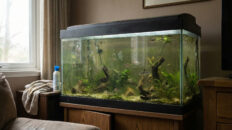

High nitrate levels can silently harm your fish, trigger algae blooms, and destabilize your aquarium’s balance. Fortunately, you don’t need expensive chemicals or complicated gadgets to fix this. Here are five science-backed, natural, and beginner-friendly ways to reduce nitrate levels—fast.
Why Are High Nitrate Levels Dangerous?
Nitrate (NO₃⁻) is a byproduct of the nitrogen cycle. While not immediately toxic like ammonia or nitrite, high nitrate levels (>40 ppm) can stress fish, reduce immunity, and stunt plant growth (https://www.ncbi.nlm.nih.gov/pmc/articles/PMC4018220/). Regular maintenance and natural strategies can bring levels back to a healthy range (5–20 ppm).
✅ Tip #1: Perform Consistent Water Changes
Regular partial water changes (20–30% weekly) help physically remove nitrate buildup. Always dechlorinate your tap water before use and avoid over-cleaning your filter media to protect beneficial bacteria.
🌱 Tip #2: Use Fast-Growing Live Plants
Plants like hornwort, water sprite, and duckweed absorb nitrates as they grow. Floating plants are especially effective because they grow faster and receive more light. Research confirms that aquatic macrophytes can significantly reduce nitrate concentrations in closed aquatic systems (https://link.springer.com/article/10.1007/s10661-021-09116-2).
🍽️ Tip #3: Control Feeding and Stocking
Overfeeding leads to more fish waste, which breaks down into nitrate. Feed lightly once or twice a day and avoid overstocking—stick to 1 inch of fish per gallon as a general guideline.
⚗️ Tip #4: Use Nitrate-Reducing Filter Media
Media such as Seachem De*Nitrate™ or Biohome Ultimate™ support anaerobic bacteria that convert nitrates into harmless nitrogen gas. These media work best in low-flow areas. Denitrification in such systems has been demonstrated to improve water quality significantly in freshwater aquaria (https://www.sciencedirect.com/science/article/pii/S0048969716301429).
🌿 Tip #5: Add Emergent Plants Like Pothos
Pothos, peace lilies, and lucky bamboo can grow with their roots submerged in tank water while their leaves stay above. These emergent plants draw nitrates directly from the water column and grow rapidly. Their effectiveness is not only anecdotal—studies in hydroponic systems show similar species reduce nitrate levels reliably.
Timestamps
- 0:00 – High Nitrate Levels? Here’s What to Do
- 0:14 – Why Nitrates Are a Silent Tank Killer
- 0:31 – #5: Perform Regular Water Changes
- 0:52 – #4: Add Fast-Growing Live Plants
- 1:11 – #3: Reduce Feeding & Stocking Levels
- 1:27 – #2: Use Nitrate‑Reducing Filter Media
- 1:45 – #1: Add Floating Plants (Like Duckweed)
- 2:04 – BONUS Tip: Use Emergent Plants (Pothos!)
- 2:19 – Final Thoughts + Drop Your Tips Below!
About FishTank Mastery
FishTank Mastery is your go-to source for beginner-friendly, science-based aquarium advice. We help aquarists in the US, UK, and Europe build beautiful, balanced freshwater tanks—without the guesswork. Subscribe and join thousands of hobbyists improving their tanks one tip at a time. 🐟
More Tips for Maintaining Healthy Water Quality
Want crystal-clear water without chemicals? Keep things balanced with our Aquarium Nitrogen Cycle Guide. For algae control, check our Top 5 Algae Eaters for Beginners. If you’re building a low-maintenance tank, see our No CO₂, No Filter, No Water Change Aquarium. And to spot early warning signs, read How to Diagnose Sick Aquarium Fish.