Best Community Fish That Get Along Together (Why Most Tanks Fail Later)
Quick Answer: The best community fish that get along together are species that occupy distinct horizontal layers (top, middle, and bottom) and share compatible behavioral patterns. Top peaceful picks include the Honey Gourami (Top), Rummy Nose Tetra (Middle), and Panda Corydoras (Bottom). To stop fish from fighting, avoid “Juvenile Masking” and build your tank around the 3-Layer Method rather than random species selection.
👉 Most community tanks fail not because fish are aggressive, but because the system was never designed for their adult behavior.
Most people searching for the best community fish that get along together are not absolute beginners anymore.
They already tried.
They built a tank that looked perfect. Peaceful. Balanced. Stable.
And for a while… it worked.
Then something changed.
Fish started chasing each other. One fish began hiding. Another stopped eating. Fins got nipped. The harmony you spent weeks building vanished.
Nothing “suddenly broke.”
The system simply reached its limit.
This is the part most aquarium guides never explain. Community tanks don’t collapse because of sudden aggression.
They collapse because of invisible behavioral pressure.
Watch This First (Before You Choose Any Fish)
If your tank went from calm to chaotic, watch this breakdown first. It explains exactly when and why community tanks stop working, and how to fix the invisible pressure building inside your glass box.
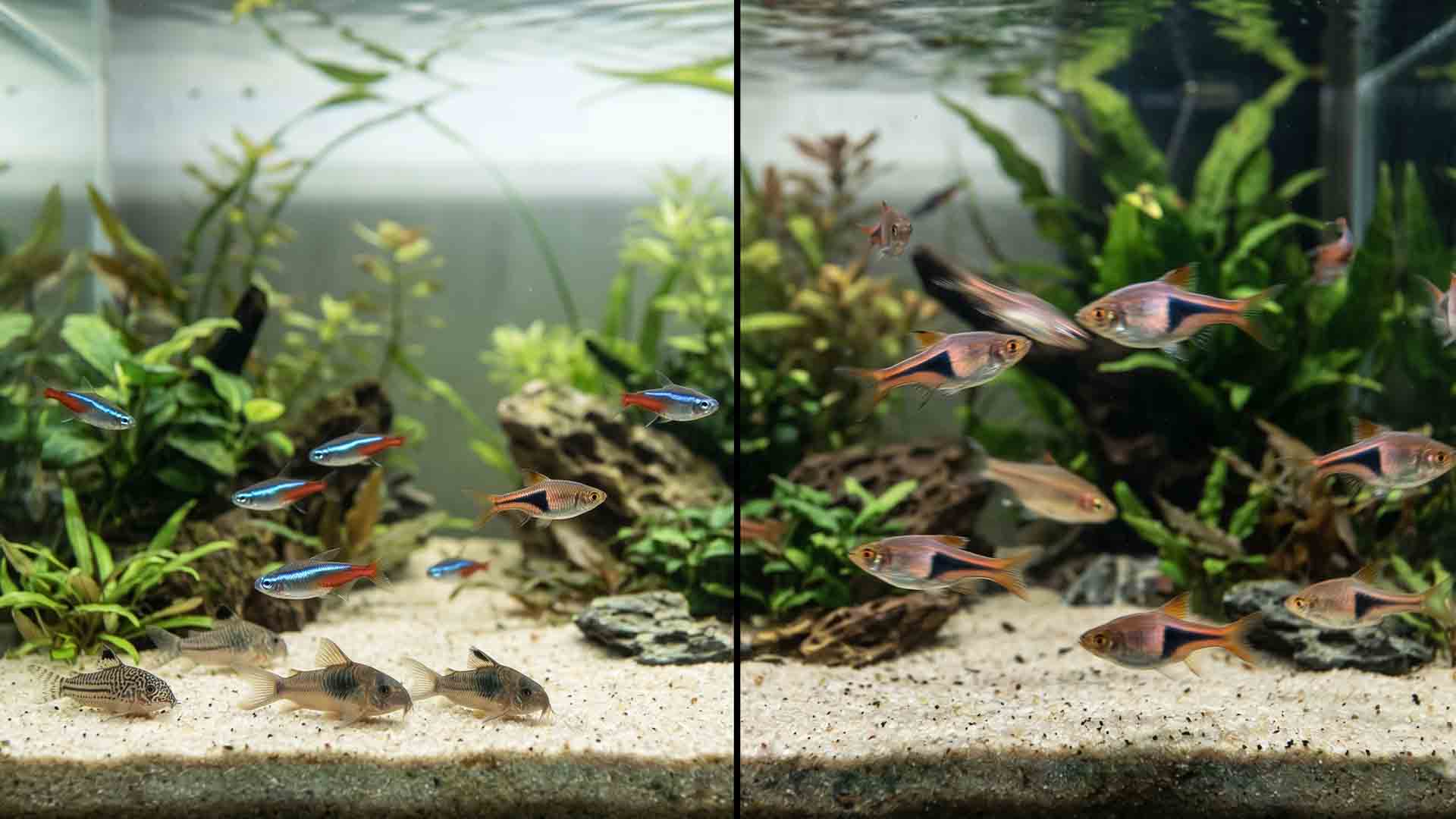
Peaceful fish only stay peaceful when their behavior doesn’t overlap.
Why Most “Peaceful Fish” Lists Fail You
Most “peaceful fish” lists fail because they ignore how fish behave over time, not how they look in a store tank.
| What You Read | What Actually Happens |
|---|---|
| “Peaceful fish live together seamlessly.” | They compete violently when physical space overlaps. |
| “Small fish are totally harmless.” | Small, fast-swimming fish can create constant anxiety for slower fish. |
| “More water fixes everything.” | It only delays the biological and behavioral breakdown. |
Most aquarium content is built around labels. Peaceful. Semi-aggressive. Community-safe.
But fish don’t behave based on labels. They behave based on space, movement, and interaction frequency. And those factors change over time.
The Juvenile Masking Trap
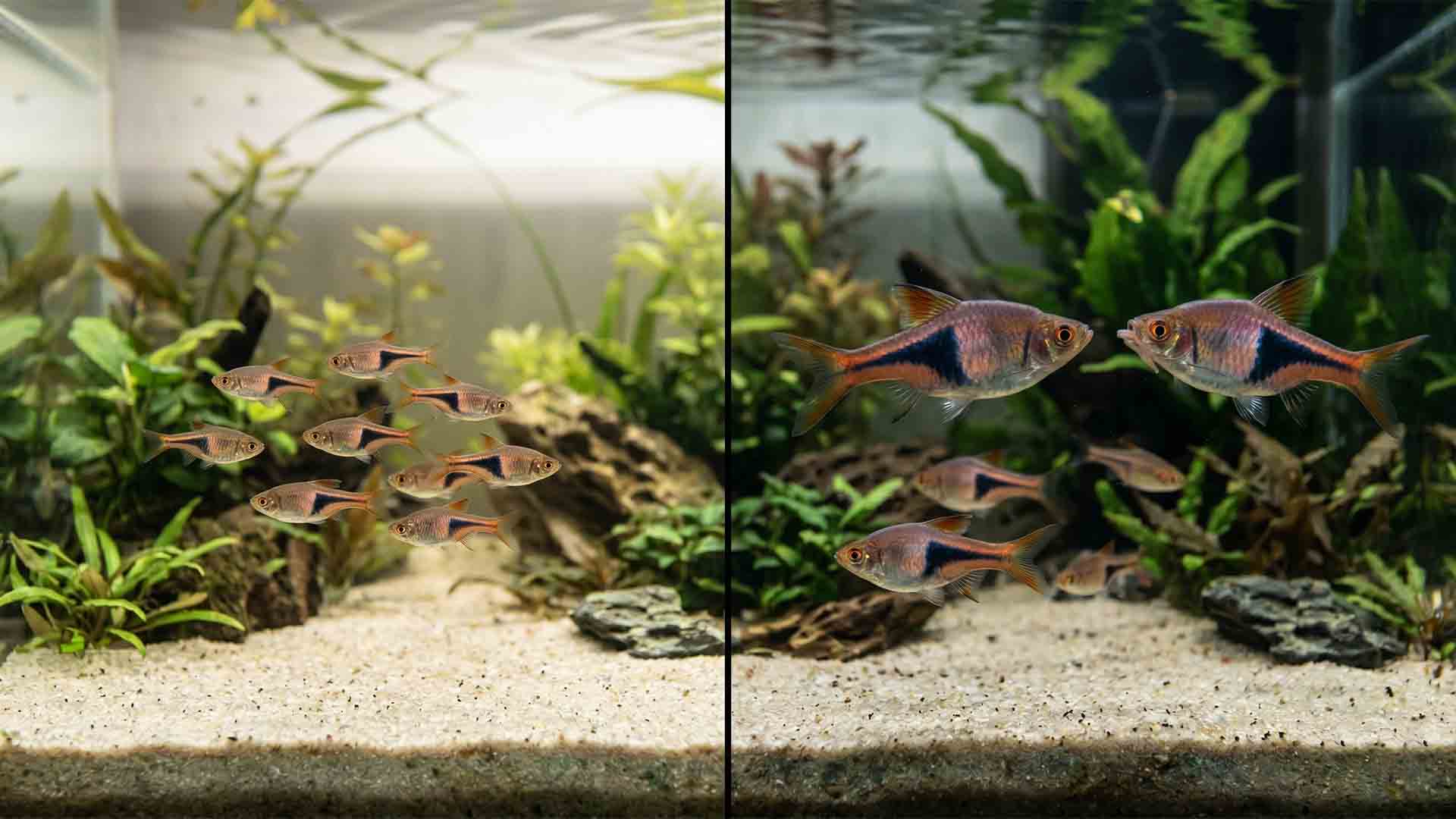
Fish appear peaceful when young—but behavior changes as they mature.
When you buy fish, you are not buying their final behavior. You are buying a temporary version of it.
Juvenile fish don’t defend territory. They don’t compete intensely. They don’t show full behavioral patterns. So everything looks calm. Everything looks compatible. Everything looks like it works.
But it’s an illusion.
As fish grow, their behavior doesn’t suddenly change. It stabilizes. And that’s when your tank gets tested.
The “Looks Fine” Stage (Where Tanks Quietly Break)
This is the most dangerous phase in any community tank. Because nothing looks wrong.
- Water is clear.
- Fish are eating.
- Plants are growing.
You feel confident. You feel like you did everything right. But under the surface, something is building.
Fish start crossing into each other’s space more often. Interaction frequency increases. Stress slowly rises. And then you see the first signs:
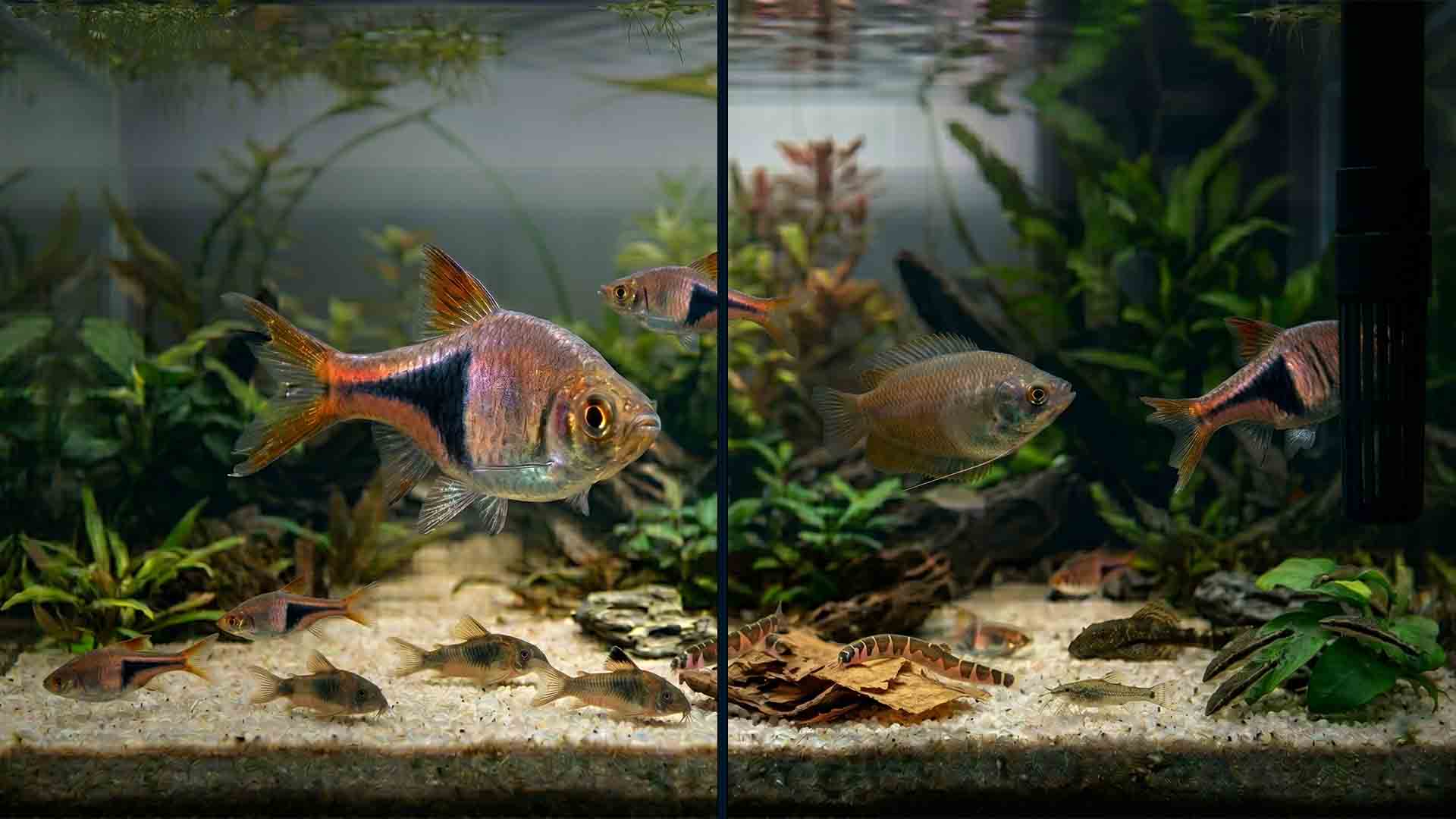
- One fish hiding more than usual.
- Another chasing briefly.
- Small fin damage appearing overnight.
These are not random events. They are system signals.
Space-Math: The Real Cause of Aggression
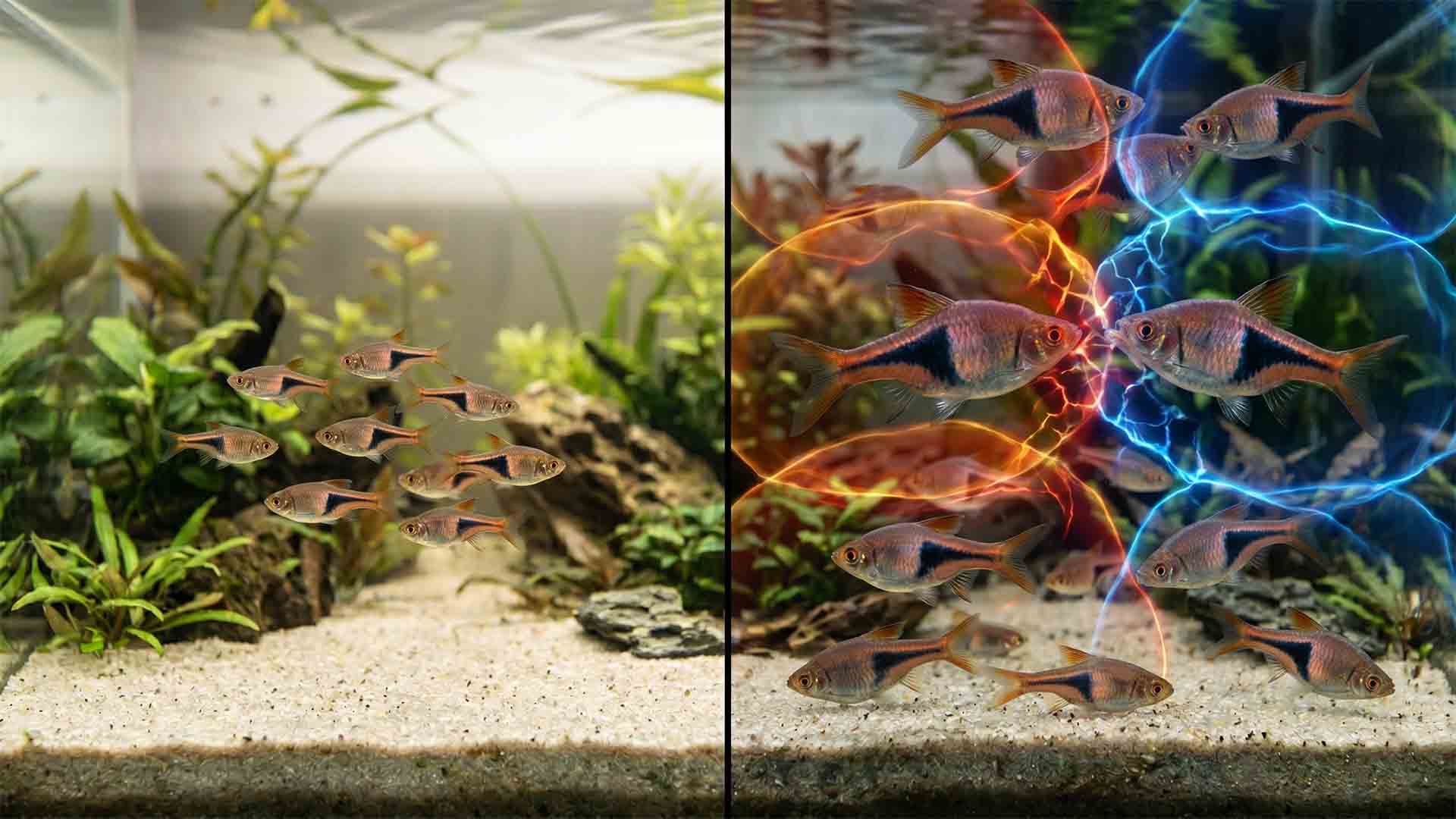
Forget the idea that tank size alone determines success. Forget the outdated “1 inch per gallon” rule. What matters is how much behavior your tank can handle.
| Factor | Why It Matters |
|---|---|
| Fish size | Bigger fish need exponentially more behavioral space. |
| Movement pattern | Fast swimmers create more overlap and visual stress. |
| Territorial instinct | Defines conflict zones and feeding aggression. |
| Group size | Changes social pressure and schooling confidence. |
Think of your tank like an elevator. At first, it’s empty. Everyone fits. As fish grow, that same space becomes crowded. Not physically. Behaviorally. And that’s when friction begins.
The FTM Blueprint: Tank Size to Best Combo Guide
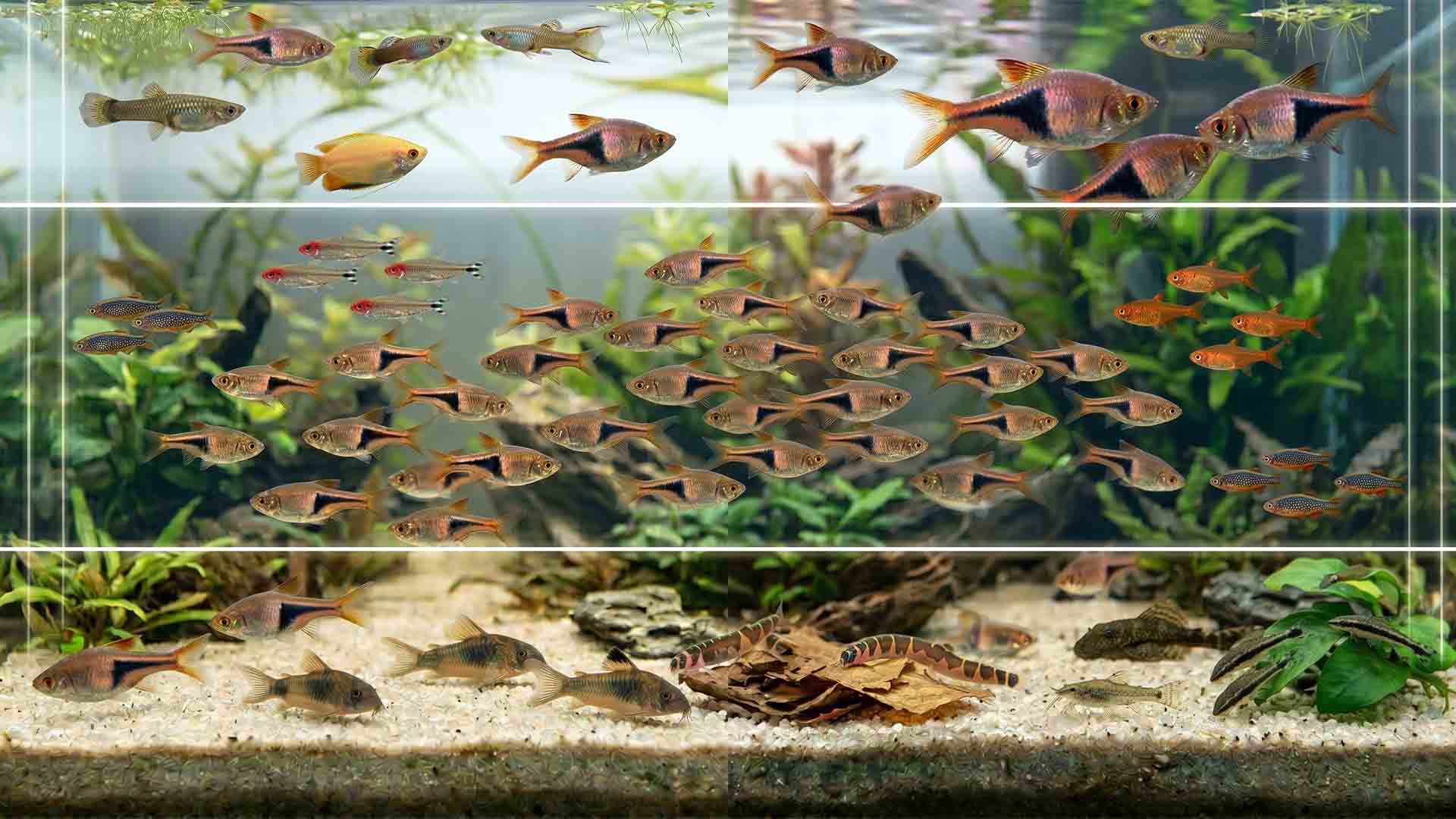
Don’t guess. If you want a guaranteed peaceful community tank, match your tank size to these biologically balanced FTM combos built entirely on the 3-Layer Method:
| Tank Size | The Best Combo (Top, Mid, Bottom) | Why It Works |
|---|---|---|
| 10 Gallon (Nano) | Clown Killifish + Ember Tetras + Amano Shrimp | Ultra-low bioload. Shrimp clean the bottom without triggering territorial instincts. |
| 20 Gallon (Long) | Honey Gourami + Harlequin Rasboras + Pygmy Corydoras | The “Zen Setup.” Perfect horizontal layer separation with zero chase-drive. |
| 30+ Gallon | Marbled Hatchetfish + Rummy Nose Tetras + Kuhli Loaches | High movement without behavioral overlap. Loaches hide while tetras school tightly. |
12 Best Community Fish That Actually Get Along Together (Deep Analysis)
This is not a simple list. Each species is included because of how it behaves inside a system—not because it is labeled “peaceful” on a pet store glass.
TOP LAYER FISH (The Surface Dwellers)
1. Honey Gourami
Unlike Dwarf Gouramis, the Honey Gourami avoids conflict instead of escalating it. They possess a slow, deliberate movement pattern and prefer to stay near the surface among floating plants. They simply do not have the biological drive to conquer the tank.
- Minimum Tank Size: 20 Gallons
- Ideal Temp: 72-82°F (22-28°C)
- Best Tankmates: Ember Tetras, Pygmy Corydoras
- 🔴 Red Flag: Hovering constantly near the heater or filter intake. This means they are being bullied out of the open water.
- ⚠️ When it Fails: It fails if kept with fast, fin-nipping mid-dwellers like Tiger Barbs or Serpae Tetras.
2. Marbled Hatchetfish
These fascinating fish have completely surface-locked behavior. They have minimal vertical movement, meaning they rarely enter conflict zones in the middle or bottom of the tank. They exist in their own world.
- Minimum Tank Size: 20 Gallons
- Ideal Temp: 75-81°F (24-27°C)
- Best Tankmates: Rummy Nose Tetras, Otocinclus
- 🔴 Red Flag: Staying perfectly still for hours or refusing to eat from the surface.
- ⚠️ When it Fails: Fails instantly if the tank doesn’t have a tight-fitting lid (they are notorious jumpers).
3. Clown Killifish
A true nano gem. This species occupies micro-territories at the surface. Their small, controlled movement patterns ensure they do not trigger defensive instincts in larger tankmates.
- Minimum Tank Size: 10 Gallons
- Ideal Temp: 68-77°F (20-25°C)
- Best Tankmates: Celestial Pearl Danios, Amano Shrimp
- 🔴 Red Flag: Drooping tail or swimming in the middle layer instead of the top.
- ⚠️ When it Fails: Fails in high-flow tanks. They need gentle filtration to establish their micro-territories.
4. Endler’s Livebearers
Highly active but incredibly non-territorial. They adapt well to various tank setups and bring life to the upper-mid layers without the aggressive breeding dominance seen in standard store-bought guppies.
- Minimum Tank Size: 10 Gallons
- Ideal Temp: 75-80°F (24-27°C)
- Best Tankmates: Nerite Snails, Kuhli Loaches
- 🔴 Red Flag: Shimmering in place (swimming without moving forward), a sign of severe stress or disease.
- ⚠️ When it Fails: Fails when their population explodes due to breeding, leading to a sudden Space-Math overload.
If your fish are already chasing, read this:
Community Fish To Avoid (Critical Mistakes)
MIDDLE LAYER FISH (The Schooling Core)
5. Rummy Nose Tetra
If there is a king of the middle layer, it’s the Rummy Nose. Their tight schooling behavior reduces chaos. They don’t just live in the middle layer—they organize it through synchronized movement.
- Minimum Tank Size: 20 Gallons (Long preferred)
- Ideal Temp: 75-82°F (24-28°C)
- Best Tankmates: Honey Gourami, Panda Corydoras
- 🔴 Red Flag: Their red noses turn pale or white. This is your ultimate early warning alarm for poor water quality.
- ⚠️ When it Fails: Fails if kept in groups smaller than 6. Without the safety of numbers, they panic and hide.
6. Harlequin Rasbora
Extremely stable schooling patterns with incredibly low aggression. They act as a “dither fish,” meaning their calm presence actually signals to other shy fish that the tank is safe to swim in.
- Minimum Tank Size: 15 Gallons
- Ideal Temp: 73-82°F (23-28°C)
- Best Tankmates: Bristlenose Pleco, Cherry Shrimp
- 🔴 Red Flag: Breaking the school and hiding solo behind hardscape.
- ⚠️ When it Fails: Very hard to fail, but they will stress out if kept with massive, fast-swimming species like Giant Danios.
7. Ember Tetra
These glowing orange gems have a very low bioload, meaning they produce minimal pressure on your biological filtration. Their soft, slow schooling behavior makes them the ultimate peaceful nano fish.
- Minimum Tank Size: 10 Gallons
- Ideal Temp: 73-84°F (23-29°C)
- Best Tankmates: Sparkling Gourami, Otocinclus
- 🔴 Red Flag: Losing their fiery orange color and turning translucent.
- ⚠️ When it Fails: Fails in barren tanks. They need dense plants (like Java Moss or Crypts) to feel secure.
8. Celestial Pearl Danio (CPD)
Also known as Galaxy Rasboras, CPDs are shy, stunning, and actively avoid conflict. They have a very low interaction frequency, preferring to dart through dense vegetation.
- Minimum Tank Size: 10 Gallons
- Ideal Temp: 71-78°F (22-26°C)
- Best Tankmates: Pygmy Corydoras, Snails
- 🔴 Red Flag: Refusing to come out during feeding time.
- ⚠️ When it Fails: Fails in tanks with bold, aggressive eaters. CPDs are shy and will easily starve if outcompeted.
If your tank has sudden deaths and you don’t know why, read this:
Why Your Fish Keep Dying (The Real Reason)
BOTTOM LAYER FISH (The Cleanup Crew)
9. Panda Corydoras
Corydoras are the gold standard for bottom dwellers because they are completely non-territorial. They move in groups along the sand, engaging in peaceful foraging. They do not care what is happening above them.
- Minimum Tank Size: 20 Gallons
- Ideal Temp: 72-78°F (22-26°C)
- Best Tankmates: Any peaceful top/mid layer fish
- 🔴 Red Flag: Sitting completely motionless for extended periods or losing their barbels (whiskers).
- ⚠️ When it Fails: Fails if kept on sharp gravel that damages their mouths, or if housed with aggressive bottom-dwellers like Red Tail Sharks.
10. Kuhli Loach
While some bottom feeders claim caves, the Kuhli Loach avoids interaction entirely. They are nocturnal, meaning they slither through the substrate during hours when the rest of the tank is resting.
- Minimum Tank Size: 20 Gallons
- Ideal Temp: 75-82°F (24-28°C)
- Best Tankmates: Harlequin Rasboras, Hatchetfish
- 🔴 Red Flag: Frantic “glass surfing” up and down the tank walls during the day (sign of severe water parameter shock).
- ⚠️ When it Fails: Fails in tanks without soft sand. They need to burrow; without sand, they live in constant anxiety.
11. Otocinclus
These tiny algae-eaters do not compete for swimming space or traditional fish food. Their sole focus is biofilm and algae on glass and plant leaves, making them completely disconnected from tank drama.
- Minimum Tank Size: 15 Gallons
- Ideal Temp: 72-79°F (22-26°C)
- Best Tankmates: Neon Tetras, Amano Shrimp
- 🔴 Red Flag: A sunken, flat belly. A healthy Oto should look like it swallowed a small pea.
- ⚠️ When it Fails: Fails in brand-new, sterile tanks. They rely entirely on established biofilm to survive.
12. Amano Shrimp
While not a fish, Amano Shrimp are the ultimate peaceful cleaners. They are independent, non-aggressive, and support ecosystem balance by rapidly processing decaying organic matter.
- Minimum Tank Size: 10 Gallons
- Ideal Temp: 70-80°F (21-27°C)
- Best Tankmates: Nano fish (Ember Tetras, Endlers)
- 🔴 Red Flag: Turning opaque/white or actively trying to climb out of the water above the filter line.
- ⚠️ When it Fails: Fails if copper-based medications are used in the tank, or if kept with fish large enough to swallow them.
How to Prevent Fish From Fighting (Before It Starts)
Most people try to stop aggression after it begins. That’s already too late. Because once fish establish conflict patterns, they don’t easily revert. The real solution is prevention. And prevention is about building a system that removes the need for conflict entirely.
Step 1: Build the Tank Around Behavior, Not Species
Most aquariums fail because they are built like collections. Random species, added over time, based on appearance. This creates overlap. Instead, build your tank like a system: define top layer, define middle layer, define bottom layer. Then choose fish that naturally fit those roles.
Step 2: Control Interaction Frequency
Aggression is not caused by bad fish. It is caused by too many interactions. Every time fish cross paths, there is potential for stress. More overlap = more interaction = more conflict. Your goal is to reduce unnecessary encounters.
Step 3: Stock in the Correct Order
This is one of the most ignored rules in aquarium setup. Fish order matters more than fish selection. Add shy/passive fish first so they can establish territory safely. Add schooling fish second to create system stability. Add confident/semi-dominant fish last to avoid them taking control of an empty tank.
Step 4: Avoid Behavioral Clones
The fastest way to create conflict is adding multiple species that behave the same way. For example: multiple mid-layer fast swimmers, or multiple territorial bottom-dwellers. Even if each species is labeled “peaceful,” they will compete.
Step 5: Use Structure to Break Line of Sight
Fish don’t fight just because they are close. They fight because they see each other constantly. Use tall plants, hardscape, and visual barriers. This reduces perceived pressure. Out of sight means out of mind.
Scientific Truths (Why Biology Rewards Harmony)
Aquarium harmony is not a guessing game; it is an ecological science. Here is why the 3-Layer Method and careful species selection actually work:
Claim 1: Fish do not become aggressive; confined systems make them aggressive.
Explanation: In natural environments, fish avoid conflict through a biological process called Niche Partitioning. Different species evolve to occupy different ecological roles and physical spaces to eliminate competition. When you put surface-dwelling fish and bottom-dwelling fish together, you successfully mimic Niche Partitioning in a glass box. In closed systems like aquariums, that natural separation is severely limited, which is why layer planning is critical.
Source: Ecological Resource Partitioning Study
Claim 2: High interaction frequency leads to a crashed immune system.
Explanation: When incompatible fish share the same horizontal layer, they are forced into constant visual contact. This unrelenting interaction spikes cortisol (stress hormone) levels. Chronically elevated cortisol suppresses the fish’s immune system, which is why “bullied” fish often die of diseases like Ich or fin rot before they ever die from physical bites.
Source: Fish Behavior and Environmental Pressure
If you think your water tests are fine but fish are still dying, read this:
Why Water Tests Are Lying To You
People Also Ask (PAA)
What is the most peaceful community fish for a 20-gallon tank?
For a standard 20-gallon tank, the Honey Gourami paired with a school of Ember Tetras and Panda Corydoras is widely considered the most peaceful and biologically stable combination. This works flawlessly because the Honey Gourami lacks the territorial drive of larger cichlids, while the Tetras and Corydoras operate in entirely different spatial layers, ensuring zero behavioral overlap, reduced interaction frequency, and minimal stress.
Why do my peaceful fish suddenly start fighting?
Most “sudden” aggression in community tanks is a direct result of Juvenile Masking and Space-Math. When you purchase fish at the pet store, they are usually young and have not yet developed adult territorial hormones. As they reach sexual and social maturity, their need for physical and behavioral space expands exponentially. If the tank is improperly planned, their “invisible boundaries” overlap, forcing them to fight for space that didn’t matter to them weeks earlier.
Can I stop my fish from chasing each other without removing them?
Yes, in many cases, you can reset the tank’s social hierarchy by completely rearranging the hardscape (rocks and driftwood) and performing a water change. This destroys the established territories, forcing the fish to start over. Furthermore, adding tall, dense stem plants helps “break the line of sight.” If an aggressive fish cannot see from one end of the tank to the other, it will not attempt to claim the entire aquarium.
FAQ (Quick Answers)
Do schooling fish reduce aggression?
Yes. Keeping schooling fish in proper groups (6 or more) makes them feel secure, which significantly reduces nervous, nippy behavior towards other species.
Are all small fish peaceful?
No. Size does not dictate behavior. Many small fish, like Tiger Barbs or Serpae Tetras, are highly aggressive fin-nippers despite their tiny footprint.
Does a bigger tank prevent fish from fighting?
No, a bigger tank only delays the fighting. If fish behaviors overlap (e.g., two territorial bottom dwellers), they will eventually fight regardless of the gallon size.
What is the best bottom-feeder for a peaceful tank?
The Panda Corydoras or the Kuhli Loach. Both have zero territorial instincts and will completely ignore mid and top-dwelling fish.
Can any peaceful fish live together?
No. Compatibility depends on biological behavior and tank layers, not pet store labels.
If you want to spot a disaster before it happens, read this:
5 Signs Your Tank Is About to Collapse
Final Insight
There is no such thing as a “perfect peaceful fish.”
There is only a well-designed system. When fish don’t need to interact, they don’t fight. And when they don’t fight, your tank doesn’t collapse.
That’s the real definition of a successful community aquarium.