
Cherry shrimp keep dying even though your water tests look perfect? That is one of the most frustrating problems in shrimp keeping, because it makes the tank feel impossible to understand.
You test ammonia. Zero. Nitrite. Zero. Nitrate looks safe. The water is clear, the tank looks clean, the filter is running, and nothing looks obviously wrong. Then one shrimp disappears. A few days later, another one is gone. Maybe you find a dead shrimp after a water change. Maybe you notice a white ring. Maybe the adults survive, but the baby shrimp never seem to make it.
That slow pattern is exactly what makes cherry shrimp problems different from many fish problems. Fish often show obvious signs when something is wrong. Cherry shrimp usually do not. A colony can look stable right up until it starts fading one shrimp at a time.
The mistake most beginners make is assuming this means the water is “bad.” Sometimes it is. But very often, the real problem is more specific than that.
Your shrimp tank may not be failing because the water is dirty. It may be failing because the system keeps changing.
Cherry shrimp, especially Neocaridina shrimp, do not respond well to sudden shifts. They depend on consistency in temperature, minerals, dissolved solids, biofilm, microfauna, and general tank rhythm. When those things keep moving, the colony slowly loses stability, even if the basic test kit numbers look fine.
Quick Answer: Why Cherry Shrimp Keep Dying One by One
Cherry shrimp usually keep dying one by one because the tank is unstable in ways basic water tests do not fully show. Common hidden causes include water change shock, TDS (total dissolved solids) swings, unstable GH or KH, failed molts, active soil lowering hardness, over-cleaning that removes biofilm, trace toxins, and peaceful fish eating baby shrimp. In many cases, ammonia, nitrite, and nitrate can look safe while the shrimp are still dealing with constant micro-stress.
This is why “perfect water parameters” can be misleading. They show you a snapshot, not the full system. A shrimp colony survives on patterns, not isolated numbers.
Watch This Before You Try to Fix the Tank
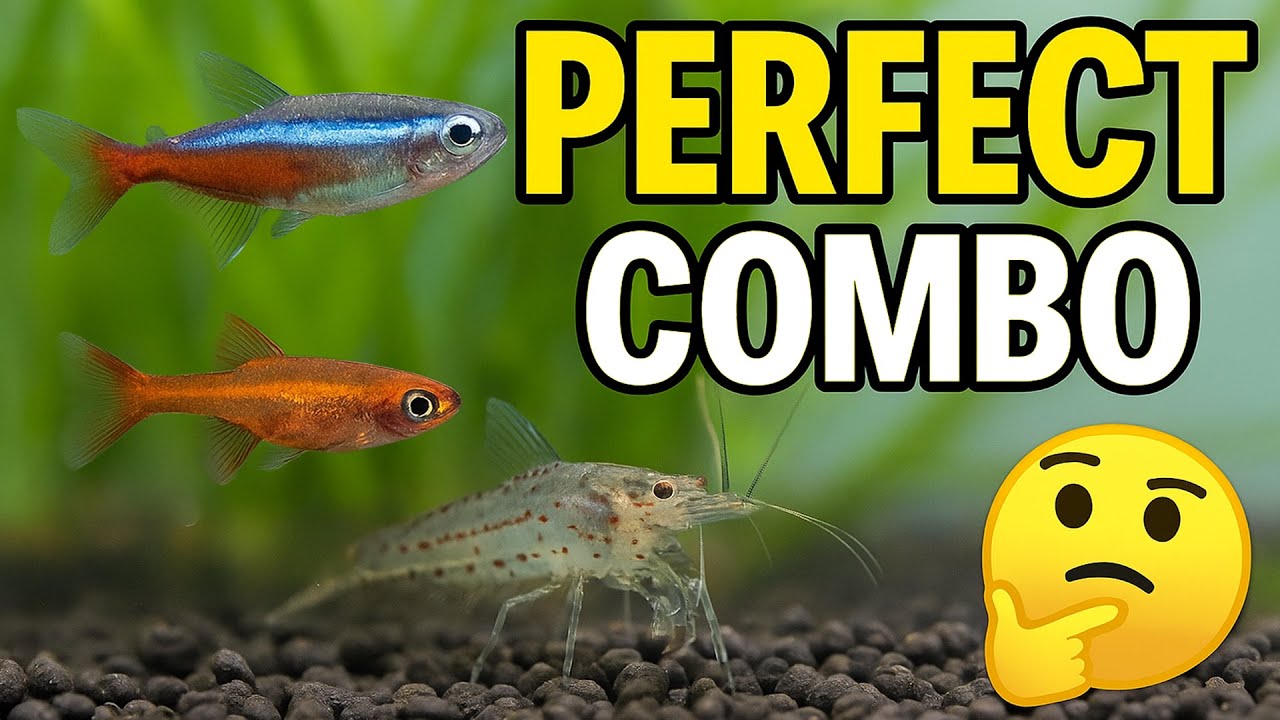
If your cherry shrimp are dying after water changes, molting problems, or “normal” parameter readings, this video breaks down the hidden threats that slowly drain a shrimp colony before the tank looks obviously broken.
The phrase “my parameters are fine” appears constantly in shrimp forums, Reddit posts, and aquarium groups. It makes sense. Most hobbyists are taught to check the same three numbers first: ammonia, nitrite, and nitrate.
Those numbers matter. If ammonia or nitrite is present, shrimp can absolutely die. But cherry shrimp are sensitive to more than the nitrogen cycle. A tank can pass the basic test kit and still be unstable for shrimp.
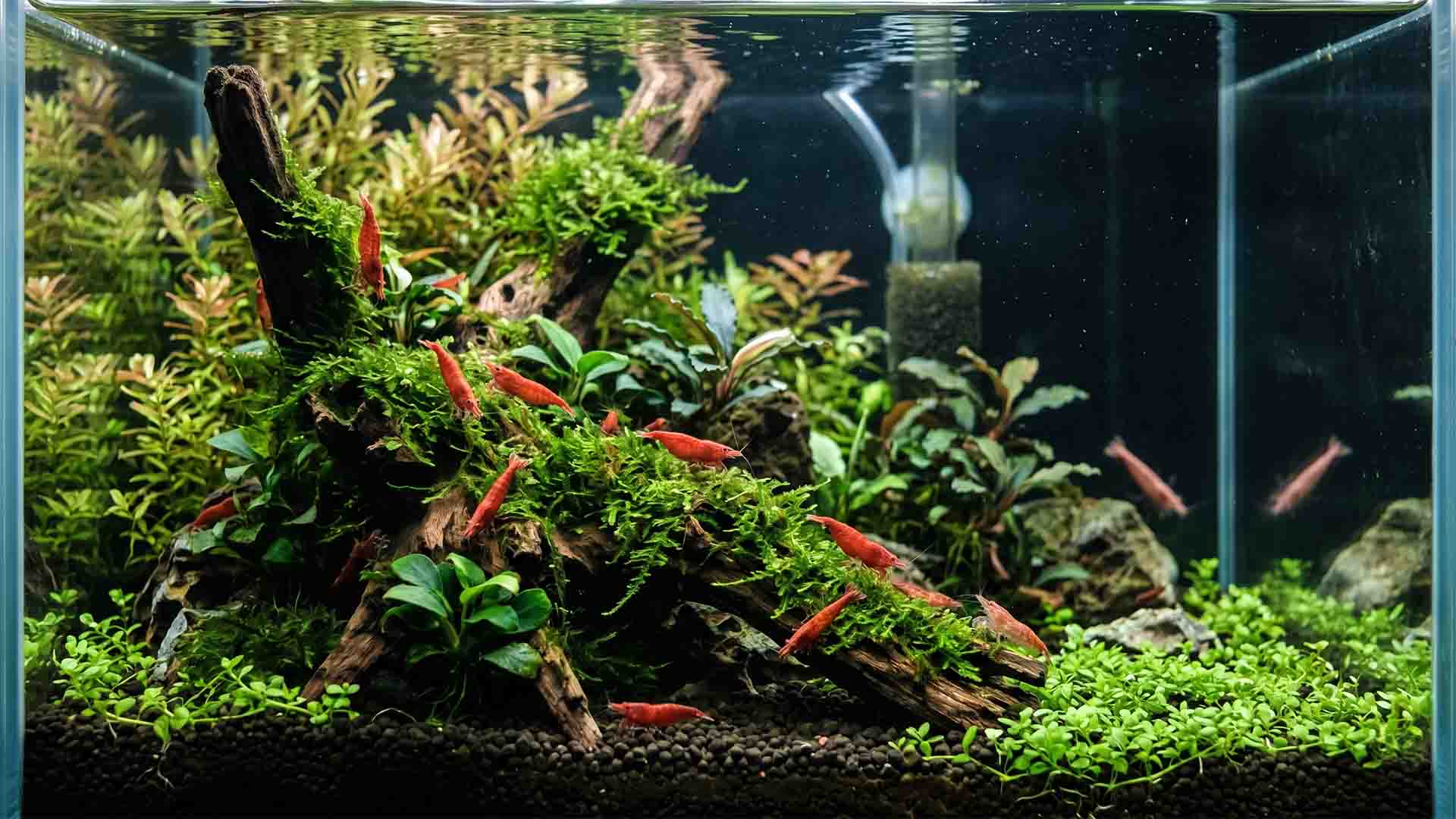
That is the perfect water trap.
You are testing the visible layer of the system while the real shrimp stress may be happening underneath it. For cherry shrimp, the deeper layer includes:
- GH, which affects mineral availability and shell development
- KH, which influences pH stability
- TDS, which shows total dissolved substances but not exactly what they are
- temperature consistency
- source water differences
- biofilm availability
- trace contaminants that do not show up on normal tests
A beginner may see zero ammonia, zero nitrite, and low nitrate, then assume the tank is safe. But if the TDS swings after every water change, or GH is too low for consistent molts, or active soil keeps pulling KH down, the shrimp are not living in a stable system.
This is why some shrimp colonies decline slowly instead of crashing overnight. The tank is not always toxic. It is unstable.
You may not be testing the wrong tank. You may be testing the wrong layer of the system.
The Stability Bank: Why Cherry Shrimp Fail Quietly
A useful way to understand cherry shrimp health is to think of your tank like a stability bank.
Every stable day adds credit. Every sudden change withdraws credit.
This is the core idea behind the entire guide: cherry shrimp losses often happen when the colony runs out of stability credit, not when one single parameter suddenly becomes “bad.”
A mature tank with steady minerals, predictable water changes, biofilm growth, and no sudden disruptions builds stability over time. The shrimp may not “look” different from day to day, but the system becomes easier for them to survive in. Molts happen more smoothly. Babies have more surfaces to graze. The colony becomes less fragile.
But every sharp change drains that account.
A large water change with different TDS. A fast refill. A sudden mineral correction. A deep substrate vacuum. A new chemical. A new fish that eats shrimplets. Active soil pulling the water in one direction while tap water pushes it in another.
None of these things may look dramatic on their own. That is why the problem is so easy to miss.
The tank does not always fail from one huge mistake. It often fails from repeated small withdrawals that the colony never fully recovers from.
By the time shrimp start dying, the stability bank may already be empty.
Why Cherry Shrimp Are Different From Fish
A major reason shrimp problems confuse people is that many aquarium habits come from fishkeeping. But shrimp do not tolerate change the same way most fish do.
Fish often benefit from larger water changes, strong cleaning routines, and quick corrections when something looks wrong. Cherry shrimp are different. They are small invertebrates with delicate molting cycles and a much tighter relationship with mineral balance, surface food, and environmental consistency.
For fish, “cleaner water” often means safer water. For shrimp, “different water” can be dangerous even when it is technically cleaner.
That distinction matters.
A shrimp keeper who treats a shrimp tank like a small fish tank can accidentally create instability while trying to improve the system. This is especially common in nano tanks, where every change is amplified.
In a larger tank, a small mistake may dilute. In a shrimp nano tank, the same mistake can hit the whole colony at once.
Small tanks do not necessarily fail faster. Small mistakes just do not dilute.
If this is happening in a small aquarium, the issue may be amplified by limited water volume. This guide explains why nano tanks crash faster and why small changes hit harder: Why Nano Tanks Crash Fast.
If you are still building your first shrimp setup, it is worth starting with the foundation before trying to fix individual deaths. A shrimp tank needs mature surfaces, gentle filtration, stable water changes, and enough biological time to settle before the colony is expected to grow. This step-by-step setup guide explains how to build that baseline correctly: first nano shrimp tank setup guide.
The 7 Hidden Threats at a Glance
Before going deeper into each threat, here is the full pattern. These problems are dangerous because they often look like responsible aquarium care. You change water to improve quality. You add minerals to fix molts. You clean to keep the tank healthy. You buy shrimp soil because it says “shrimp” on the bag. You add peaceful fish because they do not chase the adults.
But in a cherry shrimp colony, the question is not only whether something is “good” or “bad.” The question is whether it keeps the system stable.
| Hidden Threat | What It Looks Like | Real Problem |
|---|---|---|
| Water change shock | Shrimp die after maintenance | Sudden TDS, temperature, or mineral shift |
| Failed molt illusion | White ring or stuck molt | Unstable mineral balance, not always calcium deficiency |
| Perfect parameter trap | Tests look fine but shrimp die | Basic tests miss GH, KH, TDS, and stability trends |
| Active soil trap | Shrimp soil seems correct | Substrate may push pH and KH away from stable Neocaridina conditions |
| Over-cleaning | Tank looks spotless | Biofilm and microfauna are removed |
| Invisible toxins | No obvious warning signs | Trace copper, residues, chemicals, or contaminated tools |
| Peaceful fish myth | Adults survive but colony does not grow | Baby shrimp disappear from predation |
The rest of this guide breaks down each of these threats in detail, starting with the one that causes the most confusion: shrimp dying after a water change.
#7 Water Change Shock: When “Better Water” Becomes Different Water
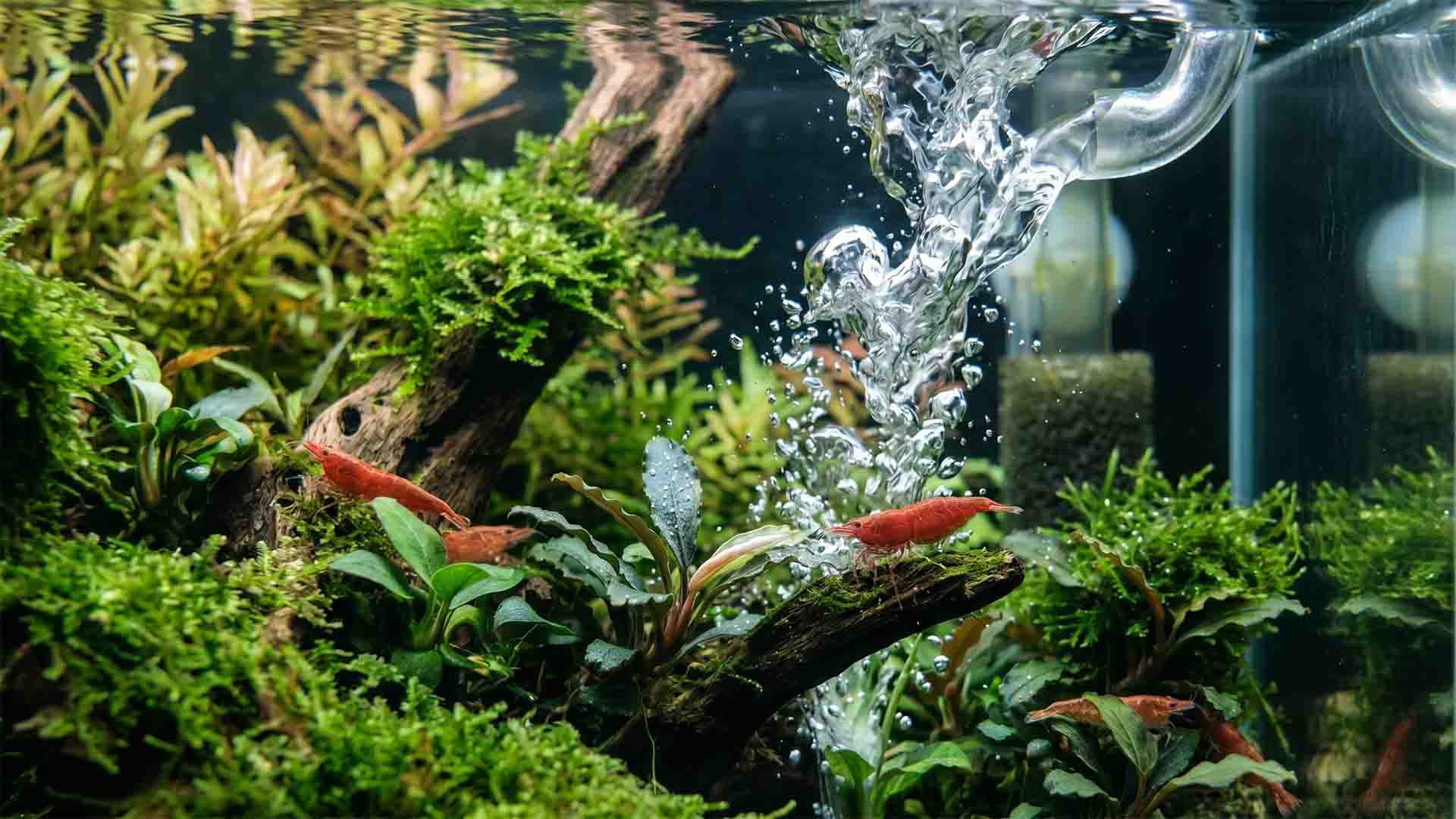
One of the most common patterns in shrimp keeping is also one of the most confusing: cherry shrimp dying right after a water change.
It feels backwards. You were trying to improve the tank. You removed waste, added fresh water, and did what most aquarium guides tell you to do. Then, within hours or days, shrimp start acting strange, hiding, molting badly, or dying one by one.
The problem is that cherry shrimp do not only react to dirty water. They react to different water.
A water change can be safe on paper and still stressful in practice if the new water does not closely match the tank. Even small differences can matter when the shrimp are already living close to their stability limit.
The most common shock points are:
- temperature mismatch between old and new water
- sudden TDS changes
- GH or KH differences
- pH movement caused by buffering changes
- fast refill speed
- chlorine or chloramine exposure
- large water changes in small tanks
This is why two shrimp keepers can do the same “20% water change” and get different results. One is matching water carefully. The other is creating a shift the shrimp cannot absorb.
For fish, fresh water often feels like relief. For shrimp, fresh water can feel like a forced reset.
Shrimp do not reward you for making the water better if the change happens too fast.
TDS Shock in Cherry Shrimp Tanks
TDS stands for total dissolved solids. It does not tell you exactly what is dissolved in the water, but it gives you a broad reading of how much dissolved material is present.
For cherry shrimp, TDS becomes important because it reflects the overall mineral and dissolved substance environment their bodies are adjusting to.
If your tank is sitting at one TDS level and your refill water is far lower or higher, the shrimp experience a sudden osmotic shift. That shift can force stress internally, even if the water looks clean and the basic test kit looks normal.
This is especially dangerous in nano shrimp tanks because there is less water volume to dilute the change. A small difference in source water can quickly become a tank-wide shift.
That is why many experienced shrimp keepers do smaller, slower water changes instead of large corrective ones.
| Water Change Mistake | Why It Hurts Cherry Shrimp | Better Approach |
|---|---|---|
| Changing too much water at once | Creates a sudden shift in temperature, minerals, and dissolved solids | Use smaller, consistent water changes |
| Refilling too quickly | Forces shrimp to adjust instantly | Add new water slowly |
| Not matching temperature | Creates immediate physical stress | Match refill water temperature closely |
| Ignoring TDS difference | Can cause osmotic stress | Compare tank TDS and source water TDS |
| Using untreated tap water | Can expose shrimp to chlorine or chloramine | Use a reliable dechlorinator and prepare water first |
If shrimp die after a water change, do not immediately assume you need more products, more minerals, or a bigger correction. First, compare the tank water and the new water. Look at temperature, TDS, GH, KH, and how quickly the change happened.
If this pattern started right after maintenance, the water change itself deserves closer attention. The same shock logic can affect fish too, but shrimp usually show the weakness faster because they are less tolerant of sudden mineral and dissolved-solid shifts. For a broader breakdown of what can go wrong during water changes, read this guide: Fish Die After a Water Change? Here’s Why.
In shrimp tanks, maintenance should feel boring. If every water change creates a new condition, the colony never gets to settle.
#6 The Failed Molt Illusion: White Ring of Death Is Not Always Calcium
Few things panic shrimp keepers faster than seeing a white ring around a cherry shrimp. The common reaction is immediate: “My shrimp need calcium.”
That reaction is understandable, but it is also incomplete.
Molting depends on minerals, but it does not depend on calcium alone. More importantly, it depends on stable mineral balance.
A shrimp molt is not just the shell coming off. The shrimp must prepare internally, absorb water, separate from the old exoskeleton, and harden the new shell properly. That process requires the right conditions at the right time.
If the water is too soft, the new shell may not develop properly. If the mineral level suddenly changes, the shrimp may be forced into a stressful molt before its body is ready. If GH, KH, or TDS keeps swinging, the shrimp is constantly trying to adjust during one of the most vulnerable processes in its life.
This is why failed molts often show up after water changes, mineral corrections, or sudden parameter adjustments.
The shrimp did not necessarily die because the water was “bad.” It may have died because the water changed at exactly the wrong time.
Molting is not about adding more minerals. It is about keeping the right mineral balance stable long enough for the shrimp to use it.
White Ring of Death: What It Really Means
The “white ring of death” usually refers to a visible pale band around the shrimp where the old shell separates near the head and body. It can happen when the shrimp cannot complete the molt properly.
But the white ring itself is not a diagnosis. It is a symptom.
Possible causes include:
- unstable GH
- very low mineral availability
- sudden mineral spikes
- TDS swings
- stress after water changes
- poor diet or weak conditioning
- general tank instability
This is where many beginners make the mistake worse. They see a failed molt, add calcium or minerals quickly, and create another sudden change. That may help in some tanks, but in unstable systems it can become another withdrawal from the stability bank.
The better approach is slower and less dramatic:
- check GH, KH, and TDS instead of only ammonia, nitrite, and nitrate
- avoid sudden mineral corrections
- keep water changes smaller and more consistent
- feed a varied diet without overfeeding
- watch whether molts improve over several weeks, not one day
Failed molts are not always an emergency that needs instant correction. Often, they are a message that the system has been unstable for a while.
#5 When “Good” Water Parameters Are Still Dangerous
This is where the perfect water trap becomes most obvious.
You test the tank and everything looks fine. Ammonia is zero. Nitrite is zero. Nitrate is low. The water is clear. The shrimp are not obviously gasping or acting poisoned.
So why are they still dying?
The answer is that shrimp health is controlled by more than the standard beginner test kit.
Ammonia, nitrite, and nitrate tell you whether the nitrogen cycle is failing. They do not fully tell you whether your shrimp are living in stable mineral conditions. They do not show you every dissolved substance in the water. They do not show trace toxins. They do not show biofilm availability. They do not show whether your source water and tank water are fighting each other every week.
For cherry shrimp, the invisible layer matters.
The Parameters Cherry Shrimp Keepers Should Actually Watch
Cherry shrimp do not need you to chase perfect numbers every day. In fact, constantly chasing numbers often creates more problems. What they need is a reasonable range that stays consistent.
| Parameter | Why It Matters for Cherry Shrimp | Common Mistake |
|---|---|---|
| GH | Supports mineral availability for molting and shell formation | Trying to fix molts without checking mineral balance |
| KH | Helps stabilize pH in many setups | Using active soil or water changes that constantly shift buffering |
| TDS | Shows broad dissolved solids movement over time | Ignoring source water difference during water changes |
| pH | Matters most when it swings or sits outside the colony’s adapted range | Chasing an ideal pH instead of keeping it stable |
| Temperature | Affects metabolism, oxygen demand, and stress | Letting nano tanks swing daily |
| Nitrate | Useful as a general waste indicator | Assuming low nitrate means the whole system is healthy |
The key is not to turn your shrimp tank into a laboratory. The key is to stop trusting one layer of data as if it explains the whole ecosystem.
A tank can look good on paper and still be stressful in practice.
For example, a shrimp tank with zero ammonia and low nitrate may still have unstable TDS. A tank with “safe” pH may still be experiencing buffering swings after every water change. A tank that looks clean may still lack biofilm and microfauna. A tank with adult shrimp surviving may still be losing every baby shrimp to fish.
These are not contradictions. They are different layers of the system.
Perfect parameters are not the same thing as biological stability.
Why Stability Beats Perfection
The biggest shift in shrimp keeping is learning to stop asking, “Are my numbers perfect?” and start asking, “Are my conditions consistent?”
Perfect numbers can still move too much. Slightly imperfect but stable numbers can be safer than numbers that are constantly corrected.
This does not mean parameters do not matter. They absolutely do. But cherry shrimp usually do better when you create a stable range and maintain it gently, instead of reacting to every reading with a new adjustment.
If your shrimp keep dying with perfect water parameters, the next step is not always more testing. Sometimes the next step is better interpretation.
Look for trends:
- Do shrimp die after water changes?
- Do failed molts appear after mineral adjustments?
- Does TDS rise between maintenance days?
- Does pH shift after adding new water?
- Are baby shrimp disappearing even though adults survive?
- Does the tank look clean but lack grazing surfaces?
Those patterns tell you more than one perfect test result ever will.
#4 The Active Soil Trap for Neocaridina Shrimp
This is one of the most frustrating mistakes because it often starts with good intentions.
You want to build a proper shrimp tank, so you buy a substrate labeled for shrimp. The bag looks professional. The product sounds specialized. It promises better conditions, softer water, lower pH, and a more shrimp-friendly environment.
The problem is that “shrimp substrate” does not always mean “best substrate for cherry shrimp.”
Many active shrimp soils are designed to change water chemistry. They absorb or reduce carbonate hardness, buffer pH downward, and create softer, more acidic conditions. That can be useful for some Caridina shrimp species, especially when the goal is soft, acidic water.
Cherry shrimp are different.
Neocaridina shrimp are generally more forgiving than many Caridina species, but they still depend heavily on stability. They can adapt to a range of conditions, but they do poorly when the system keeps pulling them in different directions.
This is where active soil becomes a trap.
If your tap water has moderate KH and your active soil keeps pulling KH down, every water change creates a push-pull effect. The new water pushes the tank one way. The soil pulls it back another way. The numbers may not look catastrophic, but the colony experiences constant movement.
That movement is the problem.
In a cherry shrimp tank, active soil can create a system that looks advanced but behaves unstable. You think you bought a premium shrimp substrate, but you may have created a tank where pH, KH, and mineral balance keep drifting after every maintenance session.
When Active Soil Becomes a Problem
Active soil is not automatically bad. The issue is whether it matches the species, water source, and maintenance routine.
For cherry shrimp, active soil becomes risky when:
- your tap water has higher KH than the soil is designed to buffer
- you do frequent water changes that reset the chemistry battle
- you do not monitor GH, KH, and TDS trends
- the soil continues lowering KH and pH after each refill
- the tank is small, so every shift affects the whole system quickly
This is why some shrimp keepers do better with inert substrate for Neocaridina. Inert substrate does not try to change the water. It allows you to build stability around your actual source water instead of fighting it.
That does not mean every cherry shrimp tank must use inert substrate. It means you should understand what your substrate is doing before assuming it is helping.
| Substrate Type | What It Does | Risk for Cherry Shrimp |
|---|---|---|
| Active shrimp soil | Lowers KH and buffers pH downward | Can create instability if paired with unsuitable tap water |
| Inert gravel or sand | Does not actively change water chemistry | Requires mineral stability from water and remineralization routine |
| Nutrient aquasoil | May release nutrients and alter chemistry early | Can be unstable in new tanks if not matured properly |
The practical rule is simple: do not choose substrate based only on the word “shrimp.” Choose it based on the water chemistry your shrimp actually need and the stability your system can maintain.
For cherry shrimp, stable and boring often beats advanced and constantly changing.
#3 Over-Cleaning: Why a Spotless Shrimp Tank Can Starve
Over-cleaning is one of the easiest mistakes to make because it looks responsible.
You clean the glass. You vacuum the substrate. You remove old leaves, surface growth, mulm, and anything that makes the tank look messy. Afterward, the aquarium looks fresh and clean.
But cherry shrimp do not experience the tank the same way you do.
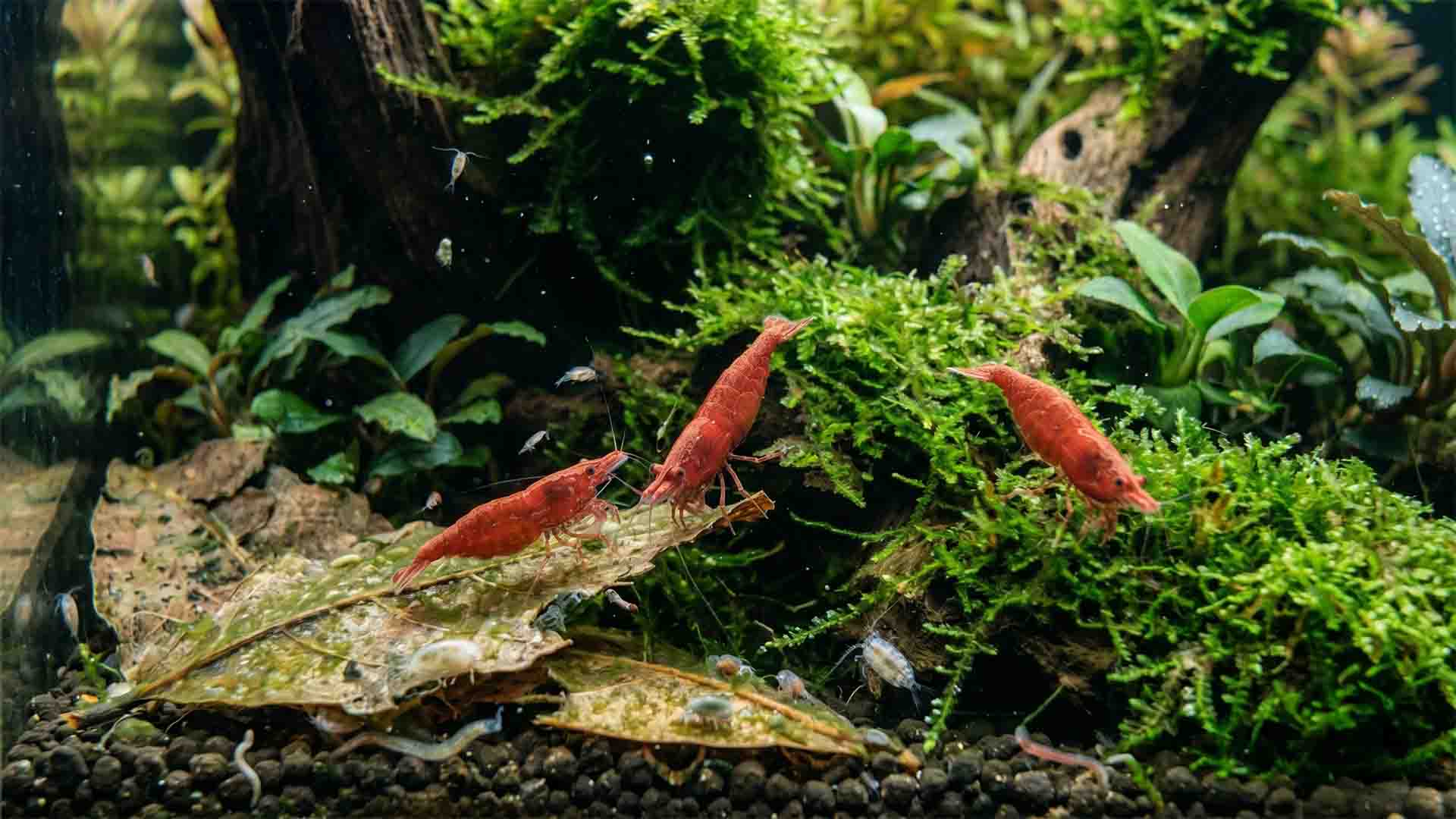
To you, biofilm may look like buildup. To shrimp, it is food.
To you, old leaves may look like decay. To shrimp, they are grazing surfaces.
To you, mulm may look dirty. To a shrimp colony, it can be part of the micro-ecosystem that supports baby shrimp, microorganisms, and constant foraging.
A sterile shrimp tank is not automatically a healthy shrimp tank. Very often, it is a starving one.
The Microfauna Layer Most Beginners Miss
Cherry shrimp are constant grazers. They spend much of their time picking at surfaces, not just eating the food you drop into the tank.
That surface layer matters.
Biofilm, algae film, microorganisms, decaying leaf surfaces, and tiny organic particles all contribute to the food web inside a mature shrimp tank. This is especially important for baby shrimp, which need safe surfaces to graze from almost immediately after they appear.
When a tank is too new, too clean, or cleaned too aggressively, the shrimp may still receive prepared food, but the ecosystem itself becomes thin. Adults may survive for a while, but the colony loses resilience. Babies fail to grow. Molting becomes harder. The population slowly declines.
This kind of problem does not look dramatic. It looks like “my shrimp just don’t thrive.”
That is why over-cleaning is dangerous. It does not always kill the colony directly. It weakens the biological foundation the colony depends on.
What Healthy Shrimp Tank Maintenance Looks Like
A cherry shrimp tank still needs maintenance. The answer is not neglect. The answer is selective cleaning.
Instead of trying to make the tank spotless, focus on keeping the system stable while preserving useful biological surfaces.
- Clean the front glass for visibility, but leave some side or back surfaces alone.
- Avoid deep vacuuming the entire substrate at once.
- Keep some moss, leaf litter, or textured surfaces for grazing.
- Remove obvious waste buildup, but do not strip the tank sterile.
- Rinse filter media gently in tank water only when needed.
- Feed lightly, but make sure the tank has natural grazing surfaces.
This is the difference between a clean display tank and a stable shrimp ecosystem.
Cherry shrimp do not need a dirty tank. They need a living one.
If your tank looks perfect but the colony keeps shrinking, ask whether you cleaned away the food web before blaming the water.
Live plants also help create more grazing surface, more visual cover, and a more forgiving micro-ecosystem for baby shrimp. The goal is not to build a high-maintenance aquascape, but to add simple plants that support biofilm and stability. If you want easy plant options that fit beginner tanks, start here: Best Beginner Aquarium Plants That Really Grow.
#2 Invisible Toxins in Aquarium Shrimp Tanks
Some shrimp problems are obvious. Ammonia, nitrite, severe neglect, or a dead fish decomposing in the tank can all create visible trouble.
Invisible toxins are harder.
These are the contaminants that do not always show up on basic aquarium tests and may not affect fish immediately, but can still stress or kill shrimp over time.
Cherry shrimp are small invertebrates, and they are generally more sensitive to certain contaminants than many common aquarium fish. That means a tank can look fine for fish while being unsafe for shrimp.
The most common risks include:
- trace copper from pipes, fertilizers, or medications
- pesticide residue on plants or hardscape
- cleaning product residue on tools or hands
- aerosol sprays used near the aquarium
- untreated tap water containing chlorine or chloramine
- medications that are unsafe for invertebrates
- fertilizer overdosing in shrimp-only systems
The danger with invisible toxins is that they do not always cause instant mass death. Sometimes they create low-level stress that slowly drains the stability bank.
Shrimp may become less active. Molting problems may increase. Females may stop carrying eggs. Baby survival may drop. A few adults may die here and there, but the tank never looks obviously poisoned.
Copper and Shrimp Sensitivity
Copper is one of the most discussed toxins in shrimp keeping, and for good reason. Invertebrates can be sensitive to copper exposure, especially when concentration, duration, and water chemistry create a stressful combination.
This does not mean every trace of copper instantly kills every shrimp. That kind of fear-based advice is not useful. The real point is that shrimp tanks need tighter contamination control than many fish tanks.
If you use fertilizers, medications, old plumbing, shared tools, or decorative materials from unknown sources, you should think carefully about what might be entering the system.
Common safety habits include:
- using shrimp-safe fertilizers only at appropriate doses
- avoiding copper-based medications in shrimp tanks
- not using household buckets or tools that touched soap or cleaners
- rinsing new plants carefully before adding them
- keeping sprays, cleaners, and aerosols away from the tank
- using a reliable dechlorinator for tap water
Invisible toxin problems are not solved by panic. They are solved by controlling inputs.
In shrimp tanks, everything that enters the water matters more than it looks.
#1 The “Peaceful Fish” Myth: Why Baby Shrimp Disappear
This is one of the most misunderstood reasons cherry shrimp colonies fail.
You add peaceful fish. They do not chase the adult shrimp. There is no aggression, no torn bodies, no dramatic hunting behavior. Everything looks calm.
Then, over time, the shrimp colony stops growing.
Adults are still visible, but you never see many babies. Females may carry eggs, but the population does not increase. A few shrimp disappear here and there, and the tank feels like it can support shrimp, but not a colony.
This is the peaceful fish myth.
Peaceful does not mean harmless. It only means the damage is harder to see.
Many small community fish will ignore adult shrimp but opportunistically eat shrimplets. They do not need to be aggressive. They only need to be curious, hungry, and fast enough to pick off baby shrimp when they appear.
That creates a very specific failure pattern: the colony does not crash, but it also never grows.
If you are trying to build a peaceful community setup around shrimp, this guide will help you avoid fish combinations that look harmless but create long-term pressure: Best Community Fish That Get Along Together.
Adult Shrimp Surviving Does Not Mean the Colony Is Safe
This is the key point many beginners miss.
If adult shrimp are visible, it feels like the fish are safe. But colony success is not measured by adult survival alone. It is measured by whether babies survive long enough to replace older shrimp.
A shrimp colony that cannot raise babies is already failing, even if the adults look fine today.
Common signs include:
- berried females appear, but baby shrimp are rarely seen
- adult numbers slowly decline over months
- the colony never expands despite stable adults
- fish show no aggression toward adults, but constantly graze around moss and hiding areas
- shrimp hide more often after fish are added
Dense moss, leaf litter, cholla wood, and complex hardscape can improve baby survival, but they do not eliminate the risk. If the goal is breeding cherry shrimp reliably, a shrimp-only tank is usually the safest setup.
Community tanks can work for display. Shrimp-only tanks work better for colony growth.
If your cherry shrimp are not dying dramatically but the population never grows, the problem may not be water. It may be missing babies.
The Pattern Behind All 7 Hidden Threats
When you look at these seven threats together, the pattern becomes obvious.
None of them are huge, obvious mistakes.
They are small shifts. Small mismatches. Small assumptions that seem harmless because they do not break the tank immediately.
A water change is supposed to help. Minerals are supposed to help. Cleaning is supposed to help. Shrimp soil is supposed to help. Peaceful fish are supposed to be safe.
But cherry shrimp do not survive based on intention. They survive based on stability.
The colony does not care whether the change was meant to help. It only experiences the change itself.
| Threat | Common Assumption | What Shrimp Actually Experience | Better Strategy |
|---|---|---|---|
| Water change shock | Fresh water is always better | A sudden change in minerals, TDS, or temperature | Make smaller, slower, better-matched changes |
| Failed molts | Add calcium immediately | Unstable mineral timing during a vulnerable process | Stabilize GH, KH, and TDS gradually |
| Perfect parameters | Zero ammonia means safe water | Hidden instability outside basic tests | Track trends, not just snapshots |
| Active soil | Shrimp substrate must be best | Ongoing buffering and chemistry movement | Match substrate to shrimp species and source water |
| Over-cleaning | Spotless means healthy | Loss of biofilm and microfauna | Clean selectively and preserve grazing surfaces |
| Invisible toxins | No symptoms means no contamination | Low-level stress from unsafe inputs | Control everything that enters the tank |
| Peaceful fish | No aggression means safe | Baby shrimp predation without visible conflict | Use dense cover or keep breeding colonies shrimp-only |
This is why cherry shrimp keeping rewards restraint. The goal is not to constantly improve the tank. The goal is to stop disrupting the parts of the tank that are already working.
How to Stabilize a Cherry Shrimp Colony
Once you understand the hidden threats, the solution becomes much clearer. A cherry shrimp colony does not need constant correction. It needs a stable environment that changes slowly enough for the shrimp to adapt.
This is where many beginners go wrong. They see one dead shrimp and immediately change something. Then they see another dead shrimp and change something else. Before long, the tank is not recovering from the original problem anymore. It is reacting to a chain of corrections.
The goal is not to make the tank perfect overnight. The goal is to stop the instability from continuing.
Step 1: Stop Chasing Perfect Numbers
Perfect numbers can be misleading if they keep moving. Cherry shrimp usually do better in a reasonable, stable range than in a tank where the owner keeps forcing the parameters toward an “ideal” target.
This does not mean parameters are unimportant. They matter a lot. But the trend matters more than a single reading.
Instead of asking only, “Are my numbers good today?” ask:
- Are these numbers stable week to week?
- Do shrimp die after water changes?
- Does TDS swing after maintenance?
- Does pH shift after adding new water?
- Do failed molts appear after mineral corrections?
- Are baby shrimp surviving long enough to grow?
A stable shrimp tank is built by watching patterns, not reacting to one snapshot.
Step 2: Match Water Before Water Changes
If shrimp are dying after water changes, your first priority is not more additives. Your first priority is matching the new water more closely to the tank.
Before adding water, compare:
- temperature
- TDS
- GH
- KH
- pH
- chlorine or chloramine treatment
You do not need to create a laboratory routine for every maintenance day, but you do need to understand whether the new water is meaningfully different from the tank water.
For shrimp tanks, especially nano tanks, smaller and slower water changes are usually safer than large corrective ones.
| Stabilization Goal | Better Habit | Why It Helps |
|---|---|---|
| Reduce shock | Use smaller water changes | Limits sudden changes in minerals, temperature, and dissolved solids |
| Protect molting shrimp | Avoid rapid mineral correction | Prevents sudden shifts during vulnerable molt cycles |
| Support baby shrimp | Preserve biofilm and microfauna | Maintains natural grazing surfaces |
| Prevent hidden contamination | Control tools, plants, fertilizers, and sprays | Reduces toxin risk in a sensitive invertebrate system |
| Improve colony growth | Limit fish predation risk | Protects shrimplets before the colony fades out |
Step 3: Keep GH, KH, and TDS Consistent
For cherry shrimp, GH, KH, and TDS are not just extra numbers for advanced hobbyists. They are part of the system that controls mineral balance, molting, and osmotic stability.
GH helps reflect mineral availability. KH helps with buffering and pH stability in many setups. TDS helps you see broad dissolved solids movement over time.
None of these numbers should be chased aggressively. The goal is to understand your baseline and keep it steady.
If your cherry shrimp are dying one by one, start tracking these values before and after water changes. If the tank swings every time you maintain it, the colony is being forced to adapt repeatedly.
Step 4: Stop Over-Cleaning the Shrimp Ecosystem
A shrimp tank should be clean enough to remain healthy, but not so sterile that the food web disappears.
Instead of deep-cleaning everything at once, preserve some biological surfaces. Moss, leaf litter, cholla wood, sponge filters, mature substrate, and hardscape all help support the grazing layer that shrimp depend on.
For baby shrimp, this matters even more. They cannot compete aggressively for food, and they rely heavily on safe surfaces where biofilm and microorganisms are available.
If the tank looks spotless but the colony keeps shrinking, the problem may not be excess waste. It may be that the system is too biologically thin.
Step 5: Control What Enters the Tank
Invisible toxin problems are often input problems. Something enters the tank that should not be there, or something safe for fish is used in a system where shrimp are far less tolerant.
Review your inputs carefully:
- fertilizers
- medications
- new plants
- hands and tools
- buckets and siphons
- tap water treatment
- decorations and hardscape
- sprays or cleaners used near the tank
The point is not to become paranoid. The point is to build a controlled system. In a shrimp tank, small contamination risks matter more than they do in many fish-only setups.
Step 6: Decide Whether You Want a Display Tank or a Breeding Colony
This is a decision many shrimp keepers avoid making.
A community tank with cherry shrimp can look beautiful. Adult shrimp may survive, graze, and appear comfortable. But if small fish are present, baby shrimp survival may be low enough that the colony never grows.
If your goal is display, a mixed tank may be acceptable. If your goal is a self-sustaining cherry shrimp colony, a shrimp-only setup or extremely dense cover is usually safer.
Adult survival is not the same as colony success. A real colony needs babies to survive.
People Also Ask
Why do my cherry shrimp keep dying one by one?
Cherry shrimp often die one by one because the tank is unstable in ways basic tests do not fully show. Water change shock, TDS swings, unstable GH or KH, failed molts, active soil, over-cleaning, hidden toxins, and fish predation can all slowly weaken a colony while the tank still looks normal.
Why are my cherry shrimp dying after a water change?
Cherry shrimp may die after a water change if the new water differs too much from the tank water. Temperature, TDS, GH, KH, pH, chlorine, chloramine, or refill speed can all create shock. Shrimp often react to different water, not just dirty water.
What causes white ring of death in shrimp?
White ring of death is usually linked to molting failure. It can happen when mineral balance, GH, KH, TDS, diet, or stability is off. It is not always solved by adding calcium, because the underlying issue is often unstable mineral timing rather than simple calcium deficiency.
Can cherry shrimp die even with perfect water parameters?
Yes. Basic water parameters such as ammonia, nitrite, and nitrate can look safe while the shrimp are still stressed by unstable GH, KH, TDS, pH, temperature, toxins, lack of biofilm, or baby shrimp predation.
Do cherry shrimp need stable TDS?
Yes. Cherry shrimp benefit from stable TDS because sudden changes in dissolved solids can create osmotic stress. TDS does not tell you exactly what is in the water, but it helps reveal whether the overall dissolved environment is shifting too much.
Can active soil kill cherry shrimp?
Active soil can contribute to cherry shrimp losses if it keeps shifting KH, pH, or mineral balance in a way that conflicts with your source water. It is not automatically bad, but many active soils are better suited to soft-water Caridina setups than typical Neocaridina tanks.
Can peaceful fish eat baby cherry shrimp?
Yes. Many peaceful fish ignore adult shrimp but still eat baby shrimp opportunistically. This can make a colony slowly disappear even when there is no visible aggression or chasing.
Why is my shrimp colony slowly disappearing?
A shrimp colony may slowly disappear because adults die one by one, baby shrimp are being eaten, the tank lacks biofilm, molts are failing, or small stability issues keep accumulating. Slow colony decline usually points to a system problem rather than one obvious event.
How often should I clean a cherry shrimp tank?
Clean only as much as needed to maintain water quality without stripping the tank of biofilm and microfauna. Cherry shrimp tanks usually do better with selective maintenance instead of aggressive deep cleaning.
How do I stop cherry shrimp from dying?
Start by stabilizing the system. Match water changes carefully, track GH, KH, and TDS, avoid sudden corrections, preserve biofilm, control toxin risks, and remove fish predation pressure if you want the colony to grow.
FAQ
Are cherry shrimp hard to keep?
Cherry shrimp are not difficult when the tank is mature and stable. They become difficult when the system is new, constantly adjusted, over-cleaned, or exposed to sudden parameter changes.
What is the most common reason cherry shrimp die?
The most common reason is instability. This can come from water changes, mineral swings, immature tanks, poor molting conditions, active substrate issues, or inconsistent maintenance.
Should I do a water change if shrimp are dying?
Not automatically. If ammonia or nitrite is present, a careful water change may be necessary. But if shrimp are dying after previous water changes, another large change may make the instability worse. First compare tank water and new water.
Do cherry shrimp need calcium?
Cherry shrimp need minerals for healthy molts, but calcium alone is not the full answer. GH, KH, TDS, diet, and stability all matter. Adding calcium too quickly can create another sudden change.
Is active substrate good for cherry shrimp?
It depends on your water and your goal. Active substrate can be useful in some soft-water shrimp setups, but for Neocaridina cherry shrimp it can create instability if it constantly lowers KH or shifts pH against your tap water.
Can cherry shrimp live with fish?
Adult cherry shrimp can live with some peaceful fish, but baby shrimp are at risk. If your goal is colony growth, a shrimp-only tank or very dense cover is safer.
Do cherry shrimp need biofilm?
Yes. Biofilm and microfauna are important natural food sources, especially for baby shrimp. Prepared food can support the colony, but it does not fully replace the constant grazing layer found in mature shrimp tanks.
Why do shrimp disappear without bodies?
Shrimp bodies can be eaten quickly by tankmates, snails, or other shrimp. Baby shrimp may also disappear because fish eat them before you ever notice they were there.
Scientific References
Cherry shrimp care is not only based on hobby experience. The main ideas in this guide are supported by broader freshwater biology, shrimp husbandry knowledge, and research on invertebrate sensitivity.
The USFWS Neocaridina davidi ecological risk summary helps establish cherry shrimp as a widely kept freshwater shrimp species with strong adaptability, but adaptability does not mean immunity to unstable captive conditions.
For molting problems, The Shrimp Farm’s failed molting guide supports the idea that failed molts are connected to more than simple calcium deficiency. Mineral balance, GH, KH, TDS, and stability all matter when shrimp are preparing to shed and rebuild their exoskeleton.
For the biological stability side, Aquarium Co-Op’s cherry shrimp care guide reinforces the importance of mature tanks, biofilm, sponge filters, and natural grazing surfaces. This supports the point that over-cleaning a shrimp tank can weaken the food web that baby shrimp and adult shrimp depend on.
For invisible toxins, the Journal of Crustacean Biology study on copper exposure in freshwater shrimp is useful because it shows why contamination risk deserves extra attention in shrimp systems. The study focuses on freshwater shrimp sensitivity to copper exposure, which supports the broader warning that low-level contaminants can matter more in shrimp tanks than many fishkeepers expect.
The key pattern across these sources is consistent: cherry shrimp do best when water chemistry, mineral balance, safe inputs, and biological surface life remain stable over time. That is why this guide focuses less on chasing perfect numbers and more on protecting the stability of the whole shrimp tank system.
If your shrimp losses seem connected to “normal” test results, you may also want to read our guide on why aquarium water tests can miss deeper system instability: Why Water Tests Are Lying To You.
Watch Next
If this is your first shrimp setup, start here before adding more shrimp or changing the tank again. This video explains the beginner mistakes that quietly destabilize shrimp nano tanks before the colony has time to settle: First Shrimp Nano Tank? DON’T Make These Mistakes.
If your shrimp are in a small tank and the system keeps swinging, this breakdown will help you understand why nano tanks crash faster and why small corrections can create large effects: Why Nano Tanks CRASH Fast – Stop Doing This.
If you want the broader version of this problem, this guide explains the fatal nano tank mistakes that affect shrimp, fish, and the whole ecosystem: Why Your Nano Tank Keeps CRASHING? 5 Fatal Mistakes.
The Perfect Water Trap
Final Insight
Most shrimp keepers do not lose colonies because they ignore the tank. They lose colonies because they keep trying to fix the tank in ways that create new instability.
They change more water. Add more minerals. Clean more surfaces. Adjust more numbers. Buy more specialized products. Add peaceful fish because nothing looks aggressive. Each action seems reasonable on its own, but together they keep withdrawing from the stability bank.
Cherry shrimp do not die because your tank is imperfect. They die when the system changes faster than the colony can adapt.
Once you understand that, shrimp keeping becomes simpler. Not easier in the lazy sense, but clearer. You stop chasing perfect numbers and start protecting stable patterns. You stop reacting to every symptom and start asking what changed before the symptom appeared.
That is when cherry shrimp colonies stop fading quietly and start behaving like what they really are: a small ecosystem that rewards patience, consistency, and restraint.