

Dirty Aquarium Filter? Why It Clogs So Fast
Your aquarium filter gets dirty so fast and it feels like the tank is judging you. You clean the media, the water looks fine, and a few days later the filter is brown again. It’s tempting to assume something is wrong: weak filtration, too many fish, or “bad water.”
But here’s the twist: a fast-dirtying filter can mean two completely different things. Sometimes it’s a warning sign. Other times it’s proof your filter is doing its job.
Let’s break down what it actually means, how to tell the difference, and what to do without triggering the classic ammonia-spike trap.
The Quick Reality Check (Before You Touch Anything)
Ask these two questions first:
- Are the fish acting normal? Eating, swimming, breathing calmly?
- Is the water stable? Not swinging between “fixes” every few days?
If fish look fine and your tank is stable, your dirty filter is not automatically a crisis. The crisis usually starts when people clean it too aggressively and accidentally wipe out the stability they built.
If you’ve been cleaning filter media frequently, this is the most important related guide on the site: stop cleaning filter media. It explains exactly how the wrong cleaning routine can trigger ammonia spikes.
Why Your Aquarium Filter Gets Dirty So Fast
Filters don’t “create dirt.” They collect what is already in the system. When a filter clogs quickly, it usually means one or more of these are true:
- High organic input (feeding, waste, decaying plant matter)
- Fine particles (powdery foods, sand dust, disturbed substrate)
- Heavy biofilm growth (normal in mature systems, increased by excess nutrients)
- Mechanical media is too fine (it catches everything fast, then slows flow)
- Flow patterns push debris into the intake (layout + circulation issue)
Now the key is separating normal clogging from danger clogging.
Normal vs Dangerous: The “Dirty Filter” Decision Rule
Use this simple rule:
- Normal dirty filter: Water is clear, fish are calm, flow is slightly reduced over time.
- Danger dirty filter: Flow drops suddenly, fish gasp near the surface, water gets hazy, or you smell a strong organic odor when opening the lid.
A filter that clogs slowly is usually just doing what it’s designed to do: trap particles and host bacteria. A filter that clogs suddenly can cause oxygen problems and destabilize the system.
The Hidden Biology: “Dirty” Media Often Means Healthy Bacteria
This is where beginners get tricked.
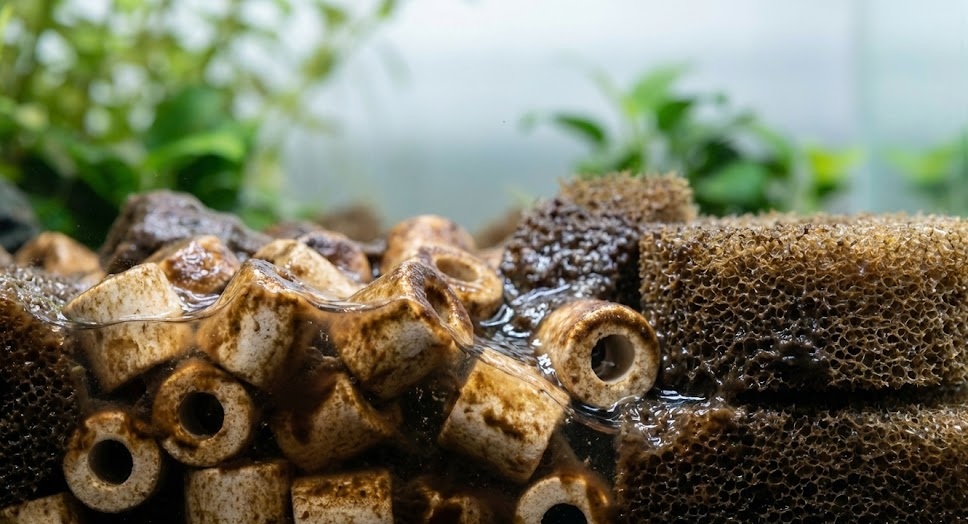
That brown gunk (mulm + biofilm) is not just gross debris. It often contains a massive population of beneficial bacteria and microorganisms that help process waste. When you scrub filter media until it looks new, you don’t just remove dirt… you remove stability.
This is why aggressive cleaning can lead to:
- temporary ammonia or nitrite spikes
- fish stress and heavy breathing
- cloudy water after “maintenance”
Yes, a filter can be too dirty. But “too clean” is often more dangerous.
What Most People Get Wrong About Filter Dirt
1) They Clean on a Schedule Instead of a Signal
Many people clean weekly because it feels responsible. But filters should be cleaned when flow drops or when media becomes physically clogged, not because the calendar told you to.
2) They Use Tap Water
Tap water can contain chlorine or chloramine. That can damage beneficial bacteria fast. Even if your city says levels are safe for humans, bacteria are not humans.
3) They Clean Everything at Once
Cleaning filter media, vacuuming deep substrate, and doing a massive water change on the same day is the stability version of pulling the power cable mid-update.
What NOT to Do When Your Filter Clogs Fast
- Do not scrub all media until it looks new
- Do not replace all media at once
- Do not rinse media under tap water
- Do not keep increasing feeding to “reward” fish (it increases load)
- Do not keep re-arranging hardscape and stirring debris weekly
If you suspect feeding is part of why your filter fills up fast, this guide is a perfect companion: overfeeding aquarium fish.
Safe Action Plan: How to Handle a Filter That Gets Dirty Fast
Step 1: Measure Flow Reduction
If flow is still strong, you likely don’t need to clean yet. A slightly “dirty” filter is normal.
Step 2: Clean Only Mechanical Media First
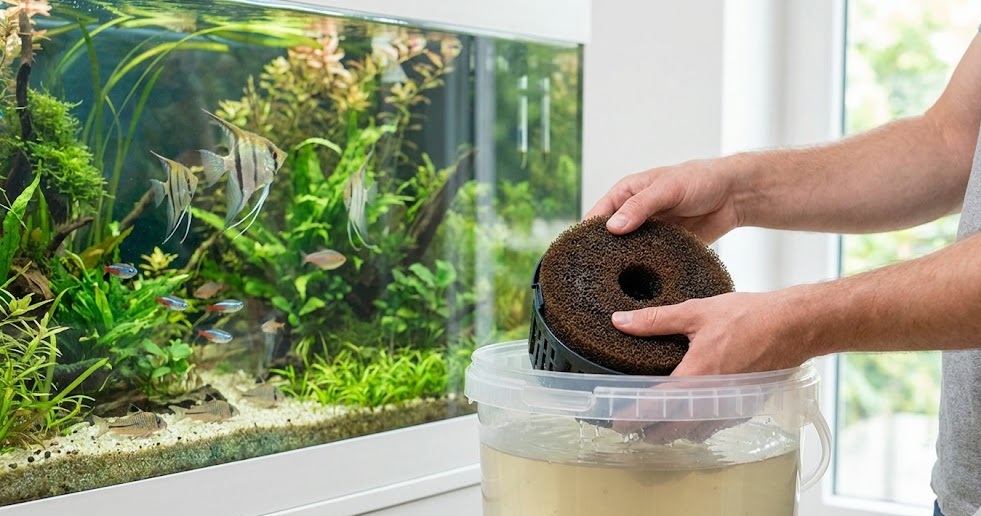
If you use a layered setup, rinse the mechanical layer first and leave bio media alone.
Step 3: Rinse in Tank Water (Not Tap Water)
Use a bucket of tank water during a water change. Gently swish. Do not sterilize.
Step 4: Don’t Clean Everything the Same Week
If you vacuum substrate, keep filter cleaning light. If you clean the filter, keep the substrate cleaning minimal.
Step 5: Reduce Input for 3–7 Days
A short feeding reduction reduces organic load and helps the system stabilize.
A Simple Troubleshooting Table
| What You Notice | Most Likely Cause | Best Move |
|---|---|---|
| Media browns fast, flow still strong | Normal waste capture + biofilm growth | Leave it alone, clean only when flow drops |
| Flow drops quickly after cleaning | Media too fine or packed too tight | Loosen media, avoid overstuffing, adjust layers |
| Filter clogs in days + lots of poop | Overfeeding / heavy bioload | Reduce feeding, evaluate stocking, improve routine |
| Fish gasp after cleaning | Stability hit + oxygen stress | Increase surface agitation, avoid deep cleaning, stabilize |
Want the Visual Walkthrough?
If you prefer seeing this applied step-by-step, our FishTank Mastery YouTube channel shows real filter cleaning routines and the exact mistakes that trigger ammonia spikes in working aquariums.
FAQ: Aquarium Filter Gets Dirty Fast
Is it bad if my aquarium filter gets dirty quickly?
Not always. It can simply mean the filter is trapping waste normally. It becomes a problem when flow drops suddenly or fish show stress.
How often should I clean my aquarium filter?
Clean based on flow reduction and clogging, not a strict schedule. Many stable tanks need only gentle cleaning every few weeks or longer.
Can cleaning the filter cause ammonia spikes?
Yes. Aggressive cleaning or tap-water rinsing can damage beneficial bacteria and disrupt stability, which may cause ammonia or nitrite spikes.
Why is my filter clogging faster than before?
Common causes include increased feeding, more waste, fine particles, disturbed substrate, or mechanical media that is too fine for your setup.
Scientific Insight: Why Filters Clog and Why “Too Clean” Can Be Risky
Aquarium filters collect organic particles and support microbial communities that process waste. In closed aquatic systems, organic matter increases biological oxygen demand and fuels bacterial respiration, which is why sudden clogging and heavy organic loads can contribute to oxygen instability.
The U.S. Environmental Protection Agency (EPA) explains how excess nutrients and organic waste drive microbial growth and oxygen depletion in water systems, a process that mirrors what happens in aquariums under heavy input.
The U.S. Geological Survey (USGS) Water Science School provides background on dissolved oxygen dynamics and why organic matter increases respiration and reduces oxygen availability, especially in low-flow conditions.
University-based aquaculture education, including material referenced by University of Missouri Extension – Fisheries & Aquaculture, supports stability-first routines: gradual maintenance reduces stress compared to abrupt, total-system cleaning.
Together, these sources reinforce the practical rule experienced aquarists learn the hard way: filters are not supposed to look brand new. They are supposed to keep the system stable.
Closing: Your Filter Isn’t Failing, Your Routine Might Be
A dirty filter is not automatically a bad filter. In many tanks, it’s the opposite.
The real win is a calm routine: clean gently, keep bacteria, avoid big swings, and only intervene when signals (flow and fish behavior) tell you to. That’s how a tank becomes boring… and boring is the goal.





Add comment