

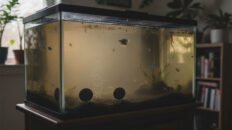
Aquarium water turns yellow for very specific reasons. It is not random, and it is not always harmless. Many tanks look “fine” at first, but yellow water is often the earliest visual warning that something in the system is drifting out of balance.
Sometimes yellow water is cosmetic. Other times, it signals organic overload, biological stress, or a slow decline that ends in algae, fish stress, or oxygen problems. The key is knowing which type you are dealing with before you react.

Is Yellow Aquarium Water Dangerous or Normal?
This is where most advice online fails. Yellow aquarium water is not automatically bad, but it is never meaningless.
There are two very different categories:
- Benign discoloration – usually from tannins released by driftwood or leaf litter
- Problem discoloration – caused by excess organics, waste buildup, or unstable biology
The mistake beginners make is assuming all yellow water is “natural” or all of it is “toxic.” The truth sits in between.
Why Aquarium Water Turns Yellow (The Real Causes)
1. Tannins From Driftwood or Botanicals
Driftwood, Indian almond leaves, seed pods, and other botanicals release tannins. These tint the water yellow or tea-colored.
This is not harmful to fish. In fact, many species prefer it. However, tannins do lower pH over time and can mask other problems if you assume everything is fine just because fish look calm.

2. Overfeeding and Dissolved Organic Waste
Food does not need to sit on the gravel to cause problems. When food breaks apart, dissolves, or is partially digested, it releases organic compounds that stain water yellow.
This is one of the most common hidden triggers, especially in tanks that otherwise look clean.
If your yellow water keeps returning after water changes, this is often the real cause.
Overfeeding aquarium fish is one of the fastest ways to create yellow water that never truly clears.
3. Dirty Substrate and Filter Mulm
Fine debris trapped in gravel, sand, or filter media slowly leaches organics into the water. This does not always create cloudiness. Instead, it causes gradual yellowing.
This often appears in tanks where:
- Water changes are frequent but shallow
- Substrate is never lightly vacuumed
- Filter media is clogged but not fully failing
4. Yellow Water After a Water Change
This confuses many aquarists. You do a water change, and within a day or two the tank looks yellow again.
That usually means the source is still inside the system. Water changes dilute symptoms but do not remove dissolved organics trapped in substrate, decor, or filters.

Why Yellow Aquarium Water Keeps Coming Back
If yellow water returns repeatedly, one or more of these is happening:
- Feeding volume exceeds biological processing capacity
- Organic waste accumulates faster than it is exported
- pH and bacterial activity are slowly shifting
- Water changes are correcting appearance, not cause
This is similar to what happens in tanks that smell bad or feel “off” despite looking stable.
Related deep dive: Why aquarium tanks smell bad even when they look clean.
Should You Fix Yellow Aquarium Water or Leave It Alone?
This depends entirely on the source.
| Cause | Safe to Ignore? | Recommended Action |
|---|---|---|
| Tannins from driftwood | Yes (if stable) | Optional carbon, monitor pH |
| Overfeeding waste | No | Reduce feeding, stabilize inputs |
| Dirty substrate/filter | No | Light vacuum, staged filter cleaning |
| After water change return | No | Remove internal organic source |
Yellow vs Brown vs Cloudy Aquarium Water (Quick Diagnosis)
Many aquarists lump all water discoloration into the same category, but yellow water is not the same as brown or cloudy water. Each points to a different underlying process.
- Yellow water usually comes from dissolved organics or tannins. The water stays clear but tinted.
- Brown water is typically heavy tannins or extreme organic buildup and often darkens rapidly.
- Cloudy water is a bacterial bloom or suspended particles, not dissolved compounds.
How Long Does Yellow Aquarium Water Last?
Yellow aquarium water does not follow a fixed timeline. How long it lasts depends entirely on what is feeding the discoloration.
- Tannin-based yellowing can last weeks or months and fade slowly as tannins exhaust.
- Waste-based yellowing will persist indefinitely until the source is removed.
If yellow water clears for a day or two after a water change and then returns, the tank is telling you the problem is internal, not in the tap water.
This is why repeated water changes often feel pointless. They reset appearance but not chemistry.
This distinction matters because the fix is different. Treating yellow water like cloudy water often leads to unnecessary chemicals, over-cleaning, or unstable parameters.
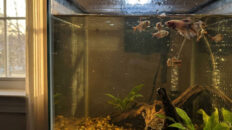
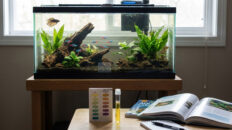
Yellow Aquarium Water in Planted & Low-Tech Tanks
In planted, low-tech, or ecosystem-style aquariums, yellow water is more common and often misunderstood.
Decaying plant matter, root exudates, and botanical-style setups release organic compounds that tint water without causing immediate harm.
However, plants do not magically delete waste. If yellowing increases over time, it usually means organic input is exceeding biological processing, even if plants look healthy.
This is where many low-tech tanks fail slowly: visually calm, biologically overloaded.
Why Water Tests Look “Fine” but the Water Turns Yellow
This frustrates many aquarists. Ammonia, nitrite, and nitrate test normal, yet the water keeps turning yellow.
That happens because most test kits measure inorganic nitrogen, not dissolved organic carbon.
Yellowing often comes from compounds that never spike ammonia but still fuel bacterial respiration, oxygen consumption, and long-term instability.
In other words, your tests are not lying. They are just incomplete.
Yellow Water + Smell = Crossing the Warning Line
Yellow water alone is not always a problem. Yellow water combined with a noticeable smell is different.
When odor appears, it usually means anaerobic zones, decaying organics, or oxygen stress are developing somewhere in the system.
This combination is an early warning sign that precedes algae outbreaks, fish stress, or nighttime oxygen drops.
If your tank smells “earthy,” “swampy,” or sour, yellow water should no longer be ignored.
How to Clear Yellow Aquarium Water Safely
Do not panic. Do not nuke the tank. Use a controlled system reset.
Step 1: Reduce Inputs
- Cut feeding by 30–50% for 7 days
- Feed in small, repeatable portions
Step 2: Remove Stored Organics
- Lightly vacuum visible debris (do not deep-clean)
- Rinse mechanical filter media in tank water
Step 3: Stabilize, Don’t Overcorrect
- Avoid massive water changes
- Keep temperature and parameters consistent
Optional: Activated Carbon
Carbon removes color quickly, but it does not fix the cause. Use it as a cosmetic aid, not a permanent crutch.
Does Yellow Water Harm Fish?
Tannins alone do not harm fish. Organic overload can.
Long-term yellowing from waste is often paired with:
- Lower nighttime oxygen
- Higher bacterial respiration
- Chronic low-level stress
Fish may survive but become more disease-prone over time.
Common Myths About Yellow Aquarium Water
“If the water is yellow, it must be natural”
False. Many failing tanks turn yellow before they turn cloudy.
“Just do more water changes”
This treats appearance, not cause. It often makes the cycle endless.
“Carbon fixes everything”
Carbon removes color, not biology.
Video Explanation (Optional)
FAQ: Yellow Aquarium Water
Is tea-colored aquarium water bad?
Not if caused by tannins. It can be beneficial for some fish.
Why does my aquarium water turn yellow overnight?
Rapid bacterial activity or dissolved organics often show up after lights-out.
Will yellow water go away on its own?
Only if the source stops adding organics. Otherwise, it returns.
Can yellow water cause algae?
Yes. Dissolved organics often feed algae long before you see blooms.
Yellow Water Is a Signal, Not a Mystery
Yellow aquarium water is not something to fear, but it is something to read correctly.
If you understand why it is happening, the fix is calm, controlled, and effective. Ignore it or misdiagnose it, and it quietly turns into a cycle of endless cleaning, unstable parameters, and stressed fish.
The goal is not crystal-clear water at all costs. The goal is a stable system that stays boring.


Add comment