
Before you buy a betta fish, you need to know something most pet stores never say out loud: the betta you see flaring in a tiny cup is not the betta you’ll get at home. Pet store bettas are often cold, stressed, underfed, and already damaged long before you walk in. If you want your betta to live more than a few painful weeks, this guide will show you what nobody tells you before you buy a betta fish — from cup damage and bowl myths to real betta tank setup, stress science, and beginner mistakes to avoid.
If you’ve searched for “before you buy a betta fish,” “betta fish care for beginners,” “betta fish bowl myth,” or “why bettas die early,” you’re already ahead of most first-time owners. This guide will help you understand what’s really happening in those cups, what conditions bettas actually need, and how to build a stable, betta-safe tank that supports their body, immune system, and personality from day one.
Why Before-You-Buy Betta Fish Research Matters
Bettas are often marketed as “easy starter fish” that can live in tiny bowls, unheated tanks, or decorative vases. The truth? Bettas come from warm, plant-heavy, low-flow habitats where the water volume is much larger than a coffee mug. When beginners bring home a stressed fish from a cold cup and place it in an unstable bowl, the outcome is predictable: clamped fins, dull color, loss of appetite, and early death.
Understanding betta needs before you buy one flips the script. Instead of reacting to sickness and stress after it happens, you prevent the damage from ever starting. That’s how you go from “my betta died after two weeks” to “my betta is thriving after three years.”
The Pet Store Betta Reality – What’s Really in That Cup
Most first-time owners fall in love with a betta at the exact worst moment of its life: when it’s sitting in a cramped plastic cup. Inside that cup, several things are happening at once:
- Cold water – No heater means temperatures often sit below 24°C (75°F).
- Ammonia buildup – Waste accumulates quickly in such a small volume.
- Low oxygen – Limited surface area and poor gas exchange.
- Chronic stress – Constant movement, bright store lights, and noise.
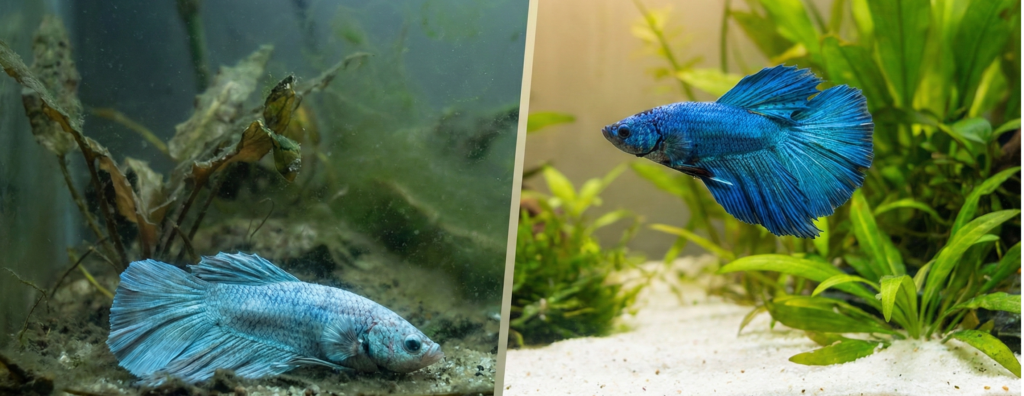
By the time you see that fish, its immune system is already suppressed. Fins may be weakened, gills irritated, and organs under long-term stress. What looks like a “healthy” fish flaring in the cup may actually be an animal in survival mode.
The Betta Bowl Myth – Why Small Containers Kill Slowly
Bettas are often advertised next to tiny bowls and stylish vases. The message is clear: “This fish doesn’t need much.” But bettas don’t die because they are fragile; they die because they are placed in environments that ignore how their biology actually works.
A bowl cannot provide:
- Stable temperature
- Consistent filtration
- Reliable oxygenation
- Room for natural exploration and resting spots
In a bowl, ammonia spikes quickly, temperature swings throughout the day, and oxygen levels drop overnight. These “micro-stress” events may not kill a betta in one day, but they slowly destroy its immune system. Over time, you see fin rot, lethargy, loss of color, and unexplained deaths — all blamed on the fish instead of the setup.
Temperature, Water, and the Betta’s Real Comfort Zone
Bettas are tropical fish. That means they do best in warm, stable water, usually between 24–28°C (75–82°F). Too cold, and their metabolism slows, their immune system weakens, and they become vulnerable to infections. Too inconsistent, and they experience constant stress.
A proper betta tank should include:
- A heater set to a stable temperature in the mid-to-upper 70s°F (around 25–27°C).
- A gentle filter that doesn’t blow the betta around but still circulates and cleans the water.
- Regular water changes to keep ammonia, nitrite, and nitrate under control.
Before you buy a betta, plan for a real aquarium, not a “desk ornament.” A tank size of 5 gallons (about 20 liters) or more gives your betta space to explore, rest, and display natural behaviors.
Betta Stress, Aggression, and Behavior – What You’re Not Told
Bettas are often sold as “aggressive fighting fish,” but most of their so-called aggression is actually fear, territorial defense, or stress. In poor conditions, bettas flare constantly, chase reflections, and hide or sulk at the bottom. These are not signs of a “tough fighter” – they’re signs of a fish that feels unsafe.
Key behavior signals to watch for:
- Stress stripes – Horizontal stripes that appear when the fish is scared or stressed.
- Clamped fins – Fins held close to the body, often a sign of discomfort or disease.
- Lethargy – Lying on the bottom, staying near the surface, or hiding constantly.
- Over-flaring – Nonstop flaring at reflections, tank walls, or shadows.
In a well-designed betta tank with plants, hiding spots, soft lighting, and stable conditions, you’ll still see flaring and personality — but you’ll also see relaxed exploring, gentle fin displays, bubble nests, and natural resting behavior.
How to Set Up a Betta-Friendly Tank (Before You Buy)
1. Choose a Proper Tank Size
A minimum of 5 gallons is strongly recommended. Larger volumes are more stable and forgiving, especially for beginners. Long tanks with more horizontal space are ideal because bettas like to cruise and explore.
2. Add a Heater and Gentle Filter
Use a reliable adjustable heater set around 25–27°C (77–80°F). Pair it with a gentle filter, such as a sponge filter or low-flow internal filter. The goal is clean, oxygenated water without a current that overwhelms your betta’s fins.
3. Build a Natural, Plant-Heavy Layout
Live or realistic silk plants, floating leaves, caves, and wood all help your betta feel secure. Plants and décor should provide:
- Shaded areas near the surface
- Resting spots like broad leaves or hammocks
- Hiding areas to break line-of-sight
4. Cycle the Tank Before Adding a Betta Fish
Before you buy a betta fish, your tank should be cycled — meaning beneficial bacteria are already converting ammonia into safer forms. A properly cycled tank prevents the “new tank crash” that kills many bettas within days of coming home.
5. Plan Your Water Change Routine
Stable water quality keeps your betta healthy. Most small betta tanks benefit from weekly partial water changes of 25–40%, depending on stocking and feeding. Regular maintenance is more important than chasing perfect numbers.
6. Research Tank Mates (Or Decide on a Solo Betta)
Bettas can be picky about tank mates. Some will tolerate calm companions; others will not. If you decide to add tank mates later, focus on peaceful species that don’t nip fins or crowd the betta’s territory.
7. Only Then… Go to the Store
Once your tank is cycled, heated, filtered, and decorated, then you’re ready to actually choose a betta. At that point, you’re choosing a fish for a home that already exists — not scrambling to build a home around a fish that’s already stressed.
Biggest Mistakes to Avoid Before You Buy a Betta Fish
- Buying a betta before setting up and cycling the tank
- Believing the “bowl myth” and skipping heater and filter
- Underestimating how much stress pet store cups cause
- Choosing a betta only by color, not by behavior and responsiveness
- Adding a betta to a busy community without planning compatibility
- Overfeeding in the first week “to make them stronger”
- Ignoring early warning signs like clamped fins or stress stripes
FAQ – Before You Buy a Betta Fish
Is a betta fish good for beginners?
Bettas can be great beginner fish if you treat them like a real tropical species, not a decoration. With a heated, filtered tank and proper setup, they’re hardy and interactive. Without those basics, they’re one of the easiest fish to accidentally harm.
What tank size should I have ready before buying a betta?
A 5-gallon (around 20 liters) tank is a smart minimum for long-term health. Larger volumes make temperature and water quality easier to control, especially for first-time betta owners.
Can I keep a betta in a bowl if I do frequent water changes?
Even with frequent water changes, bowls make it nearly impossible to provide stable temperature, filtration, and oxygenation. A small aquarium with a heater and filter is always a better choice.
How do I choose a healthy betta at the store?
Look for bright color, smooth swimming, responsive behavior, and fins that are open rather than tightly clamped. Avoid fish with torn, fuzzy, or melting fins, pale bodies, or labored breathing at the surface.
Do bettas really need a heater if my house is warm?
Room temperature often fluctuates more than you think, especially at night. A heater keeps your betta in a stable tropical range, which is critical for immunity and long-term health.
Can I add a betta to my existing community tank?
It depends on the tank mates, tank size, and the temperament of the individual betta. Fast, nippy fish or crowded setups are usually a bad match. Always research betta tank mates before mixing species.
People Also Ask About Betta Fish (Quick Answers)
Why do bettas die so quickly after purchase?
Because they are often already stressed and weakened in store cups, then placed into unstable bowls or uncycled tanks. The combination of pre-existing damage and poor post-purchase conditions leads to early death.
Are bettas really okay in cups at the store?
The cups are designed for short-term display, not long-term life. The longer a betta stays in a cup, the more its health and immunity decline.
What temperature should a betta tank be?
Most bettas do best between 24–28°C (75–82°F), with stable temperature more important than chasing a specific number inside that range.
Are bettas naturally aggressive?
Bettas can be territorial and defensive, especially against other bettas, but much of their “aggression” in captivity comes from stress, poor conditions, or the wrong tank mates.
Is a betta a good first pet for a child?
Only if an adult is committed to maintaining the tank. Bettas are living animals with real needs, not decorations. They can teach responsibility — but they require responsible setup first.
Internal Guides from FishTank Mastery
If you want to plan tank mates before you buy a betta, our in-depth guide on betta tank mates that actually work explains which species are safe companions and which combinations you should avoid completely.
For beginners building their very first tank, our general setup tutorials and tropical stocking guides help you understand how bettas fit into a broader community. If you’re coming from the world of “random pet store advice,” these resources give you a structured, science-backed foundation instead of guesswork.
Already keeping other tropical fish and thinking of adding a betta later? Our compatibility-focused content helps you rethink which species work well together and when it’s better to keep a betta as a solo showcase fish.
Scientific References
Many of the principles in this guide are grounded in research on fish stress, behavior, and environmental needs. Databases like FishBase provide habitat and temperature profiles for betta populations, helping aquarists match home conditions more closely to their natural range.
Studies on chronic stress and immune suppression in captive fish, available through platforms such as ScienceDirect, support the idea that prolonged exposure to poor water quality and low temperatures dramatically increases disease risk — a common issue for cup-kept bettas.
Research published on SpringerLink explores how tank size, environmental enrichment, and social context influence aggression and territorial behavior, reinforcing why cramped bowls and barren tanks bring out the worst in bettas.
Work compiled in journals hosted by Oxford Academic further explains how temperature stability and oxygen availability affect metabolic health and recovery from stress in tropical fish, highlighting the importance of heaters and filtration for long-term betta care.
Additional articles in aquatic biology and welfare literature, including sources like FEMS Microbiology Letters, emphasize the role of microbial communities, biofilm, and plant cover in supporting a balanced, low-stress environment — exactly the type of environment a betta-friendly tank should aim to provide.
Watch Next – Betta & Beginner Aquarium Guides
If you’re serious about doing things right before you buy a betta, these videos will help you go deeper into tank mates, beginner setups, and dangerous fish to avoid:
- Betta Tank Mates That Actually Work
- Betta Tank Mates Playlist
- Beginner Aquarium Masterclass
- Best Fish for Small & Nano Tanks
- Don’t Buy These Aquarium Fish
Before you buy a betta fish, give yourself and your future betta an advantage: build the right environment first, understand the science behind stress and survival, and treat your betta as a living animal with real needs — not a colorful accessory in a cup.