
Buying fish online? Think again. That “rare monster fish” listing you saw at 2 A.M. might look tempting—but for most aquarists, it’s a one-way ticket to chaos. Every year, hobbyists click “Add to Cart,” only to end up with an aquarium full of destruction, aggression, and regret. Today, we’re exposing the 10 deadliest monster fish sold online—species so aggressive, predatory, or simply unmanageable that they’ve earned legendary status for all the wrong reasons.
The Online Aquarium Trap
It starts innocently enough—you’re browsing through exotic listings, dreaming of a “showpiece fish” that’ll make your tank look legendary. You see names like Wolf Cichlid, Snakehead, Arowana, or Goonch Catfish. The seller promises they’re “community safe if raised together.” The photos are stunning, the price seems reasonable, and your imagination does the rest. Then reality hits: shipping stress, hidden aggression, and a fish that grows faster than your filter can handle.
Researchers have long warned about the psychological impulse behind online pet buying. A 2022 study published in Applied Animal Behaviour Science found that over 60% of aquarists who purchased predatory species online underestimated their adult size or aggression level. In most cases, the problem wasn’t carelessness—it was misinformation.
Why “Monster Fish” Are So Dangerous
Monster fish fascinate aquarists because they’re powerful, ancient, and visually striking. But in the confined space of an aquarium, their instincts turn lethal. Territorial dominance, feeding aggression, and hormonal stress all lead to violence. According to Springer’s Environmental Biology of Fishes (2021), predator species exhibit “reactive aggression” under spatial confinement—especially when tankmates intrude on feeding zones or perceived territories.
Many of these fish also produce high ammonia loads, grow rapidly beyond expectations, and require advanced filtration. They aren’t “evil”—they’re just built for survival in rivers, not living rooms.
Top 10 Deadliest Monster Fish Sold Online
#10 – Snakehead (Channa sp.)
The infamous Snakehead tops every banned species list for good reason. It’s a top predator capable of breathing air and moving on land. In the U.S., owning or transporting one is illegal under the Lacey Act. Snakeheads have destroyed ecosystems from Maryland to Florida after accidental releases. In home tanks, they quickly outgrow enclosures, eat tankmates, and may even jump out in search of prey. Avoid at all costs.
#9 – Dovii (Wolf Cichlid)
Known as the “wolf of freshwater,” the Dovii is intelligent, territorial, and relentless. Males reach over 24 inches and can rearrange rockwork or crack glass heaters. What begins as curiosity turns into dominance displays—charging, biting, and killing. Studies show that Parachromis dovii exhibits elevated testosterone spikes when confined, amplifying aggression with maturity.
#8 – Red Tail Catfish
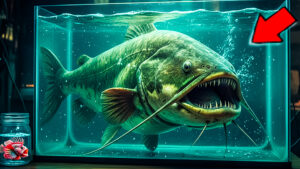
Cute as a 2-inch juvenile, the Red Tail Catfish becomes a 3-foot tank destroyer in under a year. Its growth rate outpaces filter capacity and tank size. Even in public aquariums, they’re difficult to manage. A single yawn can vacuum up tankmates whole. Once purchased online, returning or rehoming them is almost impossible.
#7 – Butterkoferi (Tilapia Buttikoferi)
Nicknamed the “Evil Genius” of African cichlids, this species combines intelligence with calculated aggression. Butterkoferi often stalks rivals for days before launching precise attacks. They recognize reflections and even bite during water changes. A 2020 behavioral analysis found their cognitive mapping ability rivals that of oscars and jack dempseys—making them relentless territory controllers.
#6 – Jaguar Cichlid
A beautiful predator with leopard-like markings, the Jaguar Cichlid is all muscle and attitude. It doesn’t just defend space—it patrols it. These fish require enormous tanks (100+ gallons minimum) and solo setups. In groups, they trigger “competitive killing,” where weaker individuals are eliminated until one remains dominant.
#5 – Flowerhorn
The Flowerhorn is a man-made hybrid bred for color and aggression. While visually stunning, they’re extremely territorial and will attack anything—even hands near the glass. Their intelligence and dominance make them interesting but dangerous to cohabitate. Keeping one requires experience, patience, and strong filtration for the bio-load they create.
#4 – Arowana
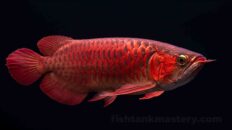
The “dragon fish” of aquariums, the Arowana is revered for beauty and myth—but feared for cost and care complexity. These surface predators jump with explosive strength, often breaking lids. They eat live prey and demand huge horizontal swimming space. Improper tank dimensions cause spine deformities, making most hobbyists regret this expensive purchase.
#3 – Wolf Fish
True to its name, the Wolf Fish (Hoplias spp.) is a torpedo with teeth. In the wild, it’s a solitary ambush predator. In captivity, it views anything moving as food. Online sellers often market juveniles as “docile,” but within months, they turn aggressive, sometimes attacking nets or hands. Their survival instinct is unmatched—and uncontrollable.
#2 – Ornate Bichir
Prehistoric, fascinating, and utterly untrustworthy, the Ornate Bichir breathes air and walks using pectoral fins. It looks peaceful until nightfall, when hunting instincts kick in. Bichirs devour smaller fish and even attempt to escape tanks. They require tightly sealed lids and heavy oxygenation. Many buyers lose them within weeks due to escapes or aggression injuries.
#1 – Goonch Catfish
The apex predator of rivers like the Ganges, the Goonch Catfish is a literal monster. Growing beyond 6 feet in the wild, it’s impossible to house safely indoors. Some online listings ship juveniles under 10 inches, misleading buyers about long-term size. They quickly outgrow any private tank and can crush glass panels under their own weight. Even public aquariums consider them a logistical nightmare.
3 Myths That Keep People Buying Monster Fish
- “They grow to the size of the tank.” False. Most predatory species keep growing regardless of volume—leading to deformation, stress, and aggression.
- “If raised together, they’ll stay peaceful.” Wrong. Juvenile harmony collapses once maturity and dominance behaviors develop.
- “I’ll upgrade later.” Rarely happens. The fish usually outgrows the setup long before the owner can invest in a larger tank.
How to Avoid the Trap
1️⃣ Research before buying. Check maximum size, aggression rating, and filtration needs.
2️⃣ Avoid impulse buys. Late-night scrolling leads to emotional decisions, not logical ones.
3️⃣ Support local breeders. They can verify origins, legality, and compatibility.
4️⃣ Never trust “community safe” tags. Many online listings exaggerate to make sales.
5️⃣ Think ecosystem, not ego. A balanced tank is more impressive than a glass cage of chaos.
The Science of Aggression in Captive Fish
Behavioral aggression in fish is heavily linked to environmental stimuli—space, light intensity, and feeding competition. The Nature Scientific Reports (2020) confirmed that confined predator fish display heightened cortisol and dopamine cycles, triggering repeated attack patterns even without provocation. In simple terms: the smaller the space, the bigger the temper.
Understanding this helps aquarists design tanks around behavioral biology instead of aesthetics. Wide open layouts, line-of-sight breaks, and species-appropriate lighting all reduce tension. Buying monster fish online skips this process entirely, placing powerful animals into unfit habitats.
Real Hobbyist Stories
Every experienced fishkeeper knows someone who’s learned this lesson the hard way. From Wolf Cichlids smashing heaters to Snakeheads jumping into sump filters, these stories aren’t rare—they’re warnings. One aquarist reported spending $400 on a Red Tail Catfish that outgrew its 75-gallon tank in 3 months, forcing an urgent rehome to a zoo facility. Another discovered his Flowerhorn destroyed both tank dividers and power cords in a single night.
Final Thoughts
The truth about buying fish online is simple: if it sounds legendary, it’s probably lethal. The internet removes natural caution—just one click can turn your aquarium from peaceful to perilous. Monster fish deserve respect, space, and expertise. Until then, admire them from afar and build tanks that thrive in harmony, not havoc.
Scientific References
- Applied Animal Behaviour Science (2022): Consumer behavior in online exotic pet purchasing.
- Environmental Biology of Fishes (Springer, 2021): Territorial aggression and confinement stress in predator species.
- Nature Scientific Reports (2020): Neural mechanisms behind aggression escalation under restricted environments.
Watch the Video & Subscribe
See every species in action and learn the warning signs before you click “Add to Cart.” Watch now on FishTank Mastery YouTube Channel and join a community of aquarists who value smart fishkeeping over shock factor. Together, we can stop impulse buying and build healthier, balanced aquariums worldwide.
Continue Learning: Monster Fish, Aggression & Smart Fishkeeping
If this guide opened your eyes to the dangers of online fish buying, you’ll definitely want to explore the next part of our predator series — 11 Monster Fish That DESTROY Tanks (Viewer Picks). It features real hobbyist experiences with tank destroyers like Dovii, Snakehead, and Flowerhorns. You’ll see how fast “cool looking” fish can turn community tanks into underwater warzones — and how experienced aquarists learned to restore balance.
Want to understand aquarium aggression at a deeper level? Our Top 10 Most AGGRESSIVE Aquarium Fish article dives into the behavioral science behind predatory species and explains why some fish become violent even in perfect water conditions. It’s the ideal next read for anyone serious about preventing territorial dominance and understanding fish psychology.
But aggression isn’t only found in large predators. Even “peaceful” fish can cause hidden chaos! Check out 7 PEACEFUL Tiny Fish You’ll REGRET Having to discover how guppies, barbs, and tetras can secretly bully tankmates through stress behavior and fin-nipping — subtle forms of aggression that often go unnoticed until it’s too late.
If you’re just starting your aquarium journey and want to avoid the mistakes that come with “rare” or “monster” fish, our Your FIRST Fish Tank? 10 Beginner Aquarium Fish You WON’T Regret Buying guide offers a safe path. Learn which beginner fish truly stay peaceful, thrive in small community tanks, and help you build confidence before tackling advanced predator setups.
Finally, don’t miss 7 Aggressive Schooling Fish You Should Avoid. It uncovers the surprising truth behind so-called “peaceful schooling fish” that actually harass or injure others in tight spaces. Together, these guides form your complete blueprint for understanding aquarium aggression — from hidden micro-bullies to legendary monster predators — and mastering harmony in every tank.
FAQ (People Also Ask)
Is it safe to buy “monster fish” online?
Only if you fully understand adult size, aggression, and legal restrictions. Many predatory species outgrow home aquariums fast, create huge bio-loads, and attack tankmates. Shipping stress also increases aggression and disease risk. Research before you buy, verify legality in your region, and plan a species-only setup with adequate filtration and tank length.
Are Snakeheads legal to keep in the United States?
No. Snakeheads (Channa spp.) are prohibited under the U.S. Lacey Act—illegal to import, transport, or possess. They are invasive, breathe air, and can move across land, making escape and ecosystem damage a serious risk. If you encounter online listings, avoid them and report suspicious sales to local authorities or your state fish & wildlife agency.
Will monster fish “stay small in a smaller tank”?
That’s a myth. Most species continue growing, and restrictive tank size causes stunting, deformities, stress hormones, and increased aggression. Even juveniles that co-exist peacefully often turn territorial at maturity. Always plan for the adult footprint: tank length, filtration capacity, diet, and solitary housing where appropriate.
What should I do if a shipped predator fish arrives stressed or aggressive?
Quarantine first. Dim the lights, provide tight lids, add hides, and avoid feeding for 24 hours. Test ammonia and nitrite; perform small, temperature-matched water changes if needed. Observe respiration, buoyancy, and injury. Never rush tankmates in—stabilize the fish alone until eating and behavior normalize, then evaluate long-term housing.
Can I return or rehome a monster fish that outgrew my tank?
Returns are rare. Contact local public aquariums, advanced hobbyists, or specialty stores for rehoming assistance. Never release fish into the wild—it’s illegal and harms ecosystems. If rehoming fails, consider upgrading to a species-appropriate tank or working with clubs that organize responsible adoptions for large predatory fish.
What are safer alternatives to buying aggressive predators online?
Choose hardy, beginner-friendly species with predictable adult sizes and calmer temperaments. Research “beginner community fish” and stick to local, reputable sources where you can see fish health and ask questions. Build your skills first—filtration, water quality, and aquascape design—before attempting any large predatory species.