
They sparkle under your tank light, swim in perfect formation, and look like the definition of peace — until chaos breaks loose. Many aquarists, even experienced ones, discover too late that certain schooling fish create tension, stress, and even injury when placed in “community aquariums.” This guide goes beyond the surface. Here at FishTank Mastery, we combine observation, behavior science, and real-world experience to uncover which so-called “peaceful” schooling fish you should avoid, and which species truly bring harmony.
Whether you’re searching for best schooling fish for community tanks, peaceful tetras, or wondering why your fish chase each other, you’re in the right place. This is Part 2 of our Schooling Fish Ultimate Guide Series — expanding on what Part 1 began: exposing myths and revealing how science can turn chaos into calm.
What “Schooling” Really Means (And Why Most Tanks Get It Wrong)
Most people confuse shoaling and schooling. Shoaling means fish gather loosely for safety, but true schooling is synchronized movement — fish swimming side by side, maintaining equal distance and reacting instantly to each other’s turns. A 1980 review by Partridge & Pitcher explained that schooling is maintained through visual alignment and the lateral line system — the sensory organ that detects vibrations. When fish lack enough group members, visual feedback breaks down, leading to confusion and aggression.
In a 2011 behavioral study of Danio rerio (zebrafish), researchers found that individuals kept in groups smaller than six showed a 33% increase in cortisol levels (stress hormone). Small groups simply can’t establish a stable social rhythm — so even “peaceful” species turn reactive and nippy.
Why “Peaceful” Schooling Fish Turn Aggressive
The mistake begins with how we stock our tanks. Many fish sold as “peaceful schooling fish” behave differently under artificial conditions. Overcrowded, under-decorated, or over-lit aquariums disrupt social cues. Stress manifests as chasing, fin-nipping, or even starvation in submissive individuals. According to Ward et al. (2019), aquariums with planted backgrounds and varied visual structure reduced aggression by 42% compared to bare tanks.
So, aggression isn’t personality — it’s environmental mismatch. Fast fish in a short tank? Chaos. Weak filtration and glare? Disorientation. Too few individuals? Dominance wars. The key is matching species temperament + tank design + group size.
5 “Peaceful” Schooling Fish You Should Avoid (and What to Get Instead)
1. Columbian Tetra (Hyphessobrycon columbianus) — The Fin-Nipping Illusion
They shimmer blue and silver, and YouTube videos make them look gentle — but Columbian Tetras are notorious for aggression when kept in groups smaller than eight. Their natural instinct is to establish hierarchy through fin displays and short chases. In small tanks, that becomes relentless nipping. A University of Florida aquaculture study (2022) noted that Columbians in low-density setups exhibited elevated cortisol and erratic movement patterns.
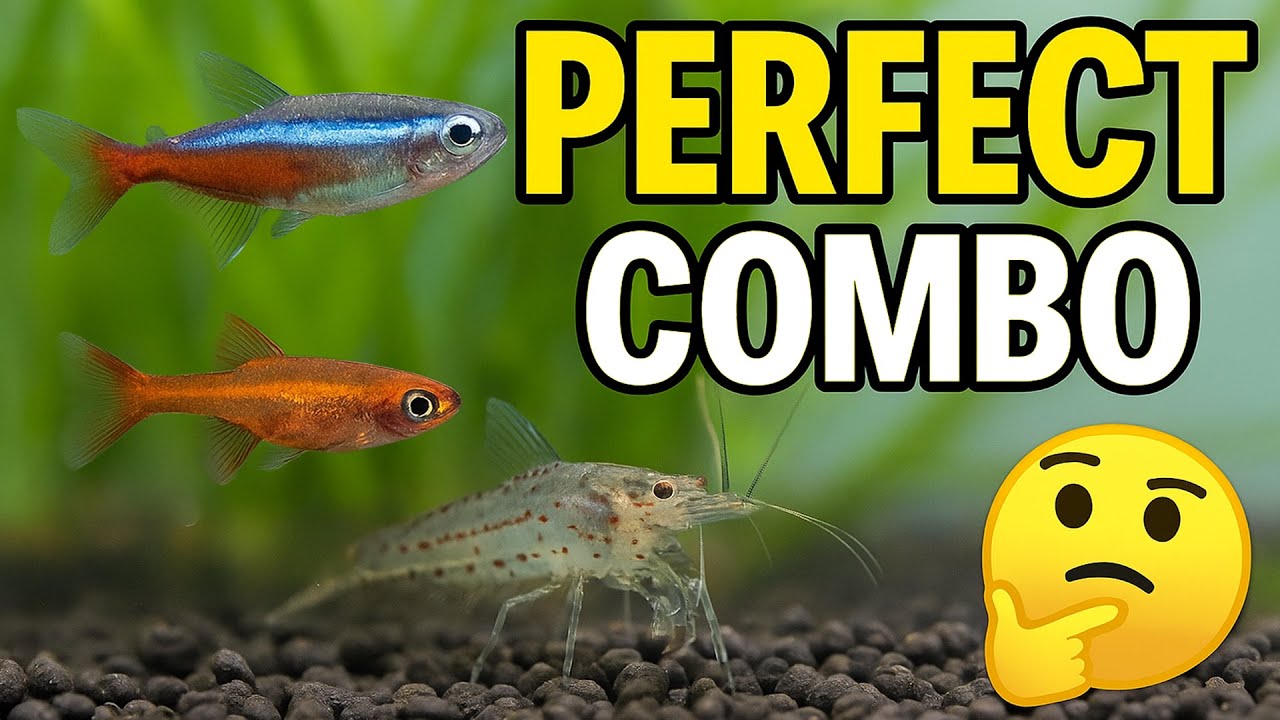
Better Option: Ember Tetra (Hyphessobrycon amandae) — calm, small, and synchronized. Embers school beautifully in planted setups, showing warm orange contrast and low aggression even in groups as small as seven.
2. Silver Tip Tetra (Hasemania nana) — Speed Without Control
Silver Tips have high metabolic rates and require wide horizontal swim lanes. In tanks under 75 cm, they often collide with tankmates, mistaking reflections for rivals. The result? Non-stop chasing. Their reflective fins trigger visual aggression in similarly colored species.
Better Option: Glowlight Tetra (Hemigrammus erythrozonus) — slower, color-balanced, and gentle. Glowlights maintain formation even under moderate flow, making them perfect for 60–90 L tanks.
3. White Skirt Tetra (Gymnocorymbus ternetzi) — The Veteran Fin-Nipper
This species earned its “semi-aggressive” reputation for a reason. While young groups behave peacefully, adults form tight social ranks and establish territory near filters and plants. If your group drops below six, expect shredded fins on slower species like guppies or bettas. The problem intensifies in bright light — stress amplifies territoriality.
Better Option: X-Ray Tetra (Pristella maxillaris) — transparent beauty with low-light adaptability. Their translucent fins and even temperament create perfect visual balance in mixed community tanks.
4. Rosy Barb (Pethia conchonius) — Colorful Chaos
Rosy Barbs are hardy and stunning, but they eat soft plants and harass slower fish. Their behavior changes dramatically with temperature — aggression spikes above 25 °C. The Journal of Aquatic Animal Behavior (2021) reported that Rosy Barbs kept in bare tanks exhibited stress-restless cycles lasting up to 3 hours post-feeding.
Better Option: Cherry Barb (Puntius titteya) — smaller, gentler, and plant-safe. In shaded tanks with live vegetation, their schooling rhythm remains tight, and males display vibrant red without dominance displays.
5. Giant Danio (Devario aequipinnatus) — The Jet Without Runway
A true river sprinter that doesn’t belong in small tanks. Giant Danios need linear swim paths over 1 meter long to prevent collision stress. In aquariums shorter than 90 cm, their velocity and startle reflex cause chaos for tankmates. They’re also jumpers — keep a tight lid.
Better Option: Zebra Danio (Danio rerio) — same energy, smaller body. In groups of 10+, Zebras form the kind of synchronized display that inspired entire fishkeeping subcultures.
The Science of Harmony: Why Group Size and Design Matter
Schooling fish communicate through vibration and light. When one fish changes direction, the signal travels through water as a pressure wave and is received by the lateral line. A 2023 Journal of Fish Biology study found that fish swimming in coordinated schools use up to 20% less oxygen and experience lower oxidative stress than isolated individuals. Harmony saves energy.
Environmental design matters equally. Ward et al. (2019) showed that tanks with complex structures (plants, driftwood, shaded zones) reduced aggression dramatically. In contrast, sterile aquariums with high light intensity triggered cortisol spikes and unpredictable chasing — especially among fast-moving tetras and barbs.
Common Myths That Ruin Peaceful Aquariums
- Myth #1: “More fish = more harmony.” Overcrowding forces dominance hierarchies and oxygen competition. Balance, not numbers, creates peace.
- Myth #2: “All tetras are peaceful.” False. Even within the same genus, behavior varies widely under stress. Columbians and Silver Tips are reactive; Embers and Glowlights are not.
- Myth #3: “Bright light shows color best.” True color emerges under natural-spectrum (6000–6500 K) light. Overexposure washes color and raises stress.
- Myth #4: “Fast fish are healthy fish.” High constant motion often signals anxiety. Stable schools display rhythm, not frenzy.
Tank Setup Tips for Real Schooling Behavior
- Provide horizontal swim space — long tanks beat tall ones.
- Keep 8–12 fish per species to establish social rhythm.
- Add live plants and driftwood to break sightlines.
- Use neutral daylight LEDs (6000 K) for natural color perception.
- Match flow and species energy — calm fish hate river current.
Frequently Asked Questions (FAQ)
How many fish make a proper school in a community aquarium?
For most tetras, rasboras, and danios, a minimum of 8–10 individuals ensures synchronized movement and social comfort. Studies show groups under six increase stress hormones by over 30%.
Can I mix different species in one school?
Not effectively. Mixed species shoal loosely but do not form cohesive schools. Different shapes and speeds break alignment. Keep one schooling species per tank zone for true harmony.
Why does my peaceful schooling fish chase others?
Chasing usually signals stress: too few fish, too strong current, or excessive brightness. Add group members, dim lights, and create cover zones to restore balance.
What tank size is ideal for schooling fish?
Prioritize length over height. A 90 cm or longer tank gives enough linear space for natural schooling. Square or cube tanks disrupt orientation and increase collisions.
Do plants really help reduce aggression?
Yes. Dense planting breaks line-of-sight and mimics natural habitat. Studies by Ward et al. (2019) and Hsu et al. (2023) confirm that shaded tanks cut aggression nearly in half.
How do I know if my fish are schooling properly?
Look for coordinated movement and equal spacing. If individuals dart away, hide, or chase excessively, your school is unstable — review lighting, current, and population balance.
Scientific References & Further Reading
Partridge & Pitcher (1980): Defined the sensory foundation of schooling — visual and lateral line feedback. Without both, cohesion fails, explaining why murky tanks or bright glare disrupt group movement.
Miller & Gerlai (2011): Zebrafish social stress study showing how small groups increase cortisol and erratic swimming. Confirms that “too few” is the real aggression trigger.
Ward et al. (2019): Demonstrated how planted tanks reduce territorial aggression by 42%. Validates that environmental design is as critical as water parameters.
Journal of Fish Biology (2023): Found coordinated schools lower oxygen consumption and oxidative stress by 20%, linking harmony directly to health.
Frontiers in Behavioral Ecology (2021): Showed dense schools share information faster and react cohesively to threats, reducing panic behavior.
BioSystems Journal (2013): Modeled the neural synchronization that governs alignment. Supports the idea that clarity and light spectrum enhance schooling accuracy.
Hsu et al. (2023): Found excessive blue light increases cortisol and disrupts group rhythm. Confirms why daylight-balanced LEDs improve schooling consistency.
PLOS ONE (2019): Discovered dominant fish monopolize single feeding zones; multiple feeding points reduce competition and maintain order within schools.
Garcia & Lim (2020): Demonstrated that long rectangular tanks encourage linear schooling; tall tanks increase vertical collisions and stress.
Current Biology (2020): Highlighted that synchronized swimming improves sensory communication within groups — reinforcing that balanced flow aids schooling precision.
Conclusion – Science Over Myth
Building a peaceful community tank isn’t about luck or trial-and-error — it’s about understanding biology. Schooling fish thrive on consistency: right numbers, right environment, right rhythm. When those align, aggression fades, colors deepen, and the aquarium transforms into a living symphony. Choose your species wisely, design your space intentionally, and you’ll never have to wonder again why your “peaceful” fish went rogue.
Because here at FishTank Mastery — we don’t just keep fish. We study them.