

How Long Does Cloudy Aquarium Water Take to Clear?
How long does cloudy aquarium water take to clear? If your new tank looks milky or hazy, this is usually normal, but the real risk often starts after the water looks clear. In this guide, you’ll learn the true timeline, what’s happening biologically, what to avoid, and when it’s actually safe to add fish.
Watch the video first (then use this guide)
If you prefer seeing real examples, the video below walks through the same timeline and shows why “fixing it fast” is the most common beginner mistake. Then come back here for the step-by-step plan, tables, and a clear decision checklist.
Why new aquarium water turns cloudy
In most new setups, cloudy water is not “dirt.” It’s biology. A brand-new aquarium has fresh surfaces, fresh water, and often a brand-new filter. That means your tank is a blank world that has to build a stable microbial community from scratch.
The most common cause: a bacterial bloom
A bacterial bloom happens when free-floating bacteria multiply quickly in the water column. They’re not the final, stable bacteria you want living on your filter media and surfaces. They’re the “rapid response” bacteria that explode when there’s food available (ammonia, dissolved organics, new tank dust, or even heavy feeding).
This bloom often shows up when:
- You’ve just set up the tank (new surfaces, new filter, no established biofilm yet).
- You added fish too early or fed too much (extra waste = extra bacterial fuel).
- You cleaned the filter aggressively (you removed the bacteria that should have lived there).
- You used products that change water chemistry fast (sometimes triggering instability).
Other causes that look similar (but behave differently)
- Dust (sand or substrate haze): usually clears faster with mechanical filtration and patience.
- Green water (algae bloom): cloudy but green tinted, usually tied to strong light and nutrients.
- White stringy particles: can be biofilm fragments or fine debris stirred up by flow.
The key difference is timing and pattern. A bacterial bloom often appears around early cycling, may last several days, then “magically clears.” That magic is not magic. It’s the system shifting bacteria from floating in the water to anchoring on surfaces and in the filter, plus the tank stabilizing nutrient availability.
Cloudy water timeline (Day 1 to Day 30)
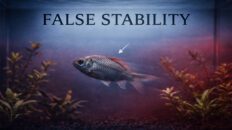
Most beginners think the goal is “clear water.” The real goal is stable biology. Clear water is just a visual effect. It can arrive before stability, which is why new tanks sometimes crash when they look perfect.
| Phase | What you see | What’s actually happening | Best move |
|---|---|---|---|
| Day 1 to 3 (Shock Phase) | Cloudy or milky water, “worst” looking stage | Early microbial bloom, unstable chemistry, no established biofilm | Do not overreact. Keep feeding light. Let the filter run. |
| Day 4 to 10 (Illusion Phase) | Water begins clearing, looks “fixed” | Bacteria shift to surfaces, but nitrifying capacity may still be weak | Resist cleaning. Test water. Stability beats sparkle. |
| Day 10 to 30 (Make-or-Break Window) | Clear water, then sudden stress or losses | Delayed instability from interruption (filter reset, over-cleaning, big changes) | Protect the biofilter. Make small, consistent moves only. |
Typical clearing time: many new tanks clear within 3 to 7 days. Some take up to 2 weeks. If it’s recurring (clear, then cloudy again), that’s usually a sign of repeated disturbance, overfeeding, or an uncycled system being pushed too fast.

Why clear water can be the most dangerous moment
Here’s the trap: when water turns clear, beginners assume the tank is “done.” But the nitrogen cycle and biofilm growth work on time, not motivation. You can’t hustle bacteria into existence by cleaning harder or changing more water.
In many new tanks, the water clears while the biological filter is still building. If you:
- add fish quickly because it “looks fine,”
- clean the filter because you want it pristine,
- do large water changes repeatedly to chase clarity,
you can create a delayed crash weeks later. The tank looks stable, then suddenly fish show stress, gasping, clamped fins, flashing, or losses. That’s why your video’s core message matters: cloudy water is often harmless, but the reactions can be harmful.
What to avoid when your new aquarium is cloudy
This section is the difference between a stable tank and a frustrating loop.
Avoid #1: Overcleaning the filter
It feels logical: “Cloudy water means dirty filter.” But in a new tank, your filter is a nursery for beneficial bacteria. If you scrub media, replace it, rinse it under tap water, or “make it spotless,” you remove the very biology that would have stabilized the tank.
Avoid #2: Big or frequent water changes to chase clarity
Water changes can reduce ammonia and protect fish, so they’re not “bad.” The problem is using them like a panic button. Constant large changes can keep a new tank from developing a stable microbial balance, and they can encourage repeated blooms by constantly changing dissolved organics and bacterial food availability.
Avoid #3: Running carbon like it’s a cure
Activated carbon helps with certain dissolved compounds, odors, and tannins, but it doesn’t “fix” cycling biology. When carbon becomes the strategy, beginners often ignore the real issue: the biofilter needs time and consistency.
Avoid #4: Adding clarifiers and quick fixes as a first move
Some clarifiers can clump particles for filtration, but they don’t solve biological instability. Worse, they can give you false confidence. The tank looks clear, you add fish, and the underlying cycle is still weak.
Avoid #5: Overfeeding because “the fish seem hungry”
In early setups, extra food becomes extra waste, which becomes extra bacterial fuel. That can prolong cloudiness and strain an immature biofilter. Feed lightly during the early window. This is one of the simplest stability hacks in the hobby.
Do this instead: the calm, effective plan
Step 1: Identify the type of cloudiness
- White/milky: commonly bacterial bloom.
- Brownish haze after substrate: dust, usually mechanical.
- Green tint: algae bloom, light-driven.
Step 2: Keep the filter running and protect the media
Do not replace filter media in a new tank unless it’s truly falling apart. If you must rinse, use old tank water from a water change, gently, and only when flow is severely reduced.
Step 3: Reduce feeding and reduce “hands in the tank”
Every adjustment is a disturbance. Your job is to stop the disturbance loop. Stable tanks are built by consistency, not constant correction.
Step 4: Use testing to make decisions, not the water’s appearance
Cloudy water can be normal. Toxic water can be crystal clear. Use ammonia and nitrite tests to guide what you do next, especially if fish are already in the tank. If ammonia or nitrite is elevated, consider small water changes to protect fish, but keep your actions measured and consistent.
Step 5: Improve oxygenation and flow (without chaos)
Higher oxygen supports beneficial bacteria and helps fish handle early instability. You can increase surface agitation or add an air stone, but avoid huge changes in flow that kick up debris continuously.
When to worry: cloudy water vs dangerous fish behavior
Cloudy water alone is often harmless. Fish behavior is your early warning system. If you see any of these, treat it as a serious signal:
- gasping at the surface
- rapid gill movement
- clamped fins, hiding, refusing food
- flashing (rubbing on objects)
- sudden lethargy in multiple fish
Those signs often point to water quality stress, low oxygen, or a weak cycle that can’t process waste yet. This is where slow, protective actions help more than panic actions.
When is it safe to add fish to a new aquarium?
Use this simple rule: do not add fish based on clarity. Add fish based on stability. If your tank is cycling, add fish only when the system can consistently handle waste without spikes.
Practical guidance:
- If the tank is fishless cycling, wait until ammonia and nitrite are consistently controlled before stocking.
- If fish are already in the tank, stock slowly and feed lightly until the biofilter catches up.
- If cloudiness keeps returning, treat that as “system still settling” and pause stocking.
Cloudy water myths that confuse beginners
Myth 1: Cloudy water means your tank is dirty
In new tanks, cloudiness is often bacterial growth, not dirt. Dirt settles. Bacterial haze can linger, shift, and then clear suddenly as surfaces develop biofilm.
Myth 2: Water changes fix the cycle
Water changes can protect fish, but they don’t magically create a mature biofilter. Stability comes from bacterial colonization on media and surfaces, which takes time.
Myth 3: Clear water means the tank is safe
Clear water can happen before your system is stable. That’s the illusion phase. The goal is predictable, consistent water chemistry and biological filtration, not just visual clarity.
Scientific truths about aquarium stability
Truth 1: Nitrifying bacteria are slow builders, not instant fixes
The bacteria that process ammonia and nitrite grow more slowly than the fast bloom bacteria that cloud water. That’s why early visual changes can move faster than true cycle stability. This is also why “quick reaction” often backfires: you’re interrupting the slow builders while fighting the fast bloomers. Read the study
Truth 2: Biofilms are the real filter, not the plastic box
A stable aquarium relies on biofilm communities attached to surfaces and filter media. Those communities need time to establish and diversify. When you repeatedly overclean or replace media, you reset parts of that community and extend instability. Read the study
Truth 3: Microbial communities shift as nutrients shift
In early tanks, dissolved organics and ammonia can swing rapidly. Microbes respond to available food. Blooms and clearing events are often signs of microbial succession, not “random tank moods.” When you chase clarity aggressively, you can keep the system from settling into a stable community. Read the study
Truth 4: Stress is biological, not psychological (for fish)
Fish respond to unstable water and low oxygen quickly, even when water looks clean. Stress can weaken immune defenses and make “mystery deaths” more likely weeks after the tank looked fine. Stability protects fish more than crystal-clear water ever will. Read the study

People Also Ask
- How long does a bacterial bloom last in a new aquarium?
Often 3 to 7 days, sometimes up to two weeks, depending on feeding, filtration maturity, and how often the tank is disturbed. - Is cloudy water harmful to fish?
Cloudiness itself is usually not harmful, but the underlying cause (ammonia, nitrite, low oxygen) can be. Watch fish behavior and test water. - Should I do a water change if my new tank is cloudy?
Only if tests or fish behavior suggest stress. Avoid frequent large changes just to chase clarity. - Why did my aquarium clear and then get cloudy again?
Often repeated disturbance, overfeeding, or filter cleaning resets stability and triggers another bloom. - Can I add fish if the water is cloudy?
Do not decide based on clarity. Decide based on stability and whether the biofilter can process waste reliably.
FAQ
1) How long does cloudy water last in a brand new aquarium?
Most new tanks clear in 3 to 7 days. If it’s closer to 10 to 14 days, that can still be normal, especially if the tank is being fed, stocked, or disturbed. The key is whether the tank is trending toward stability, not whether it looks perfect today.
2) What is the fastest safe way to clear cloudy water?
The fastest safe method is usually the calm method: protect your filter media, reduce feeding, keep consistent flow and oxygen, and let the system mature. Quick chemical fixes often create the illusion of success without building stability.
3) Is cloudy water always a bacterial bloom?
No. Substrate dust, microbubbles, green water algae blooms, and stirred debris can all create cloudiness. The timeline and appearance help you identify which one you have. White haze that appears early and clears in days often points to a bacterial bloom.
4) Why does my tank look clear but still feel “off”?
Because clarity is not stability. Your tank can look crystal clear while ammonia, nitrite, oxygen, or microbial balance is still unstable. That’s why fish can struggle even when the water looks perfect.
5) When should I actually clean the filter in a new tank?
Only when flow is severely reduced. In the early weeks, the filter is building a bacterial colony. Clean gently in old tank water, avoid tap water, and do not replace media unless it’s falling apart.
6) What’s the biggest beginner mistake with cloudy water?
Reacting too early. The urge to “fix it now” causes overcleaning, big changes, and constant adjustments that interrupt the exact biology that would have stabilized the tank.
Fix the whole system with these FishTank Mastery guides
If you’re seeing cloudiness plus confusing advice from pet stores, it helps to understand how “simple fixes” can create delayed problems. Our guide on common pet store misinformation breaks down why some popular recommendations backfire in real aquariums: Pet Store Lies That Kill Beginner Fish Tanks.
If you’re tempted to go ultra low-tech as a shortcut (or you’re hearing “no filter, no water changes” content everywhere), make sure you understand the tradeoffs and timelines. This comparison helps you decide what’s realistic for your tank and your experience level: Walstad vs Father Fish – No CO2, No Filter, No Water Changes?.
And if your water keeps going clear, then cloudy again, that’s usually not bad luck. It’s a stability loop. The fix is almost always fewer disturbances, lighter feeding, and protecting the biofilter until the tank matures.
Scientific References
Nitrification basics (why ammonia control takes time): This overview explains the biological conversion steps that make a stable aquarium possible. Read the study
Microbial ecology and community stability: Research in microbial ecology helps explain why young systems fluctuate and why repeated disturbances can delay stability. Read the study
Microbial succession (why blooms appear then disappear): Succession describes how microbial communities shift over time as resources change, which matches what many aquarists observe in new tanks. Read the study
Fish stress and water quality impacts: Fish health is strongly tied to environmental stability. Stress responses can increase vulnerability even when water looks visually clean. Read the study
Watch Next: build the full cloudy water stability chain
If you want the complete picture (especially if your tank keeps cycling between clear and cloudy), these videos connect perfectly with what you learned here:
- Cloudy water timeline and the hidden risk after it clears
- Why reacting early creates bigger problems later
- New tank biology explained in plain English
- How to clear cloudy aquarium water: quick fix steps
Closing reminder: Cloudy water in a new aquarium is often normal. The real danger is the panic cycle: overcleaning, overchanging, and overcorrecting. Let biology run on time, protect your filter, and you’ll build a tank that stays clear because it’s stable, not because it’s constantly being “fixed.”



Add comment