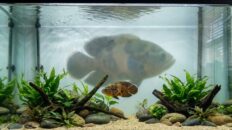

Peaceful fish turn aggressive far more often than beginners expect. Many aquarists carefully choose “peaceful” species, build a community tank, and enjoy weeks or months of calm behavior — until chasing starts, fins tear, and stress spreads through the aquarium. This guide explains why peaceful fish become aggressive, what biological triggers cause these behavior shifts, and how to prevent aquarium aggression before your tank turns into chaos.
Most aquarium aggression is not random. It is caused by delayed biological responses to territory pressure, social hierarchy, growth stages, and breeding instincts. Aquariums are closed systems, and behavior changes almost always appear after the underlying pressure has already built up.
Watch the Full Breakdown: Peaceful Fish Aggression Explained
The video above visually breaks down how peaceful fish change posture, movement, and dominance behavior over time. These shifts are often subtle at first, and seeing them in motion helps you recognize early warning signs long before aggression becomes obvious.
Why Peaceful Fish Suddenly Turn Aggressive
Peaceful fish do not become aggressive overnight. What appears sudden to hobbyists is usually the final stage of a long buildup of biological and environmental pressure inside the aquarium.
Juvenile Behavior Is a Biological Illusion
Most fish sold in stores are juveniles. During early life stages, fish suppress adult traits in favor of growth efficiency and survival. This phenomenon is often referred to as juvenile masking. Juvenile fish tolerate tankmates they would never accept as adults.
As growth slows and hormonal regulation shifts, territorial instincts and dominance behaviors emerge. What looks like a personality change is actually the fish completing its normal developmental program.
Scientific Evidence: Growth and Juvenile Masking
Fish life-history data compiled by FishBase clearly demonstrates this pattern. Species such as Redtail Catfish, angelfish, and many cichlids show extreme differences between juvenile and adult behavior. Growth curves, longevity data, and maximum size records illustrate how early calm behavior hides future dominance.
You can explore documented growth and life-history data directly on FishBase, which highlights how misleading juvenile size and behavior can be:
FishBase – Global Fish Life History Database.
Territory Pressure Builds Invisibly
In natural habitats, fish constantly adjust territory size by moving away from competitors. In aquariums, territory cannot expand. As fish mature, their perceived territory grows, but the glass walls stay the same.
This creates invisible pressure. Fish begin testing boundaries through short chases, blocking feeding zones, and fin displays. These behaviors are often dismissed as “normal activity” until they escalate into sustained aggression.
Tank Shape and Line-of-Sight Stress
Tank shape often matters more than total water volume. Tall or cube-shaped tanks compress horizontal swimming space, forcing fish into constant visual contact. Continuous line-of-sight exposure increases stress hormones and accelerates dominance behavior.
Breeding: The Fastest Aggression Trigger
Breeding flips behavior faster than any other factor. When reproduction is triggered, peaceful fish can become highly aggressive within hours. Eggs and fry activate defense instincts that override previous tolerance.
Cichlids, gouramis, and even some schooling species will defend territory aggressively during breeding phases. Beginners often misinterpret this as a sudden problem, when it is actually one of the most predictable behavioral shifts in fish biology.
Scientific Evidence: Ontogenetic Shifts
Textbook-level fish biology describes these transitions as ontogenetic shifts — stage-based changes in behavior, diet, and ecological role. As fish mature, they move from survival-focused strategies to reproduction and territory control.
These shifts are well documented in academic literature, including Helfman et al.’s foundational work on fish diversity and behavior:
Helfman et al. – The Diversity of Fishes.
Stress Biology and Aquarium Aggression
Aggression is closely tied to stress physiology. Elevated cortisol levels reduce immune function, increase irritability, and lower tolerance for tankmates. In closed systems like aquariums, stress compounds over time.
Research shows that chronic stress alters behavior even in species considered peaceful under optimal conditions. This explains why aggression often appears months after stocking rather than immediately.
A detailed overview of how stress hormones influence aggression and coping styles in fish can be found in this study:
Øverli et al. – Stress and Aggression in Fish.
Why Aquarium Aggression Is a Delayed Reaction
Aquariums are delayed-reaction systems. Stocking choices, layout decisions, and feeding habits create pressure that may not surface for weeks or months. By the time aggression becomes visible, the biological trigger has already passed.
This delay is why beginners repeat the same mistakes across multiple tanks. Problems seem to appear “randomly,” when in reality they follow predictable patterns.

Internal Guides to Prevent Aggression Long-Term
Many aggression issues are caused by habits rather than fish. Our guide
Stop Doing This – Why Your Tank Gets Algae
explains how overcleaning and instability increase stress and indirectly fuel aggressive behavior.
If your tank includes live plants, instability can amplify both melt and aggression. The article
STOP Doing THIS If Your Aquarium Plants Keep Melting
breaks down why stressed plants and unstable lighting worsen fish behavior.
Cloudy water is another early warning sign of biological imbalance. Read
Stop Doing THIS if Your Aquarium Water Stays Cloudy
to understand how bacterial instability affects fish stress.
If your aquarium never seems to stabilize, even with upgrades, this guide explains why:
Why Your Aquarium Water Will NEVER Be Clear.
Finally, avoid wasting money on products that promise quick fixes. Many worsen instability and aggression:
Top 7 Aquarium Products You’ll REGRET Buying.
People Also Ask: Peaceful Fish Aggression
Why do peaceful fish turn aggressive after a few months?
Because growth, territory pressure, and hormonal changes take time. Aggression appears once adult behavior emerges.
Can peaceful fish become aggressive as they mature?
Yes. Juvenile behavior often hides adult dominance traits that emerge later.
Does breeding cause peaceful fish to attack tankmates?
Absolutely. Breeding activates strong defensive instincts and territory control.
Is aggression normal in community tanks?
Some hierarchy is normal, but persistent chasing, fin damage, or hiding indicates excessive pressure.
How do I stop aggression before it starts?
Plan for adult behavior, design territories with visual breaks, and avoid energy mismatches between species.

FAQ – Preventing Aquarium Aggression
Are store labels reliable for peaceful fish?
No. Labels reflect short-term holding tanks, not long-term adult behavior.
Will upgrading to a bigger tank stop aggression?
It can delay problems, but it does not fix behavior mismatches.
What is the biggest mistake beginners make?
Trusting juvenile behavior instead of researching adult size and breeding traits.
Can plants reduce aggression?
Yes. Plants break line of sight and reduce stress, but they cannot fix incompatible fish.