
Pet store lies are the hidden reason so many beginner aquariums fail weeks after setup, even when the tank looks clean, the water looks clear, and everything seems “by the book.” If your fish started dying in a new tank that looked perfectly fine, this guide explains why it happens, which advice quietly causes delayed crashes, and how to avoid repeating the same beginner disasters.
Watch First, Then Use This Checklist: 7 Pet Store Lies That Kill Beginner Fish Keepers
If you want the fastest results, watch the video first. Seeing the lie, the delayed effect, and the “what to do instead” examples in real tanks makes the pattern click instantly. Then come back here and use the tables as your action map while you fix your setup.
Video: 7 Pet Store Lies That Kill Beginner Fish Keepers
If you want the fastest clarity, watch the video first. Seeing these lies play out in real tanks makes the pattern obvious. This article expands the biology, explains why the advice sounds right at first, and shows you how to build stability that lasts beyond the first 30 days.
Why Pet Store Advice Keeps Failing Beginners
Most pet store advice is optimized for today, not for the biology of the next month. It helps fish survive transport, sell products, and get you through the first few days. What it does not do is prepare your aquarium for delayed biological pressure.
Aquariums are living systems with lag. Bacteria populations, fish behavior, and waste processing do not respond instantly. This delay is exactly why beginner tanks often collapse weeks later, not immediately.
7 Pet Store Lies: Fast Fix Map (Lie → Why It Works → What It Breaks)
| Pet Store Lie | Why It Feels True Today | What It Breaks Long Term | Better Question To Ask |
|---|---|---|---|
| “Beginner friendly fish” | Juveniles behave calmer | Juvenile masking, adult size behavior and territory shifts | “What is adult size and adult temperament?” |
| “You can add fish right away” | Fish may survive the first days | Delayed ammonia and nitrite pressure | “What is my biofilter readiness?” |
| “Just change water if anything goes wrong” | Symptoms temporarily improve | Ignores root stability, creates repeat crashes | “What caused the pressure build?” |
| “This tank is big enough” | Juveniles fit physically | Adult size suppression and stress crowding | “What is the adult footprint and territory?” |
| “All peaceful fish can live together” | Short-term store tanks look calm | Compatibility math, hierarchy, breeding mode | “Do these fish share the same zone?” |
| “If water is clear, it’s clean” | Visual reassurance | Invisible chemistry and oxygen demand spikes | “What do ammonia/nitrite/pH say?” |
| “You need more products” | Quick dopamine fix | Sales loop, ignores habits and biology | “What habit created this problem?” |
The 7 Pet Store Lies That Quietly Kill Beginner Tanks
Lie #1: “Beginner Friendly Fish” Stay Beginner Friendly
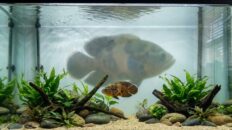
Many fish sold as beginner friendly behave very differently as they mature. Juveniles suppress adult traits early on, a phenomenon known as juvenile masking. As growth slows and body mass increases, behavior shifts. Fish that seemed calm can become territorial, dominant, or aggressive.
This is not a personality problem. It is biology. Databases like FishBase clearly document maximum adult size, lifespan, and ecological role, yet most store advice focuses only on juvenile behavior.
Lie #2: “You Can Add Fish Right Away” (The Cycling Lie)
Adding fish immediately after setup is one of the fastest ways to trigger new tank syndrome. Bottled bacteria products may reduce short-term ammonia spikes, but they do not instantly create a mature, resilient biofilter.
Biological filtration grows in response to bioload. When fish are added too fast, waste production outpaces bacterial growth. The result is delayed ammonia and nitrite stress that appears after the tank “looked fine.”
Lie #3: “Just Do a Water Change If Something Goes Wrong”
Water changes dilute toxins, but they do not replace biological stability. Frequent emergency water changes can mask underlying problems while preventing the system from stabilizing.
A stable aquarium processes waste internally. Constant resets keep the system fragile and reactive.
Lie #4: “This Tank Is Big Enough”
Tank size advice often ignores adult size and behavior. Many fish are sold into tanks they will outgrow physically or behaviorally. Even large tanks can fail when territory, line of sight, and feeding pressure overlap.
Fish do not measure gallons. They measure usable space, sightlines, and control zones.
Lie #5: “All Peaceful Fish Can Live Together”
Compatibility charts rarely account for hierarchy, breeding mode, or energy mismatch. Peaceful fish often turn aggressive once they settle, pair up, or compete for the same zones.
This is why community tanks can collapse suddenly after weeks of calm behavior.
Lie #6: “Clear Water Means Healthy Water”
Clear water only means light passes through it. Ammonia, nitrite, and nitrate are invisible. Fish can be under severe chemical stress in water that looks pristine.
Many beginners assume a visual cue equals biological health, which delays intervention until fish show symptoms.
Lie #7: “You Just Need the Right Product”
The aquarium product loop convinces beginners that every problem has a bottled solution. In reality, most failures come from pressure created by habits, layout, and stocking decisions, not missing products.
The 30-Day Biology Gap (Why Pet Store Advice Feels “Right”)
Most pet store advice sounds correct because it solves today’s symptoms, not the biology of the next 30 days. That time gap is where beginner tanks collapse.
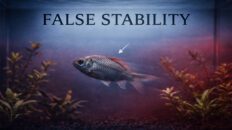
A new aquarium can look “perfect” while invisible pressure builds: nitrifying bacteria are still establishing, territories are still forming, and juvenile behavior is still masking adult traits. When the system finally reaches a threshold, the crash feels sudden, but it was predictable.
This is why the same myths repeat across thousands of beginner tanks: the advice is optimized for immediate comfort, while biology is optimized for delayed balance.
Clear Water Isn’t Clean Water (Invisible Chemistry Cheatsheet)
Clear water can still contain the exact compounds that burn gills and trigger stress behavior. The dangerous part is not what you see, it’s what your test kit reveals.
| What You See | What It Often Means | What To Check | Why It Matters |
|---|---|---|---|
| Water looks crystal clear | Ammonia or nitrite can still be present | NH3/NH4, NO2, pH, temperature | Ammonia toxicity rises as pH and temperature shift |
| Fish “acting weird” after feeding | Oxygen demand spikes, waste spike begins | Surface gasping, flow, DO if available | Stress escalates and aggression increases under low oxygen |
| Tank looks “clean” after deep cleaning | Biofilm and bacteria got stripped | Ammonia next 24-72h, nitrite next days | Delayed mini-crash pattern |
In short: stability beats appearance. A tank can look clean and still be biologically unstable.
Buying more gear rarely fixes a system built on unstable biology.
The 3 Truths Pet Stores Can’t Teach You
Truth #1: Biology Has Delayed Feedback
Aquarium systems respond slowly. Stress, waste buildup, and behavioral shifts often appear weeks after the triggering decision. This is why beginner tanks feel “mysteriously cursed.”
Truth #2: Stability Beats Perfection
Chasing perfect numbers while constantly resetting the tank prevents stability. Slightly imperfect but stable conditions outperform constantly adjusted “ideal” parameters.
Truth #3: Behavior Is a Symptom, Not the Cause
Aggression, hiding, or lethargy usually reflect environmental pressure. Fix the pressure, and behavior often improves without changing fish.
People Also Ask About Pet Store Lies
Why do fish keep dying in my new tank?
Most new tank deaths come from delayed ammonia and nitrite stress caused by adding fish too fast or relying on instant cycling myths.
Can clear water still kill fish?
Yes. Clear water can still contain toxic ammonia or nitrite levels. Visual clarity does not equal biological safety.
Do bottled bacteria really work?
They can help reduce initial spikes, but they do not replace time, surface area, and gradual stocking.
How long does a tank really take to stabilize?
Most aquariums need several weeks to months to become resilient, especially community tanks with multiple species.
FAQ: Beginner Aquarium Stability
Is it my fault if my beginner fish died?
No. Most beginners follow advice that ignores delayed biology. The failure is systemic, not personal.
Should I stop doing water changes?
No. Water changes are essential, but they should support stability, not replace it.
What is the biggest beginner mistake?
Adding fish too quickly before the system can support them.
The Beginner Crash Timeline (Why Tanks Fail After 2–6 Weeks)
Many beginner aquariums don’t crash on day one. They crash when the system finally has enough waste load, enough social pressure, and not enough established biology to buffer it.
| Time Window | What Beginners Think | What Biology Is Doing |
|---|---|---|
| Days 1–7 | “Everything looks fine” | Stress recovery, low feeding load, bacteria still ramping |
| Weeks 2–3 | “Cycle is done because water looks clear” | Ammonia and nitrite swings, biofilter still building |
| Weeks 4–8 | “Aggression appeared out of nowhere” | Territories form, hierarchy stabilizes or collapses, biofilter may still be catching up |
| Month 3+ | “It’s random” | Adult size behavior, stocking math, chronic nitrate stress patterns appear |
Biofilter establishment can take weeks, not days. That is why “instant” shortcuts often create delayed failures.
Hub and Spoke: Fix the Whole System
Most beginners who fall for pet store lies don’t fail in just one area. The same advice patterns that cause fish deaths also trigger algae outbreaks, unstable water, and long-term aggression. That’s why fixing only one symptom rarely works. You have to fix the system.
If your tank started calm and then slowly turned aggressive, the next step is understanding how delayed pressure changes fish behavior. Our guide Peaceful Fish Turn Aggressive: It’s Not the Fish explains how feeding pressure, line-of-sight stress, and territory overlap flip behavior weeks after setup. Many beginners wrongly blame “bad fish” when the real cause is invisible pressure.
Pet store lies also fuel algae problems because unstable biology creates excess nutrients and repeated micro-crashes. If your tank keeps growing algae no matter what you clean, read Stop Doing This – Why Your Tank Gets Algae. It shows how overcleaning, rushed stocking, and chemical shortcuts keep algae returning even in “clean” tanks.
Many beginners try to solve these problems by buying more gear. Unfortunately, equipment rarely fixes bad advice. The article Top 7 Aquarium Products You’ll Regret Buying breaks down why bottled quick fixes, oversized filters, and unnecessary additives often delay real stability instead of creating it.
When these guides are used together, they form a stability chain: correct advice → stable biology → calm behavior → predictable maintenance. That’s the opposite of the pet store cycle that keeps beginners stuck replacing fish.
Scientific References
Juvenile masking and adult behavior: One of the biggest lies in beginner advice is judging fish by how juveniles behave. FishBase documents life-history data such as maximum size, lifespan, and ecological role, showing how juvenile behavior often suppresses adult traits early in life. This explains why “beginner friendly fish” appear peaceful at first and then change weeks or months later. Read FishBase
Invisible ammonia toxicity: Clear water does not mean safe water. The U.S. Environmental Protection Agency documents how unionized ammonia becomes toxic at extremely low concentrations, even when water looks perfectly clean. This directly explains why beginner tanks crash without visible warning signs and why water clarity is a dangerous metric to rely on. Read EPA Aquatic Life Criteria
Biological filtration and delayed cycling: Nitrification is a biological process that requires time, oxygen, and surface area. Academic overviews of nitrification show that bacterial populations grow in response to bioload and cannot be rushed reliably with products alone. This supports why instant cycling advice creates delayed failures rather than immediate crashes. Read the ScienceDirect overview
Watch Next
- Peaceful Fish Turn Aggressive: It’s Not the Fish
- Aquarium Mistakes to STOP Doing Now
- Aquarium Fish You’ll Regret Buying
Pet store lies persist because they work short-term. When you understand delayed biology, you stop chasing fixes and start building tanks that last.