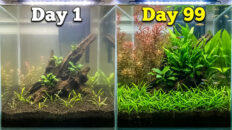

Think your aquarium light is “perfect”? Think again. Most beginners treat lighting like a simple on/off switch, but in a planted aquarium, light is everything—the heartbeat of photosynthesis, the trigger for algae, and the foundation of your plant health. This guide breaks down the 11 planted tank lighting lessons I wish I knew when I started, backed by real science and tested hobby experience.
Why Lighting Matters More Than You Think
In planted aquariums, lighting isn’t just about visibility—it’s communication. Plants interpret light color, duration, and intensity as environmental signals. Get it right, and they respond with lush growth, pearling leaves, and deep green hues. Get it wrong, and you’ll see algae blooms, melting leaves, and slow decay. Scientists refer to this light-driven behavior as photoacclimation—the ability of aquatic plants to adjust their chlorophyll density and pigment composition based on light spectrum and duration (ScienceDirect, 2018).
For beginners, the trap lies in brightness obsession. Many aquarists equate “stronger light” with “better growth,” but intensity without balance is a recipe for algae takeover. What truly matters is the combination of PAR (Photosynthetically Active Radiation), color temperature, and photoperiod.
Lesson #1: Spectrum & Color Temperature (The 5000–6500K Magic Range)
Photosynthetic pigments in aquatic plants primarily absorb blue (450 nm) and red (660 nm) light. The sweet spot for planted tanks lies between 5000K–6500K—the range closest to natural daylight. Lighting below 4500K looks too warm (orange/yellow), promoting algae growth, while anything above 8000K may stress shade-adapted species. Research from the Journal of Experimental Botany (2018) confirms that balanced cool-white light maximizes chlorophyll-a efficiency while maintaining plant morphology and color stability.
Lesson #2: PAR Beats Wattage (The Real Growth Metric)
Forget watts—modern LEDs vary in efficiency. What your plants truly need is PAR: the intensity of usable light for photosynthesis measured in µmol m⁻² s⁻¹. Low-tech tanks thrive at 30–50 PAR; high-tech CO₂ systems often need 80–120 PAR at substrate level. Always measure light penetration at depth—taller tanks require stronger fixtures or focused optics to deliver the same energy. A study on aquatic macrophytes by Frontiers in Plant Science (2020) showed a direct correlation between PAR density and carbon uptake rates in submerged plants.
Lesson #3: Photoperiod & The “Siesta” Effect
Plants need rest. Running lights 10–12 hours straight can trigger algae and stress plant metabolism. Instead, aim for 6–8 hours of full light, or try a “siesta” schedule—split sessions (4 hrs on, 3 hrs off, 4 hrs on). Studies from the Plant Ecology Journal (Springer, 2021) demonstrate that interrupted photoperiods allow plants to recycle photosynthetic intermediates and reduce reactive oxygen species buildup.
Lesson #4: Light Spread & Shadows (Fix Patchy Growth)
Uneven lighting creates “dead zones” where plants receive too little PAR. Use multiple fixtures or diffusers for balanced spread. If one side of your tank grows slower, it’s not the fertilizer—it’s the shadow. Reflective back panels or angled placement can eliminate weak spots. For dense aquascapes, top-down light combined with side diffusion ensures full canopy coverage.
Lesson #5: Match the Light to Your Plants
Not all plants crave the same intensity. Shade plants like Anubias or Cryptocoryne thrive under 40 PAR, while carpeting plants (Monte Carlo, Glossostigma) need triple that. Choose fixtures with adjustable brightness or independent channels for flexibility. Over-lighting slow growers burns leaves faster than you can prune.
Lesson #6: Color Spectrum Balance – Avoid the “Algae Disco”
Excess red or blue light promotes fast algal reproduction. A balanced full-spectrum LED should deliver equal energy across blue, green, and red wavelengths. Green light may appear useless, but it penetrates deeper water layers, feeding lower leaves. An imbalance between photosynthesis and nutrient uptake leads to the dreaded “algae disco.” The Freshwater Biology Journal (Wiley, 2020) notes that controlling red/blue dominance maintains ecosystem stability and suppresses filamentous algae growth.
Lesson #7: Algae Isn’t Evil – It’s Feedback
Every tank experiences algae—it’s an indicator, not an enemy. A mild green tint or film often signals nutrient or light imbalance, not failure. Adjusting photoperiod or reducing feeding usually corrects it. Treat algae as feedback from your ecosystem, a natural part of the biological cycle. Eradicating it entirely can destabilize your microfauna population.
Lesson #8: Dimmable Lights & Timers – Control the Chaos
Automation turns consistency into growth. Use programmable timers or Wi-Fi controllers to mimic sunrise and sunset transitions. Ramp-up lighting prevents photoshock, and steady schedules help plants anticipate energy cycles. Remember: stability outperforms intensity every time.
Lesson #9: Budget vs. Reality – What Cheap Lights Really Do
Inexpensive fixtures often exaggerate lumen ratings and underperform in PAR output. Many budget “full-spectrum” LEDs use weak red diodes or uneven optics, causing plant distortion or algae blooms. Investing in quality lighting ensures consistent output and color accuracy—cheaper lights can cost more long-term through poor plant health and algae treatments.
Lesson #10: Tank Depth & Light Penetration
Light intensity decreases exponentially with water depth. A 50 PAR fixture at 12 inches may drop to 20 PAR at 20 inches. Use lenses or multiple fixtures for deep tanks. Transparent lids and surface agitation also scatter photons; keep glass clean to avoid losses. Consider reflective substrates and pale hardscape to improve overall light utilization.
Lesson #11: Consistency = Growth
The ultimate secret? Consistency. Plants thrive on predictable rhythms. When your photoperiod, fertilization, and CO₂ remain steady, they adapt and flourish. Constantly changing schedules confuses their circadian rhythms, leading to melting and nutrient imbalance. Stable light → stable growth → stable ecosystem.
Scientific Foundations of Aquarium Lighting
The science behind planted aquarium lighting draws heavily from terrestrial botany and freshwater ecology. According to Springer’s Journal of Applied Phycology (2020), algae and higher plants compete for photons in identical spectra. Controlling light timing and intensity directly influences nutrient uptake and oxygen production. Another study in Aquaculture (2021) demonstrated that moderate blue-to-red ratios enhance leaf pigmentation while suppressing cyanobacterial dominance.
In simpler terms: a planted tank is a controlled photosynthetic system. By balancing light, nutrients, and CO₂, you recreate nature’s equilibrium inside glass walls. Light drives the carbon cycle—too much tips it toward algae, too little starves plants. Understanding this balance transforms beginners into aquascapers who grow living art, not just aquatic plants.
Watch the Full Breakdown
See every tip demonstrated visually and learn how to fine-tune your aquarium lighting setup: Watch the video on FishTank Mastery.
FAQ (People Also Ask)
What is the best color temperature for planted tanks?
Between 5000 K and 6500 K—closest to daylight. It supports balanced photosynthesis and natural color rendition while minimizing algae growth.
How many hours of light do aquarium plants need?
6–8 hours of full light per day. Longer sessions increase algae risk; try a “siesta” break for large tanks to stabilize oxygen levels.
Why do aquarium plants melt after new lighting?
Sudden PAR or spectrum changes shock plant tissues. Gradually acclimate new lights using dimmers or shorter initial photoperiods.
Do LED lights cause algae growth?
Not inherently. Algae appears when light intensity exceeds nutrient balance. Proper fertilization and photoperiod control prevent blooms.
Can I grow plants without CO₂ injection?
Yes. Low-light species like Anubias and Java Fern grow fine under 30–40 PAR, provided nutrients and light remain consistent.
Scientific References
- ScienceDirect (2018): Photoacclimation mechanisms in aquatic plants under varied light spectra.
- Journal of Experimental Botany (2018): Effects of light quality on chlorophyll efficiency and morphology.
- Frontiers in Plant Science (2020): PAR intensity correlates with carbon fixation rates in submerged macrophytes.
- Freshwater Biology (Wiley, 2020): Red/blue spectrum ratios and algal growth suppression.
- Journal of Applied Phycology (2020): Competition for photons between algae and higher aquatic plants.
- Aquaculture (2021): Light quality influencing pigment formation in submerged flora.
Continue Learning: Perfecting Light, Clarity & Plant Growth
Now that you understand how lighting balance transforms your planted tank, it’s time to master the other half of aquarium harmony — water clarity and nutrient control. Even the best light can’t fix a tank that’s biologically out of balance. If your aquarium still looks cloudy no matter what you do, check out our complete guide — Why Your Aquarium Water Will NEVER Be Clear (Stop THIS). It explains the hidden filtration and maintenance mistakes that block your plants from using the light they receive effectively.
Struggling with high nitrate levels or algae that won’t quit? A single houseplant might save your tank. Learn how the humble Pothos plant naturally absorbs excess nutrients in $5 Pothos Lifesaver: Easy Nitrate Solution for Beginners. It’s a low-cost, beginner-friendly solution that complements your lighting adjustments by keeping water chemistry stable — perfect for anyone managing algae growth under strong aquarium lights.
If you’re keeping your aquarium in a cooler room or prefer a low-maintenance setup, discover 7 Easy Low Light Aquarium Plants for Coldwater Tanks. These hardy species thrive even under gentle LED lighting and lower PAR values, proving you don’t need expensive gear to enjoy vibrant greenery. They’re excellent for testing your lighting setup’s balance between growth and energy efficiency.
Ready to create a lush, low-tech jungle? Explore 5 Aquarium Plants That Thrive Without CO₂ & Low Light – Beginner-Proof Picks to build a thriving scape using steady light and natural equilibrium. For a complete layout approach, Easy Aquascaping for Beginners (No CO₂ Needed) ties it all together — showing how strategic planting, consistent lighting, and flow design create visually stunning, self-sustaining aquariums. Together, these guides ensure your plants don’t just survive your lights — they thrive under them.
Subscribe & Keep Learning
For more science-backed aquarium lighting and plant-growth tutorials, subscribe to FishTank Mastery. Join our global aquascaping community and transform your planted aquarium into a thriving underwater forest.