
Is your aquarium water looking cloudy, milky, or just plain gross? You’re not alone—and the good news is, cloudy fish tank water is usually easy to fix! In this quick guide, you’ll learn 5 proven, beginner-friendly tips to clarify your tank fast.
Mistake #1: Bacterial Bloom (White Milky Cloudiness)
Cloudy water often signals a bacterial bloom—not something toxic, but still a warning.
A bacterial bloom happens when heterotrophic bacteria multiply rapidly in response to excess nutrients like uneaten food or fish waste. This leads to white, cloudy water and reduced oxygen levels in the tank.
📄 ScienceDirect – Biological Filtration & Bacterial Blooms
Quick Fix:
Don’t clean everything at once.
Stop feeding for 24–48 hours.
Increase aeration and wait 3–5 days.
Avoid overfiltering or chemical additives.
Mistake #2: Overfeeding = Organic Waste
Feeding too much leads to excess waste, which fuels bacterial and algal growth.
Studies confirm that overfeeding increases dissolved organics, destabilizes water quality, and contributes to turbidity and bacterial blooms.
📄 Springer – Organic Waste Accumulation in Aquatic Systems
Quick Fix:
Feed only what fish consume in 1–2 minutes.
Remove uneaten food.
Do 20–30% water changes weekly.
Mistake #3: Stirring Up Substrate
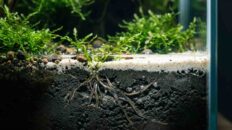
Vacuuming improperly or having active bottom dwellers can release debris into the water column.
Mechanical disturbance of gravel or sand in small tanks can resuspend particles and cloud the water, especially in tanks with poor filtration.
📄 The Spruce Pets – How to Clean Aquarium Substrate Properly
Quick Fix:
Use a gravel vacuum gently.
Add sponge pre-filters to filter intakes.
Avoid deep-cleaning all at once.
Mistake #4: Inadequate Filtration
Cloudiness often lingers when your filter is too weak or clogged.
Filters play a key role in removing suspended solids and maintaining biological balance. Low-grade or old filters allow particles to accumulate.
📄 AquariumScience.org – Aquarium Filtration Explained
Quick Fix:
Use mechanical filtration with fine filter pads or floss.
Clean filter media in tank water (not tap).
Upgrade if needed—especially in heavily stocked tanks.
Mistake #5: Hidden Chemistry Issues
Sometimes what looks like “cloudiness” is actually yellowing from dissolved organics or tannins.
Water discoloration can result from tannins, high nitrate levels, or decaying organics, requiring both chemical and biological management.
📄 The Spruce Pets – Yellow or Brown Water in Aquariums
Quick Fix:
Test pH, ammonia, nitrite, nitrate.
Add activated carbon if tannins are present.
Maintain plant growth to naturally polish the water.
Watch the Video
▶️ How to Clear Cloudy Aquarium Water – Quick Fix in 5 Steps!
Timestamps
0:00 – Intro: Why Is My Aquarium Water Cloudy?
0:30 – Tip 1: Bacterial Bloom
0:50 – Tip 2: Overfeeding
1:10 – Tip 3: Cleaning Substrate
1:31 – Tip 4: Upgrade Filtration
1:51 – Tip 5: Test Water Chemistry
2:11 – Recap
About FishTank Mastery
At FishTank Mastery, we teach you how to build crystal-clear, thriving aquariums with no guesswork and no gimmicks. Our blog posts and YouTube videos combine science, simplicity, and straight-to-the-point advice—so you can master fishkeeping, fast.
📌 Subscribe here: youtube.com/@FishTankMastery
More Tips for Crystal Clear Aquarium Water
Struggling with water clarity? Learn the essentials in our Clean Your Fish Tank Like a Pro guide. Keep algae at bay with help from our Top 5 Algae Eaters for Beginners. For a healthy cycle, don’t skip our 5 Natural Ways to Reduce Nitrates. And if you’re starting fresh, our Why Skipping Water Changes Is a Big Mistake will save you trouble.