
If your aquarium glass gets dirty fast, it’s tempting to treat it like a cleaning problem. Scrape, wipe, repeat. But if you’re cleaning the front panel every couple of days, the glass is not the problem. The glass is the scoreboard.
Your tank is producing more stuff than it can process cleanly: biofilm, dissolved organics, fine particles, and algae fuel. So the glass becomes the first place you notice it. Let’s fix the system so the glass stays clean longer without turning you into a part-time janitor.
The 3 Things That Make Aquarium Glass Dirty (Even When Water Looks Clear)
Most “dirty glass” is a mix of:
- Biofilm (a slimy bacterial layer that forms fast)
- Algae (light + nutrients + time)
- Fine particles (mulm, micro-debris, food dust)
Clear water does not mean low organics. It just means the particles are small enough not to cloud the water. They still stick to surfaces.
Why Aquarium Glass Gets Dirty So Fast
Here are the most common root causes, in the order they typically show up:
1) Overfeeding Creates a “Glass Tax”
Even when fish eat everything, extra food becomes extra waste. That waste becomes ammonia and dissolved organics, which increases microbial growth. Biofilm forms faster. Algae has more fuel. The glass gets dirty sooner.
If you want the feeding system that fixes this at the source, start here: overfeeding aquarium fish.
2) Your Tank Has High Organics (But You Don’t See It)
Mulm in the substrate, detritus behind hardscape, and clogged mechanical media slowly recycle “dirt” into the water column. That doesn’t always make water cloudy. It often just makes surfaces messy.
3) Light Timing Is Doing More Than You Think
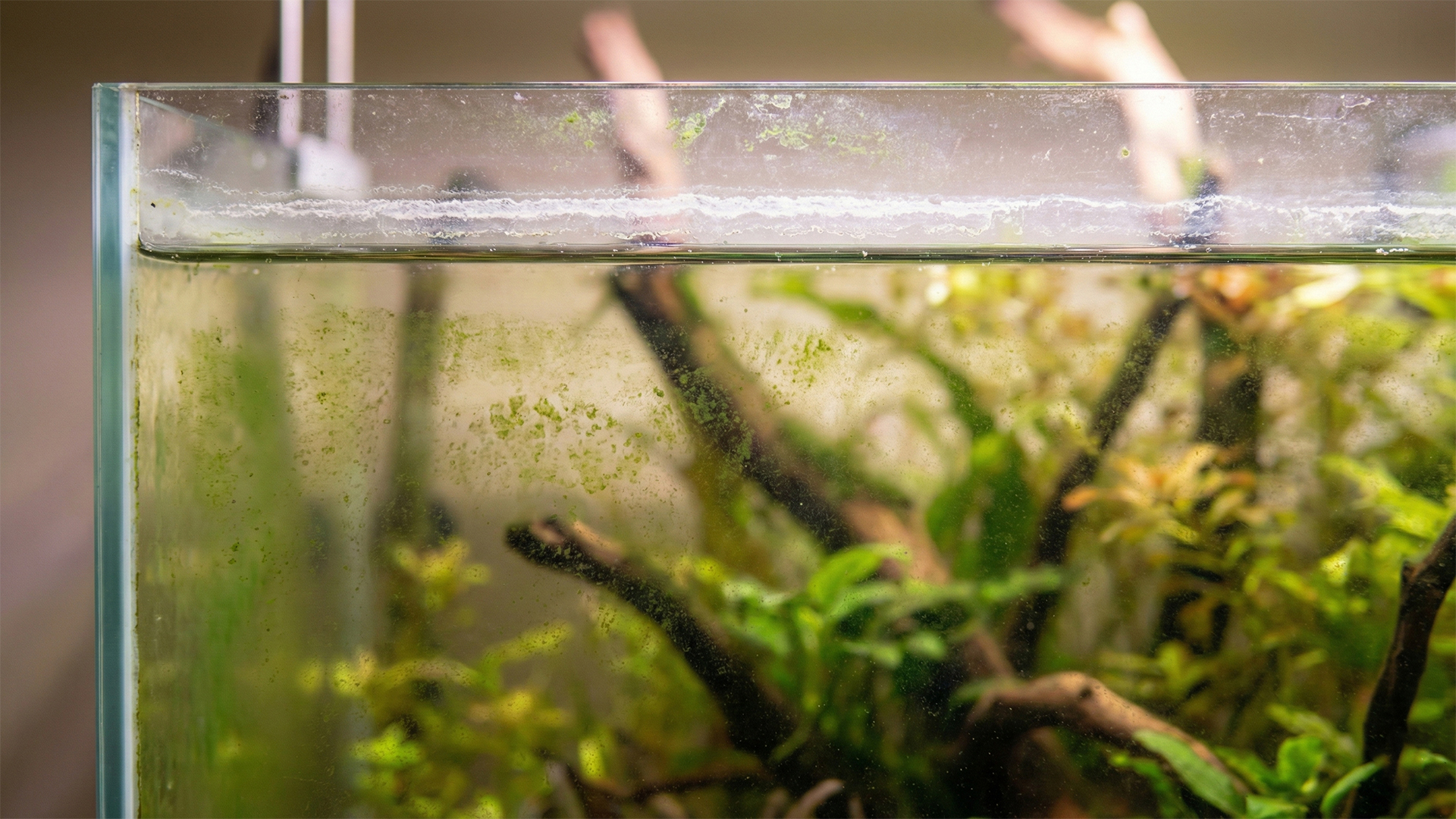
Algae does not need a “bad tank.” It needs a predictable overlap of light and nutrients. If your photoperiod is long, inconsistent, or sunlight hits the tank, the glass becomes the easiest colonization surface.
4) Your Cleanup Crew Can’t Fix the Cause
Snails and algae eaters can reduce some visible algae, but they don’t remove the conditions that keep regrowth happening. That’s why many tanks look better for a week, then the glass gets dirty again.
This is the mental model reset: cleanup crew fish don’t work.
5) The Tank Is “Stable” Only Because You Keep Intervening
If you’re doing constant interventions (big water changes, deep cleans, media rinsing), the tank never settles. Micro-swings keep bacterial layers and algae in a constant growth-rebound loop.
Related: constant water changes.
What Most People Get Wrong About Dirty Glass
- They treat it like dirt. It’s usually biology + organics.
- They scrape daily. That removes symptoms but teaches nothing.
- They add “solutions.” The system needs stability, not random inputs.
- They ignore the filter’s mechanical role. If mechanical trapping is weak, the glass becomes the mechanical filter.
Video: The Real Reason You Have Algae (Stop Doing This!)
If you want a visual breakdown of the algae loop (light + nutrients + routine), this video will make the “dirty glass” pattern click fast.
How to Keep Aquarium Glass Clean Longer (Without Scraping Daily)
This is a stability-first plan. It reduces glass buildup by reducing fuel and improving processing.
Step 1: Reduce Input for 7 Days
- Cut feeding by 30 to 50%
- Feed in smaller rounds instead of one “food storm”
- Remove uneaten food if it collects
Step 2: Improve Mechanical Trapping
If your tank is producing fine debris, you need a place for it to land that isn’t the front glass.
- Use filter floss or fine mechanical media (rinse gently in tank water)
- Don’t let the intake shred debris and spray it back into the tank
- Clean mechanical media more often than biological media
Step 3: Fix the Light Pattern
- Keep photoperiod consistent
- Reduce total light hours if algae returns fast
- Avoid direct sunlight on the glass panel
Step 4: Stop “Reset Cleaning” the Whole Tank
If you deep-clean the substrate and also clean the filter hard on the same day, you reset stability. You often get a short “clean” phase, then rebound growth.
If filter cleaning is part of your pattern, use this stability-safe approach: stop cleaning filter ammonia spikes.
Step 5: Adopt a Calm Glass Routine
- Scrape lightly on a schedule (not emotionally)
- Do not chase “perfect glass” every day
- Use glass cleaning as a signal to adjust inputs, not as a lifestyle
Quick Table: What You See vs What It Usually Means
| What You See | Most Likely Cause | Best Next Move |
|---|---|---|
| Green film returns in 2 to 3 days | Light + nutrients overlap | Reduce photoperiod, stabilize feeding |
| Brown dust film (especially new tanks) | Diatoms + early-stage imbalance | Stabilize routine, don’t over-clean |
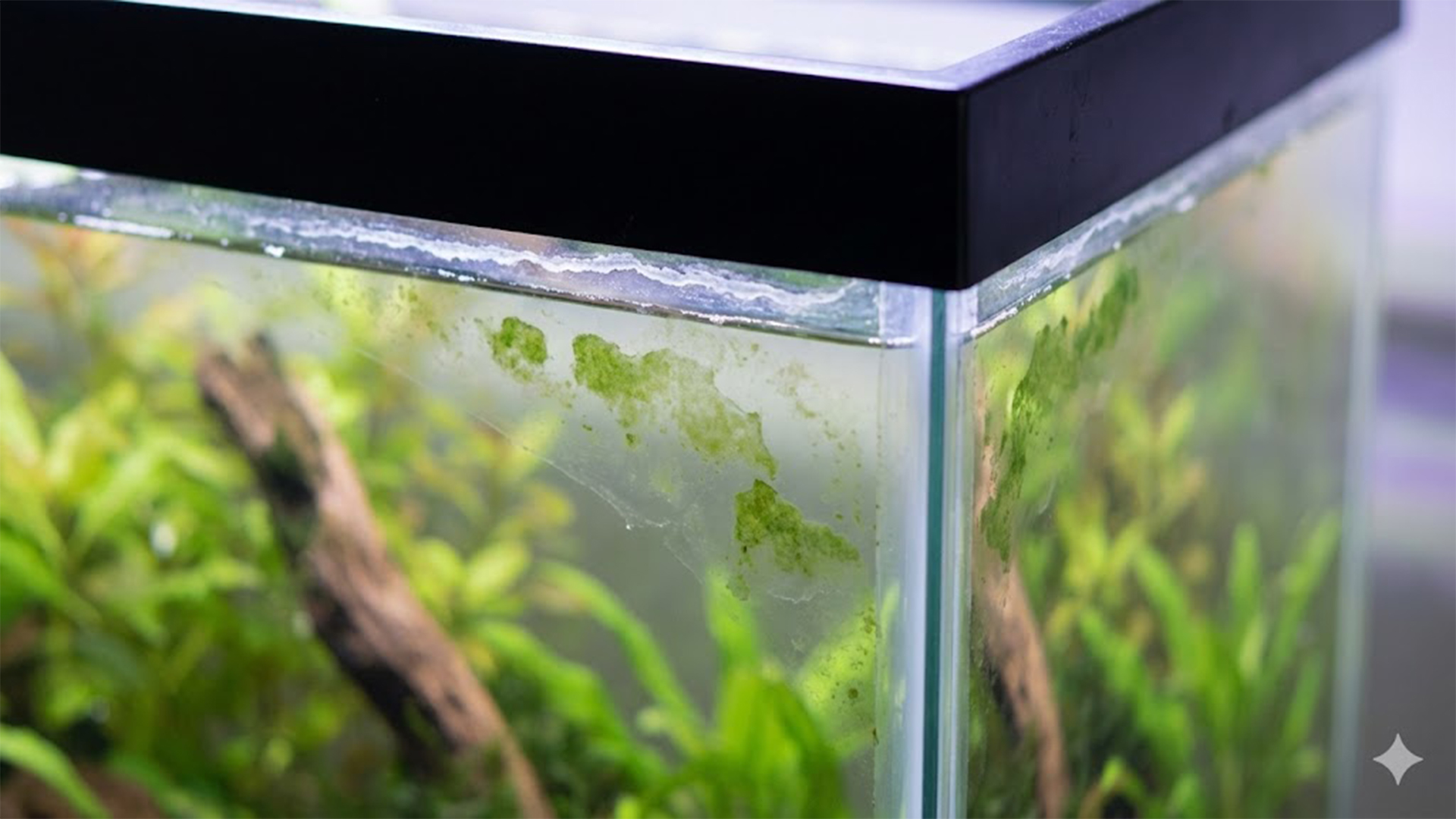
| Slippery clear slime | Biofilm + dissolved organics | Reduce input, improve mechanical trapping |
| Dirty glass + constant “fixing” feeling | System instability | Stop reset cleaning, build routine |
Soft YouTube Bridge
If you like seeing these stability patterns in real tanks, our FishTank Mastery YouTube channel breaks down why common “quick fixes” fail and what actually keeps aquariums clean long term.
FAQ: Aquarium Glass Gets Dirty Fast
Is dirty aquarium glass always algae?
No. It’s often biofilm and fine organic particles. Algae is part of it, but it’s not always the main layer you’re seeing.
Why does my aquarium glass get dirty so fast after I clean it?
Because the system is still producing the same fuel: excess organics, nutrients, and an enabling light pattern. Cleaning removes symptoms temporarily.
Do algae eaters fix dirty glass?
They can reduce some algae, but they don’t remove the conditions that cause regrowth. They are not a root-cause solution.
How often should I clean aquarium glass?
In a stable tank, many people only need light cleaning weekly or every two weeks. If you need it every few days, focus on reducing input and stabilizing the system.
Scientific Insight: Why Glass Buildup Returns So Quickly
Rapid glass buildup is usually a sign of high organic input and a favorable growth environment for microbes and algae. When dissolved organics and nutrients are available, microbial films form quickly on surfaces, and algae can recolonize glass under consistent light exposure.
The U.S. Environmental Protection Agency (EPA) explains how nutrient enrichment drives biological growth in water systems, supporting the same pattern aquarists see when inputs exceed what the tank can process.
The U.S. Geological Survey (USGS) Water Science School describes dissolved oxygen dynamics and biological respiration, which helps explain why organic-heavy systems produce faster microbial growth and instability.
University extension aquaculture guidance such as University of Missouri Extension – Fisheries & Aquaculture reinforces that stability and consistent husbandry reduce stress and biological swings, which in turn reduces recurring nuisance growth on surfaces.
In practice, experienced aquarists see the same result: when inputs are controlled and routines are predictable, glass stays clean longer without aggressive scraping.
Closing: Treat Glass as a Signal, Not a Chore
If your aquarium glass gets dirty fast, your tank is giving you feedback. It’s telling you the system is producing more growth fuel than it can comfortably process.
Instead of upgrading your scraper, upgrade your stability: reduce feeding pressure, improve mechanical trapping, fix light consistency, and stop doing full-reset maintenance. When the system calms down, the glass does too.