
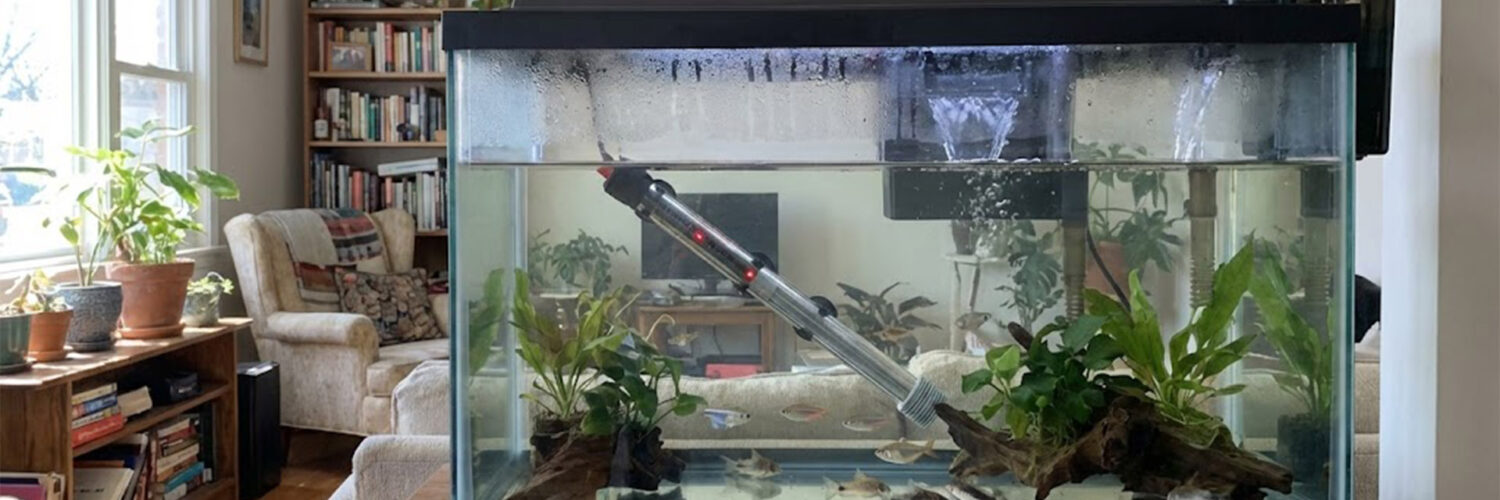
If your aquarium water evaporates fast, your first thought is usually: “Do I have a leak?” Fair. But in most freshwater tanks, fast evaporation is not a leak. It’s physics plus your setup choices: heat, airflow, surface movement, and room humidity.
Here’s the part most people miss: evaporation doesn’t remove “dirty water.” It removes pure water. Everything dissolved in the tank stays behind. So if you top off incorrectly, evaporation quietly concentrates minerals and can shift stability over time.
Evaporation vs Leak: How to Tell in 60 Seconds
Use this quick check before you panic-clean your entire setup:
- Evaporation: water level drops slowly and evenly, mostly from the surface, with no wet stand or consistent drip marks.
- Leak: you see dampness, swelling wood, salt/mineral trails on the outside, or water pooling under/behind the tank.
- Bonus test: wipe the glass and check the outside seams and bottom frame. If it’s dry and the drop is gradual, it’s almost always evaporation.
If you’re doing constant water changes because the level “keeps dropping,” you may be mixing two different problems. This post explains the difference: constant water changes.
Why Aquarium Water Evaporates So Fast
Evaporation speed depends on how quickly water molecules can leave the surface and how quickly air can carry them away. These are the biggest multipliers in real tanks:
1) Heat (Heater + Warm Room)
Warmer water evaporates faster. A heater set higher than necessary and a warm room stack together. Even a small temperature change can noticeably increase evaporation over a week.
2) Surface Agitation (Good for Oxygen, Bad for Water Loss)
Surface movement increases the effective surface area and replaces humid air with drier air. That’s why a tank with strong ripples can evaporate much faster than a calm tank.
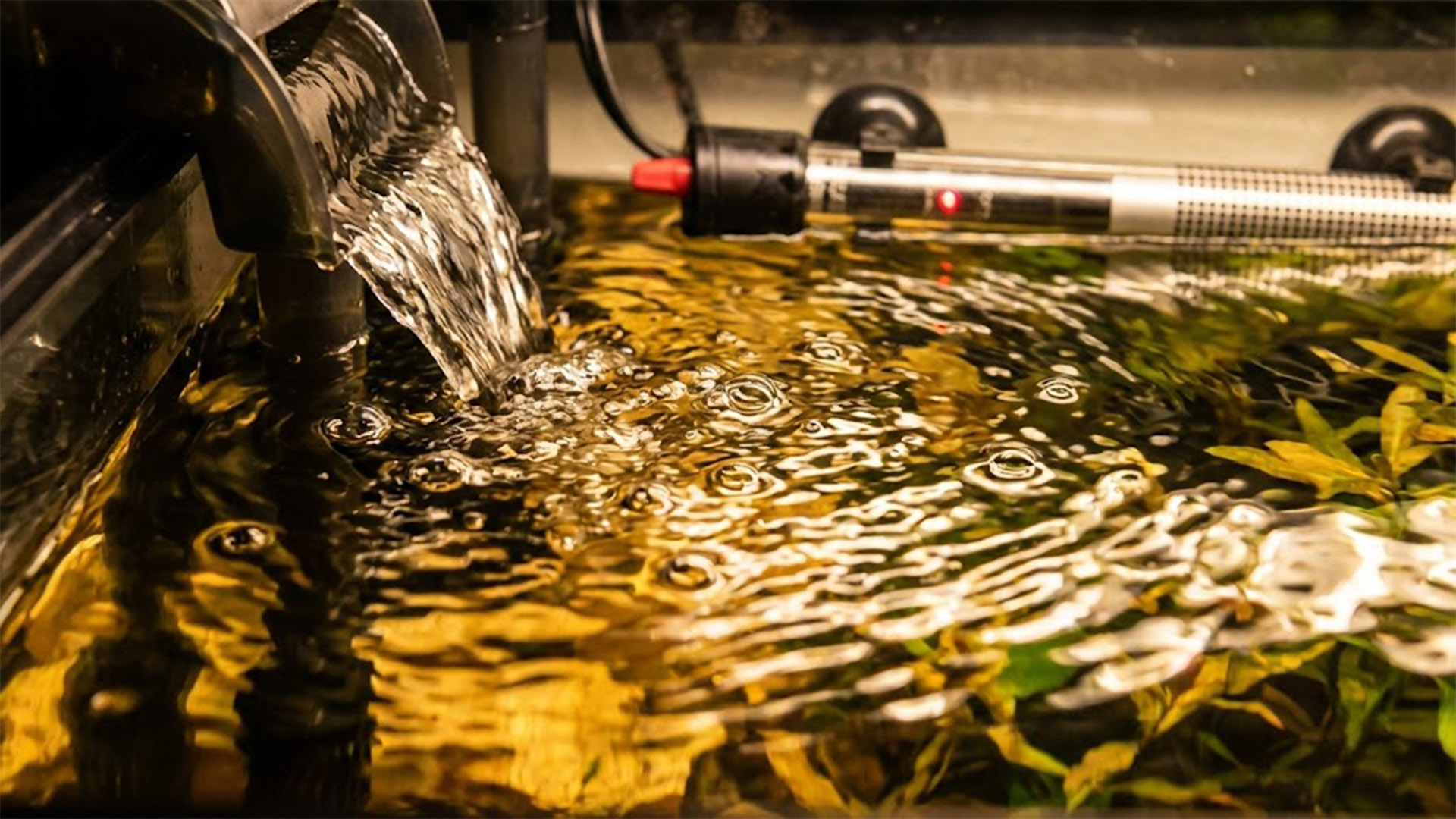
3) Airflow (Fans, Vents, AC, Open Windows)
Airflow is a silent evaporation accelerator. A nearby HVAC vent, ceiling fan, or open window can double evaporation without you noticing the cause.
4) No Lid / Open Top Tanks
Open top looks great. It also lets humid air escape instantly. A lid traps humidity above the surface and slows evaporation. Not a lot. But enough to matter long-term.
5) Dry Indoor Air (Winter Heating)
In winter, indoor heating dries the air. Dry air “pulls” water vapor faster. That’s why evaporation spikes in colder months even though the room feels cooler.
What Evaporation Does to Water Chemistry (This Is the Real Problem)
This is where beginners accidentally sabotage stability:
- Evaporation removes H2O.
- It does not remove dissolved minerals (GH/KH), nitrates, or organics.
- So concentrations can slowly rise if top-off and water-change routines are confused.
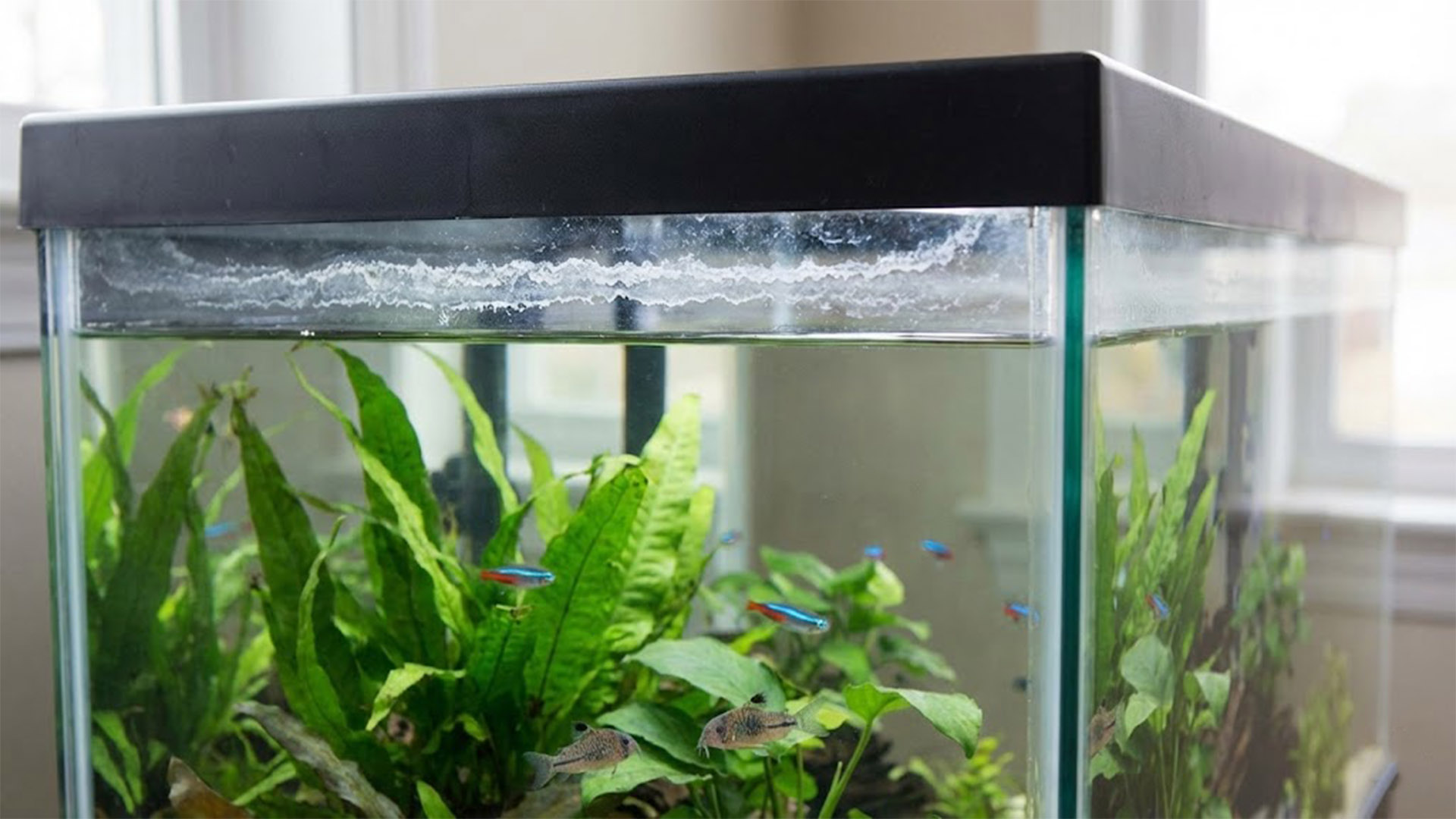
Top-off replaces evaporated water. A water change removes and replaces water. Those are not the same tool.
Top-Off vs Water Change (Simple Rule)
- Top-off: restores water level only.
- Water change: reduces dissolved waste and resets concentrations.
If your tank already feels “unstable” (cloudy episodes, algae swings, random test weirdness), evaporation plus inconsistent top-off can amplify those swings. Related stability signal: aquarium glass gets dirty fast.
How to Top Off Your Aquarium Safely
Safe top-off is about consistency. The goal is to avoid slow concentration creep and avoid sudden parameter jumps.
1) Use the Right Water for Your Setup
- Most freshwater community tanks: dechlorinated tap water is usually fine for top-off.
- Hard water problems (rising GH/KH over time): consider RO/distilled blends for top-off to avoid mineral buildup. (Not a product pitch, just chemistry.)
2) Top Off Small and Often (Not Huge and Rare)
Small, frequent top-offs reduce sudden shifts. Huge top-offs can swing temperature and parameters quickly, especially in nano tanks.
3) Mark a “Normal Waterline”
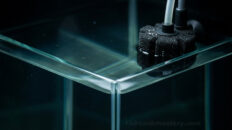
Use a simple mark on the side/back glass. If you’re losing more than expected, the mark helps you quantify it without guessing.
How Much Evaporation Is “Normal”?
Normal depends on tank size, lid, heat, and airflow. But as a practical hobby rule:
- Small open tanks can lose noticeable water in a few days.
- Lidded tanks often lose less and more slowly.
- High agitation + warm water + dry room is the fastest-evaporating combo.
If your water loss suddenly spikes overnight, check for changes: heater setting, a new fan/vent, a window position, or a filter outflow angle.
What NOT to Do When Evaporation Is Fast
- Don’t panic-water-change just because the level dropped.
- Don’t crank the heater to “help fish” if the room is already warm.
- Don’t chase perfect still water (oxygen matters). Instead, balance surface movement and evaporation.
- Don’t top off with random water sources inconsistently. Consistency beats “magic water.”
Quick Fixes That Reduce Evaporation Without Breaking the Tank
1) Adjust Filter Outflow Angle
Keep good surface movement for gas exchange, but avoid turning the surface into a whitewater rafting course.
2) Add a Lid or Partial Cover
Even a partial cover can trap humidity and slow evaporation. It also reduces splashing and micro-spray.
3) Reduce Direct Airflow
Move the tank away from HVAC vents or redirect airflow if possible. This one change can be surprisingly effective.
4) Keep Temperature Reasonable
Don’t heat higher than necessary. Stable temperature is better than “warmer feels safer.”
Soft YouTube Bridge
If you want a stability-first way to think about tank “inputs” that quietly cause algae and recurring problems, our FishTank Mastery YouTube channel explains the same system logic using real tanks and real maintenance routines.
FAQ: Aquarium Water Evaporates Fast
Why is my aquarium water level dropping but I don’t see a leak?
Most of the time it’s evaporation caused by heat, airflow, surface agitation, and dry indoor air. Evaporation is especially fast in open-top tanks.
Does evaporation remove nitrates or waste?
No. Evaporation removes water, not dissolved waste. Nitrates and minerals stay behind, so concentrations can slowly increase.
Should I top off with tap water or RO water?
Tap water is often fine if your parameters stay stable. If minerals creep upward over time (hard water buildup), RO/distilled blends for top-off can help prevent concentration drift.
Is fast evaporation bad for fish?
Evaporation itself isn’t harmful. The risk is inconsistent top-off, temperature swings, and slow concentration changes if you confuse top-off with water changes.
Scientific Insight: Why Evaporation Changes Stability
Evaporation is a physical process driven by heat transfer and vapor pressure gradients. When water evaporates, dissolved ions and nutrients remain, which can gradually increase concentration in closed systems if top-off practices are inconsistent.
The U.S. Geological Survey (USGS) Water Science School explains evaporation as part of the water cycle and how temperature, surface area, and airflow increase evaporation rates.
The NOAA education resources on evaporation describe how warm air, low humidity, and wind increase evaporation, mirroring the tank + room conditions that accelerate water loss indoors.
Research and extension guidance in aquaculture commonly emphasize that water quality stability depends on controlling inputs and avoiding sudden parameter shifts. When evaporation is paired with inconsistent top-off, it can contribute to gradual concentration drift that shows up as “mystery” stability problems over time.
Closing: Treat Evaporation Like a System Signal
Fast evaporation is usually not a leak. It’s your tank telling you something about heat, airflow, and surface movement. Fix those inputs, top off consistently, and the problem stops being stressful.
If you want the simplest win: mark your waterline, top off small and often, and stop confusing evaporation with a reason to do emergency water changes.