

Aquarium test kits are inaccurate only in one specific way: they can give you a comforting story while your tank is quietly failing for reasons the kit does not measure. That is why so many beginners end up in the same nightmare loop.
The strip says “safe.” The liquid kit says “0 ammonia.” The water looks clear. And your fish still act off, clamp fins, breathe harder, hide, stop eating, or crash days later like the tank flipped a switch.
This post is not a “throw away your test kit” rant. Test kits matter. But they are not the scoreboard. They are one instrument on a dashboard, and most people use them like a single on off answer.
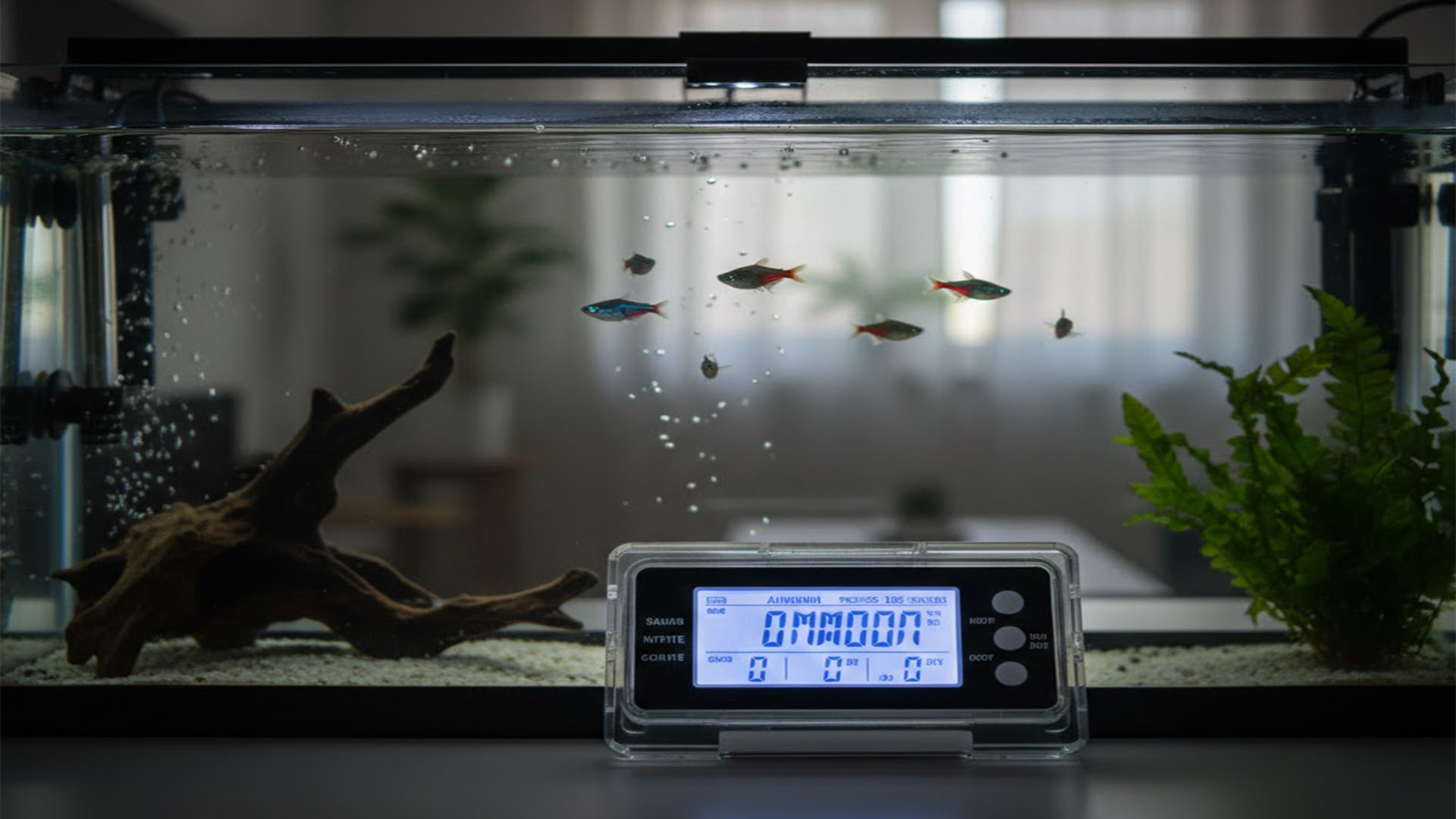
The “Perfect Test Results” Trap
Here is the pattern that shows up over and over:
- You test when the tank looks fine.
- Ammonia is 0. Nitrite is 0. Nitrate is “normal.”
- You assume the system is stable.
- Fish stress builds anyway, usually at night or after routine maintenance.
- The crash happens later, and you re test again and still see “fine.”
That is not magic. It is measurement mismatch. Your kit can be accurate about what it measures and still be useless for what is actually hurting the fish.
What Test Kits Measure vs What They Miss
Most hobby test kits measure a small slice of reality: inorganic nitrogen compounds and basic water chemistry. They do not measure the invisible pressures that cause most “mystery” crashes in beginner tanks.
Most kits measure:
- Ammonia (NH3 plus NH4, depending on kit chemistry)
- Nitrite
- Nitrate
- pH (sometimes KH, GH)
Most kits do not measure:
- Dissolved organic waste (the stuff that yellows water and feeds bacterial respiration)
- Oxygen demand (especially overnight)
- Carbon dioxide swings (which shift pH and stress fish)
- Mineral drift from evaporation and top offs (TDS creep)
- Parameter shock from sudden temperature or hardness changes
- Short spikes you missed because you tested too late
If you read that list and thought “okay, but my water is clear,” you are exactly the audience for this post.
Why Your Ammonia Can Read Zero and Fish Still Die
Ammonia is important, but it is not the only killer. And even ammonia has a time and form problem.
1) Timing: The spike can happen when you are not testing
Many tanks spike ammonia briefly, then the biofilter catches up, then the number looks fine again. Fish, however, already took the hit. By the time you test, you are reading the recovery phase, not the event.
This is common after:
- Overfeeding
- Stirring substrate or mulm
- Overcleaning filter media
- A big water change with parameter differences
If you want the real world version of how routine “cleaning” triggers instability, this post pairs well with: Stop Cleaning Filter Media This Way (Ammonia Spikes).
2) Form: pH changes whether ammonia is dangerous
Ammonia exists in two forms: NH3 (more toxic) and NH4 (less toxic). The balance shifts with pH and temperature. That means a tank can appear “fine” on paper and still become lethal if conditions shift.
Example: a tank runs low pH, so more ammonia is in the NH4 form. Then pH rises, and suddenly more becomes NH3. Fish can crash later even though the total ammonia number looked boring.
If your tank pH is unstable or slowly dropping, this is a key internal link: Aquarium pH Keeps Dropping? Hidden Causes Explained.
False Readings Are Real, but “Expired Kit” Is Not the Main Problem
Yes, test kits can produce false results. But most online advice stops at the shallow checklist: expired reagents, poor shaking, bad lighting. That is not the main reason beginners feel betrayed by tests.
The bigger issue is that people use kits as a lie detector for the tank. They are not. They are a narrow measuring tool that needs context.
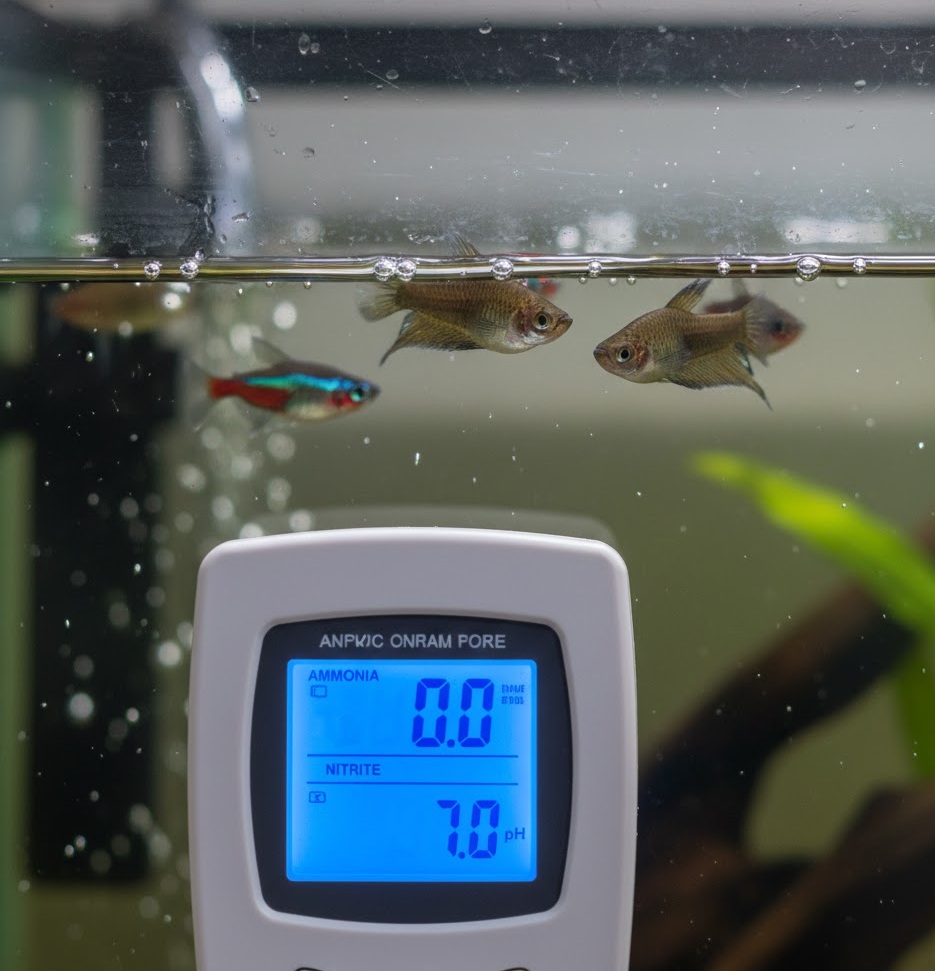
The Real “Test Kit Lie”: When You Measure the Wrong Problem
Here are the three most common situations where the kit looks perfect and the tank is still in trouble.
1) Dissolved organics are building up
Dissolved organic waste is a slow pressure. It does not always spike ammonia. It stains water (yellowing), feeds microbial blooms, increases oxygen demand, and slowly pushes fish into chronic stress.
This is why many tanks drift into problems that look psychological: “the fish are just not themselves.” The system is quietly demanding more oxygen and stability than it can supply.
Two related reads that connect the dots:
2) Oxygen is the hidden constraint, especially overnight
Many tanks fail at night. Plants stop producing oxygen. Bacteria keep consuming it. Fish are still breathing. If your tank is heavy stocked, warm, overfed, or full of organics, oxygen can dip hard while tests remain “fine.”
The most common clue is not a number. It is behavior. Fish breathing faster, hovering near surface agitation, or acting tired in the morning.
3) Parameter shock looks like disease, not chemistry
A lot of “mystery deaths” happen after maintenance. Temperature difference, pH difference, hardness difference, or TDS difference can stress fish so hard they crash later. The kit might still look normal because the parameters did not move outside the kit’s simplistic pass fail narrative.
If this happened after a water change, connect it with: Fish Die After a Water Change? Here’s Why.
Quick Reality Check: Tests vs Fish Behavior
This is the simplest rule I can give you without turning your fish room into a lab.
When tests and fish behavior disagree, do not pick a side. Assume you are missing a variable. Your job is to identify the missing variable, not to argue with the strip like it owes you money.
Behavior signals that matter more than “clear water”
- Fast breathing, especially at rest
- Clamped fins or hiding in corners
- Gasping in the morning
- Sudden aggression or sudden shut down
- Loss of appetite in multiple fish
Clear water means the tank looks clear. It does not mean the tank is stable.
Stop Doing These 7 “Test Kit” Mistakes
- Testing only when you are worried. That biases your data. Build a baseline.
- Testing right after a water change. You are measuring a temporary blend.
- Chasing perfect numbers. Fish prefer stable “okay” over swinging “perfect.”
- Ignoring pH and temperature when reading ammonia. Toxicity depends on context.
- Assuming strips and liquid kits are interchangeable. They are not the same tool.
- Fixing the tank with chemicals because a color looks scary. You can crash biology fast.
- Using the kit as an excuse to ignore your nose and eyes. Smell and behavior matter.
If your tank smells off even when tests look fine, that is a separate signal worth respecting: Aquarium Smells Bad? Hidden Causes Explained.
The Calm Action Plan When Tests Look Fine but Fish Are Not
This is the stability first protocol. No panic. No random additives. No deep cleaning everything at once.
Step 1: Reduce inputs for 48 hours
- Cut feeding hard, or pause feeding for one day if fish are healthy adults.
- Stop adding anything new.
- Do not rearrange decor or stir substrate.
Step 2: Increase oxygen and surface agitation
- Add an air stone or increase surface ripples.
- Point filter output slightly upward if safe for your setup.
Step 3: Small corrective water change, not a reset
- Do 10 to 20 percent if fish are stressed, matched temperature.
- Avoid massive swings.
Step 4: Look for hidden organic storage
- Dirty filter floss, mulm traps, dead zones behind hardscape
- Uneaten food in corners, decaying plant matter, clogged intake sponges
Step 5: Build a baseline testing schedule
Testing is most useful when it is boring. Pick two consistent days per week, test at the same time, and note fish behavior. You are not hunting a number. You are tracking stability.
Video: Seeing the “Perfect Tests, Dying Fish” Pattern in Real Tanks
If you want a visual breakdown of why fish can crash even when numbers look safe, this video shows the hidden patterns and the fixes that actually stabilize tanks.
What Most People Get Wrong About “Accurate” Water Tests
They treat the kit like a verdict
A test kit is not a judge. It is a thermometer. It measures one axis. The tank is a system with multiple axes.
They assume stability means low numbers
Stability means the tank can handle inputs without swinging. A tank can have low nitrate and still be unstable if oxygen demand is high and organics are accumulating.
They ignore drift
Many failures are not spikes. They are drifts. Evaporation concentrates minerals. Top offs change hardness. Over time, the tank becomes a different environment even without a single dramatic event.
If evaporation and mineral creep is a recurring issue in your setup, this topic matters: Aquarium Water Evaporates Fast.
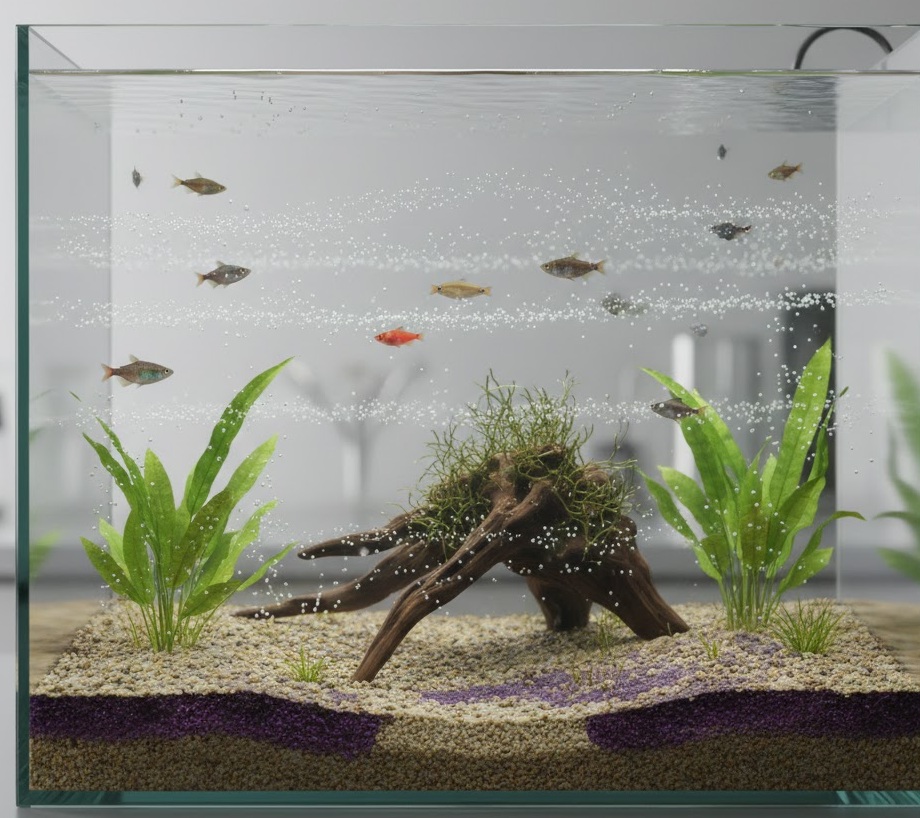
Scientific Insight: Why “Safe” Numbers Can Still Mean Stress
In closed aquatic systems, small shifts in oxygen demand and organic load can create stress without obvious changes in basic inorganic nitrogen readings. This is a known pattern in water quality science.
The U.S. Geological Survey Water Science School explains how organic matter increases microbial activity and oxygen consumption, which can reduce dissolved oxygen even when water appears clear. In aquariums, this often shows up as overnight stress and surface breathing.
The U.S. Environmental Protection Agency nutrient pollution overview describes how nutrient and organic loading drives microbial blooms and oxygen depletion. The same principle applies in a home aquarium at small scale: extra organics fuel biology that competes with fish for oxygen.
The Food and Agriculture Organization of the United Nations (FAO) summarizes how uneaten feed and excess nutrients increase biological oxygen demand in aquatic systems, stressing organisms even when water looks visually acceptable. That “looks fine” trap is exactly what hits many beginner tanks.
University extension programs also emphasize stability and gradual changes over aggressive interventions. For example, University of Missouri Extension Fisheries and Aquaculture discusses practical water quality fundamentals and how management choices affect system stability, which is the missing layer in most hobby test kit discussions.
A Soft Reality Check: Your Test Kit Is Not the Enemy
Your kit is a tool. Your biggest upgrade is using it like a tool, not like a comfort blanket. If you stop chasing perfect colors and start tracking stability, you will prevent most “mystery” crashes before they happen.
If you prefer learning this stuff visually, the FishTank Mastery YouTube channel breaks down real tank failures and stability fixes using actual setups. Many people “get it” instantly once they see how organic load, oxygen, and maintenance habits interact.
FAQ: Aquarium Test Kits Are Inaccurate
Can aquarium test kits be wrong?
Yes. Kits can be wrong due to expired reagents, poor technique, and interference. More commonly, kits are “right” but only measuring a narrow slice of what affects fish health.
Why does ammonia read zero but fish are dying?
The spike may have happened earlier, ammonia toxicity can change with pH and temperature, or the main problem may be oxygen stress, dissolved organics, or parameter shock that the kit does not measure.
Are test strips less accurate than liquid kits?
Often, yes for precision. But even liquid kits can mislead if you use them as pass fail tools instead of baseline tracking tools.
Should I trust fish behavior or test results?
Trust both, and assume a missing variable when they disagree. Use behavior as the early warning, then investigate the drivers that tests do not capture.
What is the fastest safe move if fish look stressed but tests look fine?
Reduce feeding, increase oxygen and surface agitation, and do a small matched water change. Avoid massive resets and avoid deep cleaning substrate and filter on the same day.
Closing: The Real Upgrade Is System Thinking
The goal is not perfect readings. The goal is a tank that stays boring. Clear water, calm fish, stable behavior, stable inputs. Test kits help, but the kit does not run your aquarium. Your habits do.
If you take one action this week, make it this: build a simple baseline. Test on the same days, at the same time, and pair the numbers with behavior. That is how you stop getting surprised by a tank that “looked fine.”