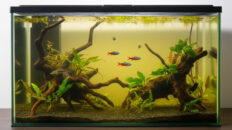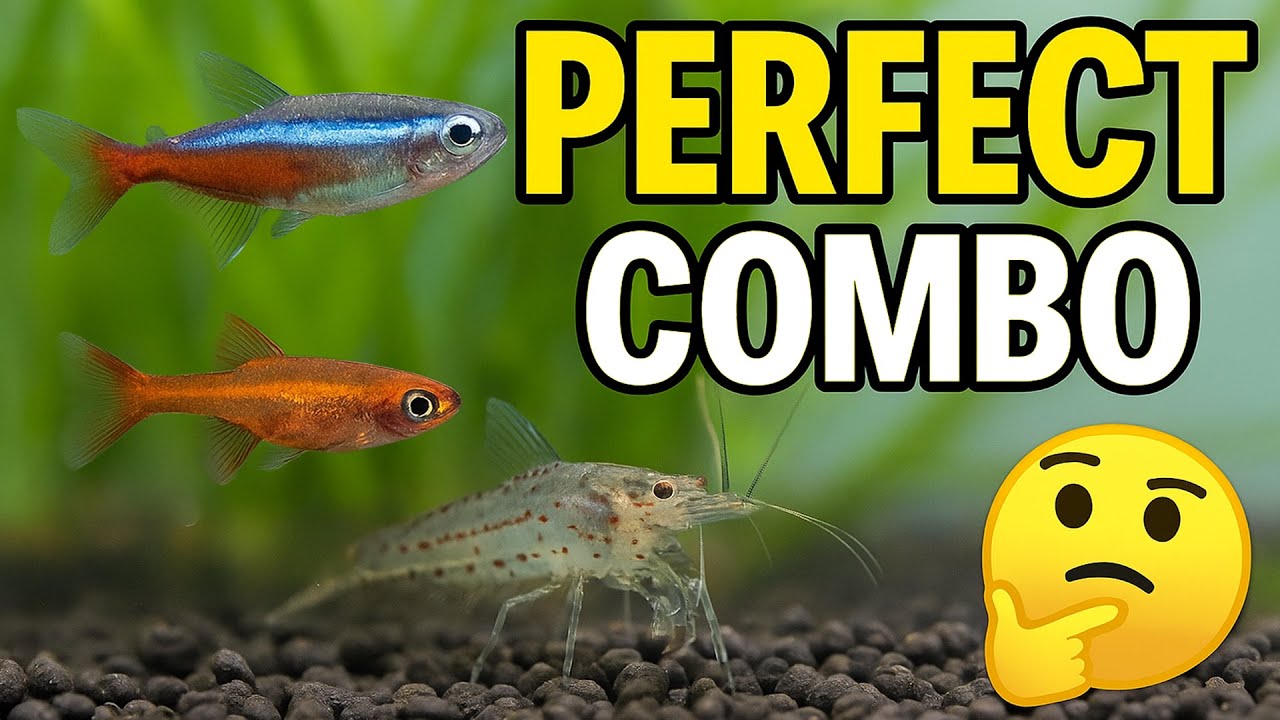

If your aquarium is covered in green film, fuzz, diatoms, or hair algae and every “algae eater” you tried seems lazy or useless, the real problem probably isn’t the fish or shrimp you bought. The real problem is that most tanks rely on the wrong species, added at the wrong time, into unstable conditions. This 2026 guide breaks down the best algae eaters that REALLY help, why some “popular” algae eaters actually make things worse, and how to build a science-backed clean-up crew that finally tilts your tank toward long-term balance. If you’ve searched “best algae eater fish,” “freshwater clean up crew,” or “algae eaters that actually work,” this guide was written specifically for you.
Most algae problems don’t start because you “don’t have an algae eater.” They start because your tank has unstable light, excess nutrients, weak flow, or stressed plants. Algae eaters are not magic erasers – but in a reasonably stable tank, a correctly built clean-up crew can dramatically reduce surface algae, support the biofilm, and give you a much bigger margin for error.
Why Algae Takes Over (The Real Science)
1. Algae Blooms Love Instability
Modern freshwater research shows that grazers alone cannot prevent algae blooms when conditions are unstable. In a 2021 study, Sandberg and colleagues found that even active grazers failed to stop algal overgrowth when light and nutrients fluctuated wildly – but under stable conditions, grazing pressure significantly reduced nuisance algae growth. In other words, if your tank is constantly swinging in light, feeding, or parameters, even the best algae eaters will seem “lazy.”
2. The Single-Grazer Myth
Many hobbyists buy one “miracle” algae eater – often a pleco or a snail – and expect it to handle everything. But different algae types grow on different surfaces and textures. Research on mixed detritivore communities in freshwater ecosystems shows that multi-species grazers remove organic matter and algae more efficiently than single-species crews because they each specialize in different food sources and microhabitats. One species polishes glass, another scrubs biofilm from leaves, another grinds filamentous strands from hardscape.
3. Biofilm Is the Hidden Engine
Algae is only part of the picture. Beneath it lives a complex biofilm of bacteria, fungi, and micro-organisms that process waste and stabilize nutrients. Studies on freshwater grazers indicate that a healthy, structured biofilm actually improves grazer survival and feeding efficiency, especially in species that scrape surfaces for food. When your clean-up crew is constantly stripping and rebuilding biofilm, the tank becomes more resilient – not just “clean-looking.”
4. Why Mixed Crews Beat “One Big Pleco”
A 2022 paper on grazer introduction showed that mixed grazer communities reduced filamentous algae biomass early in the process – even before measurable nutrient decline. That means a properly built crew doesn’t just react to algae, it shifts the balance of the entire system, making it harder for problem algae to dominate in the first place. That’s exactly what we want in a home aquarium.
Best Algae Eaters That REALLY Help (Ranked for 2026)
This guide focuses on freshwater tanks: planted aquariums, community tanks, and nano setups. Instead of a random list, these algae eaters are grouped by how consistently they perform in real hobby tanks.
1. Otocinclus Catfish – The Diatom & Film Specialist
Otocinclus catfish are some of the most effective algae eaters for planted aquariums when introduced into a mature, stable tank. They specialize in:
- Diatoms on glass and leaves
- Soft green film algae
- Biofilm on hardscape and equipment
Otos thrive when there is plenty of biofilm to graze. Research on biofilm structure shows that complex microbial layers improve grazer feeding efficiency and survival, which perfectly matches how Otos behave in a healthy planted setup. They’re peaceful, stay small, and work best in groups of 4–6+.
2. Amano Shrimp – The Hair-Algae Tactical Unit
Amano shrimp are legendary in the planted tank world for good reason. In stable tanks with good oxygen and flow, they aggressively pick at:
- Green hair algae and fuzz algae
- Food leftovers trapped in plants
- Early-stage filamentous outbreaks
Kept in proper groups (8–20+ in larger tanks), they behave like a coordinated cleaning squad. They’re especially effective when paired with Otos and Nerite snails, as each occupies a different “cleaning lane.”
3. Nerite Snails – The Hard-Algae Bulldozers
Nerite snails are among the best options for tackling stubborn green spot algae and dense film on glass, wood, and rocks. They don’t breed in freshwater, rarely damage plants, and constantly scrape surfaces that other fish ignore. Their one downside is leaving visible egg capsules – but in terms of cleaning, they’re workhorses.
4. Siamese Algae Eater – The Hair-Algae Assassin
True Siamese Algae Eaters (Crossocheilus siamensis) remain one of the only fish that reliably consume tough hair algae and even some forms of black beard algae when young and properly fed. They are most effective when:
- Kept in groups (3–6) in larger tanks
- Given stable water and good oxygenation
- Not overfed with prepared foods
Be careful to avoid look-alikes, as many “SAEs” sold in stores are different species with much weaker algae-eating behavior.
5. Bristlenose Pleco – The Manageable Wood Grazer
Unlike common plecos that become tank-destroying giants, Bristlenose plecos stay relatively small and keep grazing into adulthood. They’re excellent for:
- Driftwood and roots
- Rocks and hardscape
- Persistent brown and green films
They still produce a noticeable amount of waste, so they’re best in medium to large tanks with decent filtration – not nano setups.
6. Ramshorn Snails – The Soft-Algae Recyclers
Ramshorn snails excel at eating soft film algae, decaying leaves, and leftover food. They’re great “recyclers” that support overall tank cleanliness and reduce fuel for future algae growth. Their population is directly controlled by how much you feed; if you’re disciplined, they rarely overrun the tank.
7. The Synergy Combo – Oto + Amano + Nerite
The most consistent real-world results come from a mixed crew:
- Otos polish glass and leaves
- Amanos target hair algae and leftovers
- Nerites scrape hard, stubborn films
This combination mirrors the scientific findings on mixed grazer efficiency: different grazers working different niches reduce filamentous and film algae earlier and more completely than any single species can.
STOP Doing THIS (Why Your Algae Eaters “Don’t Work”)
- STOP adding algae eaters to brand new, unstable tanks and expecting miracles.
- STOP relying on one large pleco or one “algae fish” to fix every problem.
- STOP overfeeding and then blaming algae eaters when they choose leftovers instead of algae.
- STOP buying aggressive or oversized “algae eaters” that outgrow or terrorize your tank.
- STOP treating algae eaters as the primary solution instead of part of a stability system.
Algae Eaters to Avoid (The “Fake Helpers”)
Chinese Algae Eater – The Slime-Coat Vampire
Chinese Algae Eaters often start by grazing a bit of algae when young. As they grow, they:
- Stop focusing on algae
- Latch onto slow fish and damage slime coats
- Become territorial and aggressive
They’re mis-sold as community algae eaters but rarely function that way long-term.
Common Pleco – The Mini Dinosaur
Common plecos quickly outgrow most home aquariums. They produce massive amounts of waste, uproot plants, scratch acrylic, and offer poor long-term algae control once they switch to heavier foods. In a typical 75–200L community tank, they’re usually a liability, not an asset.
Mystery Snail – The Low-Efficiency Grazer
Mystery snails are fun, interactive pets, but their algae-eating efficiency is often overrated. They do help with leftover food and some biofilm, but they’re not strong primary algae removers. Think of them as “personality snails,” not core clean-up crew members.
How to Actually Use Algae Eaters (7-Step Fix)
Step 1 — Stabilize Light Before Buying More Fish
Start by locking in a realistic photoperiod (6–8 hours for most tanks) and avoiding sudden jumps in intensity. If your light has dimming or programmable modes, ramp up and down instead of blasting full power.
Step 2 — Fix Feeding and Bioload
Overfeeding drives many algae problems. Feed what your fish can finish in 30–60 seconds, once or twice a day, and remove uneaten food. Algae eaters are not garbage disposals; they need a reasonably clean system to be effective.
Step 3 — Choose the Right Species for Your Tank Size
Nano tanks (under ~60L) do best with Otos, Nerites, and shrimp. Medium tanks can add Bristlenose plecos and small groups of SAEs. Large tanks can support full mixed crews with more redundancy.
Step 4 — Add a Mixed Clean-Up Crew, Not Just One Fish
Combine at least two or three species with different roles (for example, Oto + Amano + Nerite). This echoes the science: mixed grazers remove algae more efficiently than any single “hero” species.
Step 5 — Protect the Biofilm
Avoid constantly scrubbing every surface to “reset” your tank visually. Biofilm isn’t the enemy – it’s a living food source for Otos, shrimp, and snails, and it stabilizes nutrients. Let your grazers harvest it instead of stripping it all away.
Step 6 — Maintain Flow and Oxygen
Grazers, especially Otos and SAEs, perform better with steady oxygen and moderate flow. Dead spots collect debris and fuel algae where your clean-up crew can’t easily reach. Gentle, even circulation helps both grazers and plants.
Step 7 — Give the Crew Time to Work
Just like plants, algae eaters need time. Expect gradual improvement over 2–4 weeks, not overnight miracles. If algae continues to explode despite a solid crew, the root cause is still instability, not “lazy fish.”
People Also Ask (Algae Eaters & Clean-Up Crews)
Why won’t my algae eater clean the tank?
Most algae eaters adjust their diet based on what’s easiest to eat. In overfed tanks with unstable light, they choose leftovers and biofilm over tough algae. If parameters swing or food is everywhere, your algae eater will always “underperform.”
What is the best algae eater for a planted tank?
For heavily planted aquariums, a core combination of Otocinclus, Amano shrimp, and Nerite snails delivers the most consistent results. They target different algae types without damaging healthy plants.
What is the best algae eater for a nano tank?
In small aquariums, stick to Nerites, small Ramshorn colonies, Amano shrimp, and a small group of Otos once the tank is mature. Avoid large plecos and full-size SAEs in tight spaces.
Do algae eaters keep glass perfectly clean?
They keep glass manageable, not sterile. Some light film will always return, which is normal. The goal is reducing heavy buildup so maintenance becomes easy, not eliminating every spot forever.
Can algae eaters replace water changes?
No. They recycle organic matter into more manageable forms, but they still produce waste. Water changes, good filtration, and healthy plants remain essential for long-term stability.
Why do some algae eaters stop eating algae as they grow?
Certain species, especially common plecos and misidentified “algae fish,” naturally shift toward heavier foods and protein as they mature. Once that happens, they contribute more bioload than they remove algae.
FAQ – Common Questions About Algae Eaters
How many algae eaters should I add to my aquarium?
It depends on your tank size, layout, and existing stock. A common starting point for a mature 75–100L planted tank is 4–6 Otos, 8–15 Amano shrimp, and 2–3 Nerite snails. Always consider total bioload and oxygen demand before increasing numbers.
Will algae eaters fix black beard algae?
Some SAEs and large Amano shrimp will graze on BBA when nutrients and CO₂ are balanced and food competition is low. However, BBA is mainly a symptom of unstable CO₂/light relationships, so fixing that relationship matters more than any single fish.
Are algae wafers bad for algae eaters?
They’re not bad when used sparingly, especially for Otos and Bristlenose plecos. The problem comes when wafers become their primary food and algae is ignored. Use wafers to supplement, not replace, natural grazing.
Do I need algae eaters in every tank?
You don’t need them, but most tanks benefit from a small, well-chosen clean-up crew. Even in low-tech setups, grazers help recycle organics and keep surfaces from getting overwhelmed between maintenance sessions.
Can I keep multiple algae eater species together?
Yes – in fact, a mixed crew is usually best. Just ensure you have enough space, hiding places, and oxygen. Avoid combining highly territorial species or overcrowding plecos in small footprints.
Will algae eaters damage my plants?
Most recommended species (Otos, Amanos, Nerites, Ramshorns) leave healthy plants alone and only graze decaying tissue or algae. Common plecos and some large “algae fish” are far more likely to rasp on leaves and uproot stems.
Internal Links – Related Guides from FishTank Mastery
If you want to go beyond algae eaters and build a full stability plan, our dedicated clean-up crew breakdown, Best Freshwater Aquarium Clean-Up Crew (2025 Guide), ranks shrimp, snails, and fish by real-world performance and compatibility.
For tanks overrun by multiple algae types – from black beard algae to diatoms and green spot – the deep-dive article Natural Ways to STOP Aquarium Algae explains how to fix root causes instead of just scraping glass every weekend.
If green hair algae is your main enemy, our focused guide Green Hair Algae Fix – Fast, Natural & Beginner-Friendly shows exactly how to combine flow, lighting, and algae eaters for a safe recovery timeline.
Sometimes the real problem isn’t algae eaters – it’s water clarity. If your tank never looks crystal clear, even after cleaning, read Why Your Aquarium Water Will NEVER Be Clear (Stop THIS) to understand the microbiome and filtration mistakes that keep haze locked in place.
Finally, if your plants are melting while you fight algae, you’re dealing with two sides of the same stability problem. Our full plant adaptation breakdown, STOP Doing THIS If Your Aquarium Plants Keep Melting, pairs perfectly with this guide to restore both greenery and clarity at the same time.
Scientific References
The limits of grazers under unstable conditions are clearly documented in Sandberg et al. (2021) in Aquatic Botany, where algae blooms persisted despite grazing when light and nutrients fluctuated, reinforcing the importance of stability before expecting results from algae eaters.
Synergistic effects of mixed detritivore and grazer communities are explored by Hättenschwiler & Gessner (2019) in Freshwater Biology, supporting the idea that diverse clean-up crews outperform single-species solutions in processing organic matter and controlling surface growth.
The early reduction of filamentous algae following grazer introduction is highlighted in Tan et al. (2022) in the Journal of Aquatic Ecology, where filamentous biomass dropped even before nutrient declines were observed, mirroring what aquarists see when the right algae eaters are added to stable tanks.
The importance of biofilm quality for grazer health is discussed in Arndt et al. (2018) in Microbial Ecology, which found that structured microbial biofilms improved survival and feeding efficiency in freshwater grazers – a direct parallel to how Otos, shrimp, and snails thrive in mature aquariums.
Watch Next – Recommended Videos
For aquarists building a complete algae control strategy, these videos extend everything in this guide into visual, step-by-step examples: