
Constant water changes are the aquarium version of running on a treadmill. You’re moving a lot, you feel busy, and the tank still refuses to feel stable. The water can look clear, the fish can be alive, and you still end up doing water changes like it’s a second job.
Here’s the uncomfortable truth: if your aquarium “needs” constant water changes to stay okay, the tank isn’t stable. You’re manually holding it together.
This guide explains why that happens, what people get wrong, and how to stop the cycle safely without triggering ammonia spikes or stressing fish.
The Most Common Reasons You Need Constant Water Changes
Most tanks fall into one (or more) of these categories:
- Too much input (overfeeding, heavy bioload, decaying organics)
- Too little processing capacity (biofiltration lagging behind load)
- Oxygen instability (microbial “oxygen debt” at night or under heavy organics)
- Mechanical buildup (mulm and debris recycling into the water column)
- Panic maintenance (deep-cleaning that resets stability over and over)
Water changes help in the short term because they dilute problems. But dilution is not the same as stability.
Clear Water Is Not Proof Your Tank Is Healthy
Beginners get trapped by the visual illusion: “It looks clean, so it must be fine.”
But a tank can look clear while still having:
- unstable ammonia/nitrite micro-spikes
- high dissolved organics that feed bacteria
- low oxygen periods (often overnight)
- stress pressure from poor routine consistency
That’s why you can have “perfect-looking water” and still feel like you’re constantly fixing something.
Why Some Tanks Need Constant Water Changes (The Real Mechanism)
There are two forces in every aquarium:
- Biological demand: waste + organics + oxygen consumption
- Biological capacity: bacteria + filtration + plants + stability
If demand grows faster than capacity, your tank becomes less forgiving. Nothing explodes immediately. It just becomes a system that only behaves when you keep diluting it.
The 5 Mistakes That Create the “Water Change Forever” Loop
1) Overfeeding (Even When Food Disappears)
Food disappearing does not mean it didn’t pollute. It just means it converted into waste fast.
If feeding is part of your pattern, read this first: overfeeding aquarium fish.
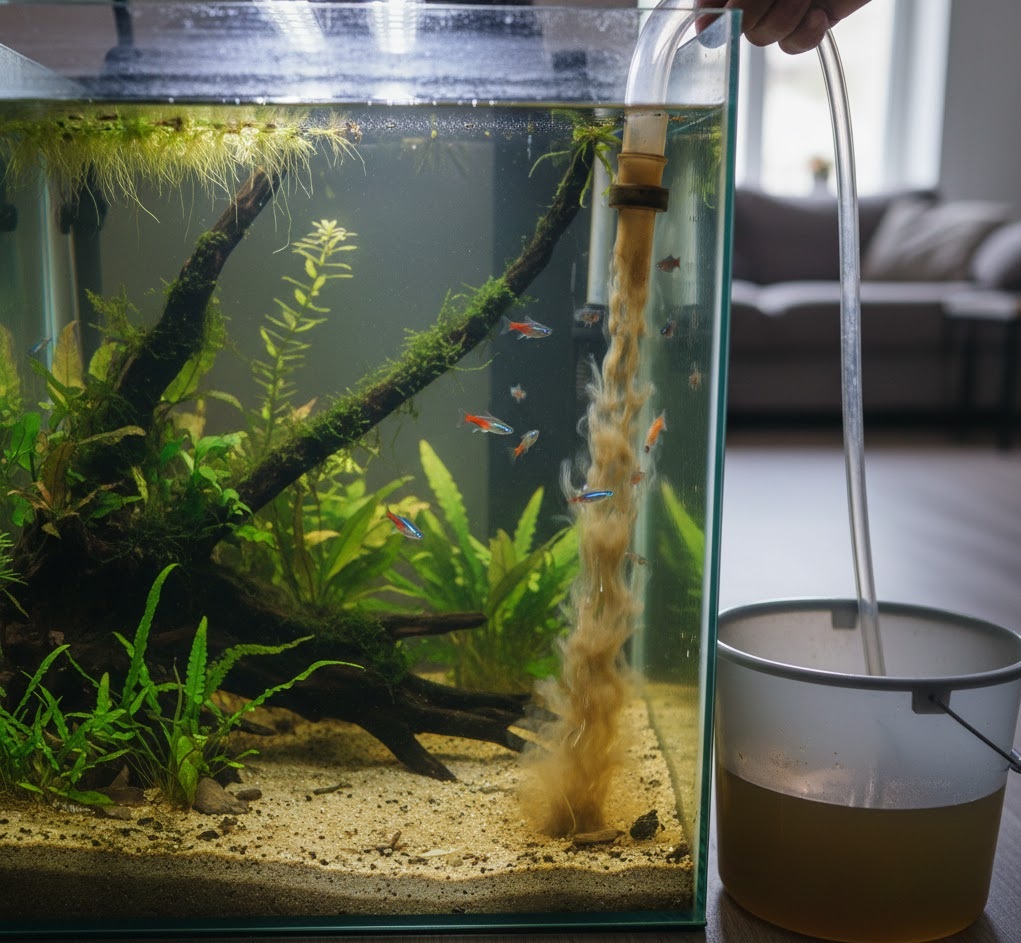
2) Cleaning Too Much at Once
Deep vacuum + filter cleaning + big water change on the same day is a stability reset. Your tank never gets a chance to build predictable biological momentum.
3) “Fixing” Every Test Result
Chasing numbers creates swings. If you’re stuck on weird readings, this can help: false ammonia reading.
4) Not Respecting Oxygen
Heavy organics increase microbial respiration. That can pull oxygen down, especially at night. Fish stress rises, appetite drops, and the tank starts acting fragile.
5) Mistaking Water Changes for a Root Fix
Water changes are a tool. Not a substitute for reducing input and building capacity.
What NOT to Do (If You Want This to End)
- Do not keep increasing water change size every time something feels “off”
- Do not add random chemicals to “stabilize” the tank
- Do not deep-clean everything weekly
- Do not overfeed to “help fish recover”
- Do not replace all filter media at once
If you’ve had fish losses after heavy maintenance, this article is relevant: fish dying after water change.
Safe Action Plan: How to Stop Constant Water Changes
This is the calm, system-first plan. It reduces demand, builds capacity, and avoids shocking fish or bacteria.
Step 1: Reduce Input for 7 Days
- Cut feeding by 30 to 50% for one week
- Stop “bonus feeding” because fish beg
- Remove uneaten food if it collects
Step 2: Stop Resetting the Filter
Most people sabotage stability by cleaning filter media the wrong way. If you want the step-by-step, use this guide: cleaning filter ammonia spikes.
Step 3: Use Small Water Changes (Not Massive)
- Do smaller changes more calmly (think 15–25%)
- Avoid huge swings that change parameters fast
- Consistency beats hero moves
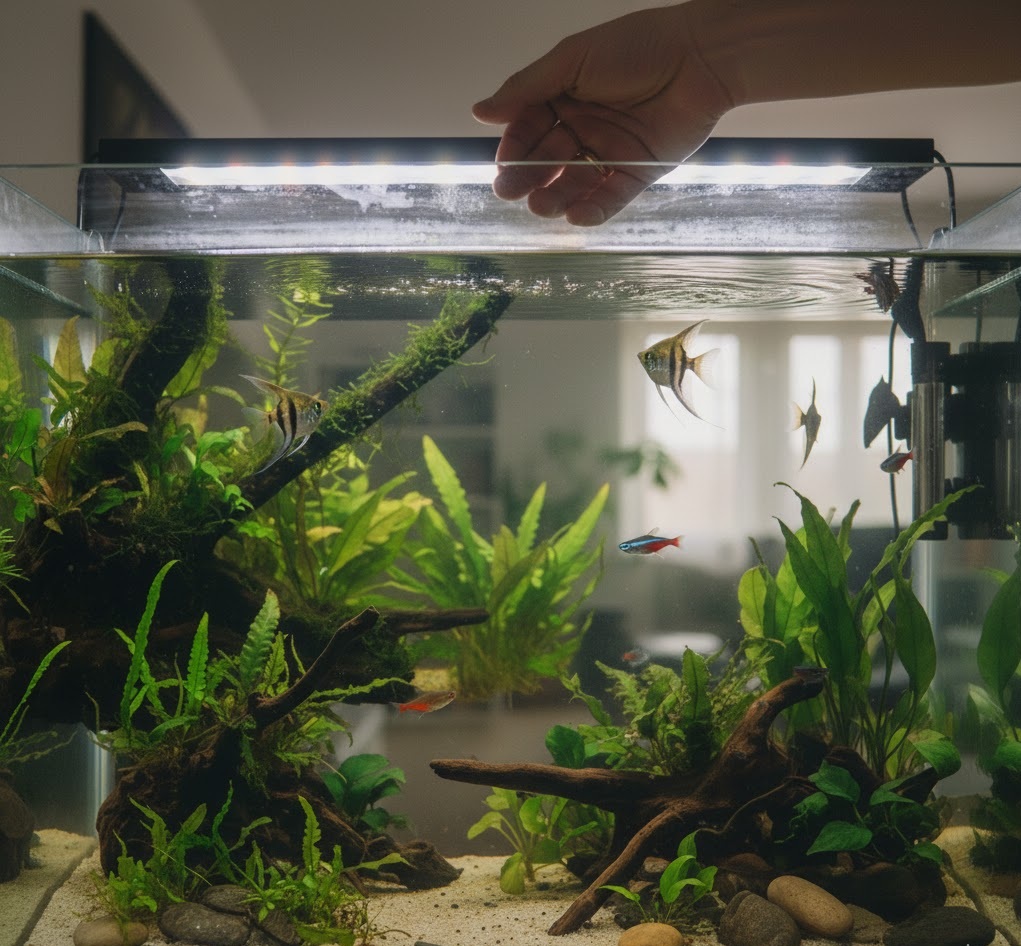
Step 4: Improve Oxygen Stability
- Increase surface agitation slightly
- Ensure filter output breaks the surface
- If heavily planted, watch morning behavior (that’s the oxygen truth window)
Step 5: Build a Routine That Keeps the Tank Boring
The goal is not “perfect water.” The goal is a system that doesn’t require constant intervention.
Quick Table: Symptoms and the Real Cause
| What You Notice | Most Likely Cause | Best Move |
|---|---|---|
| You change water often but nitrates still climb | Input exceeds processing capacity | Reduce feeding and build bio capacity |
| Fish act stressed after maintenance | Swings from big changes + over-cleaning | Small changes, gentle cleaning, consistency |
| Tank looks clear but feels fragile | Invisible organics + oxygen debt | Improve oxygen, reduce organics, stop resets |
| Ammonia/nitrite “blips” appear randomly | Biofilter lag + maintenance shocks | Stabilize routine, avoid total clean days |
Soft YouTube Bridge
If you want to see how stability breaks when maintenance is done the wrong way, our FishTank Mastery YouTube channel shows real filter-cleaning routines and the exact mistakes that trigger ammonia spikes.
FAQ: Constant Water Changes
How often should I change aquarium water?
Many stable freshwater tanks do well with weekly or biweekly partial changes. If you need frequent large changes to prevent issues, the system is usually overloaded or unstable.
Why does my aquarium need water changes so often?
The most common reasons are overfeeding, high bioload, unstable filtration capacity, and maintenance routines that reset bacteria and stability.
Do more water changes always fix the problem?
No. Water changes dilute issues, but they don’t remove the root cause. A stable tank requires reduced input and steady biological capacity.
Can water changes stress fish?
Yes, especially if they are large or frequent and cause temperature or chemistry swings. Smaller, consistent changes are usually safer.
Scientific Insight: Why Constant Water Changes Become Necessary
Frequent water changes are often a symptom of excessive organic input relative to processing capacity. Organic matter increases microbial activity and oxygen demand, and unstable dissolved oxygen can stress fish even when the water appears clear.
The U.S. Geological Survey (USGS) Water Science School explains dissolved oxygen dynamics and why oxygen levels can drop as biological respiration increases, especially when organic loads are high.
The U.S. Environmental Protection Agency (EPA) describes how excess nutrients and organic matter drive microbial growth and oxygen depletion in aquatic systems, which mirrors what happens in overfed, unstable home aquariums at a smaller scale.
University-based aquaculture guidance, such as University of Missouri Extension – Fisheries & Aquaculture, reinforces stability-first husbandry: gradual, consistent changes reduce stress compared to abrupt resets that destabilize biological filtration.
In practice, experienced aquarists see the same pattern: when you reduce inputs, preserve beneficial bacteria, and stabilize oxygen and routine, the need for constant water changes drops sharply.
Closing: Stop “Maintaining” the Tank Into Instability
If you’re doing constant water changes, you’re not lazy. You’re stuck in a loop.
The exit is simple but not glamorous: reduce input, stop resetting filtration, use smaller consistent changes, and prioritize oxygen and routine stability. When the system becomes predictable, your tank stops demanding constant intervention and finally becomes boring again. That’s the win.