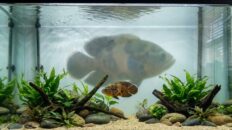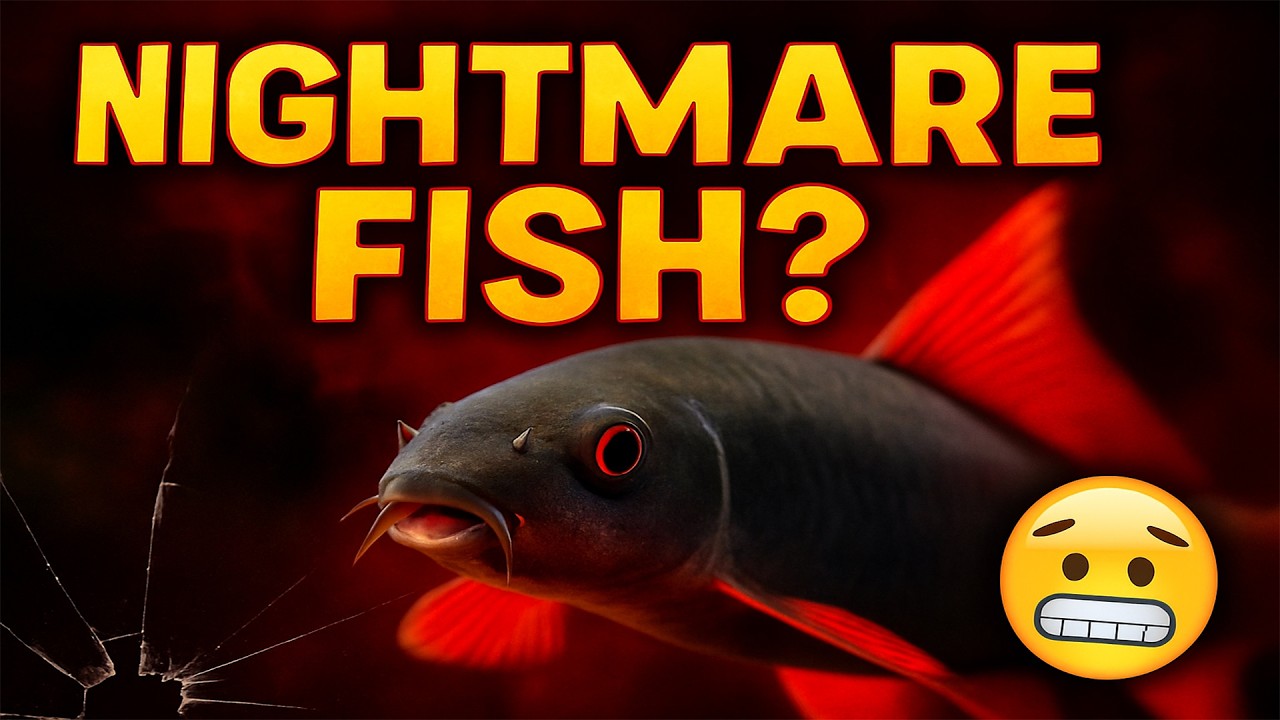

Monster aquarium fish alternatives are the solution most beginners never hear about. If you love the monster fish look but don’t want aggressive behavior, massive tank upgrades, or irreversible beginner mistakes, this guide explains which monster fish to avoid and what actually replaces them safely.
Most videos simply list huge species without explaining why they fail long-term. This guide focuses on what most fish channels never explain: why monster fish outgrow aquariums, how behavior evolves as body size increases, and why some fish become aggressive even in very large tanks.
In the video above, we break down 13 monster aquarium fish that hobbyists regret buying and explain the realistic aquarium-safe alternatives that replace them successfully in home tanks.
Instead of just warning you away from monster fish, this video explores the real biology and evolution behind why some species grow to immense size. By understanding the environments and behaviors that shaped these giants, you can choose smaller, suitable predators that deliver the same visual impact without overwhelming your aquarium.
Watch the Full Monster Fish Breakdown
In the video, we break down the realistic aquarium-safe replacements and show why they work biologically. This article focuses on the science behind why monster fish become problems in the first place.
Why Monster Fish Fail in Home Aquariums
Monster fish failures rarely happen in the first months. Juveniles often appear calm, interactive, and even community-tolerant. This creates a false sense of success. Over time, that stability erodes as the fish completes its biological development.
What hobbyists experience as “sudden aggression” or “unexpected tank crashes” is usually the predictable outcome of stress accumulation, metabolic scaling, and behavioral transitions. These are not random events. They follow known biological rules.
The Scientific Truths Behind Monster Fish Growth
Truth #1: Metabolic Scaling Is Not Linear
Large predatory fish follow a foundational biological rule known as metabolic scaling, commonly described by Kleiber’s Law. As body mass increases, metabolic rate rises at a slower, non-linear pace. This means large predators become more energy-efficient, not calmer.
In aquarium systems, this efficiency translates into dominance pressure. Larger fish require disproportionately more oxygen, recover more slowly from stress, and exert stronger control over space and resources. Waste production, oxygen demand, and recovery time increase faster than most filtration systems can compensate.
This is why tank size alone does not solve monster fish aggression. Biology scales faster than glass volume.
Scientific reference: Kleiber’s Law – Metabolic Scaling
Truth #2: Juvenile Masking Is Real Biology
Many monster fish suppress adult behaviors during early growth stages. This phenomenon is known as juvenile masking. During this phase, energy is prioritized for growth efficiency rather than territorial dominance or aggression.
FishBase growth curve data clearly illustrates this pattern. Species such as Redtail Catfish are documented to reach extreme adult sizes, yet juveniles appear manageable and calm. Their life-history data shows long lifespans, massive maximum lengths, and metabolic profiles consistent with aquatic megafauna.
Once growth slows and body mass reaches a threshold, hormonal regulation shifts. Dominance behaviors emerge rapidly. What appears to be a personality change is actually the completion of the species’ biological development.
Scientific reference: FishBase – Redtail Catfish Life History
Truth #3: Ontogenetic Shifts Change Behavior, Not Just Size
Textbook-level fish biology describes ontogenetic shifts as stage-based changes in behavior, diet, and ecological role. Juvenile fish occupy survival-focused niches. Adults transition toward reproduction, territory control, and dominance.
This shift often occurs abruptly once a body-mass threshold is reached. Species such as giant gourami, aggressive cichlids, and megafauna predators may appear stable for years before becoming incompatible with their environment.
The aquarium does not fail. The fish completes its evolutionary program.
Scientific reference: Helfman et al. – The Diversity of Fishes
Why Big Tanks Still Fail
One of the most persistent myths in the aquarium hobby is that bigger tanks solve monster fish problems. While larger volume delays failure, it rarely prevents it.
As large fish mature, they accumulate physiological stress from territory limitation, oxygen competition, and dominance loops. Elevated cortisol levels reduce tolerance for tankmates and amplify aggression. This stress feedback loop persists regardless of tank size.
Filtration addresses waste, not behavior. No amount of filtration can remove stress hormones or override evolved dominance strategies.
Water Chemistry and Predator Stress
Most monster fish articles ignore water chemistry beyond basic ammonia warnings. This is a major oversight. Predatory fish respond strongly to subtle chemistry fluctuations.
Ammonia spikes trigger heightened aggression and feeding responses. Elevated nitrate contributes to chronic stress. pH instability interferes with oxygen uptake efficiency, especially in large-bodied fish.
In predator-heavy tanks, these chemistry stressors amplify dominance behavior long before water tests appear “dangerous” to beginners.
Monster Aquarium Fish Failure Timeline
| Phase | What You See | What Is Actually Happening |
|---|---|---|
| Year 1 | Calm juvenile behavior | Juvenile masking, growth prioritization |
| Year 2 | Increased feeding response | Metabolic acceleration, stress buildup |
| Year 3 | Territorial aggression | Ontogenetic shift, dominance emergence |
| Year 4+ | Tank instability or collapse | Biological mismatch completed |
Monster Fish You Must Reconsider
| Monster Fish | Max Size | Primary Risk Factor | Why It Fails |
|---|---|---|---|
| Redtail Catfish | 180 cm | Juvenile masking | Megafauna metabolism overwhelms systems |
| Giant Gourami | 70 cm+ | Ontogenetic aggression | Territorial dominance escalates |
| Arowana | 90 cm+ | Surface-feeding evolution | Jumping and strike behavior |
| Peacock Bass | 75 cm+ | Fast-twitch predation | Strike speed incompatible with tanks |
| Alligator Gar | 300 cm | Air-breathing physiology | Lung-assisted dominance |
| Arapaima | 450 cm | Megafauna scaling | Not an aquarium species |
The realistic aquarium-safe replacements for these species are explained in detail in the video above. Seeing the behavioral comparison visually is critical to understanding why those alternatives succeed.
Monster Fish Myths You Must Stop Believing
Myth: Bigger tanks solve aggression.
Reality: Stress biology scales with body mass.
Myth: Peaceful juveniles stay peaceful.
Reality: Juvenile masking hides adult traits.
Myth: Filtration fixes everything.
Reality: Stress hormones cannot be filtered out.
Related Guides to Strengthen Your Stocking Strategy
Aggression is not limited to large fish. Our guide Top 10 Most Aggressive Aquarium Fish explains why certain species escalate conflict regardless of tank size.
Even small fish can cause outsized problems. The article 10 Tiny Fish You Should NEVER Buy shows how deceptive appearances lead to unexpected tank disasters.
Community experience matters. 11 Monster Fish That DESTROY Tanks compiles real-world failures shared by experienced aquarists.
For a deeper behavioral breakdown, read These Monster Fish That Will DESTROY Your Aquarium, which examines long-term outcomes.
Schooling behavior is often misunderstood. Don’t Buy These Schooling Fish explains when group dynamics stabilize or collapse.
Watch Next – Continue the Monster Aquarium Fish Series
- 10 Aquarium MONSTER Fish
- Monster Fish That Destroy Aquariums Playlist
- Fish You’ll Regret Buying – Peaceful Alternatives
Monster aquarium fish alternatives are not about compromise. They are about understanding biology. When stocking decisions align with natural behavior instead of fighting it, aquariums become stable, safer, and far more rewarding long-term.
If you want to see the real-world behavior comparisons and the exact aquarium-safe replacements,
watch the full breakdown here: Best MONSTER Aquarium Fish Alternatives – Full Video Guide
The video shows why these alternatives work biologically, not just visually.