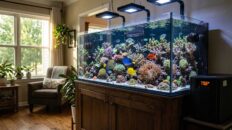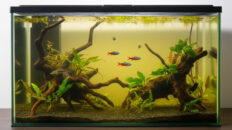

Think your new tank looks pristine? It doesn’t mean it’s safe. Skipping early water changes can lead to deadly ammonia spikes, bacterial blooms, and classic New Tank Syndrome. Here’s why changing water early is critical—and how to do it right.
Reason #5: “Clear” Water Can Be Dangerous
Crystal-clear water may hide toxic unseen dangers.
Clear water isn’t always safe—ammonia and nitrite can lurk at deadly levels without visible sign.
📄 The Spruce Pets – Ammonia Poisoning in Aquarium Fish
Reason #4: Bacterial Bloom in New Tanks
An invisible mess—the bloom thrives on organic waste and multiplies rapidly.
New tanks are prone to bacterial blooms caused by uneaten food or waste; these blooms can deplete oxygen and stress fish.
📄 The Spruce Pets – How to Resolve Bacterial Bloom
Fix: Perform small water changes (10–20%) daily, increase aeration, and let the bloom settle.
Reason #3: Hidden Ammonia Spikes
Without changes, ammonia can quickly become lethal before you notice.
Skipping early water changes often leads to ammonia spikes—oxygen deprivation, tissue damage, and death.
📄 Aquarium – Wikipedia overview of nitrogen waste in closed tanks
Reason #2: Build-Up of Nitrates & Toxins = Old Tank Syndrome
Skipping water changes leads to hidden nitrate problems that weaken fish over time.
Even harmless nitrates can suppress growth and immunity; long-term buildup leads to Old Tank Syndrome.
📄 The Spruce Pets – What Causes Old Tank SyndromeFix: Small daily changes (10–15%) if nitrates exceed ~40 ppm. Don’t shock fish with large changes at once.
Reason #1: Only Real Treatment for New Tank Syndrome
When bacteria aren’t established, toxic ammonia can spike—and water changes are the only reliable defense.
New Tank Syndrome kills fish quickly. Proper cycling can take 4–6 weeks—and water changes are the only proven mitigation, according to veterinarians.
📄 PetMD – New Tank Syndrome Causes & Prevention
Quick Recap Table
| # | Danger | What to Do |
|---|---|---|
| 5 | Hidden toxins in “clear” water | Test water frequently |
| 4 | Bacterial bloom | Small daily changes & aeration |
| 3 | Ammonia spike | Partial changes + test kits |
| 2 | Old tank syndrome (nitrates) | 10–15% daily changes if needed |
| 1 | New tank syndrome | Water changes + patience |
Watch the Video
▶️ Skip WATER CHANGES in New Tanks? BIG Mistake!
Timestamps
0:00 – Clear Water Isn’t Safe
0:22 – #5: Why “Looks Clean” Can Be Deadly
0:47 – #4: Bacterial Bloom in New Tanks
1:07 – #3: Hidden Ammonia Spikes
1:27 – #2: Trapped Nitrates & Toxins
1:49 – #1: The Risk of Old Tank Syndrome
2:10 – Bonus Tip: Stop Believing This Myth
2:29 – Final Thoughts + Share Your Mistake!
About FishTank Mastery
At FishTank Mastery, we turn aquarium chaos into clarity. Our content mixes scientific insight and practical beginner tips—so you can master aquarium care fast and safe. Subscribe and let’s build thriving tanks together.
📌 Subscribe here: youtube.com/@FishTankMastery
Essential Maintenance Tips for New Aquariums
Starting a new tank? Make sure to follow our Maintenance & Troubleshooting Guide to keep things running smoothly. Learn the science behind stable water with our Walstad vs Father Fish Comparison. For crystal clear water, read Top 7 Aquarium Secrets Most Fishkeepers Don’t Know. And if algae are creeping in, try our Top 5 Algae Eaters for Beginners.