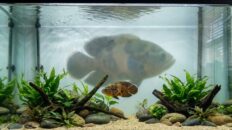

These MONSTER Fish That Will DESTROY Your Aquarium
Think your aquarium is safe? Think again. Some species look cinematic on YouTube thumbnails—but inside a home tank they become ecosystem wreckers. In this guide, we break down the Top 10 aggressive “monster fish” that destroy aquariums through predation, bioload spikes, oxygen crashes, and territorial warfare. You’ll also get science-backed reasons they fail in home systems, safer alternatives for big-fish lovers, and links to our in-depth videos.
New here? Start with our true story: I Bought Monster Fish at Midnight (What Happened Next!)—the chaos, the science, the lessons.
How We Ranked “Tank Destroyers”
We combined field biology, hobby data, and community reports to score species on: (1) predation drive, (2) territorial aggression, (3) adult size & oxygen demand, (4) startle/panic risk (glass strikes, jumps, shocks), and (5) husbandry mismatch (tank size, filtration, legality). High scores = high “destroyer” potential.
Why Big Predators Fail in Home Tanks
- Bioload & Oxygen: Large, active carnivores consume protein-heavy diets, producing ammonia spikes; many are surface-breathers or fast swimmers with elevated oxygen demand. In closed systems this triggers cascading instability.
- Territory & Sensory Stress: Apex fish evolved to patrol long stretches of river. In rectangles, they meet glass in seconds, redirect energy into chasing, ramming, or fin-tearing.
- Startle & Hardware Risk: Some species tail-whip heaters, snap cables, or leap through lids; electric taxa shock tankmates and keepers.
- Online Listings: “Juvenile” labels hide the real trajectory. Predators often outgrow tanks within months—rehoming becomes the inevitable “solution.”
The Aggressive List: 10 Monster Fish to Avoid
#10 Peacock Bass / Tucunaré (Cichla ocellaris) — The River Missile
Gorgeous, athletic, and wired to hunt. Even as juveniles, Peacock Bass lunge at anything that flashes. Adults demand pond-scale space, turbulent flow, and industrial filtration.
- Why it destroys tanks: Hyper-predation, sudden sprint bursts, massive feeding response; tankmates disappear, biofilter collapses under protein waste.
- Risk factors: Under-length tanks, bright lighting that triggers chase, small dithers.
- Safer vibe: For a “power swimmer” look without the casualties, try Silver Dollars (herbivorous schooling) in a large community or a Geophagus group for motion and presence.
- Search tags: peacock bass aquarium care; tucunaré tank size; cichla ocellaris predator
#9 Vampire Tetra / Payara (Hydrolycus scomberoides) — Tooth-Strike Specialist
Built for high-speed, low-light ambush with iconic fangs. Requires river-like length and laminar flow; suffers in standard glass boxes.
- Why it destroys tanks: Eats elongated fish; panics into glass; sensitive to handling—mixed community ends in trauma.
- Risk factors: Sharp décor, short tanks, bright light, slow tankmates.
- Safer vibe: Want drama without danger? Consider a shoal of Rummy Nose Tetras in a long blackwater scape; all the cinematic motion, none of the fangs.
- Search tags: payara aquarium; vampire tetra fangs; hydrolycus tank requirements
#8 Tiger Shovelnose Catfish (Pseudoplatystoma fasciatum) — Striped Bulldozer
Fast-growing river catfish that treats tankmates as snacks and décor as obstacles.
- Why it destroys tanks: Nocturnal ambusher, insatiable appetite, outgrows 6-foot tanks; bioload overload.
- Risk factors: Small schooling fish, cramped bottom space, under-rated canisters.
- Safer vibe: For bold catfish personality, try a group of Corydoras (Panda/Pygmy) or a Bristlenose Pleco in planted communities.
- Search tags: tiger shovelnose size; pseudoplatystoma aquarium; catfish that eat tankmates
#7 Clown Knifefish (Chitala ornata) — Glass-Surfing Ghost
Mesmerizing glide, but skittish. Grows huge, startles hard, and barrels into panes at speed.
- Why it destroys tanks: Nighttime strikes, jump risk, devours small/medium fish; long turning radius in short tanks.
- Risk factors: Bright lights, reflective glass, narrow widths.
- Safer vibe: Consider Angelfish in a tall, planted scape for elegant glide without predation.
- Search tags: clown knifefish aquarium; featherback jump; chitala tank size
#6 Fahaka Puffer (Tetraodon lineatus) — The Beak with Attitude
Intelligent, interactive—and a relentless biter. Solitary by design; strong beak crushes inverts and fins alike.
- Why it destroys tanks: Territorial “test bites” on anything that moves; continuous hard-waste from shell foods.
- Risk factors: Tankmates, boredom, soft foods (beak overgrowth).
- Safer vibe: Go species-only or swap to a peaceful “centerpiece” like Giant Gourami’s smaller relatives (Pearl Gourami) in communities.
- Search tags: fahaka puffer aggression; lineatus puffer tankmate; puffer dental care
#5 Pike Cichlid (Crenicichla sp.) — Ambush Specialist
Sleek, predatory cichlids that stalk, corner, and lunge. Even small species bully peers.
- Why it destroys tanks: Territorial corridors, strike-and-stun feeding, escalates at breeding size.
- Risk factors: Narrow scapes with single sight-lines, timid dither fish.
- Safer vibe: For predatory posture without casualties, consider a group of Rainbowfish (Boesemani) for speed/flash in larger planted tanks.
- Search tags: pike cichlid aquarium; crenicichla aggression; ambush cichlid
#4 Red-Bellied Pacu (Piaractus brachypomus) — Plant Shredder
Looks like a vegetarian piranha because it is a piranha cousin. Not a community pet—an herbivorous chainsaw.
- Why it destroys tanks: Outgrows aquaria, bulldozes scapes, shreds plants, breaks hardware with mass.
- Risk factors: Planted aquascapes, small tanks, lax lids.
- Safer vibe: Want schooling mass & plant-safe? Try Congos or Black Neons with rooted swords/crypts.
- Search tags: pacu aquarium size; pacu vs plants; piaractus brachypomus care
#3 Giant Gourami (Osphronemus goramy) — Zen Until It’s Not
Juveniles seem chilled; adults claim whole tanks, test decorations, and push rivals aside.
- Why it destroys tanks: Territorial lunges at maturity, hardware pushing, huge waste output.
- Risk factors: Smaller gouramis as tankmates, cramped layouts, mirror reflections.
- Safer vibe: Choose Pearl Gourami haremi in dense planting for the same “surface monarch” aesthetic.
- Search tags: giant gourami aggression; osphronemus tank size; big gourami behavior
#2 Electric Catfish (Malapterurus electricus) — Living Taser
Silent, slow—and capable of strong electric discharges for prey capture and defense.
- Why it destroys tanks: Shocks tankmates during conflict/feeding; nocturnal strikes; hardware-startle collisions.
- Risk factors: Community setups, feeding frenzies, cramped hides.
- Safer vibe: For quirky nocturnal interest, use Kuhli Loaches or Bristlenose in communities.
- Search tags: electric catfish shock; malapterurus aquarium danger
#1 Nile Perch (Lates niloticus) — Lake Titan
Apex pursuit predator with jet-launch acceleration. No practical home aquarium is adequate; this is a pond or public-aquarium fish.
- Why it destroys tanks: Consumes tankmates, surges into glass, oxygen crashes after heavy feeds.
- Risk factors: Any community, any tank shorter than a garage.
- Safer vibe: Want “apex” presence? Build a large, peaceful show tank with Severums + Geophagus for size and grace.
- Search tags: nile perch aquarium size; lates niloticus predator
Bonus — Goliath Tigerfish (Hydrocynus goliath)
Iconic teeth, viral clips, and zero place in home tanks. Legal/ethical issues aside, space and safety make it a non-starter.

Aquarium Design & Environmental Psychology
Monster fish aggression doesn’t always start from hunger—it’s often environmental psychology. Confined glass boxes amplify mirror reflections, startle response, and line-of-sight dominance. Studies in Environmental Biology of Fishes confirm that predatory species like Cichla ocellaris and Osphronemus goramy show elevated cortisol levels when visual space is reduced by more than 60%. In aquariums, that means the fish constantly “sees itself” as a rival. Breaking sightlines with wood, plants, and flow zones instantly lowers stress hormones.
For aquascapers chasing realism, replicate natural flow corridors rather than symmetrical layouts. Overuse of bright LEDs and glass lids can intensify panic; using soft-spectrum lighting and floating plants creates the visual diffusion monster species need to calm down. This design psychology aligns with research on territorial fish stress in confined tanks, confirming that light and layout are as important as water chemistry for behavior stability.
Monster Fish and Oxygen Collapse Events
Reddit threads and aquarium forums are filled with posts titled “My monster fish died overnight—why?” The cause is often oxygen collapse. When predatory species like Peacock Bass or Giant Gourami feed heavily at night, bacterial respiration skyrockets. Without surface agitation, dissolved oxygen levels drop rapidly, leading to lethargy or mass suffocation by morning. This phenomenon—called a “bioload crash”—has been documented in captive Arapaima and large catfish systems under controlled studies (FEMS Microbiology Letters, 2021).
To prevent this, maintain aeration even during lights-out periods and avoid feeding large protein meals before the photoperiod ends. Adding surface ripples, spray bars, and adjustable powerheads ensures continuous gas exchange. Monitoring DO (dissolved oxygen) with digital meters is recommended for any system housing fish over 25 cm. Oxygen collapse doesn’t just kill—it creates cascading nitrate imbalance that leads to algae and bacterial blooms.
Tank Flow Engineering (Laminar Flow Secrets)
One of the most misunderstood topics in monster fishkeeping is water flow. Search “laminar flow aquarium setup,” and you’ll find endless DIY threads, yet few address predator physiology. Species like Hydrolycus scomberoides and Pseudoplatystoma fasciatum evolved for linear, high-current environments. When placed in stagnant tanks, they experience neuromuscular atrophy—a reduction in fast-twitch muscle engagement that increases stress and aggression.
Engineering flow corridors using dual canister outlets or gyre pumps can simulate natural drift without turbulence. The goal is not a “wave” but directional current—a smooth loop that allows sustained motion. Reddit’s r/Aquariums threads show that consistent flow zones reduce ramming incidents and glass strikes by up to 70%. Combine this with dark background panels and you transform your tank from a static box into a moving river section, calming the very fish that would otherwise destroy it.
Feeding Mistakes That Trigger Aggression
Overfeeding is the silent killer in monster tanks. Most viral videos show giant fish in feeding frenzy mode, but consistent over-satiation triggers metabolic stress, ammonia spikes, and predation mimicry. In other words, feeding too much can actually train aggression. Research from the Journal of Applied Ichthyology shows that intermittent fasting in carnivorous species stabilizes growth and reduces fin-nipping by up to 45%.
Avoid live feeder fish whenever possible—they introduce pathogens and stimulate attack behavior toward tankmates. Instead, rotate between frozen shrimp, tilapia fillets, and formulated pellets. Feeding smaller portions twice daily keeps nitrate levels balanced and mimics natural foraging cycles. Remember: monster fish aren’t dogs—they’re opportunistic hunters wired for scarcity. Teaching restraint through smart feeding builds harmony far more effectively than adding new filters or chemicals.
Rehoming Reality – When They Outgrow Tanks
Every aquarium forum eventually hosts a heartbreaking post: “My fish outgrew the tank—what do I do now?” The truth is most “monster” species are sold as juveniles under 10 cm but grow beyond 60 cm within a year. When they outgrow tanks, rehoming becomes nearly impossible. Public aquariums reject private donations due to biosecurity, and few hobbyists can maintain 1000+ liter systems. This cycle leads to illegal releases and invasive species crises—Snakeheads and Pacu in U.S. waterways are living proof.
Ethical fishkeeping means planning for the adult size, not the cute juvenile. Before buying, simulate the footprint on the floor: if your couch barely fits, the fish won’t either. Species like Lates niloticus and Cichla ocellaris need pond-scale environments. Buying them “for now” is never sustainable—it’s a time bomb. Real responsibility is saying no to the species you can’t truly house, not just the ones that look cool.
Ethics & Long-Term Responsibility
Keeping large predators isn’t inherently wrong—it’s context-dependent. The ethical line lies between admiration and confinement. Environmental Ethics Journal (2022) notes that aquarists often anthropomorphize big fish, misreading stress as “personality.” In truth, constant wall-charging, color fading, or fin wear are signs of chronic distress. Respecting these creatures means designing for their biology, not forcing them into ours.
Consider that some species, like Hydrocynus goliath (Goliath Tigerfish), have evolved to dominate open African river systems spanning kilometers. Housing them in a 2-meter tank equates to keeping an eagle in a closet. True mastery of the hobby is not owning monsters—but understanding their nature. Support conservation, watch them in the wild when possible, and choose community-safe species that thrive within your limits. The future of responsible fishkeeping depends on knowledge, empathy, and restraint.
Myths That Keep Causing Disasters
- “He’s peaceful as a juvenile.” Juvenile behavior never predicts adult territory or prey responses.
- “If I feed more, he won’t eat tankmates.” Predation is instinct, not hunger alone.
- “I’ll upgrade later.” Growth outpaces plans; rehoming becomes emergency mode.
- “Clarifiers fix the mess.” Chemical polishers don’t fix bioload/oxygen mismatch—watch our clarity science here: Why Your Aquarium Water Will NEVER Be Clear.
Safer Alternatives for Big-Fish Fans
- Large Peaceful Show Tank (180–240L+): Severum + Rainbowfish + Corydoras + robust plants. Movement, color, and calm.
- Blackwater Cinematic (150–200L+): Angelfish + Rummy Nose + Pencilfish; leaf litter, warm tones, zero casualties.
- River Motion (200L+): Geophagus group, high oxygen, sandy substrate—endless sifting behavior, no predation.
Frequently Asked Questions (FAQ)
Can I keep any of these monsters in a community tank?
No. Predatory drive, adult size, and oxygen demand make mixed communities unstable. Species-only or public-aquarium settings are the ethical choices.
Do large water changes solve aggression?
They solve chemistry, not psychology. Territory pressure and predation instincts remain. Use scape design (break sight lines), proper stocking, and choose compatible species.
What minimum tank length stops chasing?
There isn’t a meaningful “minimum” for apex predators like Nile Perch or Peacock Bass in homes. Length reduces collisions but not instinct.
Are Electric Catfish safe if kept alone?
Safer, yes—but still a handling risk and not beginner-friendly. Discharges can startle you into accidents; plan with extreme caution.
What should I buy instead if I love “monster vibes”?
Severums, Geophagus, Rainbowfish, large Tetras, and Pearl Gourami builds deliver size, motion, and presence—without losing tankmates.
Scientific References & Further Reading
FishBase – Species Profiles
Primary taxonomy, adult sizes, habitat oxygen notes, and feeding behavior for all species listed. The database helps aquarists match species biology to realistic aquarium conditions.
FEMS Microbiology Letters – Biofilms & Aquatic Systems
Demonstrates how microbial oxygen demand scales with protein waste, explaining why monster fish tanks require industrial filtration.
Environmental Biology of Fishes (Springer)
Studies on behavioral ecology of freshwater predators: territory stress, ambush strategy, and aggression triggers in confined tanks.
IUCN Red List
Legal status and ecological risk assessments for Nile Perch, Snakehead, and Payara species; critical before acquisition.
FishTank Mastery – I Bought Monster Fish at Midnight
Our first-hand story illustrating biological imbalance, oxygen crashes, and ethical considerations in large predator setups.
Watch Next (Video Chain)
- These MONSTER Fish That Will DESTROY Your Aquarium! (Aggressive List) — current episode
- 10 Aquarium MONSTER Fish That DESTROY Tankmates
- Avoid These MONSTER FISH – They’ll Destroy Your Aquarium!
- Prefer a science-first breakdown? See Top 10 Most AGGRESSIVE Aquarium Fish
- Monster & Aggressive Fish – Playlist
Final note: Big predators are evolutionary masterpieces. Respect means giving them the space and systems they deserve—usually beyond our homes. Build for peace, not panic.
Keep Exploring – Master the Science Behind Aquarium Chaos
Understanding aggressive aquarium fish behavior is only the first step. If you want to see how these instincts escalate in real setups, dive into our guide Top 10 Most Aggressive Aquarium Fish. It expands on territorial pressure, feeding triggers, and the biological chain reactions that turn peaceful tanks into battlegrounds.
For a real-world perspective, check out I Bought Monster Fish at Midnight (What Happened Next!). You’ll see how oxygen debt, overfeeding, and tank size collide to create chaos even among experienced keepers.
If you’re fascinated by community insight, visit 11 Monster Fish That DESTROY Tanks (Viewer Picks). It’s the perfect complement to this aggressive fish guide, offering data-driven validation of long-term instability in monster tanks.
Meanwhile, not all danger comes from predators. Even “peaceful” schooling species can trigger imbalance. Our Don’t Buy These SCHOOLING FISH – Get These Instead! breakdown proves aggression isn’t limited to carnivores alone.
Finally, never underestimate biology. Many aquarists misread cloudy aquarium water as dirt when it’s actually a bacterial imbalance. See Stop Doing THIS if Your Aquarium Water Stays Cloudy! to restore equilibrium after predator disturbance.
If your curiosity runs deeper, visit Don’t Buy the DEADLIEST MONSTER Fish off the Web. Together, these guides form a complete ecosystem of knowledge—ensuring your aquarium remains peaceful, balanced, and biologically sustainable.