
Building a self-balancing freshwater aquarium clean up crew requires matching low-bioload specialists to specific tank zones—glass, substrate, and stubborn hair algae—instead of buying one giant fish. Most planted aquariums end up overrun by algae or crashing from ammonia spikes because hobbyists treat algae control as a single-species problem.
Walk into any chain pet store and ask for an algae eater, and you will likely walk out with a juvenile Common Pleco, a Chinese Algae Eater, or a bag of live-bearing snails. Within six months, that single impulse buy outgrows your aquarium, uproots expensive foreground carpets, bullies peaceful tetras, and produces more solid waste than your biological filter can oxidize. Worse still, dumping chemical algaecides or glutaraldehyde-based liquid carbon into the water melts sensitive plants like Vallisneria and Java moss while stressing beneficial nitrifying bacteria.
A functional clean up crew operates like a three-tier maintenance team. Every member occupies a distinct biological niche, consumes a specific type of organic waste or algae, and adds minimal ammonia to your nitrogen cycle.
A balanced freshwater aquarium clean up crew assigns low-bioload specialists to glass, substrate, and stubborn hair algae rather than relying on one oversized fish.
Why 90% of Aquarium Clean Up Crews Fail (The Bioload and Retail Trap)
An effective freshwater aquarium clean up crew must remove more organic waste and algae than it generates in metabolic ammonia. When a scavenger eats algae or uneaten fish food, it converts that biomass into energy, carbon dioxide, and nitrogenous waste excreted through its gills and feces. If you add heavy-bodied fish to solve a nutrient surplus, you increase total dissolved organics and accelerate the exact algae bloom you wanted to stop.
The Giant Algae Eater Myth (Common Plecos and Chinese Algae Eaters)
Retail aquariums rely on fast-growing river monsters because they are cheap to farm in outdoor ponds and look harmless at two inches long. Two species cause more planted tank disasters than almost any other fish in the hobby:
- Common Pleco (Hypostomus plecostomus): Sold in tiny plastic cups or crowded five-gallon retail cubes, this South American suckermouth catfish routinely reaches 18 to 24 inches in length. As it matures, its appetite shifts from soft glass algae to high-protein sinking foods, while its armored body bulldozes driftwood and snaps rooted stems. A single adult Common Pleco generates thick, rope-like waste strands that clog mechanical filter sponges within days.
- Chinese Algae Eater (Gyrinocheilus aymonieri): Juveniles graze biofilm actively, tricking beginners into thinking they found a miracle worker. Once this species passes four inches—on its way to 10 or 11 inches—it largely abandons algae, turns territorial, and latches onto the flanks of slow-moving fish like Angelfish, Discus, and Gouramis to feed on their protective slime coat.
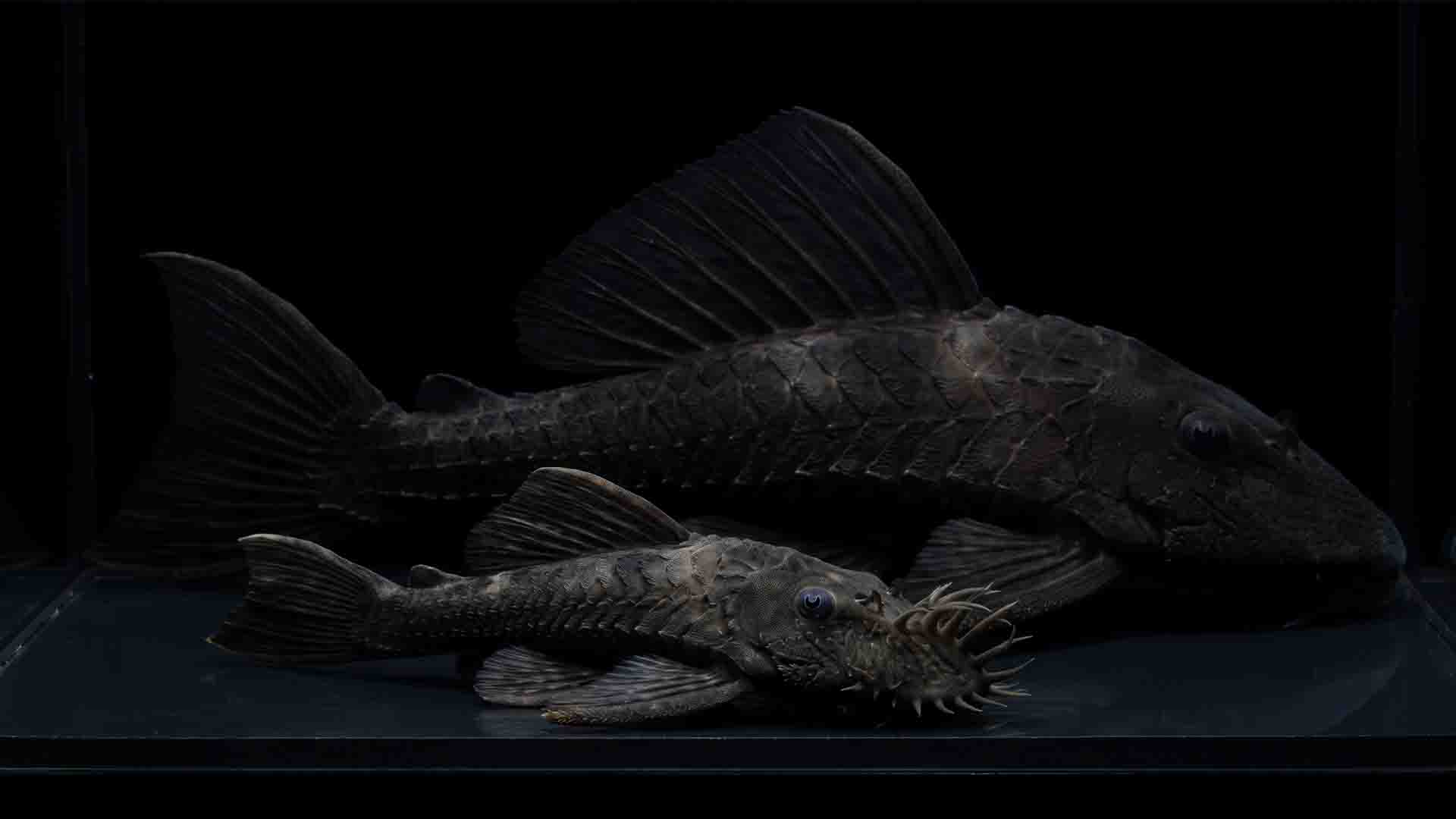
Pet stores sell juvenile Common Plecos that grow up to 24 inches and uproot planted tanks, whereas the Bristlenose Pleco stays compact at 4 to 5 inches.
The 3-Layer Biological Zoning Framework
Relying on one species to scrub glass, sift sand, and tear apart filamentous algae is like hiring a single window washer to maintain an entire apartment building. Instead, divide your aquascape into three functional zones and assign dedicated specialists to each layer:
- Layer 1 (Glass, Hardscape, and Delicate Plant Leaves): Targets brown diatoms, calcified green spot algae, and bacterial biofilm on vertical glass panels, stones, and fragile foliage without tearing plant tissue.
- Layer 2 (Substrate, Crevices, and Dense Carpets): Intercepts sinking fish pellets, melting leaves, and trapped detritus across open sand, tight driftwood gaps, and dense moss before anaerobic pockets form.
- Layer 3 (Stubborn Filamentous and Hair Algae): Eliminates tough, cellulose-walled green hair algae, string algae, and oily surface protein films that standard grazers ignore.
Every clean up crew member needs a specific target zone. When you match mouth anatomy and feeding behavior to the right tank layer, algae disappears without chemical intervention or filter overload.
Layer 1: Glass, Hardscape, and Delicate Plant Leaf Grazers
Your first line of defense handles flat surfaces and sensitive foliage. Layer 1 specialists require specialized rasping mouthparts capable of lifting tightly adhered algal cells off glass and wood without perforating slow-growing leaves like Anubias barteri or Bucephalandra.
#10. Nerite Snail (Neritina natalensis) – Zero-Outbreak Glass and Wood Control
Most aquarium snail recommendations end in regret because hobbyists accidentally introduce bladder snails (Physella acuta) or ramshorn snails on unquarantined plants. Those hermaphroditic species reproduce exponentially whenever stray fish food hits the gravel, swarming glass panels and jamming canister filter impellers within weeks.
The Nerite Snail eliminates the population explosion problem through its evolutionary reproductive biology. Equipped with a tough, chitinous radula—a ribbon-like tongue lined with microscopic teeth—Nerite snails scrape stubborn green spot algae (GSA) and brown diatoms (Bacillariophyta) completely clean from aquarium glass, rocks, and spiderwood. Because they grow to roughly one inch in diameter and possess a heavy, rounded shell, they cannot damage live aquatic plants.
Here is the biological advantage that separates Nerites from every pest snail: although female Nerite snails lay tiny, white sesame-seed egg capsules on driftwood and glass, those eggs cannot hatch into adult snails in freshwater. In the wild, Nerite larvae hatch as free-swimming veligers that must drift downstream into brackish or full-strength marine estuaries to survive. In a freshwater planted tank, zero babies survive. Keep your general hardness above 6 dGH and pH between 7.2 and 8.2 so the snail maintains a thick, erosion-free calcium carbonate shell.
#9. Otocinclus Catfish (Otocinclus vittatus) – Gentle Biofilm Care for Delicate Leaves
Cleaning broad, slow-growing leaves poses a mechanical challenge. Heavy plecos rasp right through the waxy cuticle of Anubias and Java Fern, leaving brown necrotic holes, while large snails weigh down fragile stem plants like Rotala rotundifolia.
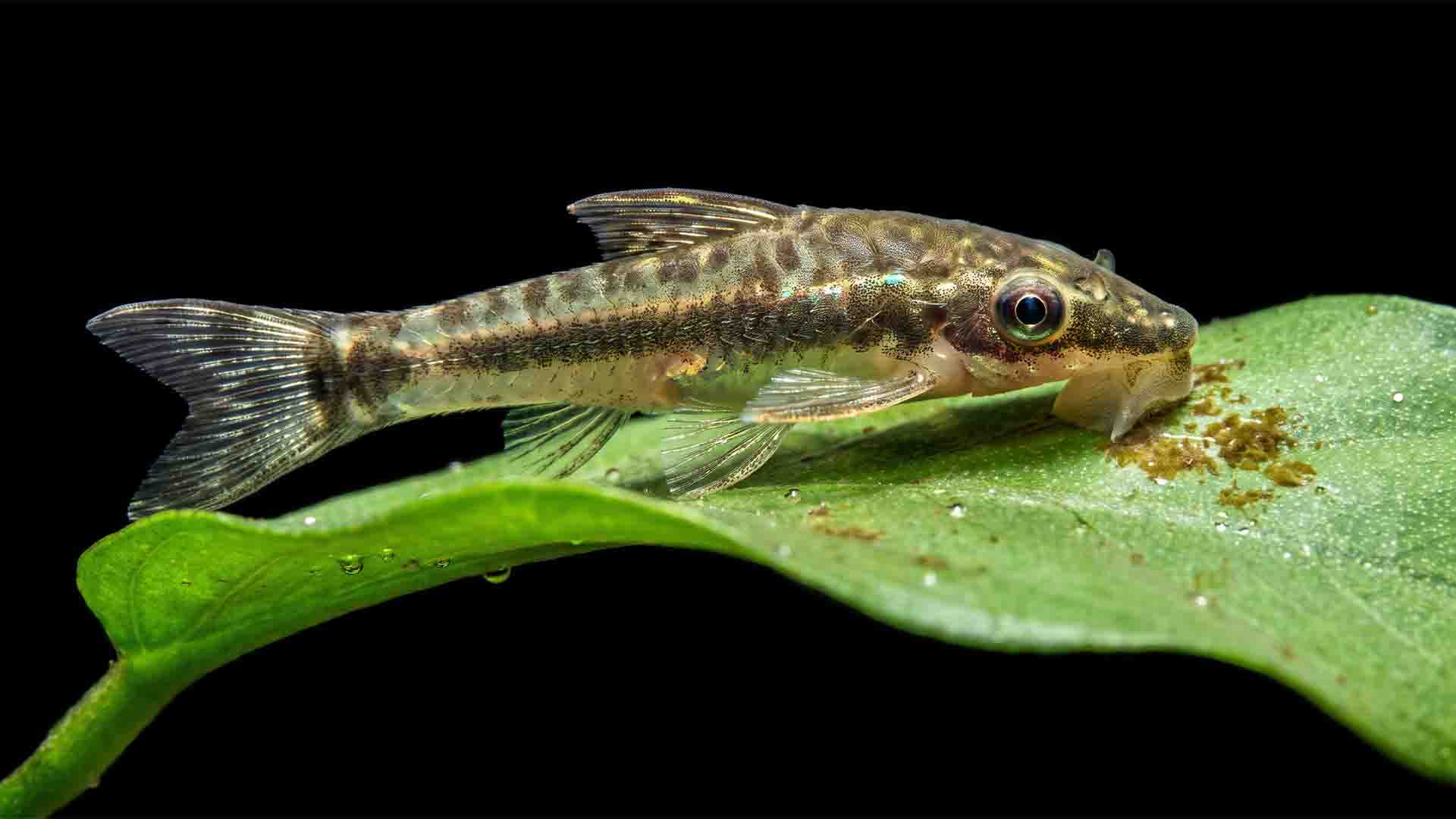
Unlike aggressive Chinese Algae Eaters, dwarf Otocinclus catfish rasp brown diatoms off delicate plant leaves without tearing tissue.
The Otocinclus Catfish solves this precision problem. Staying under two inches long, these peaceful South American dwarf suckermouth catfish rest weightlessly on narrow leaves and use soft, brush-like oral discs to lift brown diatoms and green dust algae without bruising plant tissue. They ignore tank mates completely and generate a fraction of the ammonia produced by standard community fish.
To keep Otocinclus alive long-term, avoid adding them to a brand-new aquarium. Almost all Otocinclus in the aquarium trade are wild-caught and spend weeks in transit without food, which depletes the symbiotic gut bacteria they need to digest plant matter. Introduce a social group of four to six Otocinclus only after your tank has matured for at least six to eight weeks with visible biofilm on the glass and hardscape. Once they polish off the initial diatom bloom, supplement their diet twice a week with blanched zucchini slices or high-spirulina sinking wafers so they never starve.
#8. Bristlenose Pleco (Ancistrus cirrhosus) – Heavy-Duty Driftwood Scrubbing Without the Bioload
Tiny Otocinclus catfish excel on fragile foliage, but their delicate mouths cannot strip thick, crusty algae buildup off textured Malaysian driftwood or porous volcanic rock. When hobbyists reach for a Common Pleco to handle heavy scrubbing, they trigger the 24-inch tank-buster disaster.
The Bristlenose Pleco delivers industrial-grade wood and glass rasping power in a compact four-to-five-inch frame. Easily identified by the fleshy, branched tentacles (odontodes) growing across the snout of mature males, Ancistrus cirrhosus works steadily after lights out to scour biofilm, green spot algae, and softening surface fibers from hardscape.
Because it stays under five inches, a single Bristlenose Pleco thrives in a standard 20-to-30-gallon planted community aquarium without uprooting foreground plants or overwhelming your filtration capacity. Keep at least one piece of natural driftwood in the aquarium; Bristlenose plecos are xylophagous grazers that ingest microscopic wood fibers to maintain healthy gut motility, which also keeps them from rasping broad-leafed Amazon swords (Echinodorus).
Master Comparison Table: The 10 Best Freshwater Clean Up Crew Species
Use the matrix below to select compatible species based on your aquarium volume, substrate grain size, water hardness, and active algae type. Never add all ten species into a single tank; pick one specialist per occupied zone.
| Rank & Species | Tank Layer | Primary Target | Max Size | Min Tank | Bioload | Water Params | Critical Rule |
|---|---|---|---|---|---|---|---|
| #10. Nerite Snail (Neritina natalensis) | Layer 1: Glass & Wood | Green spot algae, brown diatoms | 1.0 in (2.5 cm) | 5 gal | Very Low | pH 7.2–8.2 GH 6–15 | Eggs cannot hatch in freshwater; needs calcium |
| #9. Otocinclus Catfish (Otocinclus vittatus) | Layer 1: Plant Leaves | Brown diatoms, soft green dust | 2.0 in (5.0 cm) | 10 gal | Very Low | pH 6.5–7.5 GH 4–12 | Keep 4–6 in mature tanks only; supplement diet |
| #8. Bristlenose Pleco (Ancistrus cirrhosus) | Layer 1: Hardscape | Wood biofilm, green spot algae | 4.5 in (11.5 cm) | 20 gal | Moderate | pH 6.5–7.8 GH 4–15 | Requires natural driftwood for gut digestion |
| #7. Mystery Snail (Pomacea bridgesii) | Layer 2: Lower Tank | Decaying leaves, sinking pellets | 2.0 in (5.0 cm) | 10 gal | Low–Mod | pH 7.2–8.0 GH 8–16 | Lays egg clutches above waterline for easy control |
| #6. Corydoras Catfish (Corydoras spp.) | Layer 2: Open Sand | Uneaten protein, trapped detritus | 2.5 in (6.5 cm) | 20 gal | Low | pH 6.4–7.6 GH 3–12 | Keep 6+ on smooth sand; sharp gravel erodes barbels |
| #5. Kuhli Loach (Pangio kuhlii) | Layer 2: Crevices | Hidden scraps under wood/rocks | 3.5 in (9.0 cm) | 20 gal | Very Low | pH 6.0–7.2 GH 2–10 | Nocturnal; keep 5+ with tight cave hiding spots |
| #4. Cherry Shrimp (Neocaridina davidi) | Layer 2: Moss & Carpet | Micro-detritus, soft biofilm | 1.5 in (3.8 cm) | 5 gal | Near Zero | pH 6.6–7.8 GH 6–12 | Avoid aggressive fish; keep stable TDS and KH |
| #3. Black Molly (Poecilia sphenops) | Layer 3: Upper & Surface | Surface protein film, string algae | 3.5 in (9.0 cm) | 20 gal | Moderate | pH 7.2–8.2 GH 10–20 | Prefers harder alkaline water; skips soft acidic tanks |
| #2. Florida Flagfish (Jordanella floridae) | Layer 3: Hardscape & Stems | Dense green hair algae | 2.5 in (6.5 cm) | 20 gal | Low | pH 6.8–7.8 GH 5–15 | Do not house with slow, long-finned fancy guppies |
| #1. Amano Shrimp (Caridina multidentata) | All Layers (1, 2 & 3) | Hair algae, staghorn, dead leaves | 2.0 in (5.0 cm) | 10 gal | Near Zero | pH 6.5–7.6 GH 5–12 | Larvae need saltwater; will not overpopulate tank |
Layer 2: Substrate, Crevice, and Carpet Detritus Specialists
Once your glass panels and broad leaves are covered, organic debris still accumulates along the aquarium floor. Uneaten high-protein pellets, fish waste, and shedding plant leaves settle into substrate valleys where standard filter intakes cannot reach. Layer 2 specialists intercept and break down this organic load before it mineralizes into dissolved phosphate and triggers an algae outbreak.
#7. Mystery Snail (Pomacea bridgesii) – High-Capacity Leaf and Pellet Patrol
Tiny grazing snails barely make a dent when an older cryptocoryne leaf melts or a sinking wafer breaks apart on the gravel. Left undisturbed, decomposing plant tissue releases ammonia spikes that burn fish gills and feed green water blooms.
The Mystery Snail functions as a dedicated scavenger patrol across the lower tank. Growing to the size of a golf ball, Pomacea bridgesii consumes softened dead foliage, leftover fish food, and soft surface biofilm rapidly without touching healthy living plants—unlike its destructive cousin, the Channeled Apple Snail (Pomacea canaliculata), which devours live stems overnight.
Mystery Snails also give you complete population control. Unlike live-bearing snails or pest pond snails that hide microscopic egg jelly under plant leaves, female Mystery Snails crawl above the waterline at night to deposit large, pink, calcified egg clutches on the glass or hood. If you do not want dozens of baby snails, simply lift the clutch off the glass with a paper towel after 24 hours. Keep one Mystery Snail per 10 gallons of water, as their large body mass produces noticeable waste if overstocked.
#6. Corydoras Catfish (Corydoras spp.) – Active Sand Sifting and Filter Suspension
One of the most persistent myths in aquarium keeping is that bottom feeders eat fish poop. No freshwater fish or invertebrate consumes solid fish feces as a primary food source. Instead, sunken fish food and decaying organic dust settle between gravel grains, creating localized pockets of rot.
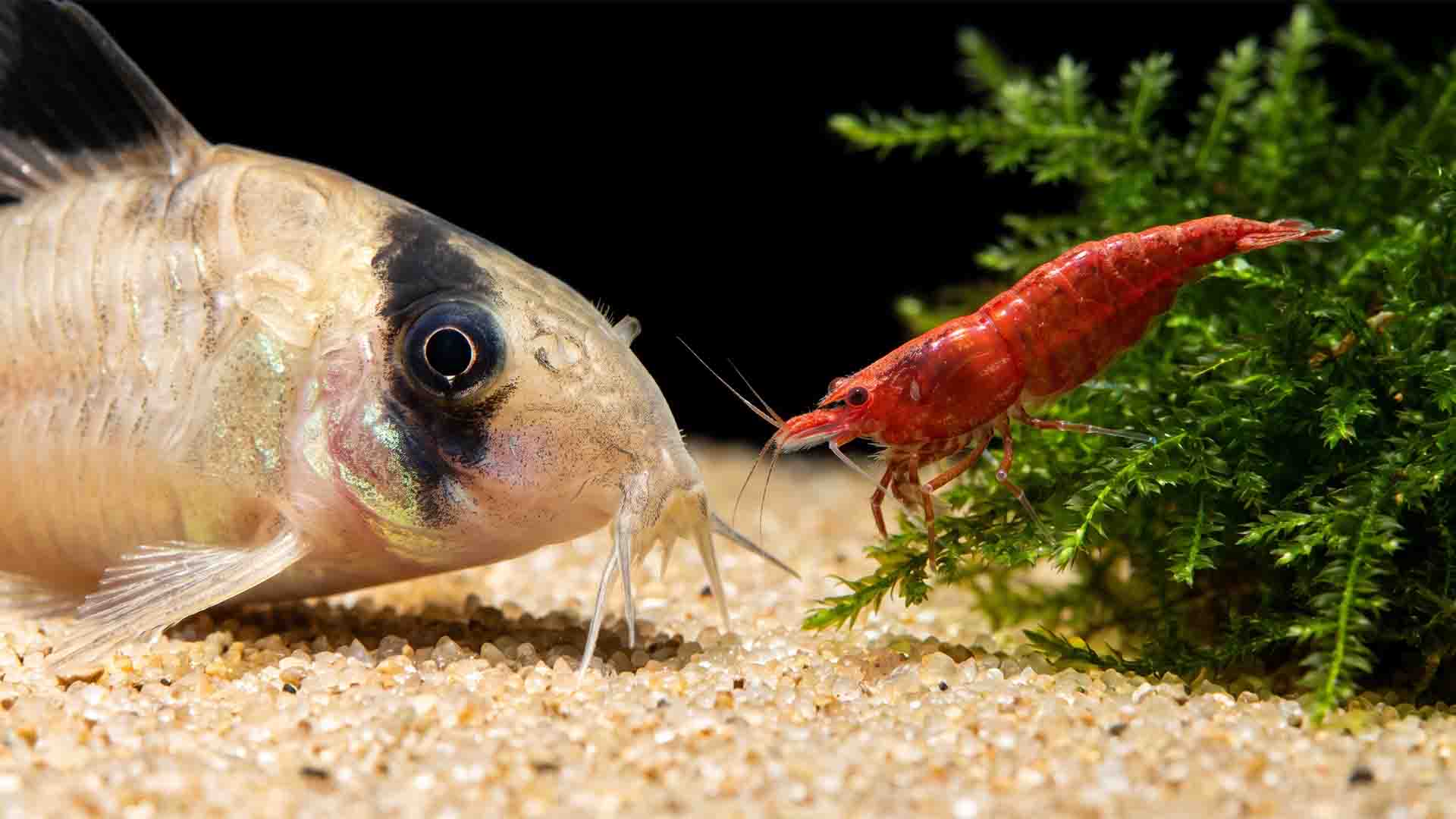
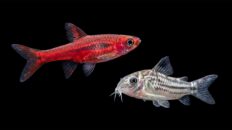
Corydoras catfish stir trapped detritus into the filter flow using sensitive barbels, while Cherry shrimp detail-clean dense moss with near-zero bioload.
Aggressive bottom scavengers like Pictus Catfish or Redtail Sharks stress peaceful community fish and uproot shallow stems. Corydoras Catfish—such as Panda, Sterbai, or Peppered Corys—work as peaceful, armored substrate aerators. Kept in a social shoal of six or more over fine sand or smooth, rounded gravel, Corydoras sweep their sensitive maxillary barbels across the top half-inch of substrate all day. They pick out missed bloodworms and protein crumbs while fanning settled mulm back up into the water column, where your mechanical filter sponge captures and removes it cleanly.
Never house Corydoras over sharp, crushed basalt or jagged fluorite gravel, which wears down their delicate sensory barbels and exposes them to bacterial infections.
#5. Kuhli Loach (Pangio kuhlii) – Nocturnal Crevice Cleaners Stopping Dead Zones
Even an active shoal of Corydoras cannot squeeze beneath sunken driftwood roots, stacked dragon stone caves, or dense cryptocoryne bases. Trapped food in these low-flow dead zones rots into nitrate factories that fuel persistent algae along your hardscape.
Many aquarists mistakenly buy Clown Loaches (Chromobotia macracanthus) for bottom cleanup without realizing Clown Loaches grow over 12 inches long, live for decades, and require six-foot aquariums. The Kuhli Loach solves the crevice blind spot without the massive footprint. Staying under four inches with a slender, eel-like body and scaleless skin, Pangio kuhlii slips effortlessly through narrow gaps under rocks and wood.
During bright daylight hours, Kuhli Loaches rest quietly in shaded rock piles. Once your aquarium lights dim, they emerge as a silent night-shift cleanup crew, sniffing out hidden protein scraps in tight crevices before anaerobic bacteria take hold. Keep a group of five or six over smooth sand so they feel secure enough to forage openly at dusk.
#4. Cherry Shrimp (Neocaridina davidi) – Near-Zero Bioload Carpet Detailers
Dense foreground carpets like Micranthemum Monte Carlo, Dwarf Baby Tears, and thick Java moss act like biological Velcro, trapping microscopic organic dust and uneaten flake particles deep inside their stems. Adding another school of bottom-dwelling fish to a smaller planted tank pushes bioload higher than slow-growing plants can absorb.
Cherry Shrimp solve this bottleneck with virtually zero ammonia impact. A colony of 15 to 20 red dwarf shrimp produces less metabolic waste than a single neon tetra. Equipped with tiny, hair-fringed feeding appendages, Cherry Shrimp climb inside dense moss fronds and carpet roots, picking out microscopic organic debris, soft biofilm, and early fungal fuzz that fish mouths cannot reach.
Because Neocaridina davidi breed steadily in stable freshwater when sheltered by dense plants, your colony automatically scales its population to match available food without ever crashing your water chemistry.
Layer 3: Stubborn Filamentous and Hair Algae Terminators
Layers 1 and 2 prevent waste buildup and remove soft films, but neither snails nor bottom-sifting catfish will touch tough, fibrous green hair algae, thread algae, or oily surface scum. Layer 3 deploys specialized mid-water and hardscape grazers built to tear through fibrous algal cell walls.
#3. Black Molly (Poecilia sphenops) – Surface Protein Film Skimmer and String Algae Grazer
Most aquarium cleaners stay glued to the glass or substrate, leaving the upper water column unguarded. When uneaten lipids and decaying plant oils rise to the top, they form an iridescent surface protein film that blocks oxygen and carbon dioxide gas exchange. At the same time, long strands of string algae drape across upper stem plants closest to your LED light.
Instead of dosing chemical algaecides that harm sensitive invertebrates, introduce a pair of Black Mollies. Unlike picky omnivores that stop eating algae the moment you drop flake food into the tank, Black Mollies possess upturned mouths and comb-like teeth adapted for skimming surface biofilm and picking filamentous green algae threads off upper leaves all day. Keep them in neutral to slightly hard alkaline water (pH 7.2 to 8.2, GH 10 or higher), as soft, acidic blackwater weakens their immune system and triggers shimmies.
#2. Florida Flagfish (Jordanella floridae) – Mechanical Jaw Power Against Matted Hair Algae
When bright lighting or erratic carbon dioxide injection triggers thick, matted green hair algae (Cladophora or Spirogyra), standard algae eaters ignore it completely. Frustrated hobbyists often overdose glutaraldehyde-based liquid carbon products, which chemically burns the cell walls of Vallisneria, Egeria densa, and aquatic mosses.
Native to sluggish, sun-drenched Florida wetlands, the Florida Flagfish evolved specialized, multi-cusped jaws designed to bite, rip, and digest tough, fibrous vegetation. A single male or bonded pair in a 20-gallon or larger community aquarium will strip thick tufts of green hair algae off driftwood and stem plants within days. Avoid housing Florida Flagfish with slow-moving, long-finned tank mates such as fancy guppies or male bettas, as Flagfish are assertive pupfish relatives that can nip trailing fins.
#1. Amano Shrimp (Caridina multidentata) – The Ultimate All-Zone Biological Insurance Policy
If you could choose only one species to protect a planted aquarium, the Amano Shrimp takes the top spot without close competition. Popularized by aquascaping pioneer Takashi Amano, Caridina multidentata bridges every cleanup zone simultaneously while maintaining a near-zero ammonia footprint.
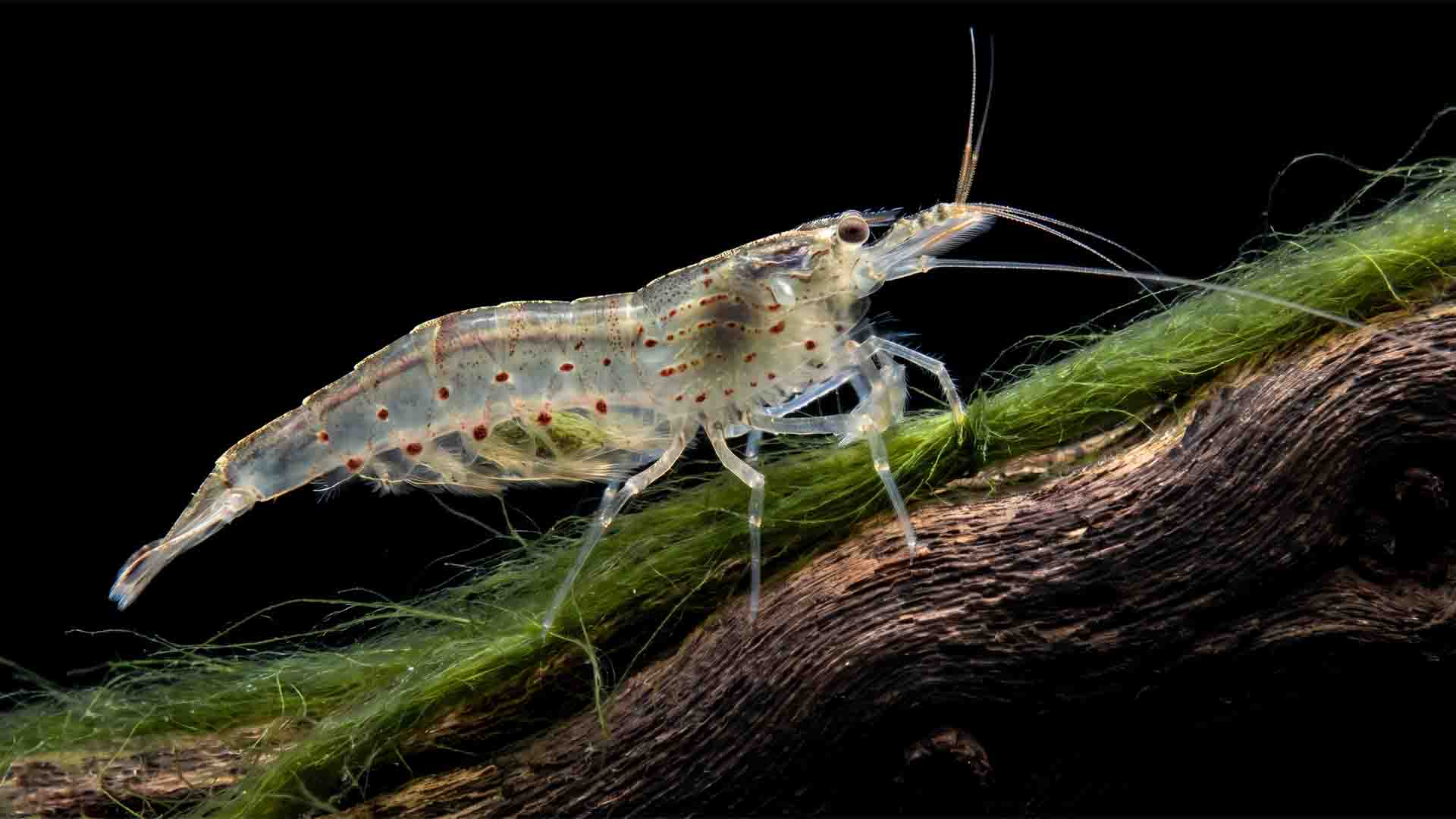
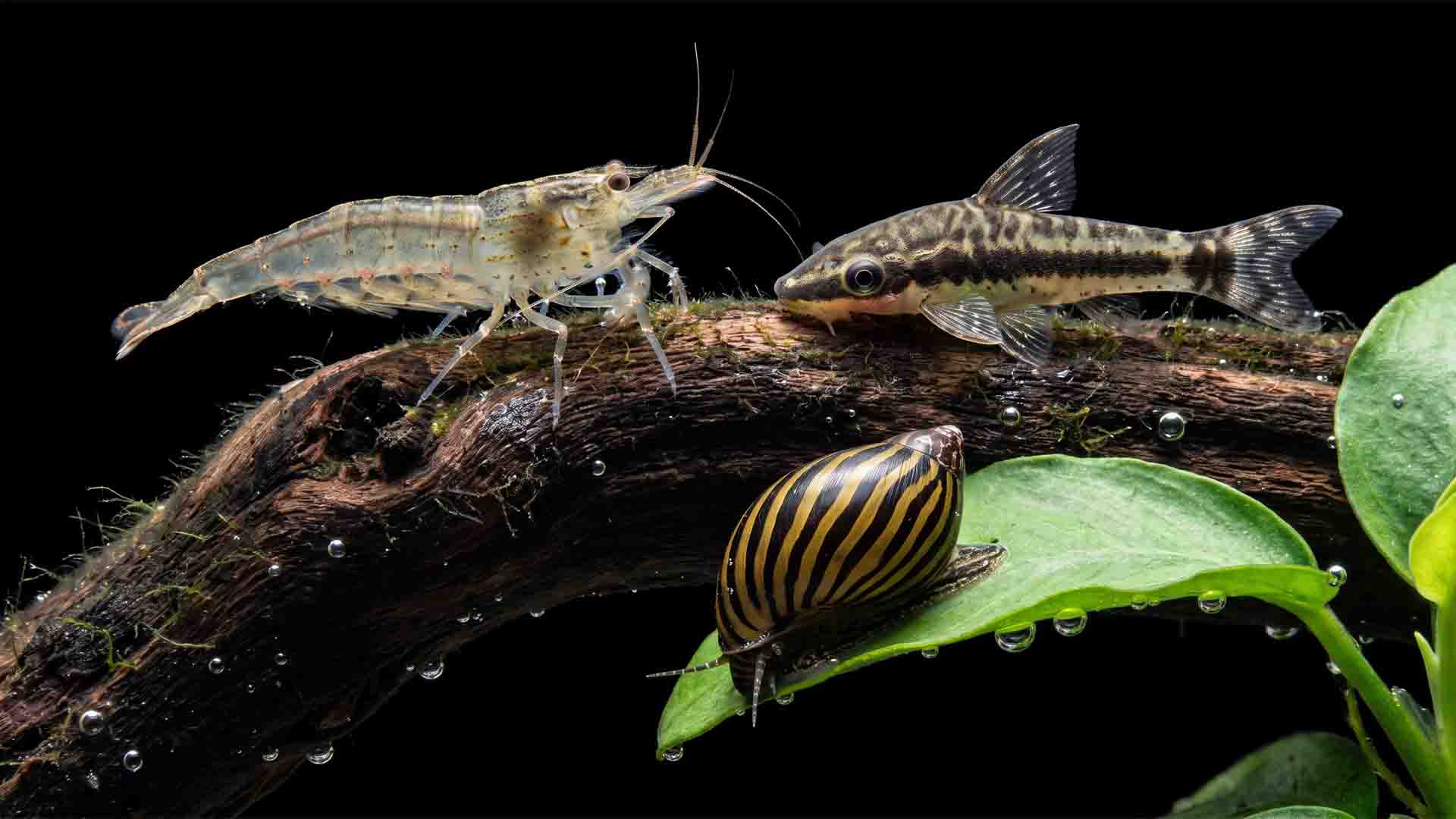
Equipped with specialized scraping claws, Amano shrimp consume fibrous green hair algae and decaying foliage while adding virtually zero ammonia load.
Growing up to two inches long—roughly twice the size of a Cherry Shrimp—adult Amano Shrimp are large enough to coexist safely alongside peaceful community tetras, rasboras, and dwarf cichlids. Their specialized, brush-tipped chelipeds (claws) strip stubborn green hair algae, early-stage staghorn algae, decaying plant leaves, and leftover protein pellets across every level of the tank, from substrate foregrounds to the highest driftwood branches.
Like Nerite snails, Amano Shrimp larvae require brackish-to-marine salinity to survive metamorphosis, meaning they never overpopulate your aquarium. Stocking one Amano Shrimp per five gallons of water acts as a living biological insurance policy that consumes excess organic nutrients before an algae bloom ever gains momentum.
What to Avoid: 4 Clean Up Crew Mistakes That Trigger Tank Crashes
Even the right species will fail if you introduce them into an unstable environment or combine them with incompatible chemical routines. Avoid these four common mistakes that destroy planted tank ecosystems:
- Adding Algae Eaters to an Uncycled or Brand-New Aquarium: Brand-new setups lack mature microbial biofilm, soft green dust, and established diatom layers. Dropping wild-caught Otocinclus catfish or Nerite snails into a sterile tank during the first three weeks causes mass starvation before the nitrogen cycle even stabilizes.
- Buying Assassin Snails or Pea Puffers to Fix Pest Outbreaks: Introducing predators like Assassin Snails (Clea helena) or Dwarf Pea Puffers to wipe out bladder snails often backfires. Once the pest snails disappear, those predators either starve or attack your expensive Nerite snails, Mystery snails, and dwarf shrimp.
- Dosing Glutaraldehyde Liquid Carbon Over Sensitive Plants: Pouring double or triple doses of glutaraldehyde-based liquid carbon to burn off hair algae dissolves the cell walls of Vallisneria, Egeria, and aquatic mosses. The resulting mass plant die-off releases dissolved organic carbon and ammonia that trigger an even worse secondary algae bloom.
- Overfeeding Sinking Wafers Every Day: Algae eaters are opportunistic grazers. If you drop high-protein algae wafers or shrimp pellets into the tank every evening, Amano shrimp, Bristlenose plecos, and Black Mollies will ignore tough hair algae and wait by the feeding corner for calorie-dense commercial food.
Do This Instead: Step-by-Step Clean Up Crew Stocking and Acclimation Protocol
Follow this four-step sequence to introduce your clean up crew without triggering osmotic shock, molting failure, or ammonia spikes:
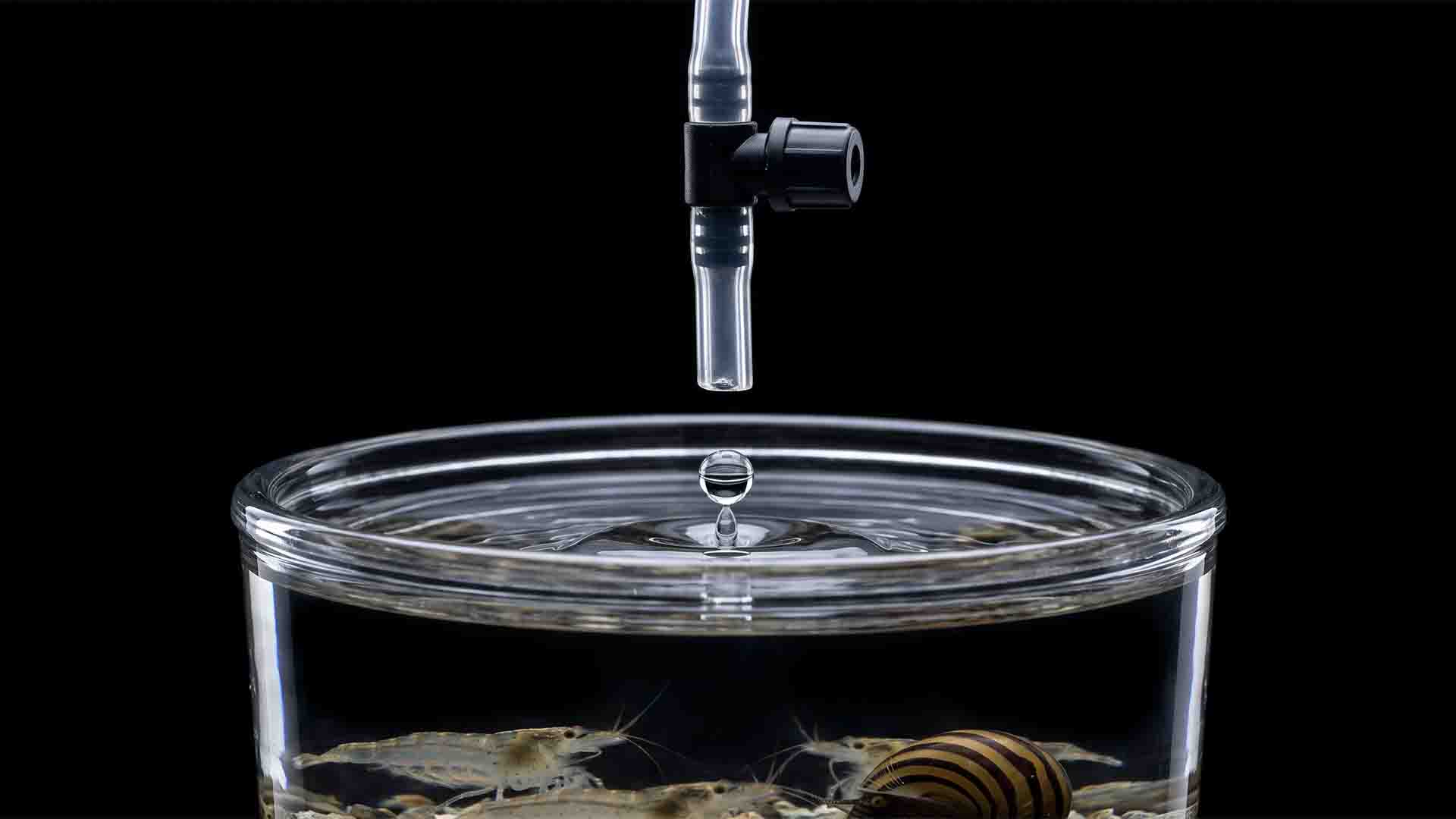
Slow drip acclimation over 45 to 60 minutes prevents osmotic shock in sensitive invertebrates like Amano shrimp, Cherry shrimp, and Nerite snails.
- Wait for Mature Biofilm Before Stocking: Cycle your aquarium completely until ammonia and nitrite read 0 ppm, then allow an additional four to six weeks for natural biofilm and brown diatoms to coat hardscape surfaces before introducing Otocinclus catfish or Nerite snails.
- Assign One Specialist Group Per Occupied Zone: Audit your tank before buying. For a standard 20-gallon planted community tank, combine four Nerite snails (Layer 1), six Panda Corydoras over smooth sand (Layer 2), and six Amano shrimp (Layer 3) instead of crowding ten different species together.
- Drip Acclimate Invertebrates for 45 to 60 Minutes: Freshwater shrimp and snails regulate internal osmotic pressure slowly. Float the transport bag for 15 minutes to equalize temperature, transfer the livestock and bag water into a clean container, and use airline tubing with a control valve to drip tank water at two to three drops per second until the water volume triples.
- Quarantine and Dip New Aquatic Plants: Prevent bladder snails and hydra from hitchhiking into your display tank by soaking all newly purchased stem and rosette plants in an alum dip (one tablespoon of potassium aluminum sulfate per gallon of water for three hours) followed by a thorough dechlorinated rinse before planting.
Stopping Algae at the Root Source (Beyond Livestock)
A healthy freshwater aquarium clean up crew acts as a biological buffer, not a license to ignore water chemistry or lighting physics. Algae spores exist in every aquarium and germinate whenever light energy exceeds the carbon and nutrient uptake capacity of your rooted plants.
To eliminate algae permanently alongside your cleanup team, cap your LED photoperiod at six to eight hours per day on a consistent timer, keep dissolved ammonia at zero through strong biological filtration, and maintain steady carbon dioxide and macro-nutrient availability so vascular plants outcompete opportunistic algae. For deeper parameter breakdowns, review our aquarium nitrogen cycle and bioload calculation guide, compare mineral requirements in our Neocaridina vs. Amano shrimp water chemistry breakdown, or follow our step-by-step planted tank hair algae removal protocol.
Scientific Truths and Freshwater Biological References
Every stocking ratio, feeding behavior, and reproductive boundary in this guide is anchored in peer-reviewed ichthyology and invertebrate physiology:
- Dwarf Suckermouth Grazing Morphology: Biological records on FishBase for Otocinclus vittatus confirm its specialized ventral sucker disc and herbivorous periphyton diet adapted for scraping diatoms without damaging vascular plant tissues.
- Fibrous Algae Mastication in Flagfish: Ichthyological data on FishBase for Jordanella floridae documents its multi-cusped jaw dentition specialized for tearing filamentous green algae and macrophytes in subtropical wetlands.
- Amphidromous Larval Salinity Requirements: Crustacean biology research indexed on ScienceDirect on Caridina larval development demonstrates that Caridina multidentata (Amano shrimp) zoeae require brackish-to-marine salinity transitions to survive metamorphosis, preventing freshwater overpopulation.
- Glutaraldehyde Phytotoxicity in Submerged Plants: Ecotoxicology studies compiled on ScienceDirect regarding glutaraldehyde exposure confirm cellular membrane disruption in non-cuticular submerged macrophytes such as Vallisneria and aquatic bryophytes.
Frequently Asked Questions About Freshwater Clean Up Crews
What is the best clean up crew for a planted tank without snail plagues?
The best snail-safe clean up crew for a planted tank combines Nerite snails for glass algae, Amano shrimp for hair algae, Otocinclus catfish for delicate leaves, and Corydoras catfish for open sand. Neither Nerite snails nor Amano shrimp can reproduce in freshwater, giving you full algae control with zero population outbreaks.
Do bottom feeders like Corydoras catfish eat fish poop?
No freshwater fish eats solid fish feces as nutrition. Corydoras catfish sift the top layer of sand with their sensory barbels to eat missed sinking pellets and protein scraps while stirring settled organic detritus up into the water column so your mechanical filter can trap and remove it.
How many Amano shrimp do I need per gallon in a freshwater aquarium?
Stock one adult Amano shrimp per five gallons of aquarium water for routine preventative maintenance, or up to one shrimp per three gallons in heavily planted tanks fighting active green hair algae. Because their bioload is nearly zero, a small group safely consumes excess organic waste without straining your filter.
Why do Otocinclus catfish die shortly after being added to a new tank?
Most Otocinclus catfish are wild-caught and arrive at pet stores with depleted gut bacteria after weeks of fasting during transport. Placing them into a sterile, newly cycled tank without mature brown diatoms or soft green biofilm causes rapid starvation. Always wait six to eight weeks before introducing them.
What freshwater fish eats green hair algae without eating live aquarium plants?
The Florida Flagfish (Jordanella floridae) and Black Molly (Poecilia sphenops) actively pull and consume fibrous green hair algae while leaving healthy vascular aquarium plants intact. Pair them with Amano shrimp for complete elimination of stubborn filamentous strands on driftwood and stem tips.
Can I keep Nerite snails, Amano shrimp, and Corydoras catfish together?
Yes. Nerite snails, Amano shrimp, and Corydoras catfish are completely peaceful and occupy separate ecological zones—glass and hardscape, mid-level plants, and open substrate—without competing for territory. Maintain a neutral pH around 7.0 to 7.4 and moderate general hardness (6 to 10 dGH) so all three thrive together.
Continue Your System Mastery (Official Video Series)
A clean, resilient planted aquarium never comes from a single oversized retail fish or a bottle of harsh chemicals. Match specialized, low-bioload cleaners to each tank zone, acclimate your invertebrates slowly, and balance your light and nutrients at the source.
To watch these species in action and troubleshoot persistent algae blooms step by step, continue directly into our official FishTank Mastery video series:
- Watch the Complete Clean-Up Crew Series: Explore every zone specialist and stocking ratio on YouTube.
- Watch the Complete Algae Fix Series: Learn how to eliminate hair algae, diatoms, and green water at the root cause.
Keep your systems balanced, your hands dry, and your curiosity flowing.