Finding the best fish for 5 gallon tank setups gets sabotaged the second you walk into a retail pet store. Clerks routinely push heavy-waste bottom dwellers and high-velocity schooling swimmers into glass boxes barely sixteen inches wide, setting your nitrogen cycle up for a delayed crash.
A five-gallon aquarium is not a miniature version of a fifty-gallon community tank. Once you subtract the volume displaced by substrate, hardscape, and filtration hardware, you are working with roughly 3.8 to 4.1 gallons of actual swimming water. In a buffer zone that small, biological margin for error does not exist. One oversized species or one unrestrained breeding pair will overwhelm your nitrifying bacteria colony within weeks.
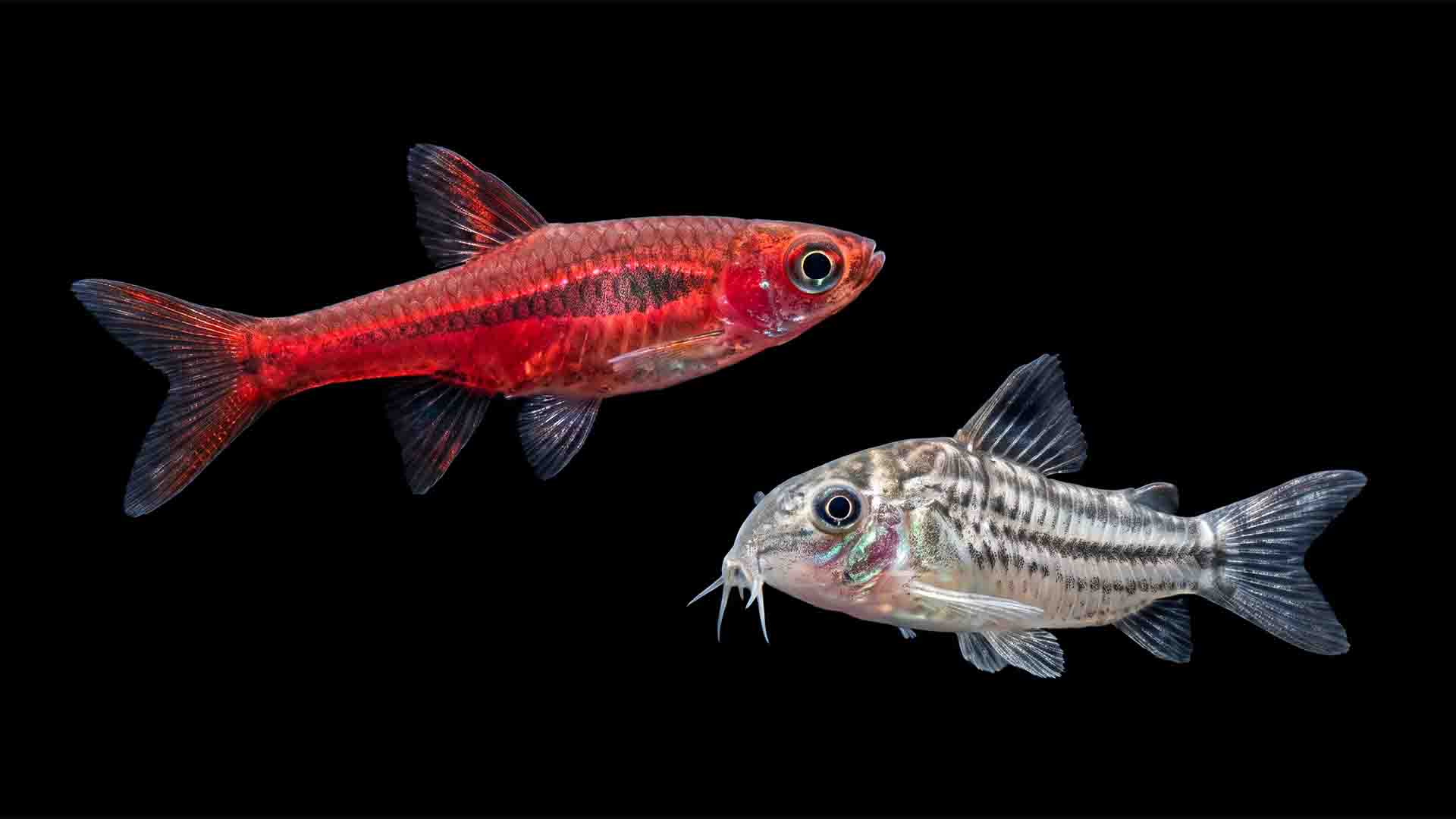
Direct Biological Answer: The only viable fish for a 5-gallon tank without a Betta are true low-bioload nano species under 1.2 inches that require minimal horizontal swim lanes. The ten safest choices are the Chili Rasbora, Male Endlers Livebearer, Sparkling Gourami, Ember Tetra, Clown Killifish, Japanese Medaka Ricefish, Pygmy Corydoras, Scarlet Badis, Celestial Pearl Danio, and a single Pea Puffer.
Before stocking a single fish, watch the complete biological breakdown and tank-zone stratification guide below so you can match each species to your exact filtration and planting setup:
Why 90% of 5-Gallon Aquarium Stocking Ideas Crash Within 30 Days
Most beginner nano aquariums do not fail on day one. They pass an initial water test, look crystal clear during week one, and then suffer a sudden die-off between days twenty-one and thirty-five. Retail stocking advice ignores three physical and biological realities that govern ultra-small water volumes.
The “One-Inch Per Gallon” Myth vs. Actual Bioload Math
The outdated “one-inch of fish per gallon” rule collapses completely in small aquariums because biological waste does not scale linearly with fish length—it scales cubically with body mass. A single three-inch fish carries far more tissue mass, consumes exponentially more oxygen, and excretes dramatically more gill ammonia than three one-inch nano fish combined.
In a five-gallon tank, your biological filtration relies on the surface area inside a compact sponge filter or miniature hang-on-back cartridge. Beneficial autotrophic bacteria—specifically ammonia-oxidizing Nitrosomonas and nitrite-oxidizing Nitrobacter or Nitrospira—reproduce slowly. When retail stores tell you to drop five standard tetras and a “cleanup” catfish into a freshly cycled five-gallon tank, total ammonia output instantly exceeds bacterial oxidation capacity.
Horizontal Swim Lanes vs. Water Volume: The Cortisol Trap
Water volume alone does not measure habitable space. A standard rectangular five-gallon aquarium measures roughly 16 inches long by 8 inches wide by 10 inches tall. Portrait-style desktop cubes offer even shorter horizontal swim paths, often under 11 inches across.
Stream-dwelling fish evolved to cruise continuously against currents across wide lateral distances. When you confine high-energy swimmers inside a 16-inch glass box, they hit visual barriers every two seconds. That constant spatial confinement triggers chronic elevation of plasma cortisol. Elevated cortisol directly suppresses leukocyte production, strips away protective mucosal slime coats, and leaves fish defenseless against opportunistic pathogens like Ichthyophthirius multifiliis (Ich) and Flavobacterium columnare.
Delayed Ammonia Spikes and Low-Buffer Water Chemistry
Large aquariums possess substantial carbonate hardness (KH) and thermal mass that absorb minor feeding mistakes. Five gallons of water has almost zero chemical inertia. Uneaten flake food trapped beneath coarse gravel decomposes into ammonium, and if your pH sits above 7.2, a dangerous fraction converts into toxic unionized ammonia (NH3).
Every species selected below passes three strict biological filters:
- Adult Size Cap: Maximum adult length stays at or below 1.25 inches (3.2 cm), keeping metabolic oxygen demand and nitrogenous waste minimal.
- Spatial Behavior: Species hover, patrol micro-territories, or hold tight stationary schools rather than pacing horizontally across the glass.
- Ecological Niche Separation: Each fish occupies a distinct vertical water layer—surface, mid-water, or benthic substrate—eliminating crowding and fin-nipping stress.
The 10 True Nano Fish Built for 5-Gallon Ecosystems
1. Chili Rasbora (Boraras brigittae) — The Smart Swap for Zebra Danios
Pet stores routinely sell Zebra Danios as bulletproof starter fish for small desktop kits. That advice kills fish. Zebra Danios grow past two inches, demand heavy dissolved oxygen, and require at least twenty gallons of horizontal runway to burn off constant kinetic energy.
The Chili Rasbora (Boraras brigittae) is the exact biological antidote. Native to slow-moving, tannin-stained peat swamp streams in Borneo, this ruby-red micro-cyprinid maxes out at 0.75 inches. Because they evolved in sluggish blackwater pools rather than fast rivers, Chili Rasboras thrive under the gentle flow of an air-driven sponge filter.
- Safe Stocking Count: 6 to 8 individuals
- Tank Zone: Upper-middle water column
- Ideal Temperature: 72 to 78 degrees Fahrenheit
- Biological Advantage: Their bioload is so negligible that a group of six produces less daily ammonia than a single adult guppy.
2. Male Endlers Livebearer (Poecilia wingei) — Color Without the Population Explosion
Recommending traditional mixed-sex Guppies for a five-gallon tank guarantees a biological crash. Female livebearers store sperm for months and drop twenty to forty fry every twenty-eight days. Inside a five-gallon ecosystem, one pregnant female turns into sixty waste-producing fish within sixty days, detonating lethal ammonia and nitrite spikes that no miniature filter can process.
Stocking an all-male group of Endlers Livebearers (Poecilia wingei) solves the overpopulation trap permanently. Purebred male Endlers stay smaller than fancy guppies—typically 0.8 to 1.0 inch—and display neon metallic greens, oranges, and blacks without long, heavy tail fins that cause swimming fatigue. Keeping males exclusively locks your bioload at a fixed, predictable number from day one.
- Safe Stocking Count: 4 to 5 males only (zero females)
- Tank Zone: Middle water column
- Ideal Temperature: 72 to 80 degrees Fahrenheit
- Biological Advantage: Constant mid-water movement and bright coloration with zero risk of exponential fry overpopulation.
3. Sparkling Gourami (Trichopsis pumila) — Territorial Intelligence and Audible Croaking
Beginners frequently ask if they can keep a Dwarf Gourami in a five-gallon setup. At three inches long with aggressive territorial instincts, a Dwarf Gourami turns a five-gallon footprint into a lethal arena and generates heavy waste.
The Sparkling Gourami (Trichopsis pumila) delivers true labyrinth-fish personality scaled down to 1.2 inches. Equipped with an auxiliary breathing organ (the labyrinth), they sip humid air directly from the water surface and navigate dense aquatic stems with precision. Even better, Sparkling Gouramis possess a specialized pectoral stridulation mechanism that produces audible clicking or croaking sounds when establishing hierarchy or hunting micro-crustaceans among plant leaves.
Plant heavily with stem plants and broad-leaf epiphytes like Anubias to break visual sight lines. When sight lines are broken, a trio coexists peacefully while patrolling every leaf surface.
- Safe Stocking Count: 1 solo specimen or a trio (1 male, 2 females) in densely planted setups
- Tank Zone: All levels, weaving through dense foliage
- Ideal Temperature: 75 to 82 degrees Fahrenheit
- Biological Advantage: Thrives in low-flow, warm nano tanks where high-current species struggle.
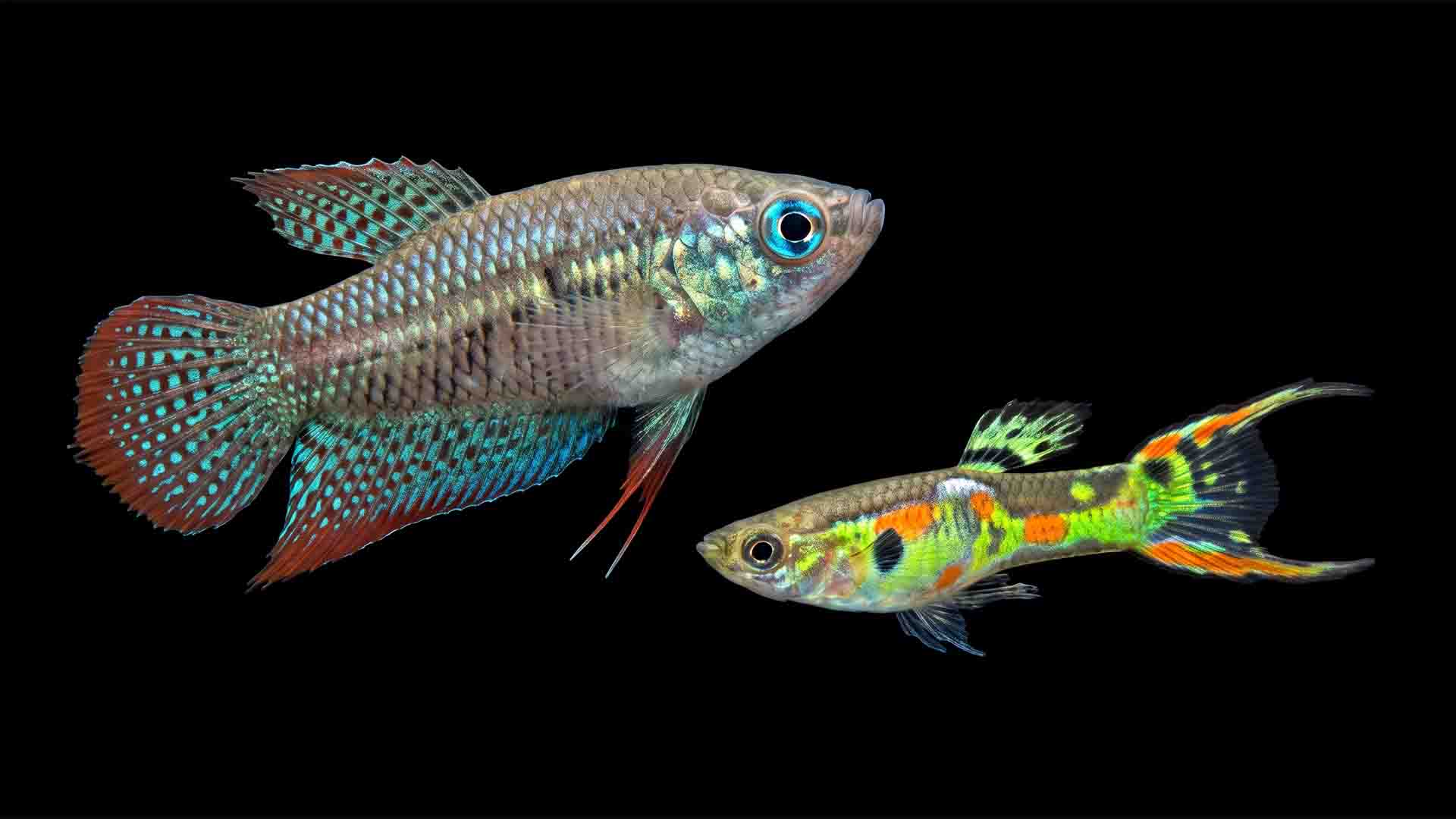
4. Ember Tetra (Hyphessobrycon amandae) — Why Neon Tetras Struggle in Desktop Tanks
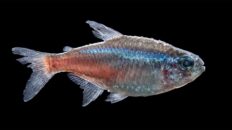
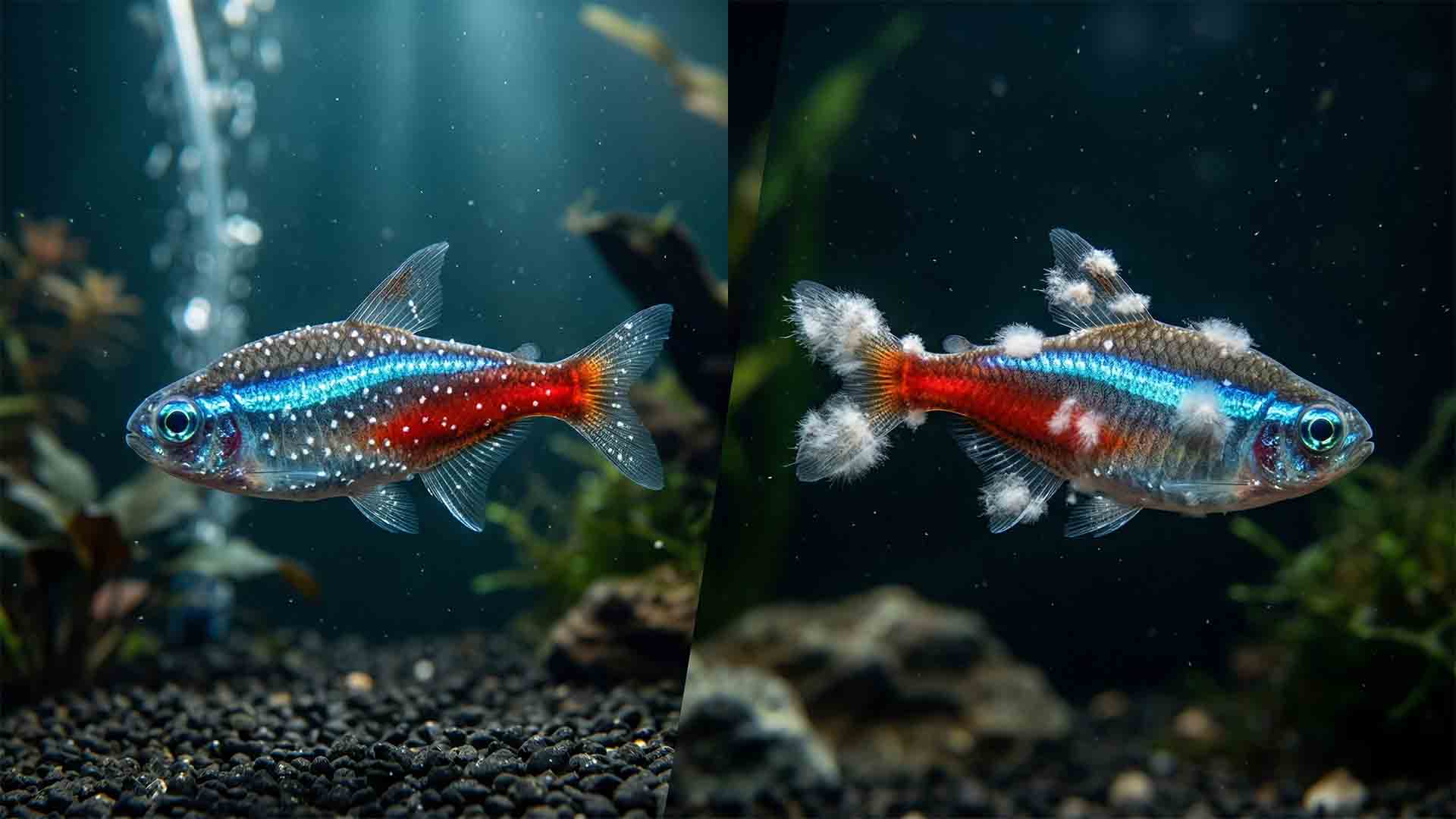
Neon Tetras are the single most mis-sold fish in the aquarium trade. While their slim bodies look small at the store, Neons are active open-water cruisers that become skittish, pale, and disease-prone when trapped in short five-gallon tanks. Think of a five-gallon aquarium as a studio apartment: you cannot lock six high-energy marathon runners inside without constant stress.
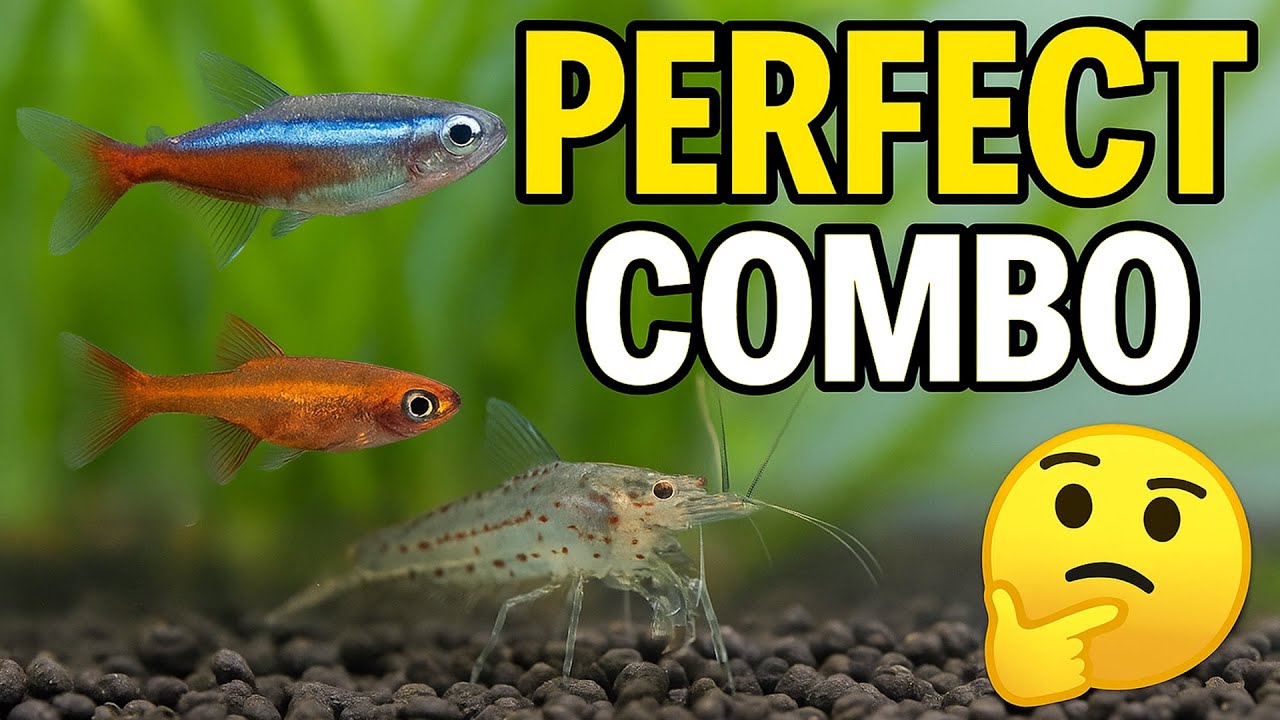
The Ember Tetra (Hyphessobrycon amandae) respects tight spatial boundaries. Reaching a maximum adult length of 0.8 inches, Ember Tetras hold tight, stationary fiery-orange formations in the middle water column. Against dark aquasoil and green background plants, a small school creates striking visual contrast without demanding long lateral swim lanes or stressing your biological filter.
- Safe Stocking Count: 6 individuals
- Tank Zone: Middle water column
- Ideal Temperature: 73 to 82 degrees Fahrenheit
- Biological Advantage: Calm schooling behavior and ultra-low oxygen consumption suited for compact planted aquariums.
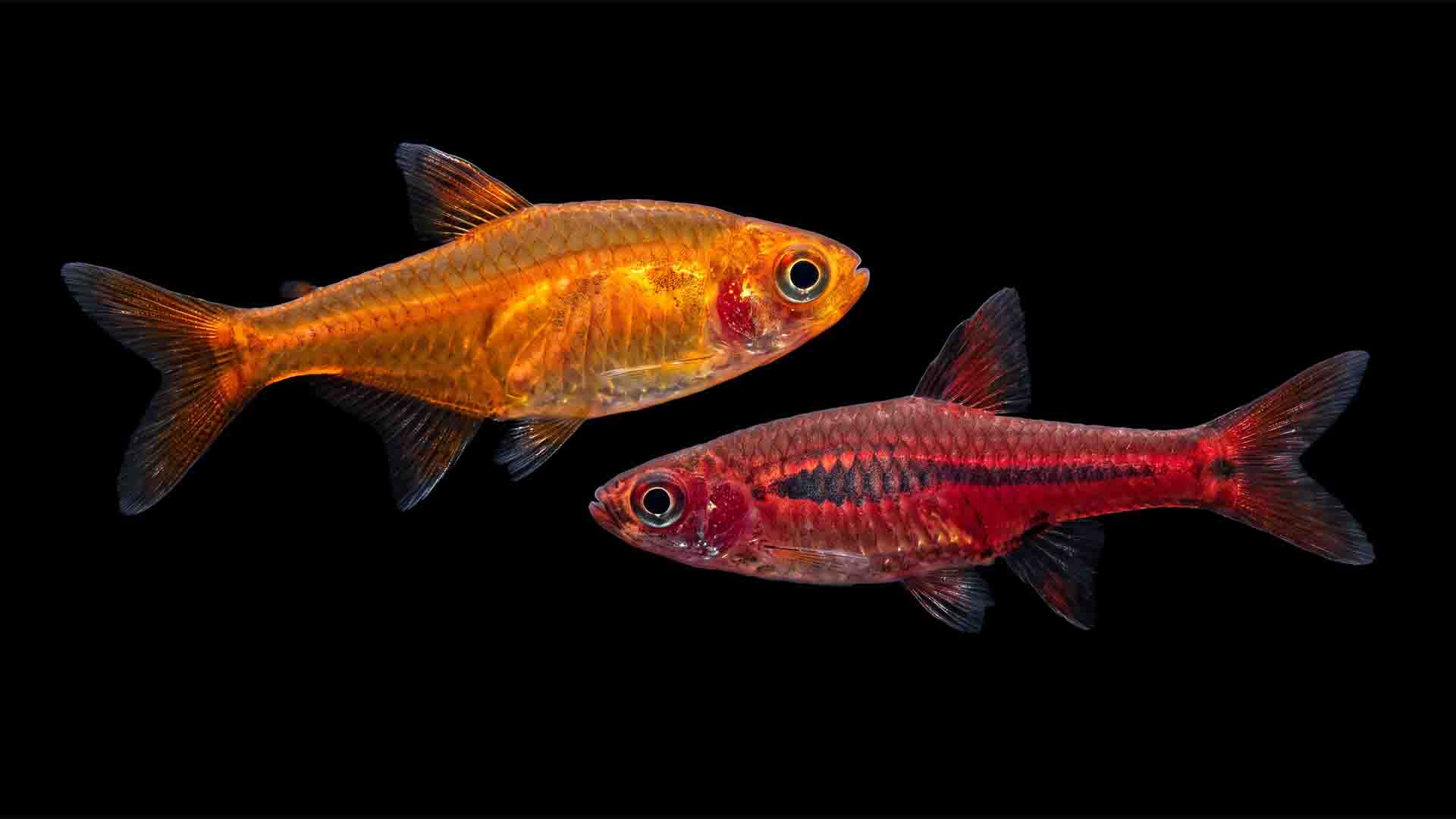
5. Clown Killifish (Epiplatys annulatus) — Top-Dwelling Surface Patrol
Most five-gallon aquariums leave the top two inches of water completely empty while crowding the middle zone. Utilizing vertical water layers lets you add visual activity without creating territorial friction.
The Clown Killifish (Epiplatys annulatus) is a strictly top-dwelling micro-predator maxing out at 1.3 inches. Sporting sharp black-and-gold vertical banding, electric blue eyes, and a flame-colored rocket tail, they spend all day cruising just beneath the surface meniscus hunting tiny floating foods while ignoring lower tank mates.
There is one non-negotiable hardware requirement: you must use a tight-fitting glass or polycarbonate lid with zero gaps around filter tubes or heater cords. In West African swamps, Clown Killifish escape predators by launching straight out of the water. Leave a half-inch gap open overnight and you will find dried fish on your desk by morning.
- Safe Stocking Count: 1 male with 3 females (or 4 to 5 individuals)
- Tank Zone: Top surface layer
- Ideal Temperature: 72 to 79 degrees Fahrenheit
- Biological Advantage: Zero competition with mid-water or substrate species, maximizing spatial efficiency.
6. Japanese Ricefish / Medaka (Oryzias latipes) — Bulletproof Coldwater Resilience
Standard tropical nano fish demand tight thermal stability. When a cheap preset heater sticks off or room temperatures plummet overnight, sudden cooling slows down nitrifying filter bacteria while depressing fish immune function.
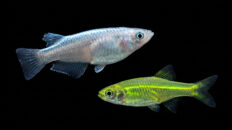
The Japanese Ricefish, known globally as Medaka (Oryzias latipes), eliminates heater anxiety completely. Bred for centuries in outdoor ceramic bowls across Japan, Medaka tolerate indoor water temperatures ranging from 50 to 82 degrees Fahrenheit without stress. Reaching 1.2 inches, metallic pearl, platinum, and orange-red Medaka shimmer under overhead aquarium lighting and remain remarkably forgiving of minor pH and hardness fluctuations.
- Safe Stocking Count: 5 to 6 individuals
- Tank Zone: Upper-middle water column
- Ideal Temperature: 55 to 78 degrees Fahrenheit (no heater required indoors)
- Biological Advantage: Eliminates heater-failure crashes and thrives in unheated office or bedroom setups.
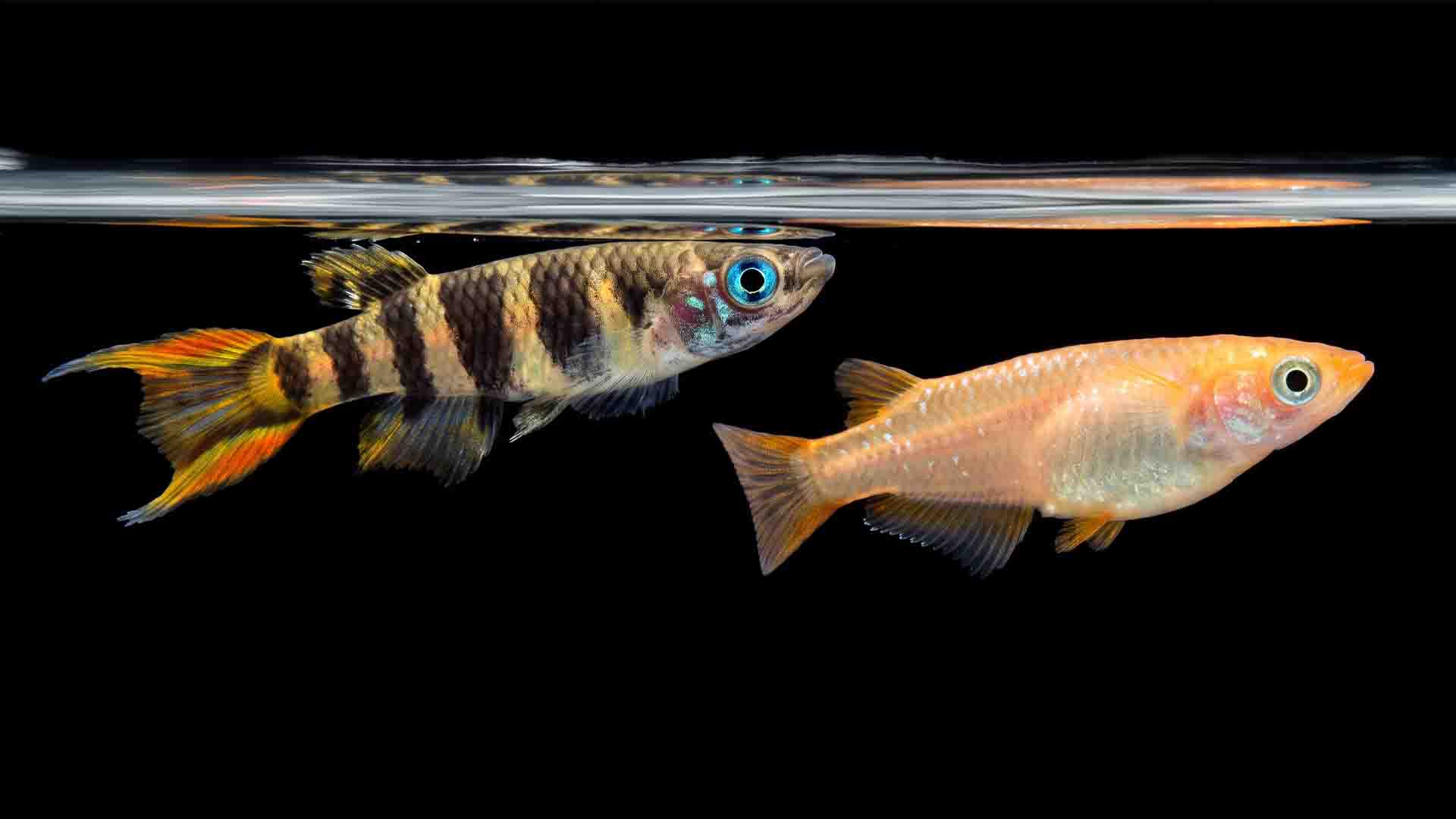
7. Pygmy Corydoras (Corydoras pygmaeus) — The ONLY True Bottom Dweller for 5 Gallons
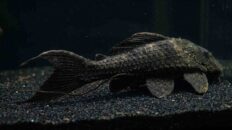
Retail employees routinely sell Bronze Corydoras, Albino Corydoras, or Bristlenose Plecos as “cleanup crews” for five-gallon tanks. That recommendation causes catastrophic ammonia spikes. Standard Corydoras species grow to nearly three inches, require large shoals, and generate heavy solid waste that overwhelms compact filters.
The Pygmy Corydoras (Corydoras pygmaeus) is the single biologically viable bottom-dwelling catfish for a five-gallon footprint. Maxing out at barely one inch, these miniature armored catfish hover in mid-water formations before dropping down to sift fine sand or rounded aquasoil for missed food particles after lights go out.
Use fine, smooth sand or rounded clay-based aquasoil rather than sharp crushed gravel. Coarse, jagged substrate erodes their delicate sensory barbels and invites secondary bacterial infections.
- Safe Stocking Count: 5 to 6 individuals
- Tank Zone: Substrate level and lower-middle column
- Ideal Temperature: 72 to 79 degrees Fahrenheit
- Biological Advantage: Scavenges uneaten sinking micro-pellets before they rot into toxic ammonia, while producing negligible waste of its own.
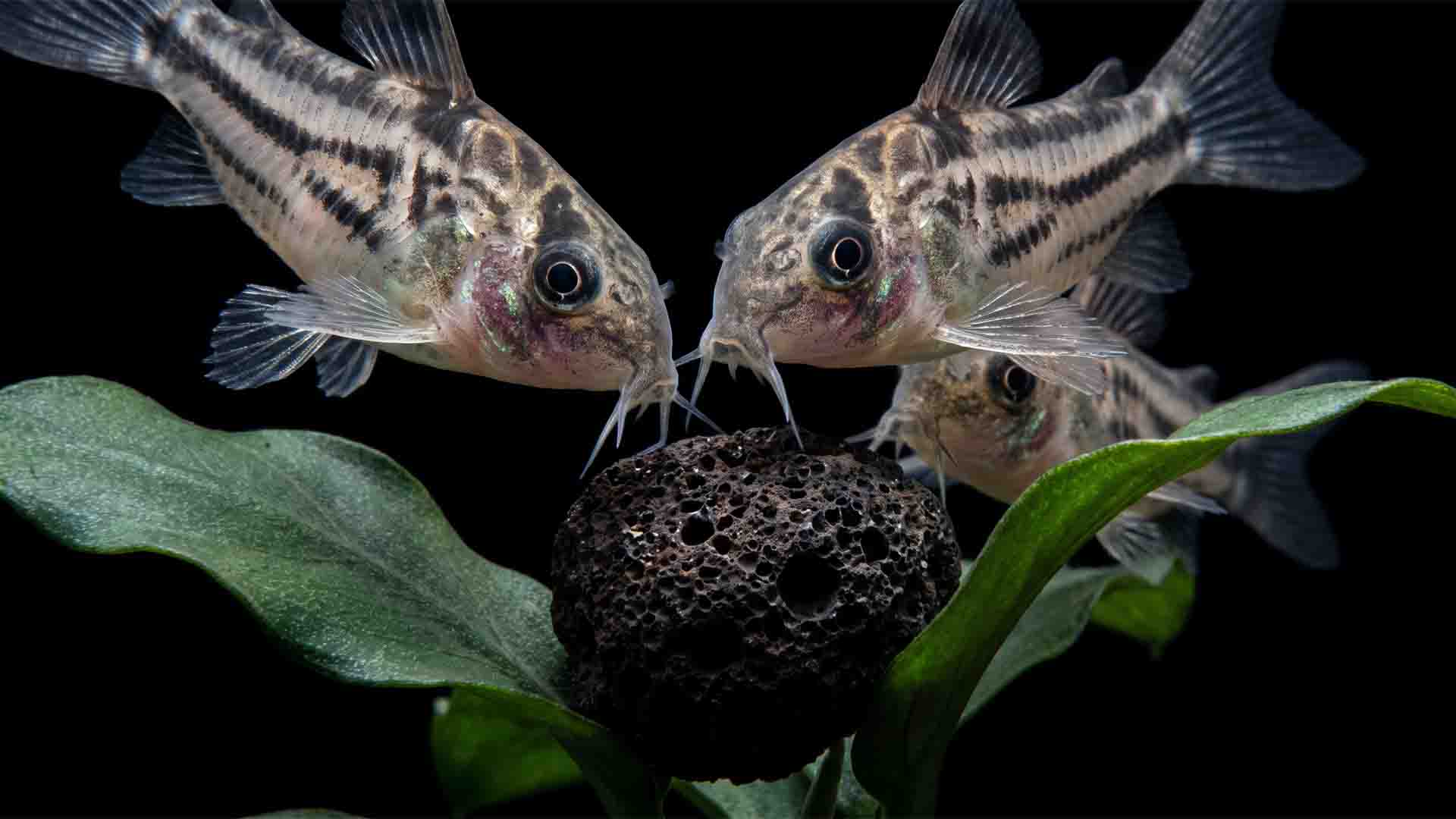
8. Scarlet Badis (Dario dario) — Solo Micro-Predator With a Strict Diet
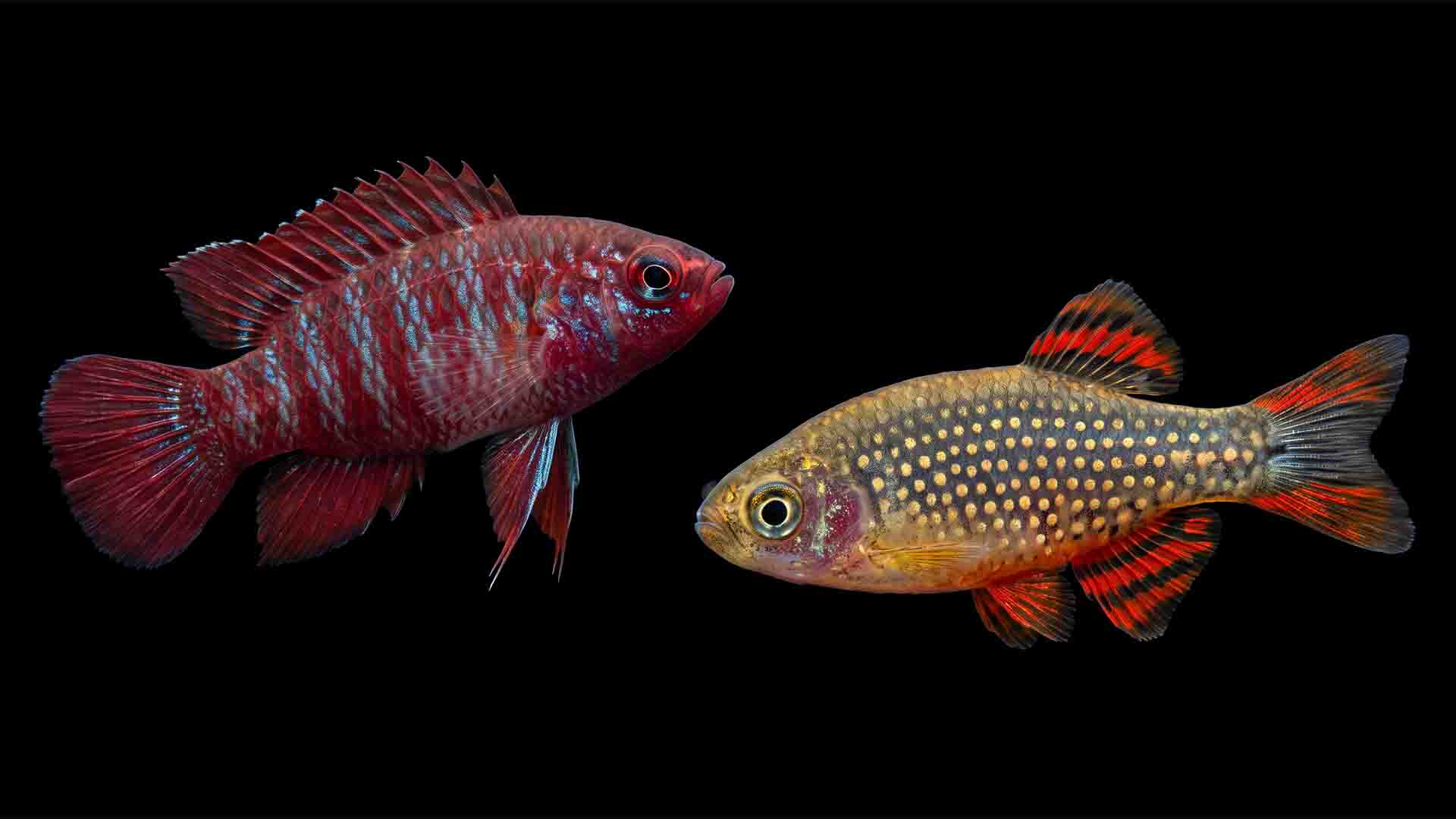
Most aquarists assume you need twenty gallons or more to house an intelligent, territorial hunter. The Scarlet Badis (Dario dario) packs big cichlid attitude into a 0.8-inch frame. Mature males display deep crimson vertical bars separated by iridescent metallic-blue stripes, stalking tiny crustaceans through dense moss with calculated precision.
Honesty matters before you buy one: Scarlet Badis almost universally refuse dry flakes and standard pellets. Attempting to starve them onto dry food ends in slow emaciation. You must maintain a supply of live or frozen micro-foods—specifically baby brine shrimp, daphnia, microworms, or frozen cyclops. Keep only a single male in five gallons; housing two males in tight quarters triggers relentless territorial combat.
- Safe Stocking Count: 1 solo male (species-only or with ultra-peaceful top swimmers)
- Tank Zone: Lower-middle planted cover
- Ideal Temperature: 70 to 77 degrees Fahrenheit
- Biological Advantage: Micro-footprint predator that never outgrows a five-gallon planted scape.
9. Celestial Pearl Danio (Danio margaritatus) — Reef-Level Color in Heavily Planted Tanks
For decades, freshwater hobbyists wanted a nano fish with the intricate spotting and fin coloration of a saltwater reef species. The Celestial Pearl Danio (Danio margaritatus), formerly traded as the Galaxy Rasbora, delivers exactly that at under one inch long. Dark midnight-blue flanks speckled with glowing golden pearls and bright red-and-black striped fins make them unmatched in macro aquascapes.
Wild Celestial Pearl Danios inhabit shallow, heavily vegetated ponds in Myanmar. In a bare or sparsely decorated five-gallon tank, they panic, glass-surf, and lose color. Pack the background with dense stem plants like Rotala rotundifolia, Java moss, and floating Salvinia to diffuse bright LED glare. Inside dense foliage, males flare harmlessly at one another in vibrant territorial displays.
- Safe Stocking Count: 5 to 6 individuals in heavily planted setups
- Tank Zone: Middle-to-lower plant cover
- Ideal Temperature: 71 to 77 degrees Fahrenheit
- Biological Advantage: Thrives in high-plant-mass ecosystems where live stems actively absorb nitrate output.
10. Pea Puffer (Carinotetraodon travancoricus) — The Smartest Solo Betta Alternative
Bettas remain the default recommendation for solitary five-gallon setups, yet decades of aggressive ornamental breeding have left many modern halfmoon and rosetail Bettas struggling under heavy fin drag, chronic fatigue, and shortened lifespans.
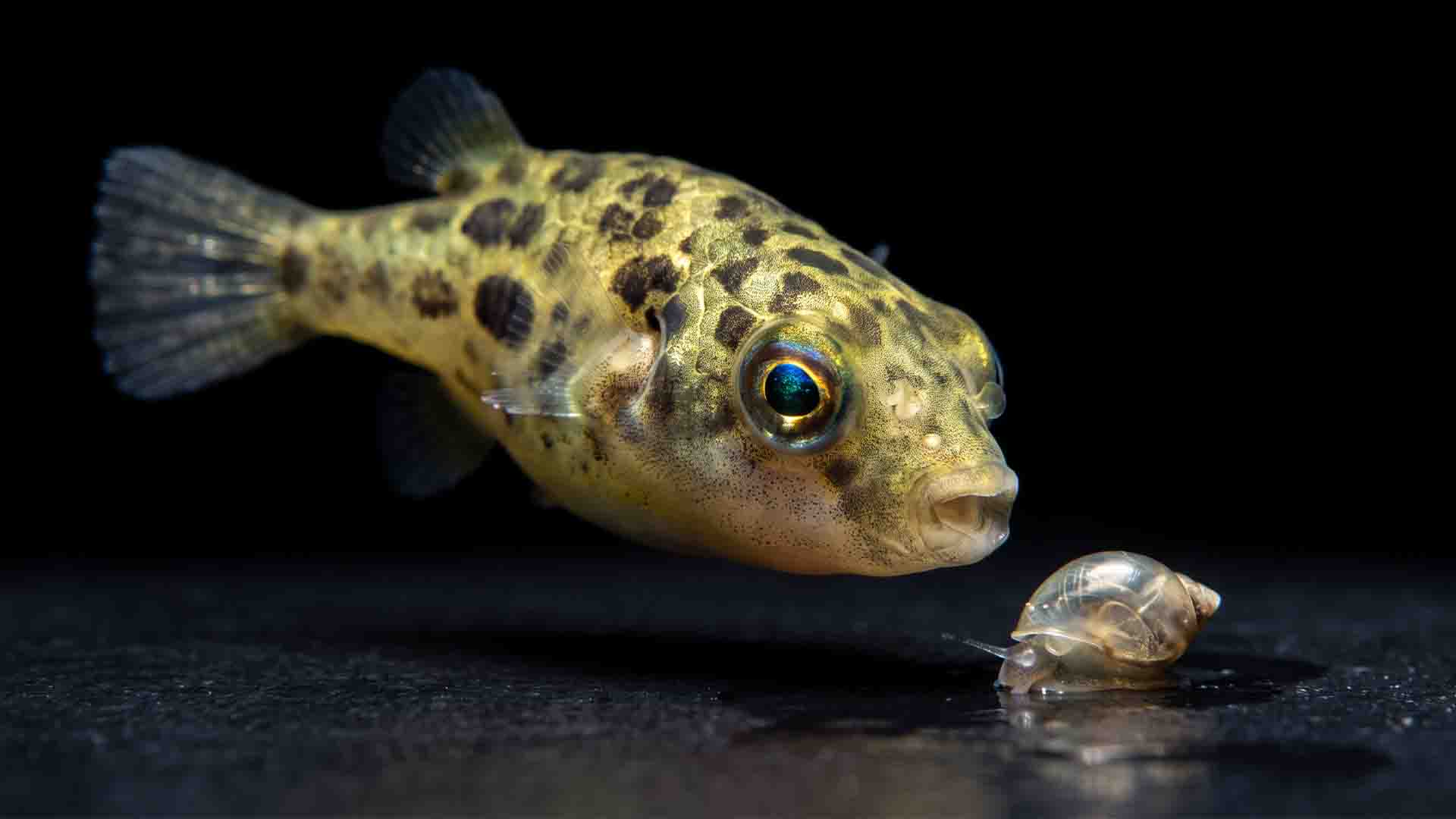
If you want an interactive solitary companion with sharp intelligence, the freshwater Pea Puffer (Carinotetraodon travancoricus) is superior in every behavioral metric. Maxing out at one inch, this true dwarf puffer tracks your movement across the room, inspects every new object you place near the glass, and hunts nuisance bladder and ramshorn snails relentlessly.
Think of your five-gallon biological filter as a strict savings account. A single Pea Puffer lives comfortably within that budget, provided you keep it strictly alone. Pea Puffers are notorious fin-nippers that will shred peaceful community fish within hours.
- Safe Stocking Count: 1 solo specimen (strictly species-only)
- Tank Zone: All water levels
- Ideal Temperature: 74 to 80 degrees Fahrenheit
- Biological Advantage: Zero fin-drag genetics, high owner recognition, and natural biological snail control.
5-Gallon Nano Stocking and Bioload Comparison Matrix
Use the biological reference matrix below to compare adult dimensions, thermal ranges, safe group sizes, and the exact retail stocking mistake each species replaces:
| Species (Common & Scientific) | Max Adult Size | Primary Tank Zone | Safe 5-Gal Count | Temp Range (F) | Bioload Impact | Replaces Retail Trap |
|---|---|---|---|---|---|---|
| 1. Chili Rasbora Boraras brigittae | 0.75 in | Mid-Top | 6 to 8 | 72–78 | Ultra-Low | Zebra Danios |
| 2. Male Endlers Livebearer Poecilia wingei | 0.90 in | Middle | 4 to 5 (Males) | 72–80 | Low | Mixed-Sex Guppies |
| 3. Sparkling Gourami Trichopsis pumila | 1.20 in | All (Planted) | 1 to 3 | 75–82 | Low | Dwarf Gouramis |
| 4. Ember Tetra Hyphessobrycon amandae | 0.80 in | Middle | 6 | 73–82 | Ultra-Low | Neon & Cardinal Tetras |
| 5. Clown Killifish Epiplatys annulatus | 1.30 in | Top Surface | 4 to 5 | 72–79 | Low | Hatchetfish / Danios |
| 6. Japanese Medaka Ricefish Oryzias latipes | 1.20 in | Upper-Mid | 5 to 6 | 55–78 | Low | Unheated Goldfish |
| 7. Pygmy Corydoras Corydoras pygmaeus | 1.00 in | Bottom / Low-Mid | 5 to 6 | 72–79 | Low | Bronze & Albino Corys |
| 8. Scarlet Badis Dario dario | 0.80 in | Lower Cover | 1 Solo Male | 70–77 | Ultra-Low | Ram & Apisto Cichlids |
| 9. Celestial Pearl Danio Danio margaritatus | 0.95 in | Middle Cover | 5 to 6 | 71–77 | Low | Harlequin Rasboras |
| 10. Pea Puffer Carinotetraodon travancoricus | 1.00 in | All (Solo) | 1 Solo | 74–80 | Moderate-Low | Heavy-Fin Bettas |
What to Avoid: Deadly Pet Store Traps for 5-Gallon Tanks
Even when you pick a suitable micro-species, four common setup errors can still collapse a five-gallon ecosystem overnight:
- Combining Multiple Lists Into One Tank: Never put all ten species into a single five-gallon aquarium. This list gives you ten safe options to choose from—not a single community recipe. Exceeding a combined total of eight to ten micro-fish crosses your biological filtration ceiling.
- Buying “Algae Eaters” for Small Tanks: Common Plecos grow past eighteen inches, Bristlenose Plecos reach five inches, and Chinese Algae Eaters become violent scale-biters. Even Otocinclus catfish frequently starve to death in brand-new five-gallon tanks because five gallons of glass cannot grow enough natural biofilm to sustain a shoal.
- High-Velocity Hang-On-Back Filters: Factory filter kits bundled with five-gallon starter tanks often create whirlpool currents that exhaust tiny 0.8-inch fish and pin them against intake slots. Swap harsh impeller cartridges for a gentle, air-driven sponge filter with a bleed valve.
- Adding Livestock Before Aquasoil Ammonia Settles: Active nutrient-rich planted substrates leach massive amounts of ammonium during the first two to three weeks underwater. Adding fish before that initial ammonium spike clears guarantees chemical gill burns.
Do This Instead: The Vertical Zoning and Cycling Protocol
To run a zero-crash five-gallon aquarium, treat stocking as biological engineering rather than impulse shopping. Follow this exact five-step deployment protocol:
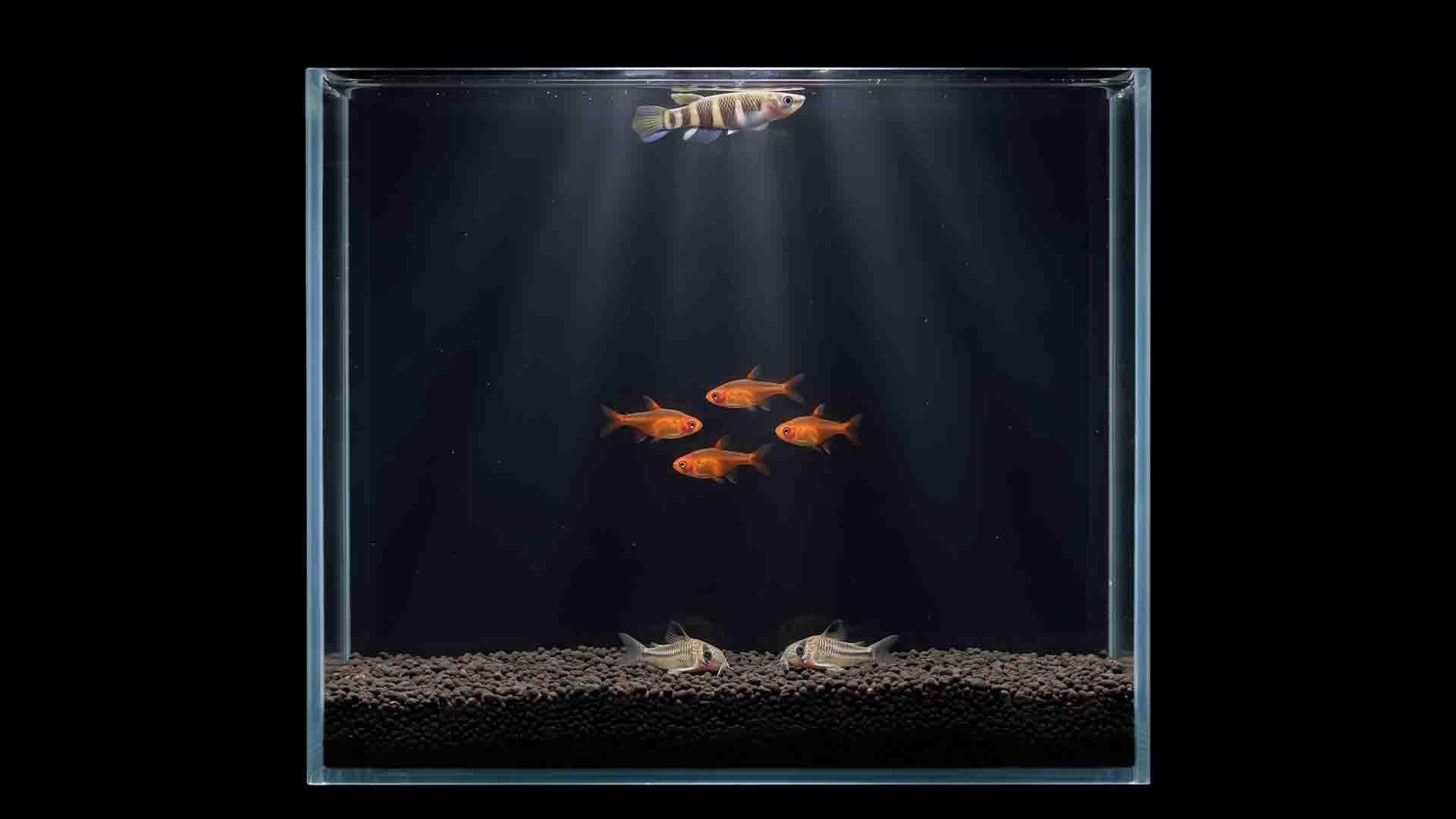
- Select Either One Solo Centerpiece OR One Stratified Micro-Community: If you choose a Pea Puffer or Scarlet Badis, keep it strictly solo. If you want a peaceful community, pair one upper/mid school with one bottom group—for example, 6 Chili Rasboras in the middle layer plus 5 Pygmy Corydoras along the substrate, or 4 Clown Killifish at the surface plus 6 Ember Tetras below.
- Plant 60 Percent of the Substrate Footprint First: Fast-growing stem plants, floating water lettuce, and epiphytic ferns act as living chemical sponges, absorbing ammonium and nitrate directly from the water column before algae or bacteria even touch them.
- Complete a Full 21-to-28-Day Nitrogen Cycle: Dose pure liquid ammonium chloride to 2.0 parts per million (ppm) and wait until your sponge filter converts both ammonia and nitrite to 0.0 ppm within twenty-four hours. Never trust “instant cycle” bottled claims without liquid reagent verification.
- Drip Acclimate Nano Fish for 45 Minutes: Tiny fish possess high surface-area-to-volume gill ratios, making them sensitive to sudden shifts in total dissolved solids (TDS) and pH. Drip tank water slowly into their transport bag at two drops per second before netting them into the aquarium.
- Feed Micro-Portions Every Other Day for Week One: Crush high-protein micro-pellets between your fingers so every particle matches the width of the fish’s eye. Stop feeding the instant food reaches the substrate, allowing your bacterial colony to scale up smoothly without an ammonia rebound.
Scientific Truths Behind Nano Aquarium Stability
Successful nano fishkeeping comes down to water chemistry and comparative physiology, not guesswork. Three documented biological mechanisms explain why strict species selection prevents sudden tank crashes in five-gallon volumes.
1. Unionized Ammonia Equilibrium and Carbonate Buffering
Total ammonia nitrogen inside an aquarium exists in two shifting forms: ionized ammonium (NH4+) and toxic unionized ammonia gas (NH3). According to aquaculture water chemistry data compiled on ScienceDirect, the ratio between harmless ammonium and lethal unionized ammonia is governed directly by water pH and temperature. As pH climbs from 7.0 to 8.0, the toxic NH3 fraction multiplies nearly tenfold.
Because a five-gallon tank holds minimal carbonate hardness (KH), organic acids produced by nitrifying bacteria and decaying fish waste rapidly deplete buffering capacity. Without regular partial water changes and low-bioload stocking, pH swings destabilize bacterial oxidation and expose gill membranes to acute ammonia toxicity.
2. Spatial Confinement and Teleost Cortisol Elevation
Physiological stress studies on teleost fishes documented via ScienceDirect confirm that physical confinement triggers sustained activation of the hypothalamic-pituitary-interrenal (HPI) axis, flooding the bloodstream with cortisol. While short-term cortisol spikes help wild fish escape predators, chronic elevation in undersized tanks suppresses lymphocyte activity, slows wound healing, and halts normal feeding behavior.
Species profiles recorded on FishBase for Boraras brigittae show that true micro-rasboras inhabit shallow, densely vegetated blackwater margins with negligible water velocity. Their evolved locomotion relies on short, hovering bursts rather than continuous open-water cruising, preventing confinement-induced cortisol buildup inside a 16-inch glass footprint.
3. Benthic Morphology and Micro-Predator Metabolic Scaling
Morphological records on FishBase for Corydoras pygmaeus confirm a maximum standard length near 2.4 centimeters (under one inch), paired with mid-water schooling behavior uncommon among larger armored catfishes. Unlike heavy-bodied bottom dwellers that churn deep substrate layers and excrete dense fecal loads, Pygmy Corydoras graze lightly across leaf surfaces and fine sand.
Similarly, biological data on FishBase for Carinotetraodon travancoricus highlights the freshwater Pea Puffer’s specialized beak dentition and solitary foraging ecology in slow-moving Kerala rivers. Keeping a single specimen aligns its territorial radius and protein waste output with the biological filtration ceiling of a mature five-gallon sponge filter.
People Also Ask: Direct Answers for 5-Gallon Aquariums
What fish can live in a 5-gallon tank besides a Betta?
Ten low-bioload nano species thrive in a cycled five-gallon aquarium without a Betta: Chili Rasboras, all-male Endlers Livebearers, Sparkling Gouramis, Ember Tetras, Clown Killifish, Japanese Medaka Ricefish, Pygmy Corydoras, a solo Scarlet Badis, Celestial Pearl Danios, and a single Pea Puffer. Each stays at or under 1.3 inches and avoids high-velocity horizontal swimming stress.
How many nano fish can you safely keep in 5 gallons?
A mature, planted five-gallon aquarium safely supports either one solitary centerpiece fish (such as a Pea Puffer or male Scarlet Badis) or a single schooling group of five to eight micro-fish under one inch, such as Chili Rasboras or Ember Tetras. If you stratify vertical tank layers, you can combine six top-to-mid micro-schoolers with five Pygmy Corydoras on the substrate.
Can Neon Tetras or Zebra Danios live in a 5-gallon tank?
No. Although pet stores frequently market Neon Tetras and Zebra Danios for small starter kits, both species are active horizontal swimmers that require at least a 20-inch to 24-inch tank length. Confining them in five gallons elevates stress hormones, weakens immune defenses, and leads to chronic fin-nipping or premature disease outbreaks.
What is the best cleanup crew or bottom dweller for a 5-gallon tank?
The Pygmy Corydoras (Corydoras pygmaeus) is the only bottom-dwelling catfish suitable for a five-gallon tank, kept in a small group of five over fine sand or rounded aquasoil. Standard Bronze Corydoras, Albino Corydoras, and Plecos grow too large and produce heavy waste that crashes small biological filters. For algae control, pair your nano fish with Neocaridina shrimp or a single Nerite snail rather than algae-eating fish.
Do you need a heater for a 5-gallon fish tank?
Most tropical nano species—including Ember Tetras, Sparkling Gouramis, and Pea Puffers—require a reliable 25-watt adjustable heater set between 74 and 78 degrees Fahrenheit. However, if you want an unheated five-gallon aquarium, stock Japanese Medaka Ricefish (Oryzias latipes), which thrive comfortably at room temperatures between 55 and 75 degrees Fahrenheit.
Frequently Asked Questions About 5-Gallon Nano Stocking
Can I keep Shrimp and Snails with these 5-gallon nano fish?
Yes, with two exceptions. Cherry Shrimp (Neocaridina davidi) and Nerite snails coexist peacefully with Chili Rasboras, Ember Tetras, Male Endlers, Medaka, Clown Killifish, and Pygmy Corydoras. Do not house shrimp or snails with a Pea Puffer, which hunts mollusks and crustaceans relentlessly, and expect a Scarlet Badis to prey on newborn shrimplets.
How often should I change water in a stocked 5-gallon tank?
Perform a 25 to 30 percent water change once every seven days using dechlorinated water matched to your tank’s temperature. Weekly water changes replenish depleted carbonate buffers, remove accumulated nitrates, and prevent trace hormone buildup in compact water volumes.
What is the best filter for a 5-gallon nano fish tank?
An air-driven sponge filter paired with a quiet air pump and inline flow-control valve is the superior filtration choice for five-gallon aquariums. Sponge filters provide massive surface area for beneficial nitrifying bacteria while creating gentle water circulation that will not exhaust tiny sub-inch fish or suck fry into intake slots.
Why did my fish die in a 5-gallon tank even though the water looked clear?
Crystal-clear water has zero correlation with chemical safety. Dissolved ammonia and nitrite are completely invisible to the naked eye. Sudden deaths in clear five-gallon tanks almost always trace back to uncycled filter media, decomposing food trapped in coarse gravel, or toxic ammonia spikes triggered by adding too many fish at once.
Should I use plastic plants or live aquatic plants in a 5-gallon setup?
Always use live aquatic plants in a five-gallon tank. Fast-growing stems, mosses, and floating plants directly consume toxic ammonium and nitrates from the water column, stabilize dissolved oxygen levels, and create visual barriers that eliminate territorial stress for shy nano species like Celestial Pearl Danios and Sparkling Gouramis.
Build a Crash-Proof Nano Ecosystem: Next Steps
Selecting the right fish solves half of the five-gallon stability equation; building the biological foundation around them locks in long-term success. If you are planning your hardware, hardscape, and filtration layout from scratch, review our complete Nano Aquarium Setup Guide to calibrate flow rates and lighting intensity for small glass footprints.
Before adding livestock, verify that your substrate and filter bacteria can handle daily nitrogen loads without delayed spikes by following our step-by-step Aquarium Nitrogen Cycle and Ammonia Prevention Protocol. If your stocking plan centers on shy cover-seekers like Sparkling Gouramis or Celestial Pearl Danios, pair your cycle with species from our Best Low-Tech Aquarium Plants guide so your tank absorbs nitrates naturally without pressurized carbon dioxide. Planning a dedicated species-only predator build instead? Dive into our specialized Pea Puffer Care and Snail-Breeding Guide before bringing one home.
Continue the Video Masterclass (Zero-Crash Ecosystem Series):
Stocking is only step one—hidden nutrient spikes trapped inside the wrong substrate can still crash a cycled tank months later. Watch the next episode in our Aquarium Setup Masterclass Series on YouTube to engineer a safe substrate foundation, or explore every micro-species profile inside the Nano Aquarium Fish Mastery Playlist. Independent freshwater science—no sponsors, no brand deals, ever.
A balanced five-gallon aquarium has nothing to do with cramming color into a small box and everything to do with respecting real biological limits. Match your species to your tank’s vertical zones, cycle your sponge filter thoroughly, keep your systems balanced, and let nature handle the rest.