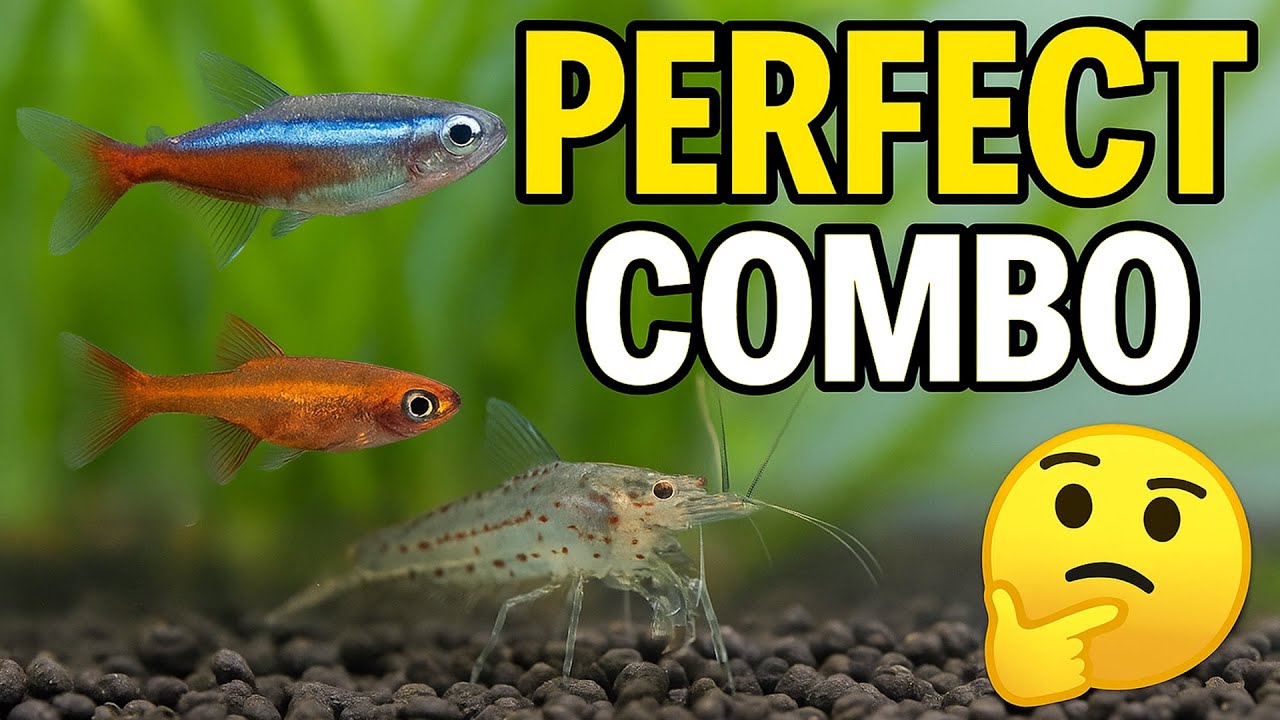

Finding the best cleaner fish for freshwater tank setups often leads straight into a retail marketing trap. Pet stores sell living animals as mechanical janitors, promising spotless glass while completely ignoring the metabolic debt they create inside closed home systems.
Every living organism added to your aquarium acts as a biological engine. Machines burn fuel and release exhaust; fish consume organics and generate ammonia. When you buy an animal solely to clean up your maintenance oversights, you are not reducing physical tank waste. You are transferring it into invisible dissolved pollutants that silently destabilize your nitrogen cycle.
In this comprehensive biological breakdown, we strip away retail hype to expose why commercial cleaner fish trigger catastrophic aquarium crashes, why bottom dwellers never eat fish poop, and which targeted biological workers actually restore equilibrium to your freshwater display.
Before introducing any clean-up crew species to your setup, watch our full operational breakdown above to see how these biological mechanics function inside mature community environments.
Quick Biological Verdict (What Actually Works):
- Substrate Health: Corydoras and Kuhli Loaches never eat fish poop; they aerate compacted sand to stop toxic anaerobic hydrogen sulfide pockets.
- Algae Control: Black Beard Algae (BBA) requires True Siamese Algae Eaters; hair algae requires American Flagfish; brown diatoms require Hillstream Loaches or Nerite snails.
- The Bioload Reality: Common Plecos and mature Chinese Algae Eaters produce up to 100x more waste and physical aggression than the algae they consume.
The Subcontractor Debt Trap: Why Commercial Cleaner Fish Crash Tanks
The biggest illusion in modern fishkeeping is the biological Roomba myth. Hobbyists assume that adding an algae eater subtracts organic matter from the glass and hardscape. In basic thermodynamics, matter cannot be destroyed; it only changes form. When an animal grazes on biofilm, green dust, or uneaten pellets, that caloric intake is metabolized into solid fecal cords and concentrated ionic ammonia released across the gills.
We call this the Subcontractor Debt Trap. You hire an animal to eliminate a visual nuisance, but its physiological presence creates an ongoing chemical debt. If your mechanical filtration and beneficial bacterial colonies cannot process that sudden metabolic surge, the tank experiences delayed biological failure. The glass may look clear for seventy-two hours, but the water column saturates with dissolved organic compounds that trigger bacterial blooms and suffocating microbial growth.
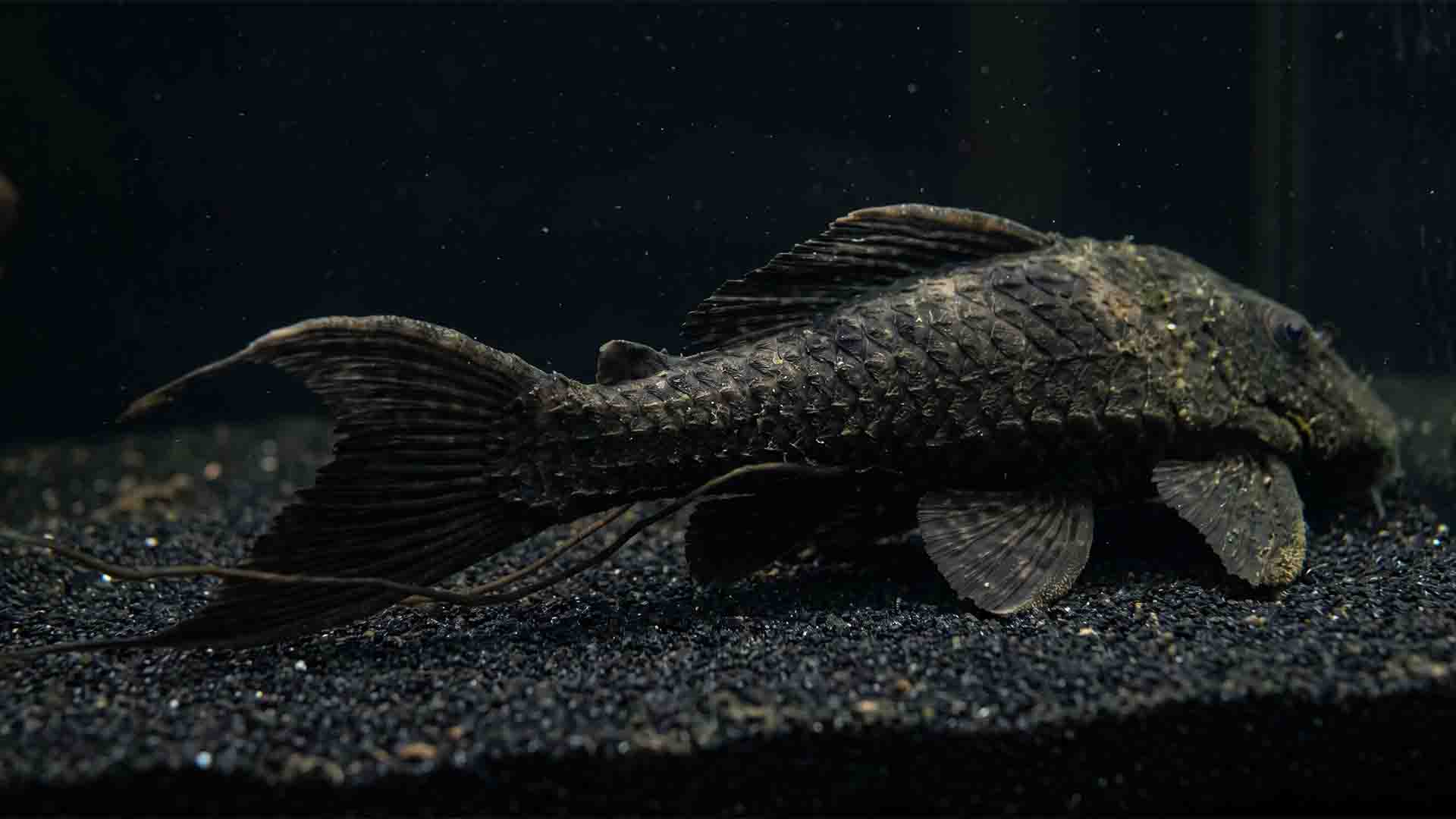
Common Plecos: The 18-Inch Waste Engine
The Common Pleco (Hypostomus plecostomus) is the most destructive retail recommendation sold to beginner aquarists, representing the exact marketing trap we uncovered in our investigation of pet store lies that crash beginner fish tanks. Big-box retail chains sell two-inch juveniles as casual janitors for ten-gallon starter aquariums, conveniently ignoring that this species is an armored river monster capable of reaching eighteen inches in length and living for over two decades.
A Common Pleco possesses an exceptionally long, coiled digestive tract specialized for processing large volumes of low-nutrient wood pulp, aufwuchs, and detritus. Because its natural food sources provide minimal caloric density, the fish must consume massive quantities of material continuously. The biological consequence is an exponential increase in solid waste. Adult specimens produce thick, continuous fecal ropes that choke mechanical filter sponges, mat over substrate beds, and overwhelm the biofilter with particulate carbon and nitrogen.
As body length scales up, animal mass increases cubically rather than linearly. A twelve-inch adult pleco does not produce six times the waste of a two-inch juvenile; it produces over one hundred times the organic waste. Expecting a Common Pleco to clean a standard home aquarium is the equivalent of hiring a contractor to repair drywall, only for him to park a diesel bulldozer inside your living room and unload three bags of wet trash onto the carpet.
Chinese Algae Eaters: The Ontogenetic Shift to Flesh Parasite
The Chinese Algae Eater (Gyrinocheilus aymonieri) is another store-bought disaster disguised as an industrious bottom dweller. When purchased as small, energetic juveniles, they graze surface diatoms and soft green microalgae with impressive vigor. This juvenile behavior tricks hobbyists into believing they have acquired the ultimate glass cleaning specialist.
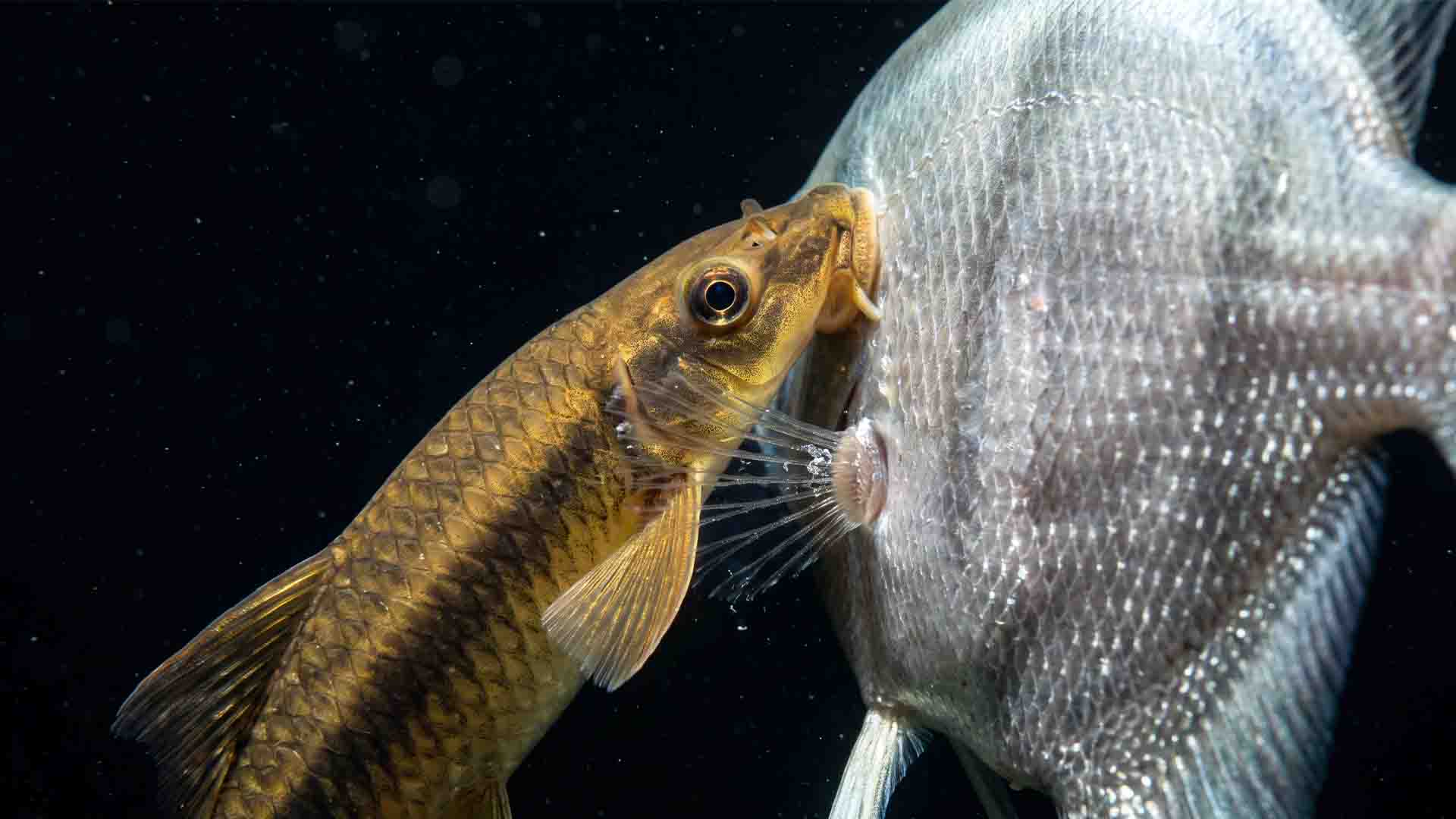
The biological trap snaps shut as the fish reaches sexual maturity at three to four inches. The species undergoes an ontogenetic dietary shift. Juvenile digestive enzyme production, specifically cellulase, downregulates, while physical protein requirements surge. At the same time, the fish develops an intensely territorial temperament and a physical body length approaching eleven inches.
A mature Chinese Algae Eater stops grazing plant-based algae entirely. Instead, its downward sucker mouth evolves into a parasitic rasping tool. During nighttime hours, when broad-bodied community tankmates such as Angelfish, Discus, and Fancy Goldfish rest motionless near the substrate, the algae eater clamps onto their lateral flanks. It actively rasps away the protective dermal mucus layer (slime coat) and underlying epidermal tissue to extract lipid-rich glycoproteins.
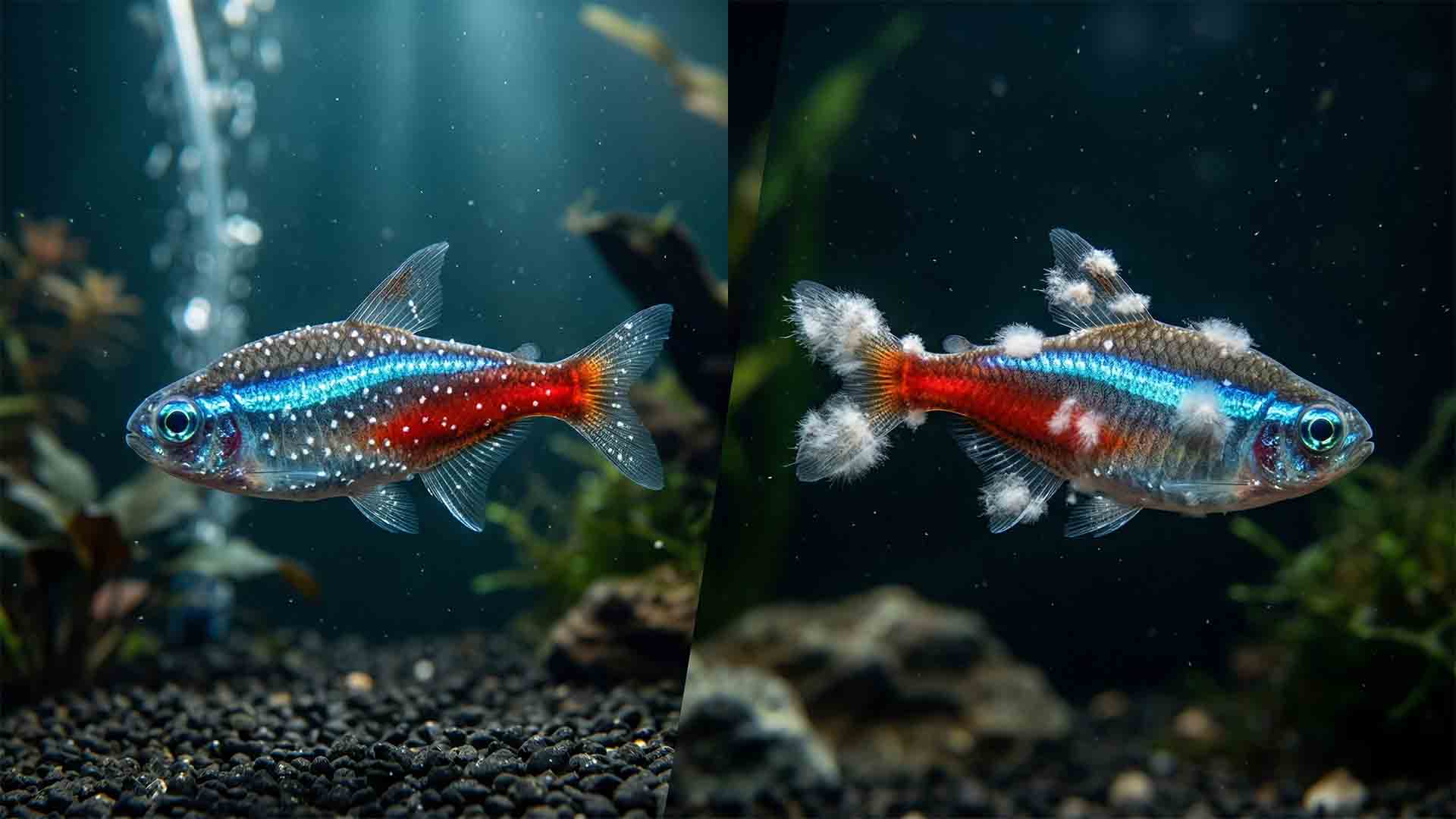
This predatory mucophagy creates raw, open lesions across your display fish. The physical trauma rapidly develops secondary opportunistic fungal infections and columnaris outbreaks, while the perpetrator is rarely suspected by the owner because it still carries the retail label of a peaceful janitor.
Flying Fox vs True Siamese Algae Eater: Identity Theft in Retail Tanks
Retail aquatic departments frequently mislabel species, but few substitutions cause as much long-term friction as selling the Flying Fox (Epalzeorhynchos kalopterus) in place of the True Siamese Algae Eater (Crossocheilus oblongus).
While juvenile specimens appear nearly identical in bare retail sales tanks, their adult biology could not be more divergent. The Flying Fox develops smooth-edged lateral stripes bordered by a distinct gold band, paired with dark patches across its dorsal and ventral fins. Anatomically, it possesses two distinct pairs of mouth barbels. Behaviorally, it is an aggressive, territory-obsessed bottom dweller that quickly loses interest in tough algae, preferring high-protein commercial fish flakes while violently driving smaller community fish away from the substrate.
True Siamese Algae Eaters, by contrast, possess a single pair of maxillary barbels, completely transparent fins, and a solid black horizontal stripe featuring jagged, saw-toothed edges that run continuously through the clear caudal fin rays. This morphological distinction is vital: only the authentic Siamese Algae Eater retains the specialized downward jaw structure required to graze red turf algae and stubborn Black Beard Algae (BBA) without terrorizing peaceful tankmates.
The Substrate Reality: Do Corydoras Eat Fish Waste or Aerate Sand?
Search queries regarding aquarium janitors consistently reveal one recurring question: do Corydoras eat fish waste, or do Cory catfish eat poop? The absolute biological answer is never. No vertebrate freshwater fish possesses the specialized digestive physiology required to extract metabolic energy from decomposed teleost feces.
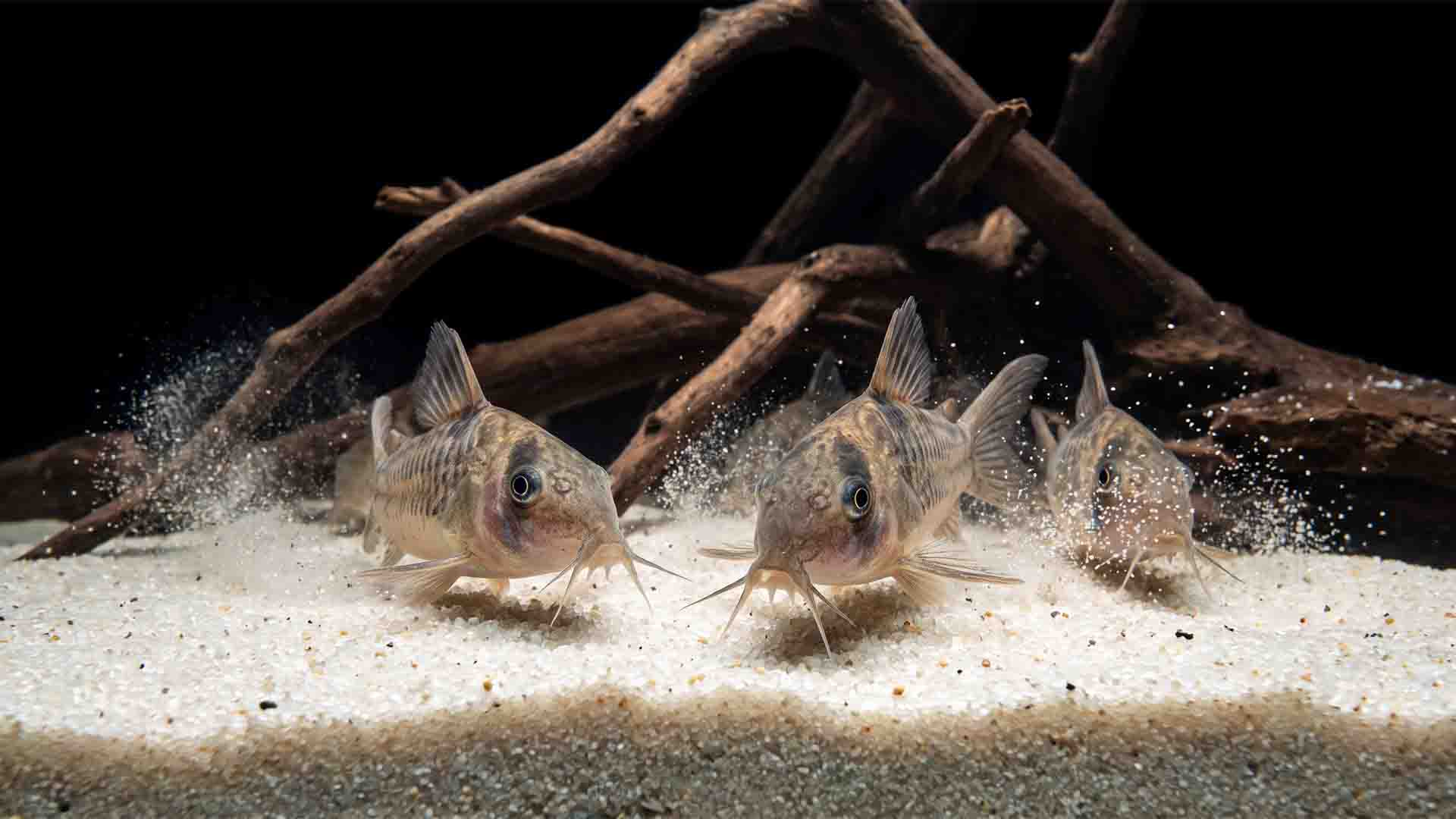
Fish waste consists primarily of indigestible organic ash, fiber, and sloughed intestinal mucus loaded with decaying bacteria. If a Corydoras mouths a piece of fecal matter, it is merely using its sensory barbels to test for insect larvae, micro-crustaceans, or uneaten protein pellets resting beneath the debris. The waste cord is promptly rejected across the opercular cavity. Expecting a bottom dwelling catfish to consume feces is the equivalent of expecting an automobile to run on its own exhaust pipe fumes.
Benthic Bioturbation: How Corydoras Actually Protect Systems
While Corydoras will never clean up fish waste for you, their true biological contribution to a freshwater aquarium is indispensable: continuous substrate aeration via benthic bioturbation. As we documented when ranking the best and worst bottom dwellers, undisturbed substrate beds compact under hydraulic pressure, trapping organic particles beneath upper sediment layers.
When maintained on fine silica river sand, a healthy shoal of Corydoras plunges their rostrums deep into the substrate, taking in mouthfuls of sand, sifting out microscopic food particles, and expelling the mineral grains out through their gill slits. This mechanical foraging provides essential ecosystem engineering:
- Eliminating Toxic Gas Pockets: Fine sands and layered substrates naturally develop anaerobic dead zones where heterotrophic sulfate-reducing bacteria thrive, producing deadly hydrogen sulfide gas. Continuous foraging mechanically stirs the upper substrate layers, allowing oxygenated water to penetrate the bed and preventing toxic gas formation.
- Suspending Detritus for Filtration: By constantly disturbing the surface gravel or sand, Corydoras lift settling organic mulm into the water column currents, enabling mechanical filter intakes to export the debris before it decomposes into base nitrates.
- Protecting Sensory Barbels: When kept on sharp, rough gravel, the delicate sensory barbels of Corydoras suffer micro-abrasions. Secondary bacterial infections rapidly settle into these open wounds, causing irreversible barbel necrosis that permanently cripples their foraging capabilities.
Kuhli Loaches: The Hidden Crevice Cleaners
Where Corydoras patrol open substrate plains, the Kuhli Loach (Pangio kuhlii) dominates the hidden micro-caverns that standard siphons and broad-bodied fish cannot reach. Planted aquariums naturally accumulate dead organic zones beneath root masses, behind dense rock hardscapes, and under submerged driftwood.
These tight crevices trap uneaten protein foods, dead foliage, and organic sludge. Left undisturbed, these pockets rot into biological dead zones that fuel cloudy water and unexpected ammonia spikes. The elongated, serpentine morphology of the Kuhli Loach is uniquely adapted for subterranean navigation. Operating primarily during the dark phase of the photoperiod, they thread through narrow gaps to consume trapped organic scraps before heterotrophic bacterial blooms can destabilize the water column.
Retail Janitors vs. Biological Equivalents: The Failure Matrix
Most aquarium crashes do not originate from equipment malfunctions; they are engineered directly at the retail sales counter. Pet stores evaluate aquatic species based on juvenile holding behavior under high-density commercial flow rather than adult trophic development, jaw morphology, and metabolic waste rates. When hobbyists stock livestock based on store marketing tags, they introduce systemic instability into closed glass biomes.
To eliminate guesswork and protect your biofilter from delayed failure, cross-reference your cleanup crew candidates against this empirical biological performance matrix:
| Species (Scientific Name) | Retail Marketing Claim | Adult Biomass & Footprint | Metabolic Bioload Score (1-10) | Real Long-Term Function | FTM Biological Substitute |
|---|---|---|---|---|---|
| Common Pleco (Hypostomus plecostomus) | “Hardworking universal glass cleaner” | 12–18 Inches (1,200+ grams wet mass) | 10 / 10 (Extreme Ammonia Factory) | Wood pulp & organic processor; deposits massive waste cords across the substrate bed. | Bristlenose Pleco (Ancistrus cirrhosus) |
| Chinese Algae Eater (Gyrinocheilus aymonieri) | “Active beginner algae eating crew” | 8–11 Inches (Aggressive Benthic Ruler) | 8 / 10 (High Waste & Stress Factor) | Ontogenetic dietary shift; attacks broad-bodied fish at night to rasp protective mucus coats. | Panda Garra (Garra flavatra) |
| Flying Fox (Epalzeorhynchos kalopterus) | “True Siamese black beard algae eater” | 5–6 Inches (Territorial Cyprinid) | 6 / 10 (Moderate Benthic Load) | Abandons red algae for protein flakes; aggressively chases peaceful community fish. | True Siamese Algae Eater (Crossocheilus oblongus) |
| Mystery Snail (Pomacea bridgesii) | “Essential natural waste recycler” | 2–2.5 Inches (Heavy Shell Volume) | 7 / 10 (High Dissolved Organics) | Low rasping efficiency on tough glass film; massive organic output and rapid decay risk. | Nerite Snail (Neritina natalensis) |
| Corydoras Catfish (Corydoras paleatus / panda) | “Eats fish poop and substrate dirt” | 2–2.5 Inches (Obligate Shoaler) | 3 / 10 (Low Benthic Footprint) | Never consumes feces; provides vital benthic bioturbation to prevent toxic gas pockets. | Authentic Shoal on Sand (6+ Individuals) |
Niche-Specific Functional Cleaners: Cleaner Fish That Actually Work
| Target Nuisance / Algae | Dedicated Biological Worker | Oral Morphology | Water Chemistry & Temp Limits | Common Retail Mistake |
|---|---|---|---|---|
| Black Beard Algae (BBA) | True Siamese Algae Eater | Downward rasping disc, single barbel pair | pH 6.5–7.5 | 24–26°C (75–79°F) | Buying Flying Fox look-alikes that attack fish. |
| Filamentous Hair Algae | American Flagfish | Spatulate tricuspid tearing teeth | pH 6.8–8.2 | 18–24°C (64–75°F) | Overfeeding flakes so they ignore tough algae. |
| Brown Diatoms & Biofilm | Hillstream Loach | Friction-disc scraping mouth | pH 6.5–7.8 | 20–24°C (68–75°F) | High O2 | Placing in warm, low-flow community tanks. |
| Surface Protein Film | Black Molly | Superior upturned surface jaws | pH 7.5–8.5 | Hard Water Required | Keeping in soft, acidic water leading to fin rot. |
| Anaerobic Substrate Rot | Corydoras (Shoal of 6+) | Subterminal sifting snout & barbels | pH 6.0–7.5 | Soft Sand Only | Keeping on sharp gravel that destroys barbels. |
A functional clean-up crew is not built by purchasing a single miracle fish. In nature, different organisms evolve specialized morphological structures to process distinct biological niches. Replicating this balance in home aquariums requires matching the exact anatomy of the cleaner to the specific nuisance accumulating in your water column or hardscape.
Black Mollies: Surface Neuston Film & Hair Algae Grazers
In low-tech and high-light aquariums alike, the water surface frequently develops a stubborn, oily sheen known as the neuston layer. This lipid-rich organic film is composed of proteins, fatty acids, and dead micro-bacteria that restrict vital gaseous exchange, driving down dissolved oxygen levels before your fish wake up. Standard canister surface skimmers clear this film mechanically, but they often suck in tiny fish and require constant electrical maintenance.
Black Mollies (Poecilia sphenops) possess an upturned, superior mouth structure perfectly engineered to skim the surface tension. Unlike strictly carnivorous livebearers, Mollies are obligate algivores with exceptionally long intestines designed to process vegetative matter. When maintained with moderate feeding routines, they constantly patrol the top layer of the water column, hoovering up the protein film and ripping away early-stage filamentous hair algae from floating plants without damaging delicate root structures.
American Flagfish: The Filamentous Hair Algae Shredder
Green hair algae and staghorn algae present severe physical challenges for standard grazers. Their thick, cellulose-reinforced filaments easily choke the delicate scraping radulas of snails and the soft suction discs of catfish. Most hobbyists watch their expensive Siamese Algae Eaters ignore mature hair algae entirely once commercial sinking pellets enter the system.
The American Flagfish (Jordanella floridae), a pupfish native to the shallow wetland ecosystems of Florida, represents the ultimate biological lawnmower for fibrous vegetation. Maxing out at two to two and a half inches, this cold-tolerant fish features reinforced jaws equipped with specialized, spatulate tricuspid teeth. Instead of weakly rasping surface film, the Flagfish actively bites down on filamentous algae mats, using violent body torsion to rip the strands off driftwood, mosses, and hardscape. They provide relentless mechanical eradication where typical community fish refuse to graze.
Hillstream Loaches: High-Velocity Diatom & Biofilm Polishers
When brown diatoms coat large river stones, broad-leaf plants, and glass panes, beginners routinely reach for giant plecos. What they actually need is the hydrodynamic perfection of the Hillstream Loach (Sewellia lineolata).
Native to fast-flowing, oxygen-saturated hillstreams across Southeast Asia, this specialized loach looks like a miniature freshwater ray. Its expanded paired pelvic and pectoral fins form a powerful ventral suction disc that allows it to cling securely to slick surfaces against extreme current velocities. Because its mouthparts are adapted strictly for scraping epilithic biofilms and diatoms without the destructive jaw power of large loricarids, Hillstream Loaches polish glass and broad foliage without ever gouging soft wood, uprooting carpeting plants, or contributing to an unmanageable bioload.
Panda Garra: The Peaceful Biofilm Correction
If you have ever suffered through a community tank terrorized by a mature Chinese Algae Eater, the Panda Garra (Garra flavatra) provides the definitive biological correction. Originating from the torrential mountain streams of Myanmar, this small cyprinid caps out at three to three and a half inches.
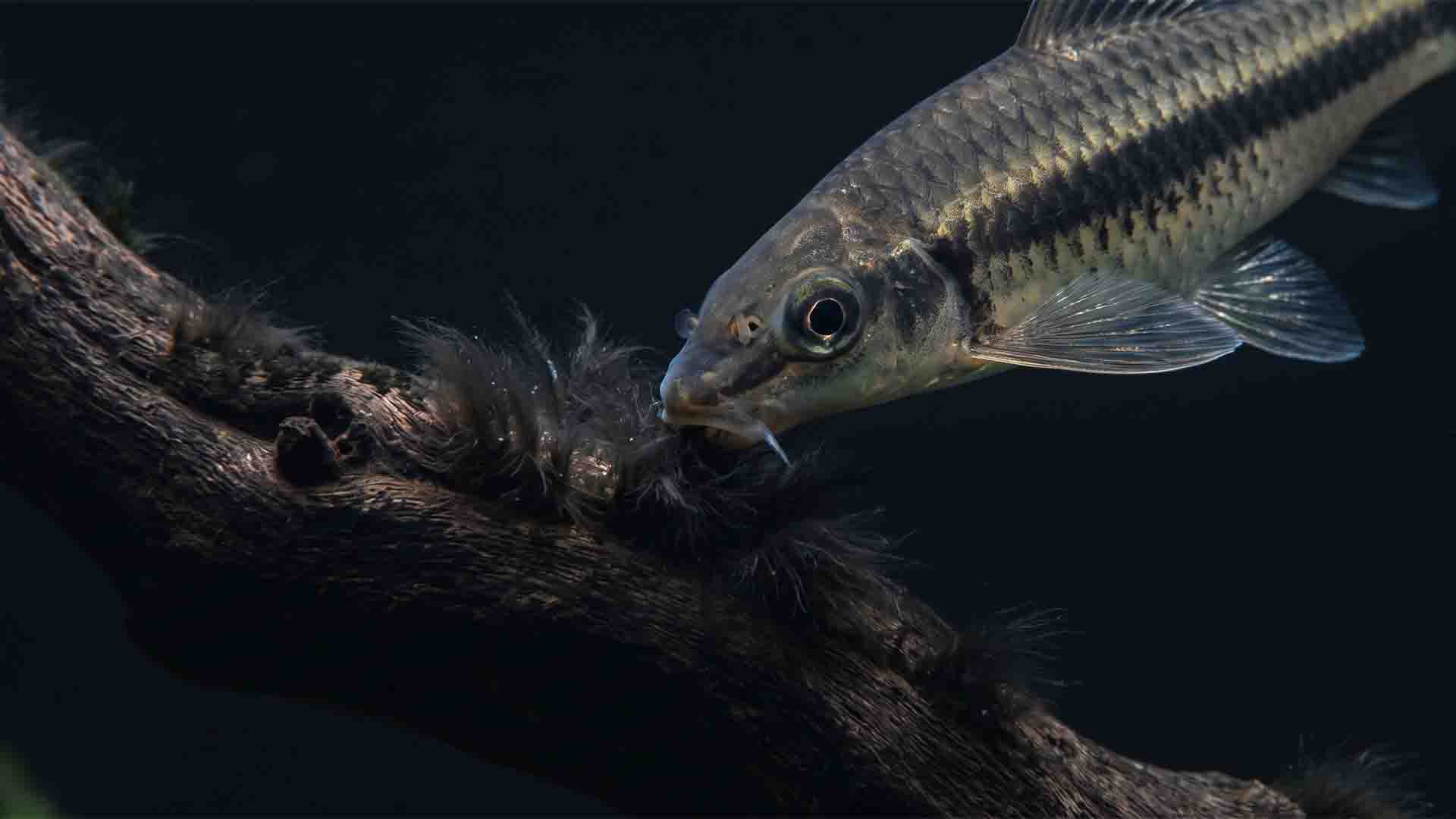
The Panda Garra features a modified, crescent-shaped suctorial disc on its lower labial fold. This muscular oral apparatus allows the fish to anchor in moderate flow while methodically stripping away diatoms, organic biofilms, and early-stage Black Beard Algae (BBA). Unlike the nocturnal, reclusive habits of large catfish, Panda Garras are diurnal, highly active micro-explorers that hop between hardscape features, displaying zero predatory interest in community slime coats and providing active daytime maintenance.
Bristlenose Pleco: The Only Safe Woodworking Professional
If you demand the classic suction-plate grazer dynamic without the eighteen-inch disaster of a Common Pleco, the Bristlenose Pleco (Ancistrus cirrhosus) is the single manageable solution. Staying between four and five inches at complete adult maturity, its metabolic footprint fits safely inside standard twenty-gallon or larger displays.
Bristlenose Plecos perform a vital digestive function that hobbyists routinely overlook: they process the soft, decaying lignin layer from natural submerged driftwood. The presence of real wood is physiologically mandatory for their long-term survival, as the insoluble fiber aids in moving nutrients through their specialized digestive tract. When provided with natural driftwood and shaded caves, a single Bristlenose will keep hardscape clean of green dust and soft algae without ever turning into an uncontrollable waste factory.
True Siamese Algae Eater: The Dedicated BBA Specialist
Black Beard Algae (Audouinella sp.) is widely considered the most intractable nuisance in the freshwater hobby. Its dense, rhodophyte tufts contain structural pigments and fibrous matrices that almost all aquatic grazers refuse to touch.
The True Siamese Algae Eater (Crossocheilus oblongus) remains the only vertebrate fish scientifically documented to consume Black Beard Algae consistently. Equipped with a downturned, rasping oral disc and a single pair of delicate maxillary barbels, juvenile and sub-adult specimens use specialized lateral biting mechanics to crop BBA filaments down to the substrate. To maintain their cleaning efficiency, avoid dumping excessive commercial protein flakes into the water column; when overfed with processed dry diets, even authentic Siamese Algae Eaters downshift their grazing instincts in favor of easy carbohydrates.
What to Avoid: 4 Stocking Habits That Break Clean-Up Crews
Aquarium stability is compromised far more frequently by predictable keeper habits than by external equipment failures. When hobbyists attempt to solve biological issues through retail transactions, they trigger feedback loops that accelerate tank deterioration. Eliminate these four behavioral traps to protect your aquatic ecosystem:
1. Purchasing Juvenile Fish Based on Current Display Tank Size
- Why it feels right: Seeing a two-inch baby Common Pleco or Bala Shark swimming calmly in a retail cubicle creates the false psychological impression that the animal produces a negligible bioload that fits a small home setup.
- What it silently breaks: It violates the geometric scaling law of allometric growth, where metabolic waste scales cubically with body length. As the fish grows, its solid waste and un-ionized ammonia production multiply over one hundred times, silently suffocating your biofilter sponges and overwhelming mechanical filtration capacity.
- What to ask instead: “What is the certified adult biomass and volumetric spatial requirement of this animal at thirty-six months of age?”
2. Adding Livestock to Solve Feeding and Photoperiod Imbalances
- Why it feels right: When glass panels turn green with diatom film or excess food settles between rocks, dropping in a “cleaner fish” feels like a responsible, organic maintenance shortcut.
- What it silently breaks: It falls into the Subcontractor Debt Trap. Every organism introduced into a closed aquarium consumes dissolved oxygen and metabolizes physical food into toxic dissolved nitrogen. Introducing new fish without correcting lighting duration or overfeeding inputs simply loads more chemical pressure onto an already overburdened biofilter.
- What to ask instead: “What operational imbalance in my photoperiod, water circulation, or feeding input is fueling this algal bloom?”
3. Forcing Benthic Sand-Sifters Onto Coarse, Jagged Gravel
- Why it feels right: Coarse epoxy-coated gravel or crushed obsidian substrates look visually striking and come pre-packaged on retail store shelves.
- What it silently breaks: Corydoras and loaches rely on delicate, chemosensory barbels to navigate and sift substrate beds. Forcing these benthic animals across razor-sharp gravel creates constant mechanical micro-abrasions, exposing raw epidermal tissue to opportunistic bacterial pathogens like Flavobacterium columnare and causing lethal barbel erosion.
- What to ask instead: “Does my substrate grain size match the evolutionary foraging morphology of the benthic animals I intend to keep?”
4. Scrubbing Glass and Media Spotless to Eliminate All Natural Biofilm
- Why it feels right: A surgically clean, sparkling tank with zero surface discoloration looks pristine and reassuring to an inexperienced fishkeeper.
- What it silently breaks: It triggers Sterile Tank Syndrome. The thin, slippery film coating your hardscape and glass is not dirt; it is a complex, living matrix of autotrophic bacteria, heterotrophic decomposers, and extracellular polymeric substances (EPS) that buffers your water against sudden chemical spikes and feeds obligate grazers. Aggressively scrubbing this biofilm starves specialized cleaners and resets your microbial cycle.
- What to ask instead: “Am I cleaning this surface to ensure functional mechanical water flow, or am I destroying essential microbial infrastructure for purely cosmetic reasons?”
Do This Instead: The FTM Biological Janitor Action Protocol
To establish an authentic, self-regulating maintenance crew that polishes your freshwater ecosystem without triggering water quality crashes, execute the following four-step operational protocol:
Step 1: Audit and Stabilize Environmental Inputs First
Never introduce clean-up crew livestock into an actively swinging, unstable aquarium. Lock your lighting photoperiod to a strict six to eight hours per day using a dependable digital timer, adjust feeding inputs so no physical flake sinks unconsumed past thirty seconds, and maintain steady directional flow across the substrate bed before spending money on cleaning animals.
Step 2: Match Specific Grazing Anatomy to Your Precise Nuisance
Identify the exact biological challenge present in your aquarium. If dealing with surface protein films, deploy Black Mollies. For stubborn filamentous green hair algae, introduce American Flagfish. For hardscape Black Beard Algae, stock authentic Siamese Algae Eaters. For substrate de-compaction, maintain a proper shoal of Corydoras on soft silica sand. Never purchase a generalist janitor expecting it to resolve multiple distinct ecological imbalances.
Step 3: Provide Supplementary Nutrition to Prevent Micro-Starvation
A clean-up crew cannot survive on visual tank waste alone. Once your utility fish successfully graze down the initial flush of diatoms and surface algae, they face rapid starvation in clean water. Regularly supplement their diets with blanched zucchini, cucumber slices, and sinking spirulina wafers dropped into the aquarium after lights-out to ensure their intestinal microbiomes remain fully functional.
Step 4: Maintain Uninterrupted Biological Filtration Margins
Adding utility livestock increases total system respiration and dissolved organic carbon. Ensure your mechanical and biological filtration turnover provides at least four to six times the total water volume per hour. When rinsing filter media during scheduled water changes, always squeeze sponges inside a bucket of siphoned aquarium water rather than chlorinated municipal tap water, preserving the living nitrifying bacteria that process your clean-up crew’s metabolic exhaust.
The Starvation Line: Why Otocinclus Catfish Die on Spotless Glass
Among all commercial clean-up crew species, the Otocinclus catfish (Otocinclus vestitus) suffers the highest retail casualty rate in the freshwater hobby. The scenario is universally familiar: a fishkeeper spots a dusting of brown diatoms on the front glass pane of a two-week-old tank, visits a pet store, and returns home with four tiny suckermouth catfish. Within ten to fourteen days, every single Otocinclus is dead on the substrate, even though liquid test kits show absolute zero ammonia, zero nitrite, and nominal nitrates.
This mortality spike has nothing to do with basic water chemistry parameters; it is the direct consequence of the retail starvation trap. Over ninety percent of Otocinclus entering the trade are wild-harvested from the Amazon and Orinoco river basins. During the multi-week logistics pipeline—moving from local river collectors to export holding pools, transcontinental shipping crates, wholesale distributors, and finally sterile retail holding cubes—these obligate algivores receive zero biologically appropriate food. By the time they reach your home aquarium, their delicate digestive tract is running on an empty biological reserve.
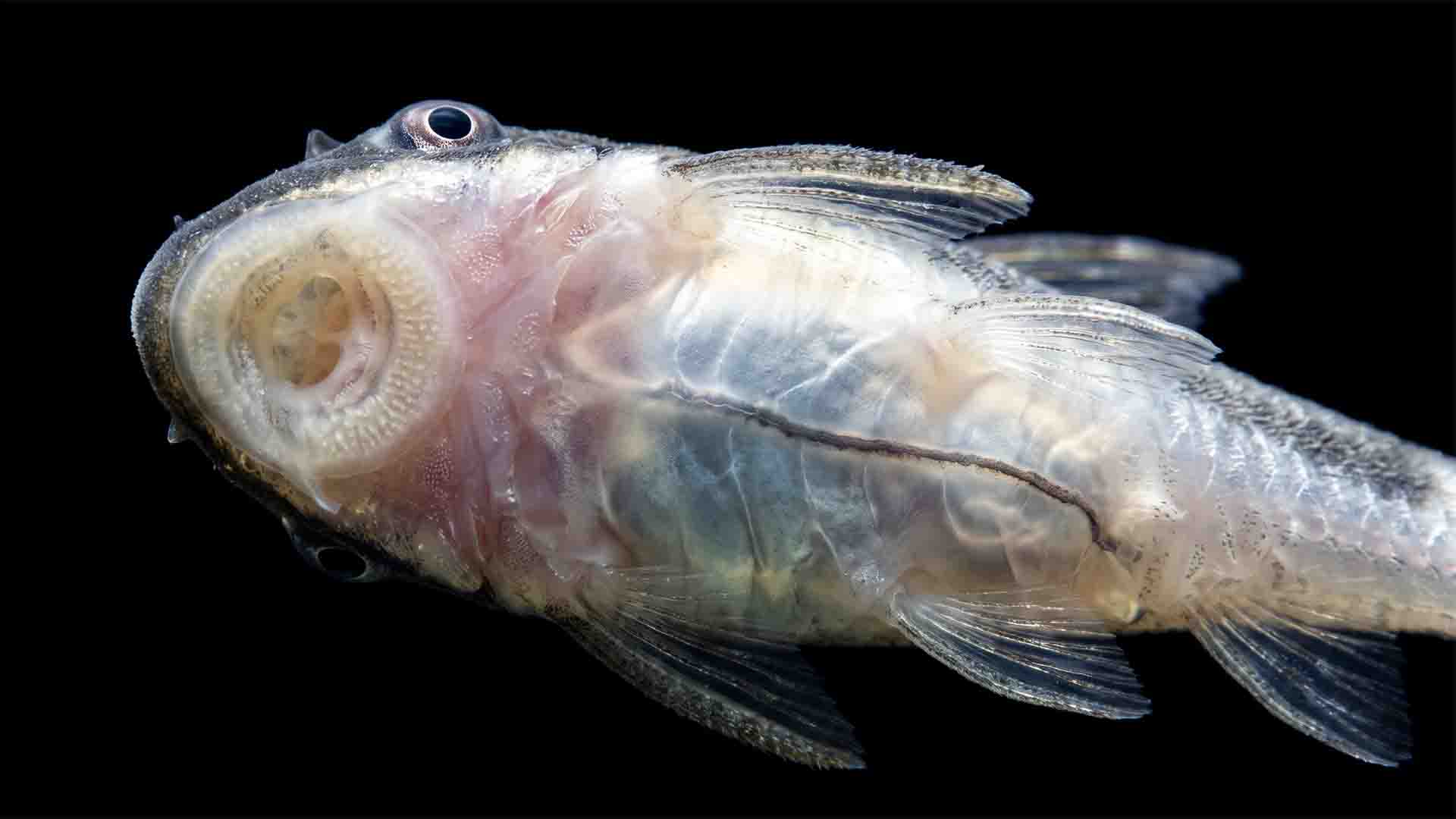
The tragedy escalates when hobbyists drop these transit-starved fish into surgically clean aquariums. Otocinclus are not broad scavengers; they are obligate aufwuchs grazers that depend on a living matrix of micro-crustaceans, green unicellular algae, and bacterial biofilms to sustain the symbiotic gut bacteria that break down plant cellulose. When placed on sterile glass devoid of mature biofilm, their intestinal microflora starves and dies off. The fish crosses an invisible starvation threshold where its digestive tract permanently atrophies, creating the unmistakable concave, sunken belly diagnostic sign. Once an Otocinclus develops a hollow belly, dropping commercial spirulina wafers into the tank will not save it, because the enteric enzymes needed to process food are gone. To keep this species alive, introduce them exclusively into mature displays that have aged for at least ninety days, and supplement their transition with blanched zucchini medallions weighted to the substrate.
The Filter Sterilization Disaster: When Cleaners Trigger Ammonia Spikes
Adding dedicated cleaner fish creates an immediate metabolic surge in your closed ecosystem. Because these active grazers process high volumes of fiber and protein, solid waste production increases across the substrate bed. When hobbyists notice this rising particulate matter settling into their mechanical filter pads, they frequently execute the single most destructive habit in fishkeeping: pulling the filter sponge out and blasting it under cold municipal tap water at the kitchen sink.
Municipal tap water is deliberately dosed with chemical disinfectants like chlorine and chloramines to eradicate bacterial life. Blasting a colonized aquarium sponge with chlorinated tap water triggers catastrophic osmotic lysis across your biofilter. The microscopic extracellular polymeric substance matrix that binds chemolithoautotrophic nitrifying bacteria—predominantly Nitrosomonas and Nitrospira—to your filter media dissolves within seconds. You wash away months of living biological infrastructure in exchange for a cosmetically clean piece of foam.
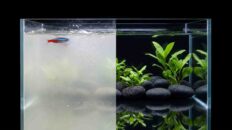
When you reinstall that sanitized filter back into the aquarium, your ecosystem loses its biological processing buffer. While your newly added Bristlenose Plecos, Siamese Algae Eaters, and livebearers continue consuming food and expelling metabolic waste, the dormant biofilter cannot oxidize the resulting toxic un-ionized ammonia into nitrite and nitrate. Within twenty-four to forty-eight hours, unoxidized ammonia burns secondary gill lamellae, forcing fish to gasp at the surface while opportunistic heterotrophic bacteria reproduce unchecked in the water column, turning your display into an opaque milky haze. To preserve your biological filtration, never expose media to municipal tap water. Always rinse your mechanical sponges gently in a separate bucket of water drawn directly from the aquarium during routine water changes.
Scientific Truths: Aquatic Microbiology and Trophic Energetics
Resolving clean-up crew failures requires moving past retail myths and examining the verified peer-reviewed literature governing closed freshwater habitats:
Benthic Digestive Physiology and the Feces Calorie Deficit: Empirical teleost nutrition reviews document that freshwater fish feces consist primarily of refractory structural fibers, sloughed intestinal epithelial tissue, metabolic ash, and dead gut microflora. Vertebrate fish lack the metabolic enzymes and coprophagous gut anatomy needed to extract net positive calories from teleost waste. When bottom dwellers sift through substrate debris, their chemosensory barbels identify uneaten organic pellets while systematically expelling indigestible fecal cords out through the gill covers. Expecting bottom fish to consume feces contradicts basic thermodynamic energetic laws.
Extracellular Polymeric Substances and Biofilter Resilience: Controlled microbiology studies published in aquatic environmental journals show that nitrifying biofilms do not float freely; they anchor securely within a self-secreted hydrogel of extracellular polymeric substances. This polysaccharide shield provides mechanical adherence and enzymatic retention. When exposed to chemical oxidizers like municipal chlorine or aggressive physical scrubbing, the protective matrix shears off entirely, halting the oxidation of toxic ammonia into inert forms and inducing delayed system instability.
Ontogenetic Trophic Inversion in Benthic Algivores: Long-term behavioral and morphological studies on cyprinid and gyrinocheilid species demonstrate that juvenile herbivorous fish experience down-regulated cellulase production as they attain adult body mass. In species like the Chinese Algae Eater, juvenile scraping discs morph into robust territorial mouthparts as metabolic protein demands outpace carbohydrate absorption. This developmental transition triggers opportunistic nocturnal mucophagy, driving mature fish to rasp the dermal slime coat from broad-bodied tankmates to fulfill essential lipid and amino acid requirements.
Benthic Bioturbation and Sediment Redox Potential: Geological and freshwater ecological research confirms that undisturbed fine sand substrates develop severe oxygen depletion beneath the top few millimeters. In these stagnant conditions, heterotrophic sulfate-reducing bacteria reduce sulfate ions into deadly un-ionized hydrogen sulfide gas. Continuous mechanical sifting by foraging groups of Corydoras catfish disrupts this anaerobic stratification, introducing oxygenated pore water into the sediment and neutralizing dangerous gas pockets before they can harm livestock.
People Also Ask: Clean-Up Crew Search Queries Answered
Do Corydoras catfish eat fish poop or physical waste?
No. Corydoras catfish never consume fish poop. Fish feces contains zero digestible nutrients or caloric energy for freshwater teleosts. Corydoras sift sand beds exclusively to forage for insect larvae, worms, and uneaten commercial fish food, ejecting indigestible fish waste back into the water currents through their gills.
Why do Otocinclus keep dying in clean aquariums?
Otocinclus die from acute microbiome starvation rather than poor water quality. Most specimens are wild-harvested and endure weeks of transit starvation, which kills their symbiotic digestive bacteria. Placing them into surgically scrubbed tanks with zero natural aufwuchs biofilm causes fatal intestinal atrophy and sunken belly syndrome.
What is the best cleaner fish for a small planted aquarium?
For small setups under twenty gallons, the best natural cleaners are invertebrate workers like Amano shrimp and Nerite snails, combined with a small group of Otocinclus in a mature setup. Large plecos and Chinese Algae Eaters should be avoided because their waste output and adult size overwhelm small water volumes.
Why do Chinese Algae Eaters attack other fish at night?
Mature Chinese Algae Eaters undergo an ontogenetic diet shift. As they grow past three inches, they stop eating plant-based algae and require concentrated animal protein. At night, they use their muscular suction mouths to latch onto broad-bodied fish like Angelfish and Discus, rasping away their protective slime coat.
What fish actually eats Black Beard Algae without touching plants?
The True Siamese Algae Eater (Crossocheilus oblongus) is the most reliable vertebrate fish for eating Black Beard Algae. To ensure they graze on red turf algae, verify that the horizontal black stripe has jagged edges running through the tail fin, and avoid overfeeding the aquarium with rich protein flakes.
How many cleaner fish should be stocked per gallon?
Stocking clean-up crews based on gallon rules is an ecological mistake. Stocking should be calculated based on the available grazing surface area, substrate footprint, and the biological processing capacity of your filter. Overstocking cleaners quickly results in starvation and heavy ammonia spikes.
Frequently Asked Questions
Can a clean-up crew replace routine water changes and gravel vacuuming?
No clean-up crew replaces water changes. Cleaners are consumers that convert solid physical debris into dissolved inorganic nitrates, phosphates, and organic acids. Living organisms do not remove nutrients from an aquatic system; they simply break them down. Manual water changes remain essential to export dissolved compounds from the aquarium.
How can I feed my algae eaters once the visible algae is gone?
Once surface algae is depleted, feed your clean-up crew blanched vegetables like zucchini, spinach, and cucumber weighted to the substrate. You can also culture natural biofilm by placing smooth river stones in a shallow container of water under direct sunlight, transferring the green stones into your display tank on a rotational basis.
Why did my tank turn cloudy white after adding cleaner fish and rinsing the filter?
The white haze is a heterotrophic bacterial bloom triggered by two overlapping mistakes: the added cleaner fish increased total dissolved organic waste, while washing the filter in tap water destroyed the beneficial nitrifying colonies. The bacteria exploded in the water column to consume the unoxidized waste.
Will Siamese Algae Eaters eat live aquatic plants?
Authentic Siamese Algae Eaters will not consume healthy live plants. Their jaw anatomy is specialized for scraping soft biofilms, filamentous algae, and diatoms off hard surfaces. They will only feed on plant leaves that are already dying and decomposing due to nutrient deficiencies.
Why do mystery snails create such massive waste piles?
Mystery snails possess a very inefficient digestive system with rapid transit times. Because they assimilate only a small percentage of the nutrients they consume, they excrete large, concentrated fecal cords that place a heavy load on mechanical and biological filtration systems.
System Integration: The FishTank Mastery Ecosystem Network
Establishing an authentic maintenance crew requires looking past individual species and understanding how every biological component integrates into your display. If you are developing your overall stocking plan, start with our master ranking in the best freshwater aquarium clean-up crew guide to identify compatible scavengers and grazers for your setup.
When selecting bottom dwellers to manage hardscape and substrate surfaces, examine our analysis of the best and worst bottom dwellers to prevent territory competition. To understand why relying on utility fish alone will never permanently eradicate problem vegetation, read our breakdown on why cleanup crew fish don’t stop algae from returning.
Avoid expensive livestock losses by studying the predatory sales tactics exposed in our guide to pet store lies that crash beginner fish tanks. If you have ever experienced an unexpected cloudy water bloom after filter maintenance, review our protocol on how to stop cleaning filter media under tap water. Finally, to eliminate nuisance outbreaks by controlling light and nutrients rather than stacking utility animals, apply our proven roadmap for natural methods to stop aquarium algae permanently.
Scientific References and Peer-Reviewed Literature
Every biological mechanism, nutritional parameter, and filtration principle detailed in this guide is grounded in verified aquatic research:
Nitrifying Biofilm Architecture and Media Disruption: Research documented in microbial ecology journals confirms that autotrophic nitrifiers like Nitrospira are obligate biofilm formers encased within an extracellular matrix. This physical barrier provides environmental stability; chemical disruption through chlorinated municipal water results in rapid structural breakdown and complete loss of nitrification capacity. Read the study on PMC
Aquatic Toxicology and Ammonia Speciation: Official regulatory criteria from environmental protection agencies detail the chemical equilibrium between non-toxic ionized ammonium and lethal un-ionized ammonia across varying thermal and pH ranges. Sudden biological filtration collapse triggers immediate spikes in un-ionized ammonia, causing chemical burns on delicate gill lamellae. Read the EPA Reference
Benthic Invertebrate and Teleost Bioturbation: Environmental studies analyzing sediment geochemistry prove that mechanical bioturbation by bottom-foraging organisms significantly elevates dissolved oxygen concentrations in sediment pore water. This physical aeration halts anaerobic sulfate reduction, effectively preventing toxic hydrogen sulfide gas build-ups in closed aquatic environments. Read the study on SpringerLink
Global Teleost Life History and Morphology Records: Verified taxonomic data repositories provide baseline measurements for adult body mass, maximum lengths, and natural trophic classifications for species like Hypostomus plecostomus, Gyrinocheilus aymonieri, and Crossocheilus oblongus, confirming their long-term growth and dietary trajectories. Explore the records on FishBase
Watch Next: FishTank Mastery Topic Authority Video Chain
Building a self-regulating aquarium requires connecting your tank’s biological maintenance with targeted mechanical and livestock choices. To expand on the principles covered in this guide, continue your education through our curated video sequences across the FishTank Mastery archive.
If you want to discover overlooked utility species that clean efficiently without outgrowing your display, explore our master ranking of the 10 Best Underrated Aquarium Cleaners. To avoid catastrophic retail stocking traps that destroy community harmony, watch our breakdown on Don’t Buy These Bottom Dwellers: Worst to Best Fish.
For hobbyists looking to build a balanced, multi-tier utility biome from scratch, dive into The BEST and WORST Aquarium Cleanup Crew and follow our practical fieldwork in Best Freshwater Tank Cleaners That Actually WORK. To understand the complete life-cycle architecture of utility stocking, study the Freshwater Clean Up Crew Ultimate Guide, and ensure your maintenance routines protect your biofilter by watching You’re Cleaning Your Filter WRONG!.
By shifting your focus from purchasing temporary retail janitors to cultivating a balanced, mature biological system, your aquarium stops suffering from delayed ammonia crashes and transforms into a stable, self-sustaining freshwater ecosystem.