
Most best bottom dwellers for freshwater tank setups sold in local pet stores aren’t peaceful cleanup crews—they are biological ticking time bombs that trigger a delayed biological crash. Before you buy an algae eater or janitor fish to fix your setup, you need to understand the invisible landfill trap. Some fish actually clean, but others trigger unexpected aggressive behavior, erode water parameters, and quietly collapse your entire ecosystem.
Every beginner dreams of an aquarium that cleans itself. You walk into a pet store, glance at the bottom-row displays, and think you are hiring a quiet, hard-working little janitor to sweep up waste so you do not have to. It sounds like an unbeatable bargain: pay five dollars, drop the juvenile fish into your community setup, and check “substrate maintenance” off your mental list.
Small tanks do not fail faster; small mistakes simply do not dilute. When you place the wrong bottom dweller into a standard aquarium, nothing breaks on day one. The water tests zero for ammonia, your tetras swim peacefully, and your glass appears slightly clearer. That exact illusion is the most dangerous stage of fishkeeping. You were sold a job title instead of an animal, and the bill for that mistake is quietly accumulating.
The Delayed Failure Trap: Why Cleanup Crews Collapse Aquariums
Aquariums rarely collapse overnight. They drift. The bottom layer of your tank is not a magical recycling plant; it is an Invisible Landfill where your mechanical shortcuts and miscalculated biological loads accumulate. Most hobbyists evaluate tank health based on cosmetic appearance—if the water is clear, they assume the biology is rock-solid. However, clear water can hide intense structural instability.
When you introduce species with high waste ratios, destructive habits, or adult diets that shift toward aggression, you introduce constant, unmeasured pressure. The nitrifying bacteria in your filter media and substrate can cope with this strain for a few weeks. But as the fish matures, its metabolic footprint expands exponentially, consuming your biological safety margin. By the time your water turns cloudy or your centerpiece fish show signs of chronic stress, your tank has already reached its point of non-return.
Before assuming your water is safe because your test strips read zero, remember that liquid charts often miss localized substrate toxicity. If your parameters look spotless on paper but your fish are gasping, re-read our diagnostic breakdown on why aquarium test kits are wildly inaccurate before making frantic adjustments.
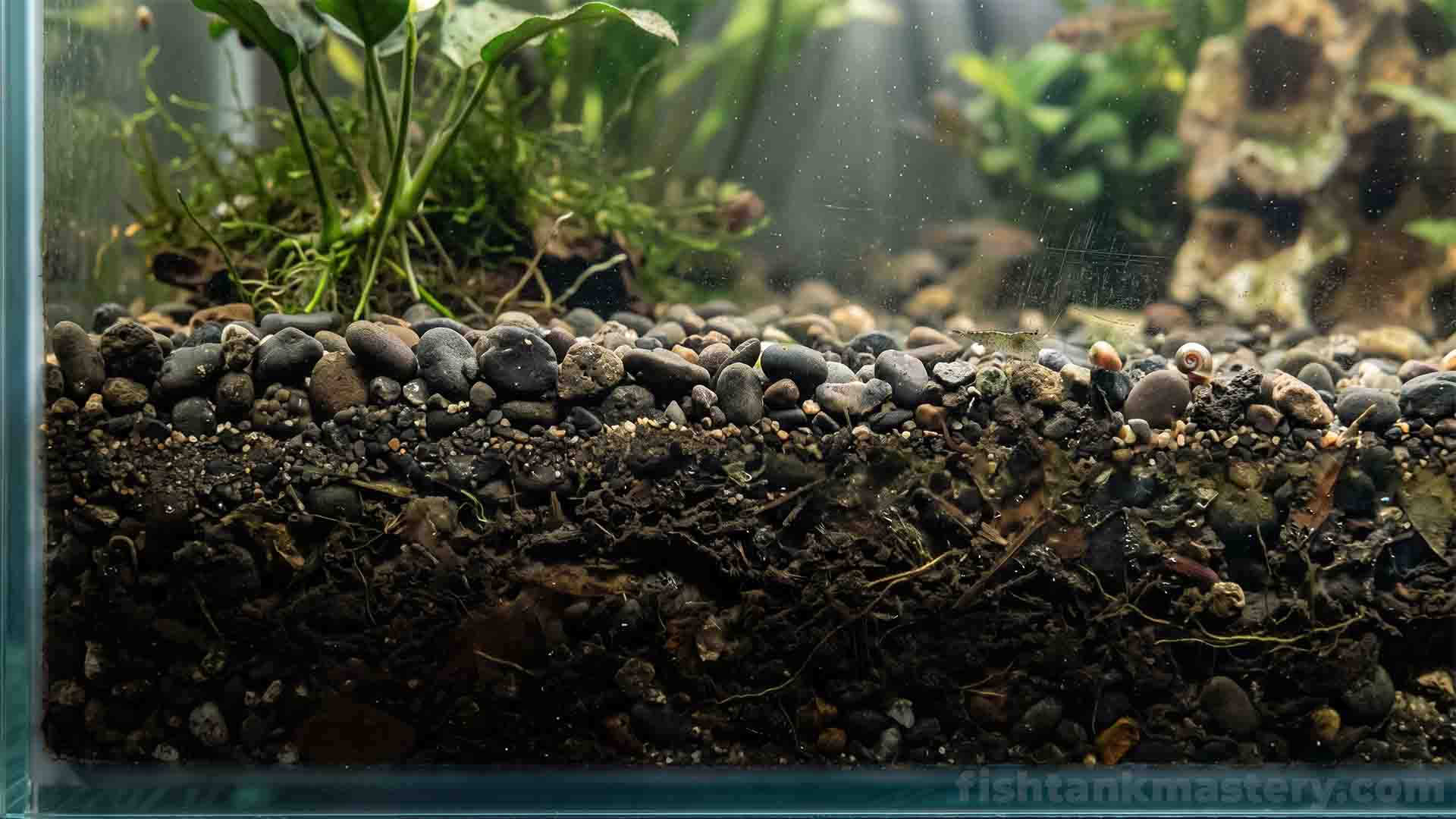
The image above illustrates the mechanics of the Invisible Landfill Trap. Beneath a crystal-clear water column, organic detritus, uneaten proteins, and heavy fecal matter settle deep into coarse substrate beds, creating anaerobic pockets and continuous, unmeasured ammonia leakage.
The Delayed Failure Timeline
To visualize how these false “cleanup crew” species destroy an aquarium over a 180-day cycle, analyze the strategic timeline below:
| Timeframe | System Status | Visual Illusion | Underlying Biological Reality |
|---|---|---|---|
| Days 1 – 14 | Perfect Stability | Clear water, active grazing, zero visible waste. | Juvenile fish eats soft algae; bioload remains well within standard filter capacity. |
| Days 15 – 45 | Invisible Strain | Glass looks spot-cleaned; feeding remains normal. | Waste output doubles; biological filter consumes its safety margin to process excess organics. |
| Days 46 – 90 | Behavioral Shift | Centerpiece fish display torn fins or hide near surface. | Dietary shift occurs; bottom dweller actively hunts slime coats or claims substrate territory. |
| Days 91 – 180 | System Collapse | Persistent water cloudiness, sudden bacterial blooms, mysterious deaths. | Substrate saturation; massive waste load overwhelms beneficial bacteria, causing total ecosystem failure. |
Top 5 WORST Bottom Dwellers (Biological Ticking Time Bombs)
If you want an aquarium that remains stable long-term, you must identify species whose biological evolutionary trajectories directly conflict with closed glass systems. Here are the five worst bottom dwellers frequently sold to unsuspecting beginners.
Worst #5: The Common Pleco (Hypostomus plecostomus) — The Bioload Disaster
At the pet shop, a Common Pleco is an innocent, two-inch, button-eyed juvenile glued to the glass. It appears peaceful, industrious, and completely harmless. In reality, the Common Pleco is an evolutionary logistics disaster for any standard home aquarium.
Over a span of 12 to 18 months, that tiny two-inch fish expands into a massive, heavy-bodied organic waste factory capable of reaching 12 to 18 inches in length. Common Plecos do not merely graze on micro-algae; their digestive biology processes massive quantities of wood pulp and plant matter, producing triple the biological waste load they consume. As they move, their thick, armored bodies act like underwater bulldozers, ripping rooted plants out of the substrate, pushing over hardscape, and stirring up trapped detritus.
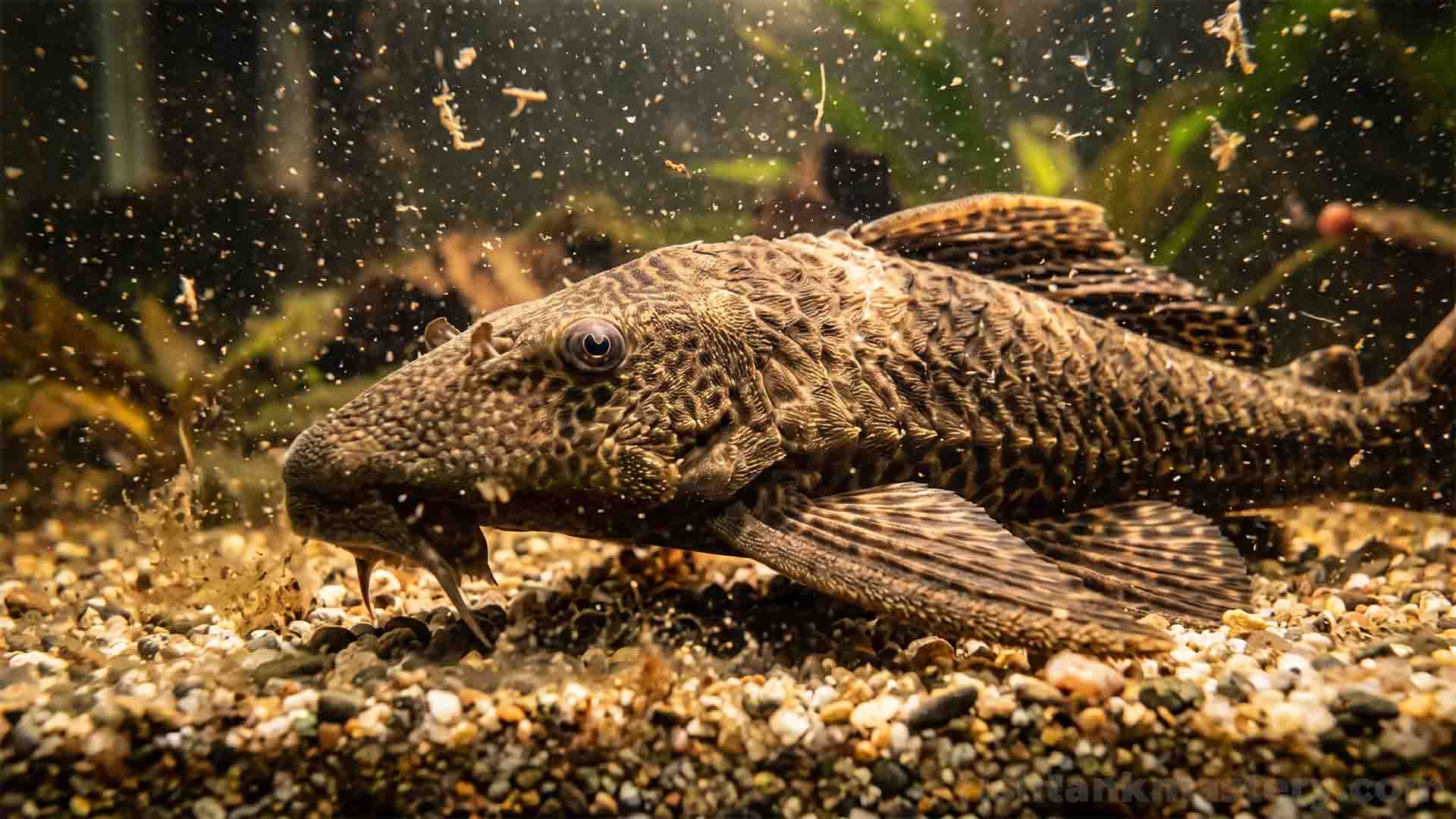
The image above demonstrates the inevitable outcome of keeping a Common Pleco in a community aquarium. The massive physical waste output rapidly overwhelms standard mechanical and biological filtration systems, turning once-clear water into a persistent bacterial haze. If you are currently dealing with persistent haze caused by unmanageable bioloads, examine our complete diagnostic breakdown on how to fix cloudy aquarium water fast.
Large Loricariidae require tremendous dissolved oxygen and massive filtration volume. When kept in standard 20 to 50-gallon tanks, their continuous excretion outpaces nitrifying bacterial colonies, forcing your water chemistry into endless fluctuations that leave tankmates chronically immunosuppressed.
Worst #4: The Chinese Algae Eater (Gyrinocheilus aymonieri) — The Slime-Coat Vampire
Fish stores promote the Chinese Algae Eater (CAE) because it is exceptionally cheap, hyperactive, and highly effective at scraping green algae during its juvenile stage. Beginners buy them expecting a lifelong worker. What pet stores fail to disclose is that the Chinese Algae Eater undergoes a radical ontogenetic dietary shift as it reaches sexual maturity.
As the CAE matures past three inches, its internal digestive metabolic requirements flip. It gradually loses its ability and desire to digest simple micro-algae and develops an urgent requirement for high-protein lipids. In a closed aquarium, it satisfies this drive by targeting broad-bodied, slow-moving tankmates such as Angelfish, Discus, and fancy Guppies.
The CAE stops grazing on rocks and begins lurking near plant thickets. During nighttime hours, it uses its specialized suctorial mouth to latch directly onto the flanks of sleeping community fish, rasping away their protective slime coat. You wake up to find your centerpiece fish swimming with raw, discolored, oval-shaped lesions on their sides. These micro-wounds expose the victim to fatal secondary fungal and bacterial infections. For a complete breakdown on why commercial algae eating species fail community tanks, read our dedicated investigation on the truth about algae eater fish.
Worst #3: The Red-Tail Shark (Epalzeorhynchos bicolor) — The Territorial Warlord
Pet stores often market the Red-Tail Shark and its close relative, the Rainbow Shark, as striking bottom occupants due to their jet-black bodies and brilliant crimson tails. Beginners buy them to add dynamic color to the lower third of their aquariums. However, keeping a shark in a standard freshwater community setup is a severe ecological contradiction.
During their juvenile phase, Red-Tail Sharks display mild curiosity and spend their time exploring rock crevices. As they mature, an aggressive territorial drive takes complete control of their behavior. They claim the entire bottom layer of the aquarium as their sovereign territory and violently attack any fish that enters their line of sight.
Corydoras catfish attempting to sift for food get relentlessly rammed and chased. Peaceful tetras lingering in the lower-mid water column live under perpetual stress, forced to crowd near the surface tension. The continuous harassment destroys the calm social dynamics of your tank, turning a relaxing display into a low-intensity civil war zone. If you want to identify other aggressive species that turn community tanks into battlegrounds, read our comprehensive guide on aquarium monster fish that destroy tankmates.
Store displays frequently label juvenile Red-Tail Sharks and Plecos as gentle additions to community setups. If you want to avoid bringing home hidden predators marketed to beginners, check our warning list on the worst monster fish sold at PetSmart and PetCo before making an impulse purchase.
Worst #2: The Stunted Clown Loach (Chromobotia macracanthus) — The Volume & Social Hierarchy Trap
The Clown Loach is universally loved across the aquarium hobby. With vibrant orange and black tiger stripes and active daytime behavior, they are famous for eradicating nuisance snail populations. Pet shops routinely sell tiny two-inch Clown Loaches to beginners operating 20 or 30-gallon community setups, intentionally omitting two catastrophic biological facts: Clown Loaches reach over 12 inches in length and require massive, complex social groups to remain mentally stable.
When a Clown Loach is housed individually or in a small pair within a cramped aquarium, it does not simply stay small and thrive. It suffers severe physical stunting. Internal organs continue to expand while the external skeletal frame is restricted by chronic environmental stress, leading to premature organ failure and suppressed immune function.
Deprived of a proper shoal (6 to 10 individuals) and adequate swimming space, single Clown Loaches develop frantic behavioral patterns. They endlessly pace the glass, retreat into permanent hiding, or display erratic stress-swimming. The combination of physical stunting and social deprivation converts a fascinating wild species into a tragic aquarium casualty.
Retail stores optimize for fast sales rather than long-term ecosystem survival. To protect your budget and prevent buying high-maintenance traps sold under misleading labels, review our full investigation on the best and worst beginner fish at big-box pet stores.
Worst #1: Gravel-Damaged Corydoras — The Invisible Micro-Abrasion Torture
Corydoras catfish are universally regarded as model community citizens. They are gentle, highly social, and entirely non-aggressive. Yet, millions of Corydoras suffer silent, prolonged deaths in beginner aquariums due to a single structural flaw in tank design: abrasive gravel substrate.
In nature, Corydoras evolve alongside soft alluvial sand beds where they forage by plunging their snouts deep into the substrate, pushing sand out through their gill slits while retaining micro-invertebrates. Forcing a Corydoras to live on sharp, crushed gravel or artificial epoxy-coated rock is the ecological equivalent of forcing a dog to run barefoot over shattered glass.
As the fish attempts to search for food, its delicate sensory barbels endure continuous mechanical friction. This friction scrapes away the protective epithelial layer, creating open micro-wounds. Opportunistic waterborne bacteria, particularly Aeromonas spp. and Pseudomonas spp., invade the damaged tissue, triggering rapid barbel erosion. Over time, the barbels completely dissolve, leaving the fish unable to locate food. Scratches along their delicate underbellies lead to systemic bacterial infections, causing the fish to waste away in plain sight while owners mistakenly blame standard water parameters.
When Corydoras endure barbel loss on sharp gravel, secondary infections immediately follow. Before mistaking these open bacterial micro-wounds for white spot parasites, consult our identification guide on white spots on fish: Ich vs. Fungus to treat the root cause correctly.
The Invisible Landfill Trap: Where Shortcuts Accumulate
Why do beginner aquarists keep falling into these bottom-dweller traps? Because standard freshwater filtration systems are designed to remove floating mechanical debris and process dissolved nitrogenous waste—they cannot correct structural biological mismatches.
When you drop a high-bioload or behaviorally aggressive species into your aquarium, you create an invisible landfill. Food scraps settle into substrate gaps, heavy fecal ropes break down into micro-particulates, and subtle aggression keeps tankmates under constant physiological stress. The fish do not die immediately. Instead, their elevated cortisol levels suppress their immune systems over weeks and months.
Eventually, a minor trigger—a slight temperature fluctuation or a delayed water change—causes the system to collapse. The hobbyist assumes the sudden disease or cloudiness was an unpredictable accident, completely unaware that the biological landfill had been filling up since the day the wrong bottom dweller was introduced.
A bottom dweller’s massive waste output demands heavy mechanical and biological turnover. If your current filter is struggling to maintain clarity against heavy bioloads, compare structural media options in our complete guide to the best aquarium filters for beginners.
Top 5 BEST Bottom Dwellers (The Sensible Professionals)
Achieving true system balance requires selecting bottom-dwelling species whose adult size, waste output, and social dynamics align perfectly with closed aquarium environments. These species do not just survive in your tank; they actively support its biological stability.
The table below compares the ecological requirements and functional roles of the five best bottom dwellers you should get instead:
| Species | Max Adult Size | Primary Functional Role | Substrate & Environmental Need |
|---|---|---|---|
| Pygmy Corydoras | 1.0 Inch | Mid-water hovering & substrate micro-cleaning | Fine sand, gentle flow, planted resting zones |
| Panda Garra | 3.0 Inches | Active biofilm & surface algae grazing | Smooth rocks, moderate-high flow, high oxygen |
| Kuhli Loach | 3.5 – 4.0 Inches | Nocturnal detritus sifting & sub-surface aeration | Strictly soft sand, leaf litter, multiple caves |
| Panda/Bronze Corydoras | 2.0 – 2.5 Inches | Continuous substrate turnover & food recovery | Smooth fine sand (mandatory for barbel health) |
| Bristlenose Pleco | 4.0 – 5.0 Inches | Targeted hardscape algae & biofilm management | Natural driftwood (for dietary fiber), hiding caves |
Best #5: Pygmy Corydoras (Corydoras pygmaeus) — The Masterclass in Scale
If you maintain a nano aquarium or a heavily planted aquascape where traditional bottom dwellers feel bulky and destructive, the Pygmy Corydoras is a biological masterclass in scale. Reaching a maximum size of just one inch, this micro-catfish completely redefines the rules of bottom-dwelling behavior.
Unlike standard Corydoras that remain strictly on the floor, Pygmy Corys break conventional zoning rules. They form tight, synchronized shoals that hover motionless in the mid-water column, looking like tiny metallic helicopters, before descending together to gently sift the substrate. Their minuscule bioload makes them ideal for delicate setups, and their calm, non-territorial nature ensures zero stress for tankmates.
Introducing new Pygmy Corys or schooling tankmates into an unstable lower layer causes severe physiological stress. To prevent sudden losses during stocking, apply our step-by-step protocol for avoiding transition shock in schooling fish.
Best #4: The Panda Garra (Garra flavatra) — The Active Algae Correction
If you have been burned by aggressive Chinese Algae Eaters or sluggish Common Plecos, the Panda Garra represents the ultimate ecological correction. Native to fast-flowing hillstreams of Myanmar, the Panda Garra possesses a specialized adhesive disc on its chin that allows it to anchor securely against smooth rocks while grazing methodically on algae and biofilm.
Panda Garras remain small (under three inches) and display striking black-and-gold banded patterns. Unlike nocturnal catfish that hide during daylight hours, Panda Garras are hyperactive daytime grazers. They hop dynamically from rock to wood, interacting with one another in harmless playful squabbles without ever harassing other fish species. Their constant grazing keeps hardscape surfaces clean while adding energetic personality to your display.
Best #3: Kuhli Loach (Pangio kuhlii) — Substrate Weaving & Detritus Sirculation
At first glance in a pet store tank, Kuhli Loaches resemble tiny, striped aquatic snakes. Beginner aquarists often skip them, assuming they will hide permanently and serve no practical purpose. However, when kept in an appropriate social group of six or more in a planted tank equipped with smooth sand, Kuhli Loaches transform the lower ecosystem layer.
Kuhli Loaches are nocturnal detritus specialists. Their slender, ribbon-like bodies allow them to slide under heavy rocks, glide beneath root structures, and weave through tight spaces where no other fish can reach. As they wriggle through soft sand, they gently aerate the upper substrate layer, preventing gas pockets from forming while consuming trapped food particles. They build zero territorial aggression, ignore other tankmates entirely, and turn the floor of your aquarium into a dynamic, living habitat.
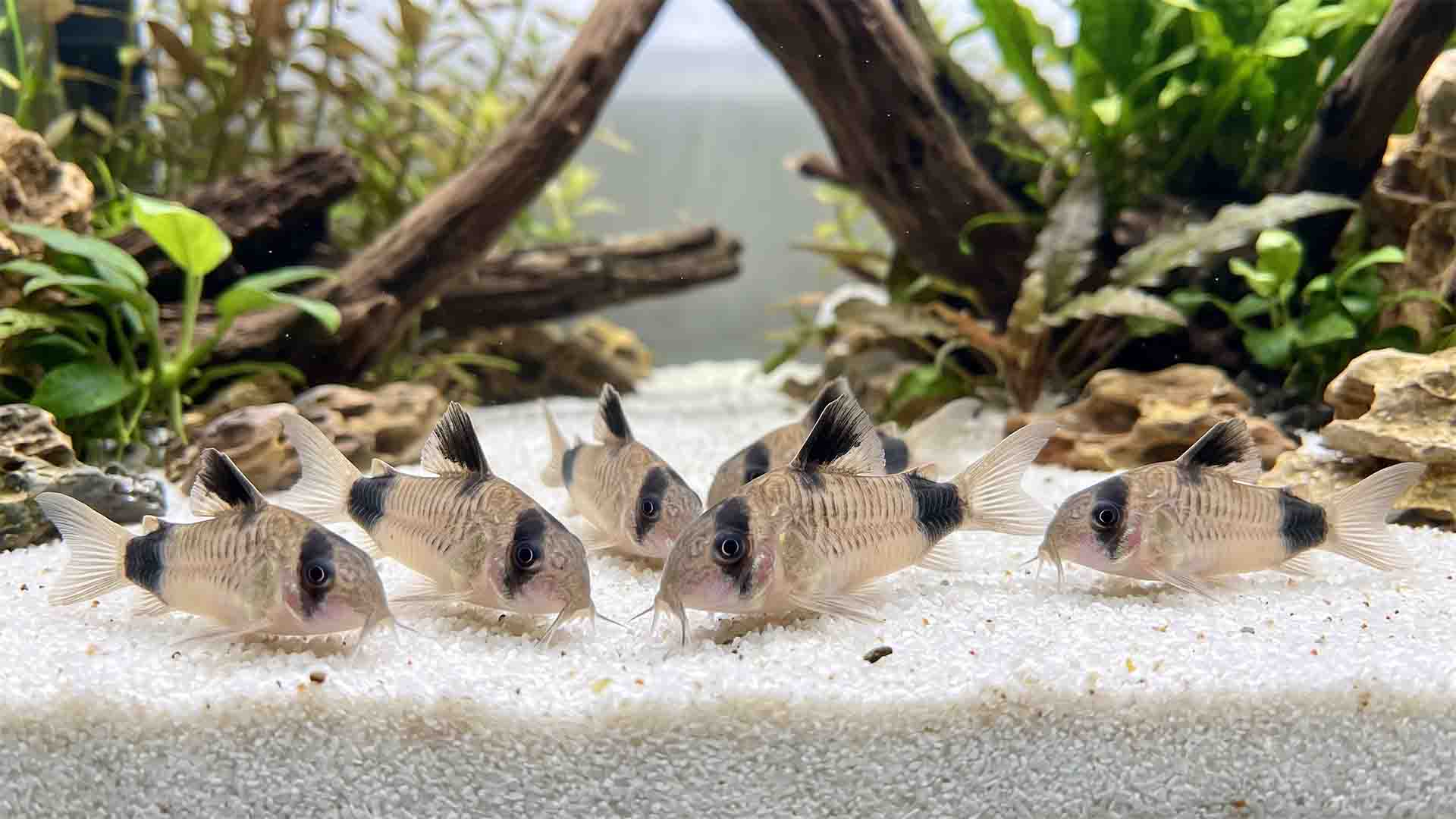
The image above highlights the transformation that occurs when bottom dwellers are matched with appropriate environmental conditions. A dedicated squad of Corydoras kept on smooth, fine sand displays natural sifting mechanics, preserving their delicate barbels and maintaining optimal substrate hygiene without generating biological instability. To explore the full lineup of species that keep aquariums spotless without causing environmental damage, check out our ultimate guide on the best freshwater tank cleaners that actually work.
Best #2: Fine Sand Corydoras Squads (Panda & Bronze Corys) — Natural Substrate Aeration
If you want to experience the classic Corydoras charm without risking barbel trauma, the secret is not picking a different species—it is matching the fish to soft, fine aquarium sand. Placing Bronze, Panda, or Sterbai Corydoras on smooth silica sand completely unlocks their evolutionary biology.
Instead of scraping their sensory barbels against sharp, artificial gravel, Corydoras on fine sand display a rhythmic foraging dance known as gill-filtering. They plunge their entire snouts deep into the sand, intake micro-invertebrates and food particles, and vent the clean sand out through their gill slits. This process continuously turns over the top half-inch of substrate, preventing detritus compaction and breaking up harmful anaerobic pockets before stagnant gas can build up.
Corydoras kept in proper shoals of six to ten on fine sand serve as the ultimate biological barometer for your tank. When your Corys are active, displaying bright color, and sifting sand naturally, your lower ecosystem layer is functioning in total equilibrium.
Best #1: The Bristlenose Pleco (Ancistrus spp.) — The Manageable 4-Inch Professional
If the Common Pleco represents an evolutionary logistics disaster for home aquariums, the Bristlenose Pleco is the sensible, professional alternative. Maxing out at a manageable four to five inches in adult size, the Bristlenose fits comfortably into standard 20-gallon or larger community setups without outpacing your biological filtration capacity.
Male Bristlenose Plecos develop a quirky, magnificent crown of soft facial tentacles that assist in sensory navigation. More importantly, their biological waste output remains proportional to standard tank filtration. They consume diatom algae, soft green algae, and natural biofilm off hardscape surfaces with relentless dedication.
To keep a Bristlenose Pleco healthy long-term, ensure your tank contains natural driftwood. Bristlenose Plecos require natural wood lignin to maintain proper intestinal tract digestion. Give them a piece of bogwood, a shaded cave, and sinking spirulina wafers, and you secure years of dependable algae control without ever waking up to an ammonia spike or a collapsed ecosystem. If you want to compare how the Bristlenose Pleco stacks up against other top-tier janitorial species, explore our ultimate breakdown on the best tank cleaners that really help.
System Balance vs. Shortcut Myths: Why Products Cannot Fix Biological Design
The pet store industry frequently promotes cleanup crew species as quick-fix appliances. When algae spikes or waste accumulates, beginners are advised to purchase a fish to clean the mess. This mindset treats living animals as maintenance tools rather than biological participants that alter water chemistry.
Adding a live animal to an unstable aquarium never reduces total biological load—it increases it. Every fish excretes metabolic waste, consumes dissolved oxygen, and demands physical territory. When you add a cleanup species to fix a maintenance issue, you add biological weight to a system that is already struggling to process its existing load.
Real aquarium stability is not achieved by stocking janitor fish; it is cultured by balancing lighting schedules, feeding amounts, and water turnover. Cleanup species like the Bristlenose Pleco or Panda Garra do not create biological balance from scratch—they polish a system that is already structurally sound. When you align your stocking choices with true biological capacity, routine maintenance becomes effortless, and sudden tank crashes vanish entirely.
Maintaining healthy substrate biology in planted tanks requires balancing flow, nutrients, and temperature. If you run unheated or high-light setups, adapt your hardscape using our masterclass on high-tech planted aquarium setup for cold water.
Scientific Truths Behind Substrate & Bottom-Dweller Biology
Understanding the physiological and ecological mechanics of bottom-dwelling species requires examining peer-reviewed research in aquatic ethology, microbial ecology, and teleost physiology.
Ontogenetic Dietary Shifts in Gyrinocheilus: Studies in teleost nutrition demonstrate that Gyrinocheilus aymonieri undergoes significant jaw morphology and digestive enzyme restructuring upon reaching sexual maturity. Juvenile fish possess soft, scraping mouthparts optimized for periphyton and diatom consumption. As adult hormones surge, the digestive tract requires concentrated lipids and proteins, driving the fish to target the mucosal epidermal layer of sympatric species. This parasitic scraping exposes host fish to secondary Saprolegnia and bacterial infections. Research published on aquatic species biology confirms these metabolic shifts across mature wild and captive populations. To understand the exact anatomical and nutritional parameters driving this behavior, read the study on FishBase species morphology and feeding ecology.
Substrate Mechanics & Teleost Barbel Pathology: Research examining Callichthyidae catfish health highlights the physical friction caused by coarse or sharp substrates. Corydoras barbels contain dense networks of chemoreceptors and delicate nerve endings used to locate food beneath the substrate. Abrasive gravel micro-scratches these sensory organs, destroying the protective mucus barrier and creating open entry points for opportunistic environmental pathogens, specifically Aeromonas hydrophila and Flavobacterium columnare. Once infected, the barbel tissue undergoes rapid necrosis, permanently impairing the animal’s foraging ability. Comparative studies published in veterinary aquatic literature emphasize smooth silica sand as mandatory for maintaining Callichthyidae longevity. For detailed pathological data on sub-surface bacterial infections caused by mechanical substrate abrasion, read the study on Springer Aquatic Sciences.
Loricariidae Allometric Growth & Nitrogen Excretion Ratios: Ichthyological research into metabolic scaling proves that body mass in large catfish species increases exponentially relative to total body length. A 12-inch Common Pleco does not produce six times the waste of a 2-inch juvenile—it produces over twenty times the organic waste volume due to gut capacity and wood pulp processing requirements. Standard aquarium biological filtration media cannot scale rapidly enough to process these sudden, massive solid waste outputs, resulting in chronic heterotrophic bacterial blooms and water cloudiness. Exhaustive datasets documented by academic ecology publishers detail the exact bioenergetics of Loricariidae digestion. To examine the biochemical equations behind nitrogenous waste scaling in large benthic species, read the study on ScienceDirect Loricariidae energetics.
Watch the detailed video above to observe these critical behavioral shifts and biological failure points in real aquarium environments.
Higher water temperatures accelerate catfish metabolism while stripping dissolved oxygen from the lower water layer. To protect your bottom dwellers during heatwaves, review our summer insurance guide on how aquarium chillers prevent oxygen crashes.
People Also Ask (PAA)
Why is my common pleco making my aquarium water cloudy?
Common Plecos produce massive amounts of waste because they digest wood pulp and organic matter continuously. As they grow past six inches, their waste output rapidly overwhelms the nitrifying bacteria in standard aquarium filters. This excess organic material triggers blooms of heterotrophic bacteria in the water column, creating a persistent milky haze.
Do Chinese Algae Eaters attack other fish in the tank?
Yes, adult Chinese Algae Eaters frequently attack broad-bodied, slow-moving tankmates like Angelfish and Goldfish. As they mature, their dietary needs shift from plant algae to high-protein lipids. They latch onto other fish using their suctorial mouths to feed on their protective slime coats, causing serious tissue damage and severe stress.
Do Corydoras catfish need sand substrate instead of gravel?
Corydoras catfish require smooth sand substrate to protect their delicate sensory barbels. Sharp or abrasive gravel causes micro-abrasions on their whiskers as they forage, leading to painful bacterial infections, barbel erosion, and eventual starvation. Fine sand allows them to perform natural gill-filtering foraging without physical injury.
What is the best small pleco for a 20-gallon aquarium?
The Bristlenose Pleco (Ancistrus spp.) is the best small pleco for a 20-gallon or larger tank. Maxing out at four to five inches, it remains manageable in size, actively cleans algae off rocks and driftwood, and will not outgrow standard home setups like the Common Pleco.
Why do bottom-dwelling fish die suddenly even when water tests read fine?
Bottom dwellers often suffer from delayed biological pressure and physical substrate damage rather than immediate chemical toxins. Trapped detritus in coarse gravel creates micro-pockets of harmful bacteria, while continuous stress from territorial tankmates suppresses their immune systems. Liquid test kits measure dissolved nitrogenous waste in the water column, but they cannot detect micro-abrasions or localized bacterial infections at the substrate level.
How many Kuhli Loaches should be kept together?
Kuhli Loaches must be kept in social groups of at least six individuals. Housed alone or in small pairs, they suffer chronic stress and remain permanently hidden inside rock crevices. Kept in a proper shoal on fine sand, they become confident, active daytime scavengers that wriggle through the substrate together.
Frequently Asked Questions (FAQ)
Can a bottom dweller replace manual aquarium maintenance?
No bottom-dwelling fish can replace regular manual maintenance like water changes and filter care. While peaceful species like Bristlenose Plecos and Panda Garras scrape algae and consume leftover food, they also excrete waste and consume dissolved oxygen. They modify waste into secondary forms, but human maintenance is required to remove accumulated nitrates and organic detritus from the ecosystem.
What should I feed my bottom dwellers so they don’t starve?
Bottom dwellers cannot survive solely on naturally occurring algae or tank scraps. You must feed them sinking nutrient-dense foods designed specifically for their diet. Herbivorous species like Bristlenose Plecos require high-quality spirulina wafers and natural driftwood. Omnivorous foragers like Corydoras and Kuhli Loaches require sinking micro-pellets, freeze-dried tubifex, and frozen bloodworms dropped into the tank after main lights are turned off.
Why did my peaceful community tank become aggressive after adding a bottom fish?
Community tank aggression spikes when added species claim territorial rights over the lower third of the aquarium. Species like Red-Tail Sharks or adult Chinese Algae Eaters view the substrate as their exclusive domain, chasing away peaceful schooling fish that swim into their territory. Matching species based on adult temperament rather than store labels prevents unexpected territorial clashes.
Is it safe to keep different species of Corydoras together?
While different Corydoras species will coexist peacefully in the same aquarium, they will generally prefer to school with their own species. For the best behavioral results, keep a group of six or more of a single species (such as six Panda Corydoras) rather than mixing single individuals of multiple varieties. This ensures proper social schooling structure and stress reduction.
How do I stop my pleco from uprooting live plants?
Large Pleco species like the Common Pleco uproot live plants through sheer physical size and clumsy movement as they scuttle across the substrate. Switching to smaller Loricariidae species like the Bristlenose Pleco prevents plant destruction. Additionally, anchor delicate root plants with heavy aquascaping stones or secure epiphytes like Anubias and Java Fern directly onto hardscape wood and rocks using fishing line or aquatic glue.
What are the signs of barbel erosion on Corydoras catfish?
Signs of barbel erosion include shortened, rounded, or completely missing whiskers around the mouth area. Affected fish may show reddened, inflamed skin on their snouts, lethargy, loss of appetite, and difficulty locating sinking food. If noticed early, transferring the fish to a smooth sand substrate and maintaining pristine water parameters allows the sensory tissue to slowly heal and regenerate.
Hub & Spoke — Fix the Whole System
Building a stable aquarium ecosystem requires evaluating every layer of your tank rather than treating problems in isolation. If you have previously added algae eating species expecting them to solve your maintenance issues, take a step back and analyze your structural routines. For a comprehensive deep dive into why relying on animals for maintenance fails, read our guide on why you should stop buying cleanup crew fish.
If your aquarium is currently suffering from persistent bacterial haze triggered by heavy Pleco waste or unmanaged bioloads, adding chemical clarifiers will only cause further biological disruption. Instead, follow our proven biological troubleshooting methods in our complete article on how to stop cloudy aquarium water permanently.
Furthermore, if you suspect your lower tank layer has turned hostile due to territory overlaps, re-evaluate your species mix. Read our detailed breakdown on peaceful beginner fish combos to discover compatible schooling and bottom-dwelling options that thrive together without stress.
Finally, if you want to expand your ecosystem knowledge and avoid keeping hidden predators alongside peaceful cleaners, read our diagnostic report on the top aquarium monster fish to avoid in home setups.
Scientific References
Understanding the precise biological mechanisms behind bottom-dweller care requires looking beyond general hobby myths and evaluating peer-reviewed aquatic research. The following scientific papers provide the physiological, morphological, and ecological foundation for the stocking and substrate rules outlined in this guide:
Ontogenetic Dietary Shifts in Teleost Algae Eaters: Mature specimens of Gyrinocheilus aymonieri experience structural modifications in their cranial morphology and digestive enzyme production. As the fish reaches adulthood, its metabolic demand shifts from simple plant matter to protein-dense lipid sources, prompting parasitic mucosal feeding on broad-bodied tankmates. To explore the documented morphological data on teleost feeding mechanics, examine the FishBase species analysis on Gyrinocheilus aymonieri.
Pathology of Substrate-Induced Barbel Erosion in Callichthyidae: Clinical research on benthic South American catfish proves that coarse or sharp substrates cause mechanical friction against maxillary barbels. This continuous scraping destroys the epidermal sheath and sensory nerve nodes, creating direct entry pathways for opportunistic bacterial pathogens like Aeromonas hydrophila. To review the clinical findings regarding substrate friction and secondary bacterial septicemia in Corydoras, read the Springer study on catfish barbel pathology.
Bioenergetics and Nitrogen Excretion Scaling in Large Loricariidae: Quantitative metabolic studies show that large armored catfish species process vast quantities of structural plant fiber, resulting in an exponential rise in nitrogenous waste output relative to total body length. This massive organic load easily surpasses the carrying capacity of standard home biological filters, leading to severe bacterial blooms. To inspect the metabolic data and waste scaling formulas in large Loricariidae, read the ScienceDirect study on Loricariidae digestive bioenergetics.
Watch Next: Recommended Video Chain
To further protect your aquarium from delayed biological crashes and optimize your ecosystem design, continue your learning journey with our dedicated video guides. Each guide below addresses a critical piece of the ecosystem puzzle, connecting water chemistry, species compatibility, and maintenance habits into one unified system:
Best Freshwater Tank Cleaners That Actually WORK: If you are ready to construct a functional janitorial squad that supports your water parameters without adding destructive bioload, this video showcases the top-tier, species-safe cleaners. You will learn how to pair grazers like Panda Garras and Bristlenose Plecos with specific tank sizes to achieve permanent glass and hardscape clarity. Watch the Ultimate Clean Up Crew Guide on YouTube.
Stop Buying Cleanup Crew Fish: The Truth About Algae Eater Fish: To understand why commercially pushed “algae eaters” often trigger sudden tank instability, this video breaks down the commercial traps and false mental models surrounding cleanup species. Discover why adding live animals to solve maintenance errors always increases total biological pressure. Watch The Truth About Algae Eater Fish on YouTube.
STOP Doing THIS if Your Aquarium Water Stays Cloudy!: Heavy Pleco waste and over-cleaning frequently trigger milky, persistent bacterial blooms in the water column. This video explains the exact biological timeline of cloudy water and reveals the hands-off protocol required to clear your tank naturally without relying on chemical clarifiers. Watch the Cloudy Water Fix Guide on YouTube.
10 Aquarium MONSTER Fish That DESTROY Tankmates: Many popular bottom dwellers and centerpiece fish start as harmless juveniles before transforming into aggressive territorial dictators. This video exposes ten misleading species sold to beginners, detailing their adult growth curves, dietary shifts, and behavioral triggers so you can avoid catastrophic stocking mistakes. Watch the Aggressive Monster Fish Breakdown on YouTube.