Watch the complete biological breakdown above from the FishTank Mastery channel to see how selective breeding affects swimming geometry and internal organ placement in real home setups.
When hobbyists evaluate the worst to best goldfish breeds based on real-world survival rate, they quickly discover a brutal truth: perfect water parameters cannot fix compromised genetics. You buy a cute, round fancy goldfish from a brightly lit pet store display, float the bag, acclimate it carefully, and watch it swim normally for two weeks. Then, without warning, the fish ends up sitting heavily on the gravel or floating upside down at the surface, struggling to submerge. Most aquarists immediately blame themselves, running to test ammonia, nitrite, and pH. However, the biological clock on that fish was ticking long before you ever handed over your credit card.
The Anatomical Tax of Selective Breeding
To understand why fancy goldfish fail in clean, fully cycled aquariums, we must look at the wild ancestor of all domesticated goldfish: the Prussian carp (Carassius gibelio). In nature, a wild carp possesses a streamlined, torpedo-shaped body designed for hydrodynamic efficiency. Its internal organs—the stomach, intestines, liver, and dual-chambered swim bladder—are laid out linearly along a 12-inch muscular frame. This arrangement gives every organ ample space to expand, contract, and function without encroaching on adjacent biological systems.
Over centuries of selective breeding, human breeders systematically selected for morphological mutations: shortened spines, egg-shaped bodies, exaggerated fluid-filled sacs, doubled tail fins, and the complete deletion of the stabilizing dorsal fin. When you compress a 12-inch aquatic organism into a 3-inch sphere, the physics of fluid dynamics and internal anatomy do not adapt magically. The skeleton shrinks, but the organ mass remains relatively constant. The result is catastrophic organ displacement, where the gastrointestinal tract becomes contorted and presses directly against the delicate membranes of the swim bladder.
Genetic Compression: Shrinking a 12-Inch Carp into a Sphere
Selective genetic compression forces the interior volume of the abdominal cavity down by up to 70 percent compared to wild types. When a compressed fancy goldfish ingests dry, commercial flake food at the water surface, it inevitably gulps atmospheric air. As that dry food absorbs water inside the contorted intestine, it swells. In a wild carp, this expansion is negligible. In a genetically compressed fancy goldfish, the swollen intestinal mass expands directly into the space occupied by the posterior chamber of the swim bladder.
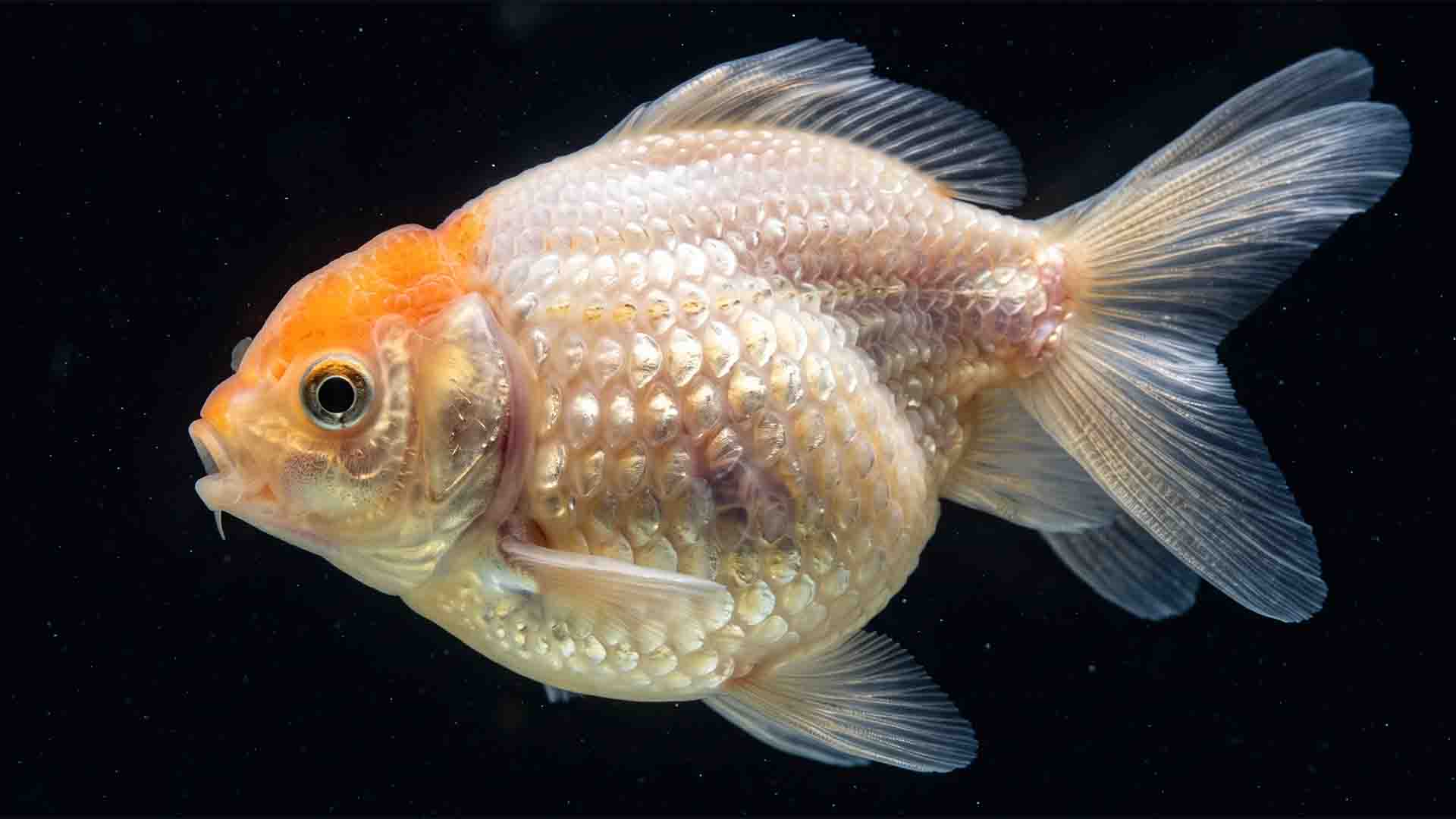
Extreme selective breeding compresses the Pearlscale goldfish into a golf-ball shape, crushing its internal organs and swim bladder.
This pressure locks the pneumatic duct or prevents the gas gland from reabsorbing gases properly, resulting in permanent positive buoyancy. The fish floats upside down not because you poisoned the water, but because its compressed geometry creates a mechanical failure every time it digests a meal.
The 4 Worst Goldfish Breeds for Beginner Survival
Not all fancy goldfish mutations carry the exact same rate of mortality. Certain breeds combine severe internal organ compression with physical handicaps that turn a standard home aquarium into a biological obstacle course. Below are the top four worst goldfish breeds you can buy if your goal is long-term system stability and survival.
#4 Black Moor: Visual Blind Spots & Aggressive Food Competition
The Black Moor, along with its Telescope Eye cousins, is heavily marketed to beginners due to its striking velvet-black coloration and protruding ocular lenses. However, those signature telescoping eyes come with a devastating biological tax. The physical extension of the eye socket severely distorts the optic nerve and limits peripheral vision, leaving the fish with extreme spatial disorientation and near-sightedness.
In a mixed community tank, feeding time is a competitive event driven by speed and sensory acuity. Streamlined fish locate food instantly via sight and lateral line vibrations. The Black Moor often swims in frantic circles, smelling food in the water column but physically unable to pinpoint its location before faster tankmates clean the substrate. Over time, Black Moors do not die from sudden water parameter spikes; they suffer from chronic, low-grade starvation and stress. Furthermore, those exposed fluid-filled ocular lenses are highly vulnerable to scraping against hardscape, rocks, or filter intakes, causing secondary bacterial infections such as columnaris or exophthalmia (pop-eye).
#3 Bubble Eye & Celestial: Fragile Fluid Sacs & Glass Hazards
Ranking even lower on the survival spectrum are the Bubble Eye and Celestial Goldfish. Bred strictly for visual novelty, the Bubble Eye features delicate, fluid-filled sacs hanging directly underneath each eye socket. These sacs act as massive physical blinders and hydro-dynamic drag anchors. In a barren, sterile store tank, they survive simply because there are no obstacles. Drop them into a home aquarium with hardscape, filter siphons, or gravel, and those fragile sacs become immediate safety hazards.
A minor scrape against a piece of driftwood or an unfiltered intake tube can rupture the fluid sac. Once ruptured, the delicate tissue is exposed to ambient water bacteria, triggering systemic septicemia. Because these fish lack normal upward and forward vision, they cannot navigate water currents efficiently. They spend their days hovering near the bottom, completely unable to compete for floating or sinking food in anything other than a specialized, custom-padded single-species tank.
#2 Ranchu & Lionhead: Dorsal Absence & Current-Induced Exhaustion
The Ranchu and Lionhead varieties are beloved for their rounded, blimp-like body profiles and dense head growth known as the “wen.” However, these breeds carry a structural defect that severely impairs their survival in standard aquariums: the complete absence of a dorsal fin.
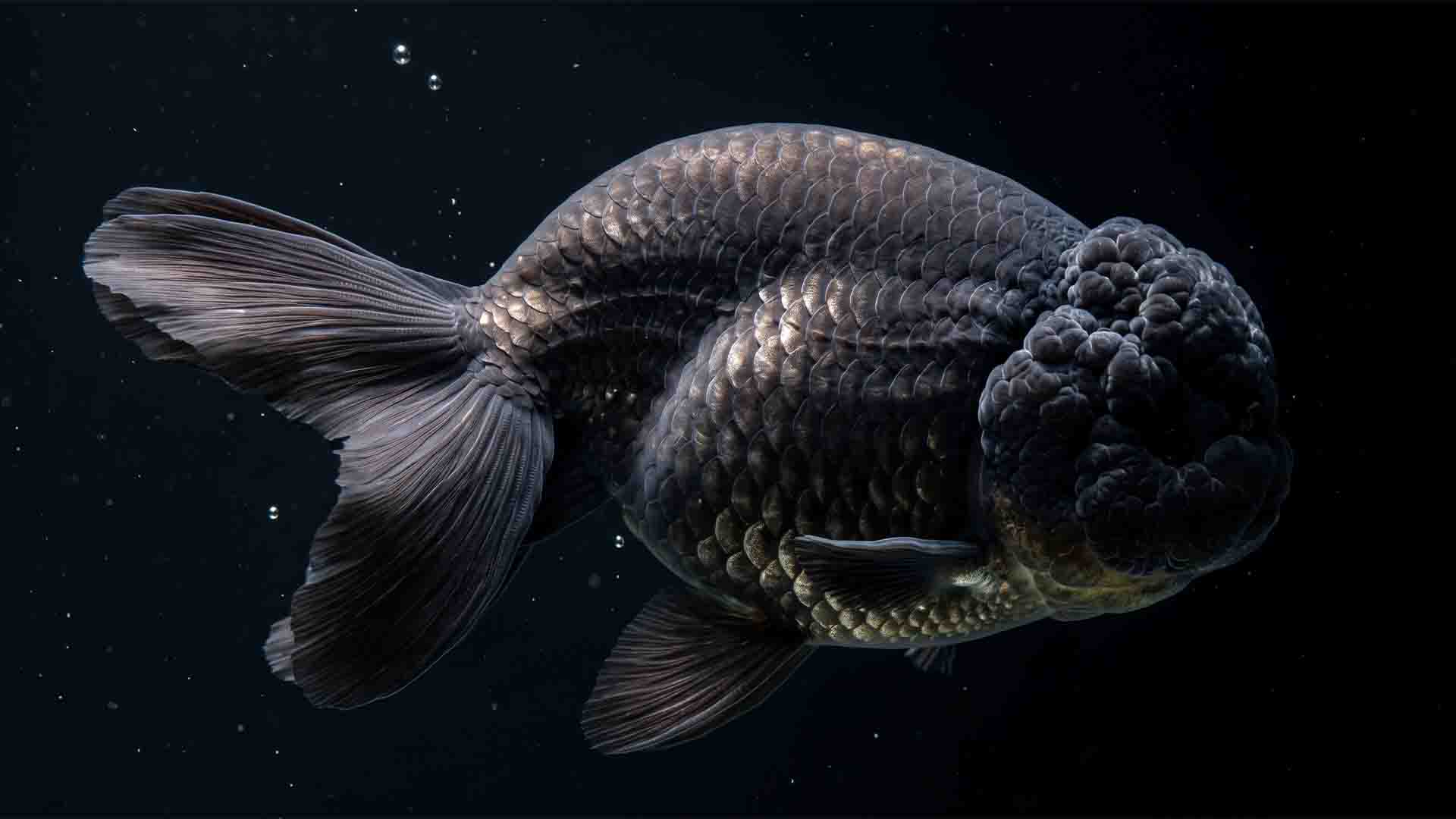
The dorsal fin functions as the primary keel and directional stabilizer for any swimming fish. Without it, a Ranchu experiences perpetual rolling instability along its longitudinal axis. To stay upright, the fish must constantly adjust its pectoral and anal fins. If you place a Ranchu in a tank powered by a standard powerhead, hang-on-back filter, or canister filter, the water flow creates continuous hydrodynamic drag. The Ranchu exhausts its entire daily caloric intake just fighting the ambient current. This chronic physical exhaustion depresses its immune system, leading to systemic organ failure within weeks of purchase.
#1 Pearlscale: The Ultimate Genetic Timebomb (Twisted Gut & Compressed Swim Bladder)
Taking the number one spot as the absolute worst goldfish breed for beginner survival is the Pearlscale Goldfish. Featuring thick, domed scales that resemble tiny pearls, this breed is artificially selected to achieve a body shape that mimics a golf ball or ping-pong ball.
Achieving this extreme spherical shape requires severe skeletal distortion. The spine is radically shortened, forcing the gastrointestinal tract into a tight, convoluted spiral. The swim bladder is crushed directly against the vertebral column with virtually zero room for normal expansion. When a Pearlscale ingests standard dry commercial food, the dry material expands inside its twisted gut. The resulting tissue inflation compresses the swim bladder membranes, causing immediate, catastrophic buoyancy failure. When a Pearlscale flips upside down, it is not a water chemistry issue—its own body geometry has collapsed the internal system.
The Delayed Biological Reality (Why Perfect Water Tests Lie)
The most dangerous trap in fishkeeping is assuming that clean water equals a healthy ecosystem. When a newly purchased fancy goldfish begins bobbing uncontrollably at the surface, the aquarist pulls out a liquid test kit, measures zero ammonia, zero nitrite, and low nitrates, and concludes, “My water is perfect, so it must be a sudden disease.”
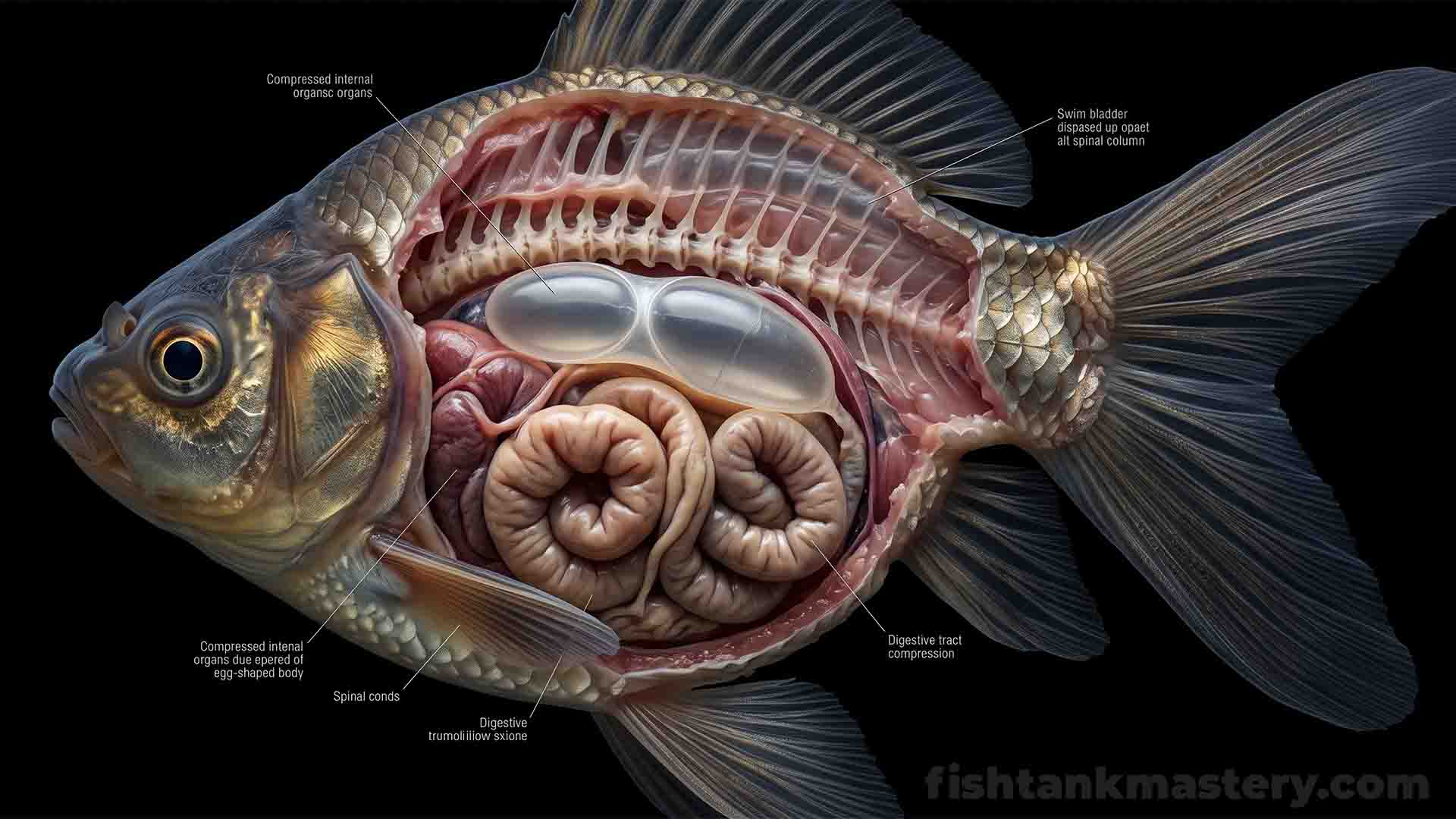
This is the illusion of false stability. Your liquid test kit measures dissolved nitrogenous compounds; it does not measure anatomical stress, metabolic strain, or genetic organ compression. Fancy goldfish are heavy waste producers with broken internal anatomy. While your biological filter may be processing their waste efficiently, the fish’s internal system is silently failing under the mechanical pressure of its own genetics. The failure didn’t happen when the water turned bad—the failure was locked into the fish’s DNA at the breeding facility.
The 3 Best Resilient Goldfish Breeds (Survival Architecture)
If you want to enjoy coldwater fishkeeping without dealing with constant buoyancy failure and premature deaths, you must select breeds that retain structural integrity. These breeds feature anatomical architectures designed to handle water flow, digest food properly, and navigate physical environments efficiently.
#3 Ryukin: The Sailboat Keel Balance
The Ryukin offers the dramatic, exotic aesthetic of a fancy goldfish while retaining structural stability. Famous for its pronounced dorsal hump located directly behind the head, the Ryukin possesses a deep, tall body profile paired with a long, rigid dorsal fin.
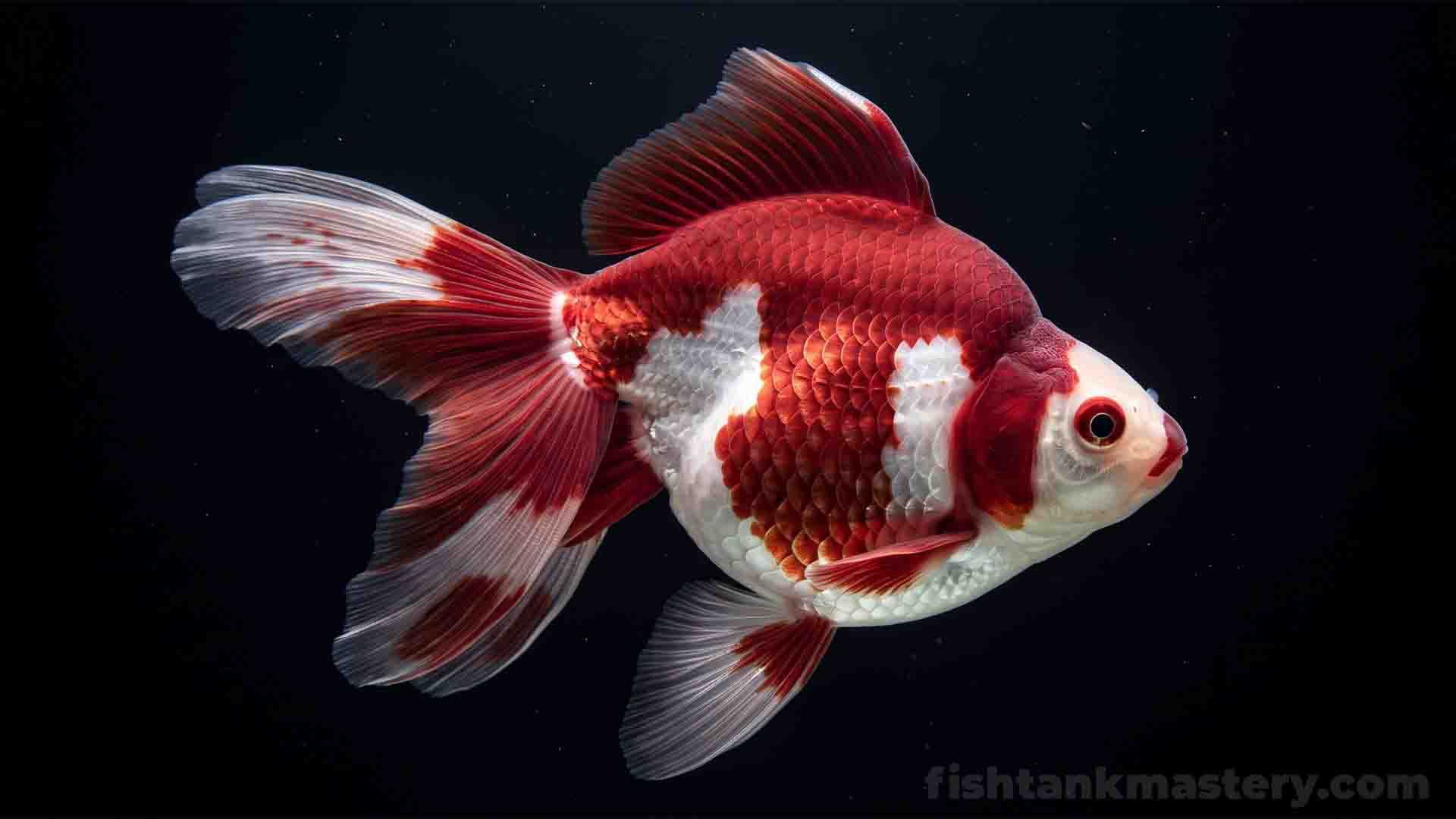
This tall, arched geometry acts like the deep keel of a sailboat. While spherical, finless goldfish roll helplessly in filter currents, the Ryukin cuts through water efficiently. More importantly, its vertical height provides ample internal space for the gastrointestinal tract to expand without crushing the swim bladder. When fed high-quality sinking pellets, Ryukins rarely suffer from chronic floating issues, making them a solid choice for aquarists wanting a fancy aesthetic backed by real physical stability.
#2 Oranda & Fantail: Anatomical Space & Retained Dorsal Stability
For the ideal balance between classic fancy goldfish appearance and long-term durability, the Fantail and Oranda varieties are exceptional choices. Both breeds retain a moderately elongated, egg-shaped body rather than a tight sphere, and both keep a fully developed, erect dorsal fin.
Because their torsos are not hyper-compressed, their internal organs have room to function. They handle standard aquarium filter flow effortlessly, swim with agility, and compete effectively during feeding times. Their digestive tracts follow a far more natural curve, drastically reducing the incidence of swim bladder impaction. If you are determined to keep a fancy goldfish in an indoor aquarium, the Oranda or Fantail gives your biological filter time to mature without leaving casualties on the substrate.
#1 Common & Comet Goldfish: The Indestructible Pond Bulldozer
Ranked at the absolute top for pure biological resilience is the single-tailed group: the Common and Comet Goldfish. Possessing the streamlined body plan of their wild carp ancestors, these fish are biological bulldozers. They feature perfect organ alignment, fully functional swim bladders, and powerful swimming muscles.
Common goldfish shrug off cold drafts, handle minor water parameter fluctuations, and digest standard foods without floating upside down. However, their extreme hardiness introduces a different challenge: space and bioload. A Common goldfish easily grows over 12 inches in length and produces a massive amount of waste. While they are virtually indestructible in terms of anatomy, placing them in a small 20-gallon indoor tank will quickly overload the nitrogen cycle. They are ideal survival fish, but they belong in large systems or outdoor ponds where their biological capacity can be accommodated properly.
Goldfish Failure Timeline: Biological Stress Progression
Most aquarists believe that an unhealthy aquarium collapses instantly. In reality, aquatic ecosystems and domesticated fish operate on delayed biological timelines. When you purchase a genetically compressed fancy goldfish, you are bringing home an organism with pre-existing anatomical vulnerabilities. The fish may appear vibrant in the pet store, but once introduced to a home aquarium, these anatomical stressors stack over days, weeks, and months until the internal system completely fails.
Understanding this delayed failure curve is essential for diagnosing why your fish is suddenly floating upside down or sitting lethargically on the substrate. The table below outlines the exact biological progression from the moment of purchase to the final systemic collapse, illustrating how superficial clarity hides internal anatomical degradation.
| Timeline Phase | Observed Behavior | Internal Anatomy & Physiology | Systemic Outcome |
|---|---|---|---|
| Days 1–7 (The Retail Honeymoon) | Active swimming, eager feeding at the surface, vibrant colors. | Cortisol levels temporarily drop post-transport; internal organ compression is unmasked by light feeding. | False stability phase; the aquarist assumes the fish is healthy and fully acclimated. |
| Days 8–21 (Micro-Impaction Phase) | Slight wobble after feeding, brief floating near surface, subtle loss of balance. | Dry flake food expands in the contorted intestinal tract; pressure builds against the posterior swim bladder. | Sub-lethal buoyancy loss; gas gland struggling to reabsorb trapped atmospheric air. |
| Days 22–45 (Hydrodynamic Exhaustion) | Resting on gravel, heavy opercular (gill) breathing, inability to fight filter current. | Finless or round body physics force continuous pectoral fin exertion; metabolic energy reserves completely exhausted. | Chronic physical stress depresses immune function; opportunistic bacteria begin colonizing internal organs. |
| Month 2+ (Systemic Collapse) | Permanent upside-down floating, pineconing scales (dropsy), complete lethargy. | Irreversible swim bladder displacement, kidney failure from osmotic pressure, bowel blockage. | Final biological collapse; aquarist misdiagnoses event as an “ammonia spike” despite 0 ppm readings. |
As demonstrated in the timeline above, a fancy goldfish does not die because of a sudden mistake made on day 30. The casualty is the cumulative result of anatomical compression, improper feeding habits, and hydrodynamic stress operating continuously behind the glass.
What to Avoid: 5 Habits That Accelerate Genetic Collapse
When hobbyists keep fancy goldfish, they often apply care routines designed for wild-type, streamlined fish. Because fancy goldfish possess severely modified body plans, standard fishkeeping practices actually accelerate their biological decline. To protect your coldwater system, you must identify and eliminate these five destructive habit loops.
1. Feeding Surface Flakes to Compressed Bodies
The single most destructive habit in fancy goldfish care is feeding dry, atmospheric flake food at the water surface. When a Pearlscale, Oranda, or Ranchu gulps food at the surface, its mouth structure draws in atmospheric air along with the flake. In a long-bodied fish, this air passes through the digestive tract effortlessly.
In a compressed fancy goldfish, that air becomes trapped inside a twisted gastrointestinal tract. As the dry flake absorbs water, it expands like a sponge inside the abdominal cavity, exerting massive mechanical pressure on the swim bladder. This instantly triggers positive buoyancy, causing the fish to float helplessly upside down. If you want to prevent swim bladder disease, you must stop feeding dry surface flakes immediately.
2. Over-Filtering Finless Breeds with High-Flow Canisters
Beginners are correctly taught that goldfish are heavy bioload producers requiring robust filtration. However, installing a high-velocity powerhead or an unbaffled canister filter in a tank housing finless breeds like Ranchus or Lionheads creates a physical nightmare. Without a dorsal fin, these fish lack the directional stability needed to slice through moving water.
Placing a Ranchu in a high-flow environment is the aquatic equivalent of forcing a human to run on a treadmill at maximum speed 24 hours a day. The fish burns through its liver glycogen stores simply trying to stay upright, leading to severe metabolic exhaustion, weakened slime coats, and premature death. High turnover is necessary for waste management, but unbaffled, directional current will destroy finless breeds.
3. Mixing Visually Impaired Breeds with Single-Tailed Speedsters
Combining Black Moors, Bubble Eyes, or Celestial Goldfish with Common, Comet, or Shubunkin goldfish is a guaranteed recipe for chronic starvation. Single-tailed goldfish possess the hydrodynamic efficiency of wild carp; they spot food instantly and consume it within seconds.
Telescopic and bubble-eyed breeds suffer from extreme visual blind spots and physical drag. While the Black Moor is still searching for the origin of the food scent, the Common goldfish has already consumed 90 percent of the meal. Over time, the visually impaired fish suffers from nutritional deficiencies and systemic weakness, making it susceptible to secondary bacterial and fungal infections.
4. Treating Buoyancy Failure with Emergency Chemical Medications
When an aquarist sees their Pearlscale or Ryukin floating upside down, the instinctual reaction is to dump antibacterial, anti-parasitic, or “swim bladder remedy” chemicals into the tank. This is a critical diagnostic mistake. Swim bladder disease in fancy goldfish is rarely caused by a bacterial pathogen; in over 85 percent of cases, it is a mechanical issue caused by intestinal compaction pressing against a compressed organ.
Dousing an anatomically stressed fish with harsh chemical medications damages its liver, wipes out beneficial intestinal microflora, and further destabilizes the biological filter. Treating a mechanical structural issue with chemical toxins increases metabolic stress and drastically reduces the probability of recovery.
5. Misinterpreting Ammonia-Free Water Tests as Ecosystem Health
Relying exclusively on liquid test kits to evaluate fish health creates a dangerous false sense of security. Aquarists test their water, see 0 ppm ammonia, 0 ppm nitrite, and 10 ppm nitrate, and conclude that their ecosystem is perfectly stable. However, test kits only measure dissolved nitrogenous waste; they do not measure organic loading, bacterial counts, dissolved oxygen depletion, or anatomical stress.
A compressed fancy goldfish can suffer from severe internal organ crushing and metabolic exhaustion while living in chemically “perfect” water. Do not allow a zero-ammonia reading to blind you to early behavioral warning signs such as clamped fins, surface gasping, or irregular swimming posture.
Do This Instead: The FTM Resilient Goldfish Protocol
Fixing an unstable goldfish tank requires shifting your mindset from reactive treatment to proactive system engineering. You cannot alter the genetic coding of a compressed fancy goldfish, but you can engineer an environment and a nutritional routine that eliminates biological pressure points. Follow these five action steps to maximize the survival rate of your coldwater system.
Step 1: Eliminate Atmospheric Ingestion via Gel and Sinking Diets
To prevent mechanical swim bladder compression, completely eliminate floating flakes and floating pellets from your feeding routine. Transition your fancy goldfish to high-protein gel foods (such as Repashy Super Gold) or high-density sinking pellets that have been pre-soaked in aquarium water for 5 minutes prior to feeding.
Gel diets hydrate fully before entering the fish’s mouth, providing a moist, soft consistency that glides through a contorted intestinal tract without expanding. Pre-soaking sinking pellets ensures that air bubbles escape into the atmosphere rather than entering the fish’s digestive system. This single nutritional shift reduces swim bladder incidents in fancy goldfish by over 90 percent.
Step 2: Engineer Low-Velocity Baffled Flow Zones
Goldfish require heavy biological filtration, but finless and round-bodied breeds require low-velocity water movement. To achieve both, install spray bars, spray baffles, or custom flow-diverters on your filter returns. Angle canister filter spray bars directly against the back glass of the aquarium to dissipate kinetic energy before the water reaches the swimming column.
This configuration maintains high hourly water turnover through your filter media while creating a calm, low-current swimming zone in the water column. Finless breeds like Ranchus can navigate easily, conserving their energy reserves for growth, immune defense, and digestion rather than fighting continuous current drag.
Step 3: Establish Visual-Safe, Bare-Zone Hydroscapes
If you keep Black Moors, Bubble Eyes, or Telescope varieties, you must audit your hardscape for physical hazards. Remove jagged lava rocks, sharp driftwood branches, and rough plastic plants that can tear delicate eye fluid sacs or scratch protruding lenses. Replace sharp materials with smooth, water-worn river stones, smooth driftwood, and live coldwater plants like Anubias or Java Fern attached to surfaces.
Create open, unobstructed feeding zones at the front of the aquarium where food can settle predictably. This allows visually impaired fish to locate sinking food using their olfactory senses without risking physical trauma against sharp decor.
Step 4: Execute Zone-Specific & Multi-Point Feeding Tactics
In tanks housing mixed fancy breeds, end the competition war by implementing multi-point target feeding. Rather than dropping all food into a single spot, disperse sinking pellets across opposite sides of the aquarium simultaneously.
Feed fast-moving, upright breeds like Ryukins or Fantails on the left side of the tank first. While they are occupied, place soaked sinking pellets or gel food directly in front of slow-moving Black Moors or Ranchus on the right side. Distributing food strategically ensures that slow and visually impaired breeds receive complete nutrition without expending excessive energy fighting for dominance.
Step 5: Match Body Morphology to True System Volume
Stop following outdated stocking guidelines like the “1 inch per gallon” rule. Stocking decisions must be made based on adult body mass, bioload production, and swimming geometry. Fancy goldfish require a minimum of 20 to 30 gallons for the first fish, plus 10 to 15 gallons for each additional fancy goldfish, paired with heavy biological filtration.
If you choose to keep Common or Comet goldfish, acknowledge their true biological reality: they require a minimum of 55 to 75 gallons per fish or, ideally, an outdoor pond environment exceeding 200 gallons. Matching species morphology to appropriate physical volume prevents chronic waste saturation, preserves dissolved oxygen levels, and keeps the nitrogen cycle stable for years.
Scientific Truths: Visceral Displacement & Swim Bladder Physiology
To fully understand why fancy goldfish breeds suffer from catastrophic buoyancy failure, we must examine the anatomical and physiological realities established by veterinary aquatic research. In wild cyprinids, the swim bladder consists of two distinct chambers connected to the esophagus via a specialized pneumatic duct (physostomous anatomy). This duct allows the fish to adjust volume by swallowing or venting air. However, when selective breeding forces the vertebral column to compress by up to 50 percent, the spatial layout of the visceral cavity is severely compromised.
Studies in aquatic animal health published on ScienceDirect demonstrate that body shorting in fancy goldfish morphs causes severe gastrointestinal displacement, pushing the intestinal tract directly against the anterior and posterior swim bladder walls. When dry, unhydrated commercial feeds pass through this compressed digestive tract, localized tissue inflammation blocks the pneumatic canal. This mechanical obstruction prevents gas reabsorption, trapping atmospheric air inside the posterior chamber and forcing the fish into permanent positive buoyancy.
Hydrodynamic research available through SpringerLink highlights the metabolic cost of finlessness in breeds such as the Ranchu and Lionhead. Swimming efficiency in teleost fish depends heavily on the stabilization provided by the dorsal fin. Without this vertical stabilizer, finless morphs experience dramatic rolling torque along their central axis. To maintain horizontal trim, these fish must increase pectoral fin stroke frequency by up to 300 percent, consuming vital oxygen reserves and inducing systemic metabolic exhaustion in standard aquarium flow environments.
Furthermore, ocular research published by Oxford Academic indicates that eye protrusion in Telescope and Black Moor varieties causes a dramatic reduction in binocular visual field overlap. This spatial disorientation directly limits the fish’s ability to locate sinking food items via visual cues, forcing them to rely entirely on olfactory search behaviors. In mixed setups, this visual impairment leads to severe chronic malnutrition despite abundant food availability in the water column.
Watch the complete biological breakdown above from the FishTank Mastery channel to see how selective breeding affects swimming geometry and internal organ placement in real home setups.
People Also Ask (PAA)
Why is my fancy goldfish floating upside down if my water parameters are perfect?
Your fancy goldfish is floating upside down because of mechanical swim bladder compression caused by genetic body shorting, not water toxicity. When dry flake food absorbs water inside a twisted gastrointestinal tract, the expanding tissue presses against the swim bladder, locking gas inside the organ. Even if ammonia, nitrite, and nitrate read zero, compressed internal geometry causes buoyancy failure whenever dry food is ingested.
Which goldfish breeds live the longest without swim bladder issues?
Streamlined, single-tailed goldfish breeds such as the Common, Comet, and Shubunkin possess the longest lifespans (often exceeding 15 to 20 years) with minimal swim bladder risk. Among fancy goldfish varieties, the Fantail, Oranda, and Ryukin are the most resilient because they retain a functional dorsal fin and possess enough interior torso length to accommodate their digestive organs without crushing the swim bladder.
Can Pearlscale goldfish recover from swim bladder disease?
Pearlscale goldfish cannot be permanently cured of swim bladder susceptibility because their golf-ball shape is a genetic skeletal deformity. However, you can manage buoyancy symptoms by completely removing dry flakes and floating pellets, feeding exclusively pre-hydrated gel foods, and offering cooked, deseeded green peas to clear intestinal blockages.
Why do Ranchu goldfish struggle in standard filtered aquariums?
Ranchu goldfish struggle in standard filtered tanks because they lack a dorsal fin, which acts as the primary stabilizer against rolling water currents. In aquariums with unbaffled canister or powerhead filters, the continuous current forces the Ranchu to burn its entire daily caloric reserve just staying upright, leading to severe hydrodynamic exhaustion and immune suppression.
Can I keep Common goldfish with Fancy goldfish in a small tank?
No, you should never keep Common goldfish with Fancy goldfish in a small aquarium. Common goldfish are streamlined speedsters that outcompete slow-moving fancy goldfish for food. Additionally, Common goldfish grow over 12 inches long and produce a massive bioload that quickly overloads the nitrogen cycle in indoor tanks under 55 gallons.
What is the most resilient fancy goldfish breed for beginners?
The Fantail and Oranda varieties are the most resilient fancy goldfish breeds for beginners. They offer the classic fancy aesthetic with flowing tails and head growths while retaining a stabilizing dorsal fin and a moderately elongated torso that allows internal organs to function properly without constant swim bladder failure.
Frequently Asked Questions (FAQ)
Is swim bladder disease in fancy goldfish contagious to other fish?
No, swim bladder disease in fancy goldfish is almost never contagious. In over 80 percent of cases, it is a mechanical and structural failure caused by genetic organ compression, intestinal impaction, or atmospheric air ingestion during surface feeding. It cannot spread to other fish unless it is driven by a secondary systemic bacterial infection, which is extremely rare.
How often should I feed my fancy goldfish to prevent float issues?
Fancy goldfish should be fed small, controlled portions once or twice daily, using high-quality sinking gel foods or pre-soaked sinking pellets. Fasting your fancy goldfish one day per week helps clear the digestive tract, preventing food impaction and giving the compressed organs room to recover.
Will adding aquarium salt cure my goldfish’s buoyancy problems?
Aquarium salt (sodium chloride) does not fix mechanical swim bladder compression, but it can reduce osmotic stress on an exhausted fish struggling at the surface. Adding 1 tablespoon of aquarium salt per 5 gallons of water supports kidney function and slime coat production while you address the root cause by altering the fish’s diet and water flow.
Why do pet stores sell fragile fancy goldfish breeds to beginners?
Pet stores stock hyper-compressed fancy breeds like Pearlscales and Bubble Eyes because their exaggerated, unusual appearance drives impulse purchases among beginners. Retail displays use bare glass tanks with minimal water flow where these anatomical handicaps are temporarily masked, allowing the fish to look healthy until they reach a home aquarium.
What temperature range is best for maintaining fancy goldfish immune health?
Fancy goldfish thrive best in stable water temperatures between 68°F and 74°F (20°C to 23°C). While they are coldwater fish, housing compressed fancy breeds in extremely cold water slows their digestive metabolism, dramatically increasing the risk of food impaction and subsequent swim bladder failure.
Fix the Whole System: Building Long-Term Coldwater Balance
Understanding that fancy goldfish mortality is driven by genetic architecture rather than random luck is the first step toward true aquarium mastery. If you have been struggling with mysterious losses despite liquid test kits reading clean, you must evaluate the hidden biological stressors operating behind the glass. Our comprehensive guide on why fish keep dying when water tests are perfect breaks down the exact mechanics of false stability, chemical testing limitations, and environmental fatigue.
If you are re-evaluating your stocking plan to build a stable coldwater ecosystem, avoiding overstocking errors is paramount. Outdated rules like the “1 inch per gallon” guidelines lead aquarists to place large, waste-heavy fish into inadequate water volumes. Read our deep dive on why the 1 inch per gallon stocking rule fails aquariums to learn how adult mass, surface oxygen exchange, and biological filtration capacity dictate true stocking limits.
To eliminate recurring maintenance traps and build a system that runs smoothly for years, you must align your daily habits with natural ecosystem principles. Explore our guide on 5 hidden mistakes that cause fish loss to identify destructive habit loops before they trigger a biological collapse. For aquarists looking for hardy coldwater tankmates that thrive without artificial heating, check out our guide on top coldwater fish that survive without a heater to build a diverse, resilient community.
🔬 Scientific References
1. Gastrointestinal Displacement & Buoyancy Failure in Modified Cyprinids
Scientific literature on teleost anatomy demonstrates that selectively bred spherical goldfish morphs experience intestinal twisting and severe swim bladder displacement, leading to chronic positive buoyancy when fed expanding dry diets. Read the study on ScienceDirect
2. Hydrodynamic Drag & Metabolic Exhaustion in Dorsal-Deficient Fish
Research examining the biomechanics of swimming in finless cyprinids shows that the absence of a dorsal fin increases pectoral fin work effort and daily caloric expenditure, predisposing fish to chronic metabolic exhaustion in standard water currents. Read the study on SpringerLink
3. Ocular Lens Morphology & Visual Foraging Deficits in Telescope Goldfish
Ecology and ethology research highlights how ocular protrusion in Telescope and Black Moor varieties impairs binocular vision, resulting in severe competitive feeding handicaps in community setups. Read the study on Oxford Academic
4. Nitrification Mechanics & Sub-Lethal Stress in Closed Aquatic Systems
Environmental criteria published by the U.S. EPA detail how sub-lethal waste accumulation and environmental fluctuations induce chronic cortisol elevation in freshwater teleosts, depressing immune function long before lethal thresholds are reached. Read the criteria on U.S. EPA
Watch Next: Fix Your Coldwater System
To turn this information into a permanent stability framework for your aquarium, extend your learning with these essential video guides from the FishTank Mastery channel:
- Why Your Betta Fish Keeps DYING? (The Cup Trap) — Discover how retail holding conditions and environmental shock create delayed casualties in popular aquarium fish. Watch the full guide on YouTube
- Best Freshwater Tank Cleaners That Actually WORK — Learn which algae eaters and bottom dwellers actually support your biofilter without turning into aggressive monsters. Watch the cleanup crew guide on YouTube
- 5 Signs Your Tank is About to Collapse (Don’t Ignore These) — Learn how to read subtle behavioral warning signs before your ecosystem experiences a full biological crash. Watch the collapse warning guide on YouTube
- STOP Doing These 7 Aquarium Mistakes — Fix the seven most common beginner habits that destroy biological stability and waste your money. Watch the mistake breakdown on YouTube
Choosing the right fish means choosing the biology that matches your system. Keep your water steady, your research independent, and your curiosity flowing.