
Planning a freshwater angelfish aquarium setup? Avoiding the 10 critical angelfish mistakes that destroy an angel fish community tank is the only way to prevent delayed ecosystem collapse. Most home aquarists do not lose fish because they neglect water changes; they fail because retail pet stores market freshwater angelfish (Pterophyllum scalare) as oversized, peaceful community tetras rather than calculating, vertical ambush cichlids.
When you introduce a juvenile angelfish into a standard community aquarium, everything appears stable for the first forty-five days. The fish glides gracefully among your plants, ignores smaller schooling species, and accepts standard dry flakes. But biology operates on delayed physiological clocks. As your angelfish grows, its hormonal chemistry shifts, its predatory jaw morphology activates, and its territorial spatial geometry expands. Without understanding the strict biological rules governing angelfish care, your peaceful living room showpiece will quietly transform into a high-stress aquatic battlefield.
Before buying your next centerpiece cichlid or wondering which aquarium fish you will regret buying, you must understand the evolutionary adaptations of the Amazonian river basin. In this comprehensive freshwater angelfish care guide, we break down why your favorite schooling tetras vanish overnight, how an angelfish pair wages war during spawning, and why traditional tank dimensions doom long-finned cichlids to chronic systemic failure.
The Ambush Cichlid Reality: Why Freshwater Angelfish Aren’t Overgrown Tetras
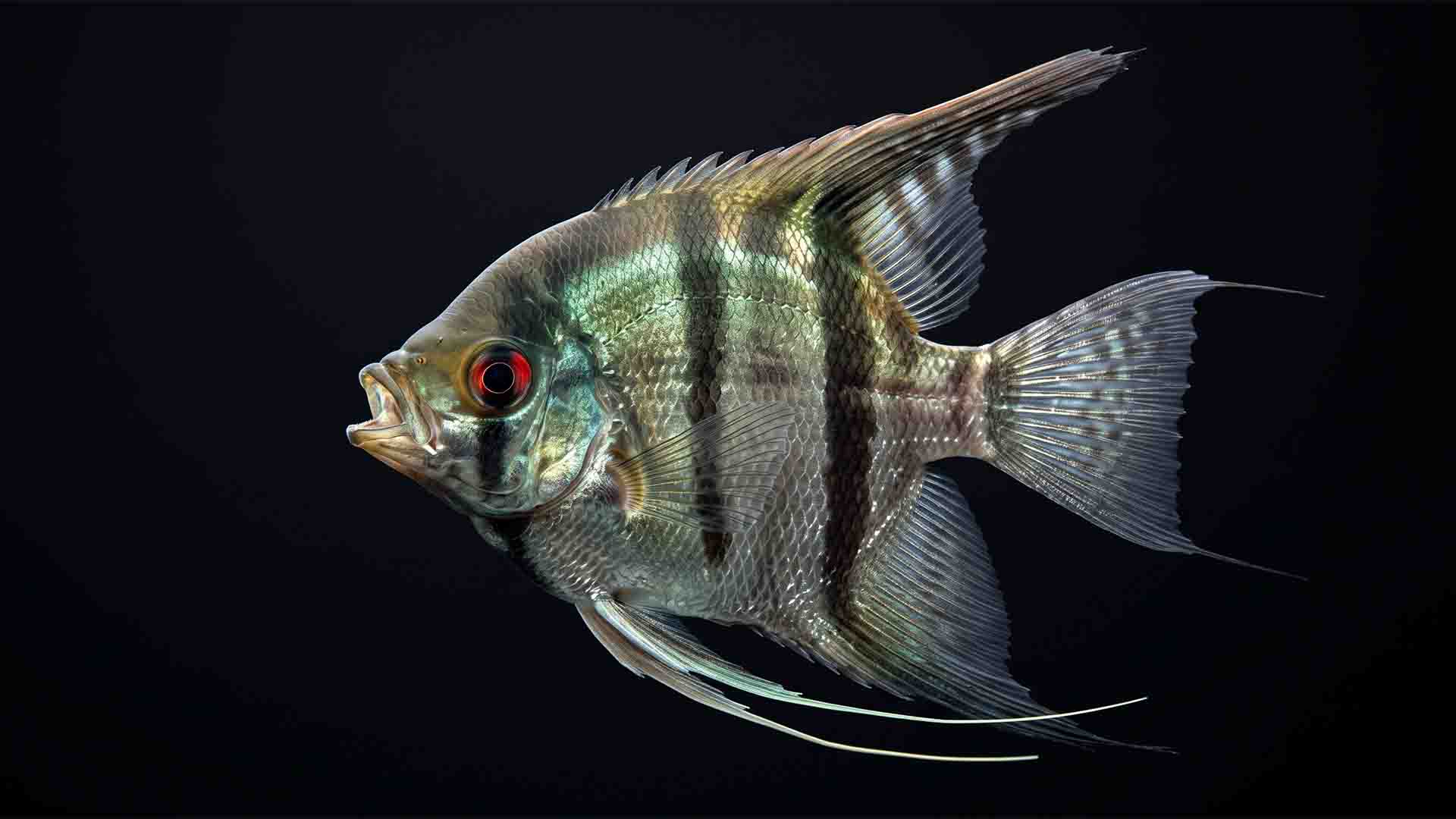
To successfully maintain an angelfish aquarium, you must first dismantle the retail myth of the “gentle giant.” Angelfish belong to the family Cichlidae. While they share the wild Amazonian river systems with cardinal tetras, corydoras catfish, and pencilfish, their ecological niche is not that of a peaceful grazer. In their angelfish natural habitat, they are specialized vertical ambush predators designed to stalk, isolate, and swallow smaller organisms whole.
The Mouth-Size Predation Threshold (Why Schooling Fish Vanish Overnight)
The single most common complaint on modern fishkeeping forums follows an identical script: a hobbyist wakes up to find half their neon tetra school missing, yet water parameters test at zero ammonia, zero nitrite, and safe nitrate levels. They assume a mysterious disease struck the tank. In reality, the culprit is the angelfish’s protractile mouth morphology combined with scotopic night vision.
Angelfish hunt using a rapid-vacuum jaw extension. When inspecting a juvenile Pterophyllum scalare, its mouth looks deceptively small. However, as an angel fish grows big, its premaxillary and maxillary bones develop a hinged kinematic linkage. When striking, the oral cavity expands instantaneously, generating negative pressure that pulls prey inside within milliseconds. If a fish’s body depth is less than the internal diameter of the angelfish’s expanded oral cavity, it is biologically classified as live food. When the aquarium lights turn off, diurnal schooling fish enter a state of torpor (resting near the substrate or plant leaves). The angelfish uses its specialized lateral line array and light-sensitive retina to hunt these paralyzed targets in near-total darkness. If you want to understand how seemingly calm species trigger nocturnal predation, read our breakdown on why aquarium fish secretly kill their tankmates.
Vertical Water Column Hydrodynamics: Why Tank Height Trumps Gallon Volume
Standard aquarium sizing is engineered around horizontal swimming space for torpedo-shaped fish like danios, barbs, and tetras. Standard retail tanks—such as a 20-gallon long or a standard 29-gallon—measure only 12 to 18 inches in vertical height. For an angelfish, horizontal length without vertical depth is a physiological death trap.
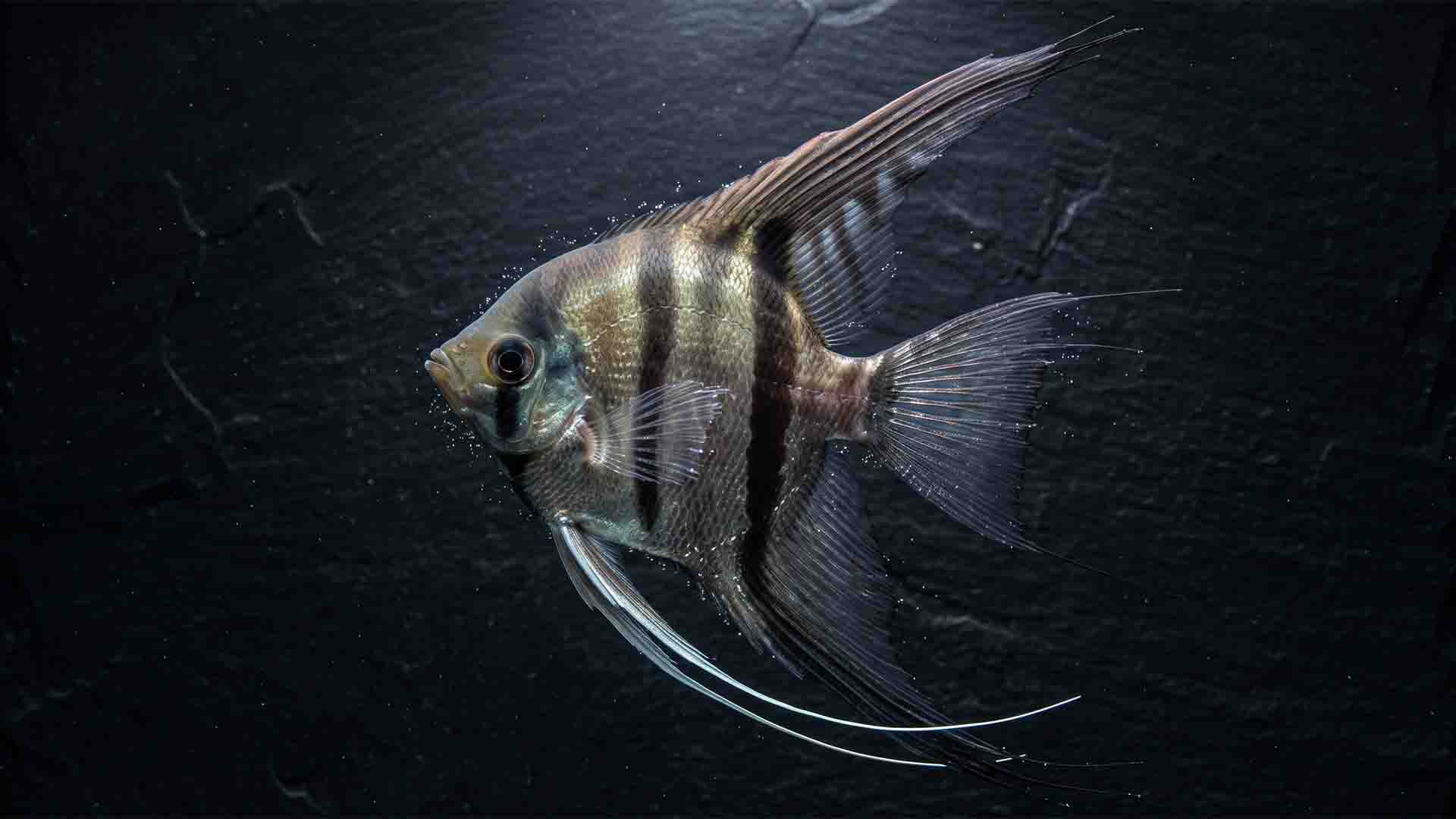
An adult angelfish possesses a laterally compressed, disc-shaped body flanked by elongated dorsal and anal fins that can easily span 8 to 12 inches (20 to 30 cm) from tip to tip. When confined to shallow water columns, the fish experiences continuous hydrostatic restriction. It cannot execute natural vertical cruising patterns or establish multi-tier territorial layers. Instead, its fin filaments scrape against the substrate and surface film, leading to chronic physical micro-tears, secondary bacterial fin rot, and severe dorsal fin curvature (atrophy). An authentic angelfish tank setup requires a minimum water column depth of 24 inches (60 cm) to allow natural hydrodynamic posture and prevent chronic stress-induced immunosuppression.
10 Systemic Angelfish Mistakes Destroying Community Aquariums
Building a resilient angel fish community tank is entirely possible, but only when you engineer the system around cichlid biology rather than aesthetic impulse. Below are the primary systemic errors that cause premature livestock mortality, social friction, and total tank crashes.
1. The Micro-Schooler Predation Trap (Treating Neon Tetras as Midnight Live Food)
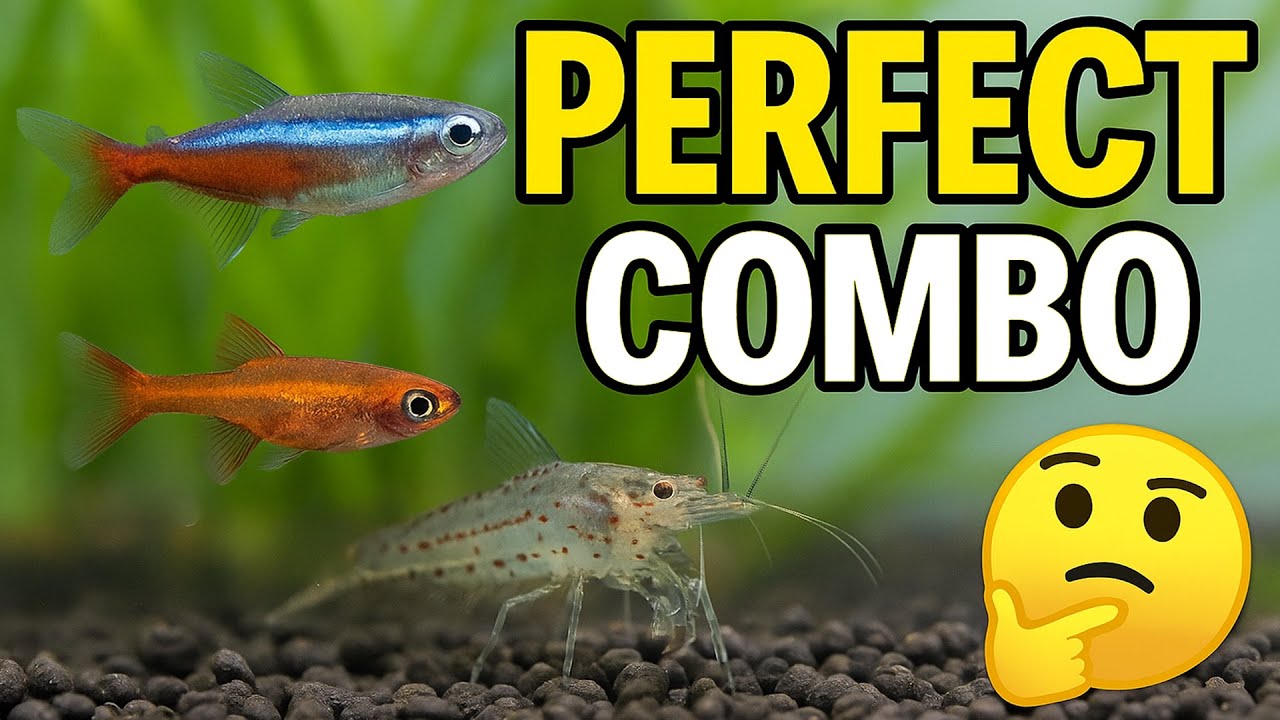
The classic image of a planted aquarium pairing silver angelfish with vibrant Neon Tetras (Paracheirodon innesi) is the most pervasive marketing deception in the aquarium hobby. In the wild Igapó flooded forests, neon tetras and wild Pterophyllum inhabit the same river systems—not as harmonious roommates, but as predator and primary prey.
While an angelfish is young (under 2 inches), it lacks the mouth gape necessary to swallow a slender tetra. Hobbyists observe this peaceful coexistence for three to four months and falsely conclude that their angelfish is “docile” or “vegetarian.” However, the angelfish’s growth rate outpaces the tetra by a factor of five. Once the cichlid crosses the 3-inch body disc threshold, its predatory hunting drive switches on irreversibly. The hobbyist goes to sleep with twelve tetras and wakes up with eight, then six, then none.
- The Biological Failure: Torpid small fish are systematically ambushed under moonlighting or total darkness.
- The Behavioral Sign: Angelfish hovering motionless in plant thickets during dawn and dusk with laser-focused downward gaze.
- The System Fix: Never house angelfish with slender micro-schoolers. If you want a harmonious mid-water school, you must select deep-bodied species like Lemon Tetras, Diamond Tetras, Bleeding Heart Tetras, or Harlequin Rasboras that exceed the maximum adult oral gape of the cichlid. Learn which species maintain peaceful group dynamics in our guide to schooling fish alternatives that actually work.
2. The Shallow Footprint Deficit (Standard 12-Inch Tanks vs. 24-Inch Vertical Water Column Depth)
Beginners frequently purchase standard starter kits (such as standard 20-gallon or 30-gallon tanks) believing that 30 gallons of water volume is universally sufficient for any medium-sized tropical fish. But gallons represent water mass, not usable swimming geometry.
When an angelfish reaches its full adult vertical span of 10 to 12 inches, a tank with a 12-inch or 16-inch total wall height leaves barely 2 to 4 inches of clear water once you subtract 2 inches of substrate at the bottom and 1.5 inches of air space below the rim. The fish is forced to swim with its ventral filaments dragging across gravel and its dorsal fin breaking the surface film. This physical confinement creates severe spatial frustration and prevents the fish from fleeing dominant conspecifics in three-dimensional space.
- The Hydrostatic Consequence: Compressed vertical movement forces the angelfish to swim horizontally at awkward tilt angles, resulting in spinal deformities and chronic swim bladder strain.
- Minimum Tank Architecture: A single adult angelfish requires a minimum of 30 gallons with at least 20 inches of depth. For a breeding group or community centerpiece display, a 55-gallon, 75-gallon, or specialized tall aquarium measuring 24 inches in vertical height is mandatory. Plan your foundational layout properly using our step-by-step masterclass on how to set up a fish tank correctly from day one.
3. High-Velocity Current Exhaustion (Laminar Flow vs. Amazonian Slow-Water Biotope Demands)
Modern aquarium power filters, wavemakers, and oversized hang-on-back units are engineered to produce massive turnover rates (often 8x to 10x the tank volume per hour) to maintain mechanical water clarity. While rheophilic (current-loving) fish like Hillstream Loaches and Rainbowfish thrive in high-velocity laminar currents, angelfish evolved in ultra-calm, slow-moving Amazonian tributaries, oxbow lakes, and flooded forest margins.
An angelfish’s disc-shaped, laterally compressed body acts like a giant aquatic sail. In a high-flow environment, the fish must expend immense metabolic energy simply maintaining upright equilibrium. It cannot drift or rest naturally. This constant counter-swimming triggers acute muscular fatigue, accumulates lactic acid in its tissues, and elevates systemic cortisol levels. Chronic cortisol exposure suppresses the immune system, leading to rapid outbreaks of opportunistic pathogens such as Ich, Epistylis, and Hexamita (Hole-in-the-Head disease).
- The Diagnostic Symptom: Angelfish wedged behind filter intake tubes, hovering vertically behind heater guards, or clamping their pectoral fins while breathing rapidly.
- The Biotope Correction: Install adjustable spray bars angled against the rear glass to dissipate kinetic energy, or transition to dual large-pore sponge filters driven by air pumps. Your goal is high biological filtration capacity with low laminar surface displacement. For a complete hardware comparison, check our review on the best aquarium filters for beginners.
4. The Fin-Nipper Mismatch (Housing Slow Angelfish with Fast Tiger Barbs and Serpaes)
One of the fastest ways to destroy an angel fish community tank is pairing slow-moving, long-finned centerpiece cichlids with hyperactive, schooling fin-nippers. Species such as Tiger Barbs (Puntigrus tetrazona), Serpae Tetras (Hyphessobrycon eques), and Black Widow Tetras possess an instinctual drive to nip at trailing fin filaments and moving sensory antennae.
Because an angelfish relies on its elongated ventral “feelers” (modified pelvic fin rays packed with gustatory and tactile nerve endings) to navigate and inspect its surroundings, damage to these fins is physically debilitating and excruciatingly stressful. Nipped fins expose bare cartilage rays to ambient water column bacteria, creating an open gateway for severe bacterial fin rot and Columnaris infections. Furthermore, because angelfish cannot match the burst sprint speed of barb species, they become defenseless punching bags in open water.
- High-Risk Species to Blacklist: Tiger Barbs, Ruby Barbs, Serpae Tetras, Buenos Aires Tetras, and aggressive Danios.
- Safe Centerpiece Companions: Rummy-Nose Tetras, Cardinal Tetras (only when added with juvenile angels), Harlequin Rasboras, Sterbai Corydoras, and Bristlenose Plecos. If you are struggling with unpredictable compatibility, review our comprehensive analysis on why peaceful fish turn aggressive and how to fix tank triggers.
5. The Juvenile Group Illusion (The Violent Transition to Angelfish Male Female Hierarchy)
When hobbyists visit a retail store, they see 30 juvenile angelfish swimming harmoniously in a 20-gallon holding tank. Enthusiastic beginners often buy five or six young angels, drop them into a 40-gallon community tank, and enjoy total social peace for the first six months. This temporary harmony is what behavioral biologists call the “Juvenile Group Illusion.”
As angelfish reach sexual maturity (between 7 to 10 months of age, depending on water temperature and protein intake), their neuroendocrine system undergoes a dramatic rewiring. Social shoaling behavior completely dissolves and is replaced by rigid, violent territorial hierarchy. Dominant males will stake claim to the primary feeding zones and tall vertical structures, relentlessly chasing submissive males and uncooperative females into the upper corners of the tank.
- The Submissive Angelfish Fate: Subordinate individuals are forced into perpetual vertical glass-surfing, their colors darken (stress bars become permanently black), their immune systems collapse from chronic exhaustion, and they eventually starve from social feeding exclusion.
- The Territorial Formula: You cannot keep multiple adult angelfish in a standard tank unless you provide massive footprint space (75+ gallons) or intentionally maintain a single bonded angelfish pair while rehoming the remaining individuals once pairing occurs. See how juvenile territorial switches operate across larger species in our guide to the monster fish juvenile trap and delayed tank collapse.
6. The Breeding Fortress Switch (Hormonal Aggression Defending Angelfish Eggs and Fry)
Few events in freshwater fishkeeping are as deceptively destructive as an angelfish pair forming inside a community aquarium. Beginners often perceive breeding as the ultimate proof of a thriving, healthy tank. In reality, breeding triggers a massive surge of territorial hormones that overrides normal social restraints, converting peaceful centerpiece fish into relentless killers.
When a male and female angelfish bond, they select a vertical surface—such as a broad Amazon Sword leaf, a heater casing, or the filter intake pipe—to deposit and fertilize hundreds of angelfish eggs. The moment these eggs touch the substrate, their neuroendocrine system floods with prolactin and isotocin, establishing an invisible territorial defense zone spanning 60% to 70% of the entire tank footprint. Any fish swimming through this perimeter, regardless of size or peaceful disposition, is treated as an active predator.
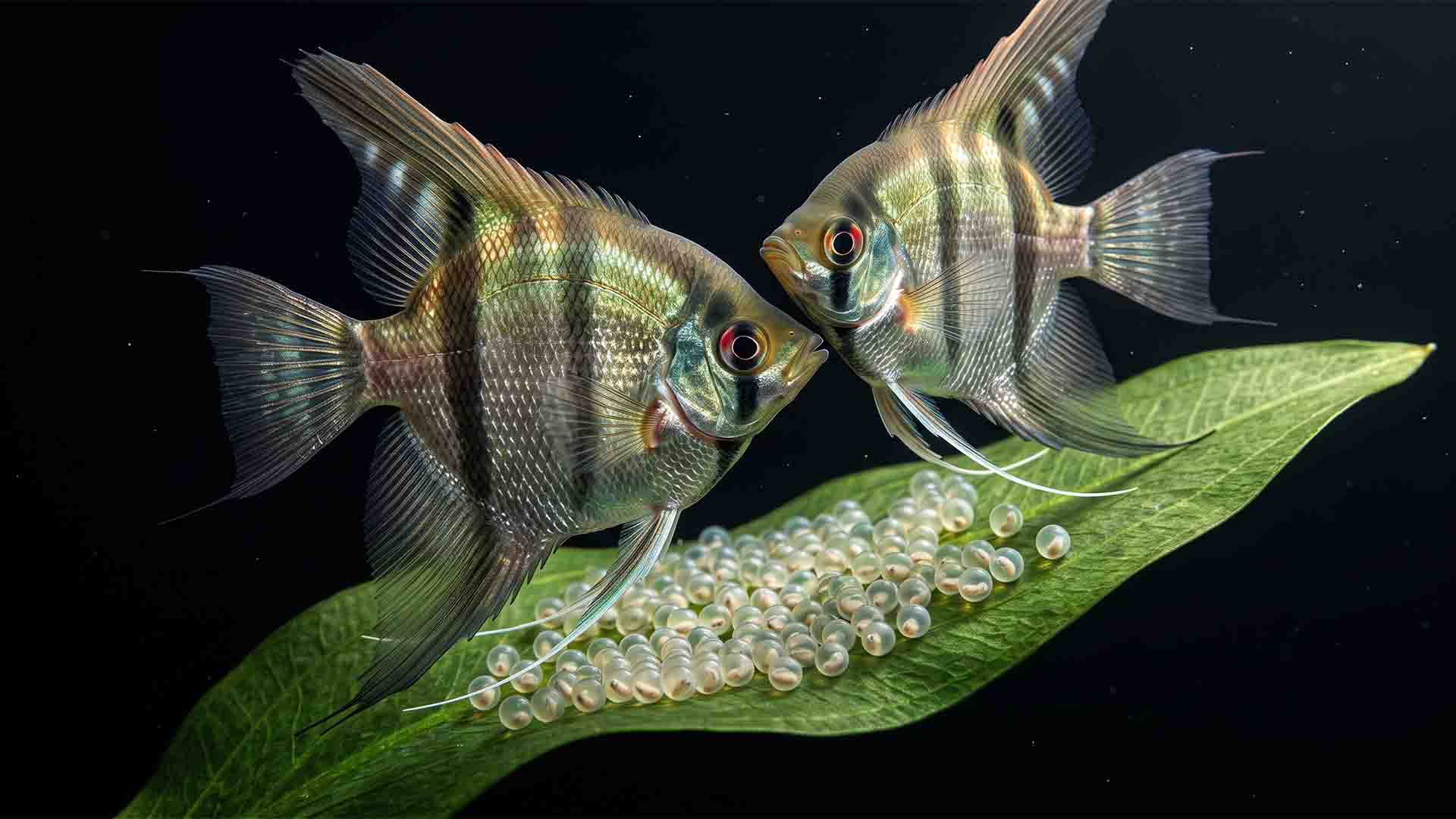
During the 60 to 72 hours required for eggs to hatch into wriggling angelfish fry, the bonded pair wages relentless psychological and physical warfare against their tankmates. Peaceful tetras and bottom dwellers are pinned into top glass corners or behind filter tubes. If you are experiencing unexplained behavioral shifts or wondering why peaceful fish suddenly turn aggressive, spawning hormones are almost always the hidden biological trigger. Once free-swimming fry emerge, parental guarding intensifies further, often resulting in severe eye injuries, shredded fins, and secondary septicemia in neighboring fish.
- The Behavioral Alarm: Two angelfish cleaning a vertical surface with their mouths, lip-locking, or flaring opercular gill plates at every passing tankmate.
- The Biological Reality: In a closed glass ecosystem lacking miles of open river current, submissive tankmates cannot escape the breeding territory, leading to severe physical trauma.
- The Ecosystem Fix: If you intend to raise fry, relocate the bonded pair to a dedicated 29-gallon or 40-gallon breeding aquarium. If keeping them in a community display, construct dense vertical sightline barriers using tall driftwood and dense stem plants to break spatial visibility.
7. Metabolic Cold-Lock (Enzymatic Slowdown & Immune Collapse Below 78°F / 26°C)
Freshwater angelfish (Pterophyllum scalare) originate from the warm, equatorial waters of the Amazon and Orinoco river basins, where water temperatures consistently hover between 78°F and 84°F (26°C to 29°C). Housing angelfish in unheated aquariums or standard community temperatures of 72°F to 75°F (22°C to 24°C) locks their metabolic machinery into first gear.
Fish are ectothermic organisms; their enzymatic reaction rates, digestive kinetic efficiency, and immune antibody production are dictated entirely by ambient water temperature. Below 78°F, digestive enzymes in the angelfish gastrointestinal tract lose catalytic velocity. Ingested protein remains stagnant in the foregut, fermenting and producing toxic gas that compresses internal organs. Furthermore, cellular mucosal production on the skin slows down, allowing opportunistic parasites like Ichthyophthirius multifiliis (Ich) and water molds to penetrate the epidermal barrier. Learn how thermal instability drives sudden tank crashes in our breakdown on what happens when an aquarium heater fails overnight.
- Diagnostic Symptoms: Clamped dorsal fins, sluggish forward propulsion, refusing high-protein live foods, and lingering directly above heater elements.
- Thermal Parameter Rule: Maintain a rock-solid water temperature of 79°F to 82°F (26°C to 28°C) utilizing dual calibrated submersible heaters equipped with external digital temperature controllers.
8. The Open Glass Arena (Zero Sightline Breaks & Continuous Spatial Glare Wars)
Minimalist aquascapes—featuring vast open sand beds, sparse foreground carpeting, and crystal-clear open glass panels—are visually appealing on social media, but they represent a neurological nightmare for territorial cichlids. In their angelfish natural habitat, angelfish navigate dense submerged root tangles, fallen branches, and towering aquatic vegetation where continuous line-of-sight rarely exceeds 6 to 8 inches.
When placed in an open glass arena with zero physical barriers, dominant angelfish maintain unobstructed visual contact with every individual in the tank 24 hours a day. This visual stimulation prevents the endocrine system from downregulating adrenaline and cortisol. Subdominant individuals experience relentless “sightline panic,” unable to forage, rest, or establish micro-territories. This continuous spatial friction eventually leads to intense angel fish fights, caudal biting, and complete social breakdown.
- The Stress Manifestation: Permanent vertical stress bars displayed across the flanks, frantic corner-pacing (glass-surfing), and rapid opercular gill movement.
- Aquascaping Architecture Solution: Break horizontal swimming lines by positioning tall driftwood branches (such as Manzanita or Spider Wood) reaching the water surface, flanked by large-leaf plants like Echinodorus bleheri (Amazon Sword) and tall Vallisneria. Structure your layout following our blueprint on how to arrange hardscape for zero fish stress.
9. Dry Flake Expansion & Swim Bladder Bloat (Hydro-Compaction in Short Digestive Tracts)
Feeding cheap, dry commercial flakes or non-sinking hard pellets directly from the container is a leading cause of sudden angelfish mortality. While wild angelfish consume a moisture-rich diet consisting of insect larvae, small crustaceans, and aquatic worms, dry processed fish foods contain less than 8% moisture and high concentrations of indigestible carbohydrate binders.
When an aggressive angelfish gulps dry flakes at the surface, it swallows atmospheric air alongside dehydrated food particles. Inside the fish’s warm, acidic stomach, these dry flakes absorb digestive fluids and expand up to 300% of their original volume within minutes. This rapid hydro-expansion creates severe gastrointestinal impaction, pressing directly against the adjacent pneumatic duct and swim bladder organ. The resulting physical displacement causes acute swim bladder disorder: the angelfish loses buoyancy control, floating helplessly upside down or listing horizontally at the surface.
- Clinical Signs: Distended, asymmetric abdominal swelling, uncontrollable head-down swimming angles, and trailing white stringy feces.
- Safe Feeding Protocol: Cease feeding dry floating flakes immediately. Pre-soak all dense pellets in aquarium water for 2 to 3 minutes prior to feeding, and anchor the staple diet with moisture-rich frozen foods such as frozen bloodworms, spirulina-enriched brine shrimp, and frozen Daphnia (a natural biological laxative). Review our complete nutritional framework on safe feeding routines to prevent fatal bloat.
10. The Genetic Inbreeding Vulnerability (Fragile Commercial Veil Strains vs. Resilient Wild Types)
Decades of intensive commercial line-breeding for extreme aesthetic traits—such as ultra-long veil fins, hyper-pigmented blushing morphs, and deformed pearlscale textures—have severely compromised the genetic resilience of commercial Pterophyllum scalare. Highly modified domestic varieties frequently suffer from weakened skeletal structures, deformed swim bladders, and severely suppressed immune systems.
Long-fin Veil and Super-Veil angelfish experience extreme hydrodynamic drag. Their oversized, heavy fin tissue demands excessive metabolic energy to propel, leaving the fish physically incapable of escaping territorial confrontations or navigating moderate water flow. Furthermore, commercial supply chains routinely maintain these fragile strains in medicated, sterile holding tanks. When an inexperienced aquarist drops these immuno-compromised fish into a biologically dynamic community tank, the sudden exposure to everyday heterotrophic bacteria triggers rapid fin rot and systemic organ failure.
- High-Liability Strains: Super Veil-Tail, Blushing Double-Dark Black, and extreme Diamond morphs.
- FTM Resilient Recommendations: Prioritize hardy wild-type silver variants, Peruvian Altum morphs, Manacapuru Red Shoulders, or sturdy standard-fin Zebra angelfish. See why modified genetic variants fail during transition in our study on fancy genetic liabilities you should avoid.
The 90-Day Angelfish Community Breakdown Timeline
Aquarium ecosystems rarely collapse overnight; they fail through a progressive accumulation of unaddressed biological stress. The timeline below illustrates how common angelfish care mistakes develop over a 90-day cycle and details the precise biological interventions required to restore system equilibrium.
| Timeline Phase | Visual Cue (What You See) | Biological Reality (Under the Hood) | Systemic Impact | Biological Intervention |
|---|---|---|---|---|
| Days 1 – 14 (The Deceptive Calm) | Angelfish glides gracefully; ignores tetras; eats dry flakes greedily; water is crystal clear. | Juvenile oral gape is under 5mm; predatory drive is hormonally dormant; dry flakes begin absorbing gut fluid. | Low immediate bioload; beneficial bacteria handle waste; micro-schoolers remain safe purely due to juvenile mouth size. | Measure vertical depth; ensure minimum 24-inch water column; transition immediately from dry flakes to pre-soaked sinking pellets and frozen Daphnia. |
| Days 15 – 45 (The Invisible Strain) | Trailing fin rays appear slightly ragged; angelfish hovers near heater; one or two small tetras vanish. | Water flow creates lactic acid buildup; temperatures below 78°F slow digestive enzyme kinetics; nocturnal predation begins. | Elevated plasma cortisol suppresses immune mucosa; submissive fish begin avoiding central feeding zones. | Baffle filter outflow to establish low-flow Amazonian conditions; lock temperature at 80°F (27°C); rehome slender micro-schoolers before complete predation. |
| Days 46 – 75 (The Hierarchy Shift) | Two angelfish claim rear corner; intense lip-locking and chasing; submissive angels pinned near surface glass. | Sexual maturity reached; neuroendocrine system triggers pairing aggression; line-of-sight absence magnifies territorial wars. | Subordinate fish experience chronic exhaustion, stopped growth, and progressive starvation; physical bite wounds appear. | Install large-leaf Echinodorus and vertical driftwood to break visual sightlines; isolate or rehome unbonded single angelfish to eliminate social friction. |
| Days 76 – 90+ (Systemic Collapse) | Severe abdominal bloat; fish swimming head-down; secondary bacterial fin rot; multi-species casualties. | Chronic flake compaction compresses swim bladder organ; systemic bacterial pathogens invade compromised epidermal slime coat. | Total community ecosystem failure; irreversible swim bladder paralysis; opportunistic Columnaris outbreaks. | Fast system for 48 hours; feed frozen Daphnia and Epsom salt bath (1 tbsp/5 gal); execute 25% gentle water change to reduce dissolved organic carbons. |
Angelfish Water Chemistry, Flow Dynamics & Compatibility Matrix
To prevent community tank friction, water parameters and species stocking must match the strict physiological boundaries of Amazonian river systems. Use this operational matrix to evaluate your system parameters and livestock compatibility:
| Environmental / Stocking Parameter | Ideal Target (FTM Standard) | Critical Failure Threshold | Biological Consequence of Mistake | System Correction |
|---|---|---|---|---|
| Water Column Height | 24 Inches (60 cm) | Under 16 Inches (40 cm) | Hydrostatic fin compression, severe dorsal curvature, chronic swim bladder strain. | Upgrade to standard 55-gallon, 75-gallon, or tall format aquarium architecture. |
| Water Temperature | 79°F – 82°F (26°C – 28°C) | Below 76°F (24°C) | Gastrointestinal enzyme freeze, gut stagnation, acute susceptibility to Ich and velvet. | Deploy dual submersible heaters with an external digital controller unit. |
| Water Flow Velocity | Gentle / Dispersed (2x–4x turnover) | High Laminar Jet (>8x turnover) | Lateral sail drag, continuous muscular exhaustion, elevated cortisol, fin clamping. | Install spray bars facing glass or switch to dual high-volume sponge filters. |
| Schooling Tank Mates | Deep-Bodied Tetras (Bleeding Heart, Diamond, Lemon, Rummy-Nose) | Slender Micro-Schoolers (Neon Tetras, Micro Rasboras, Endlers) | Nocturnal ambush predation via protractile mouth gape vacuum extension. | Stock only deep-bodied schooling species exceeding 1.5 inches in adult vertical depth. |
| Nipping / Fast Species | Peaceful Surface Dwellers (Hatchetfish, Harlequin Rasboras) | Tiger Barbs, Serpae Tetras, Black Skirt Tetras, Giant Danios | Trailing pelvic feelers bitten off, open cartilage wounds, lethal bacterial fin rot. | Blacklist all fin-nipping barb and aggressive tetra species from the community. |
| Substrate Clean-Up Crew | Sterbai Corydoras, Bristlenose Pleco (Ancistrus), Nerite Snails | Common Plecostomus, Chinese Algae Eaters | Massive organic bioload spikes, nocturnal slime-coat feeding, aggressive substrate bullying. | Deploy size-appropriate, peaceful benthic cleaners that ignore centerpiece cichlids. |
What to Avoid in an Angelfish Community Setup (Behavioral Pitfalls)
Most aquarium disasters are not triggered by sudden equipment failures; they stem from well-intentioned maintenance habits that slowly dismantle ecosystem resilience. Avoid these critical behavioral traps:
- Avoid Stocking Small “Cleanup” Fish as Problem Solvers: Introducing tiny Otocinclus catfish or juvenile shrimp to an established angelfish tank does not solve algae problems; it provides expensive live snacks. Stressed angelfish will hunt and choke on armored catfish spines. Deploy mechanical balance and appropriate adult herbivores instead, as detailed in our guide to freshwater clean-up crews that actually work.
- Avoid Over-Cleaning Filter Sponges During Behavioral Crises: When fish display aggression or water parameters fluctuate slightly, beginners frequently deep-clean their filter media under tap water. Chlorinated tap water instantly sterilizes nitrifying biofilm, converting a behavioral stress event into a lethal ammonia spike. Protect your biofilter following our rules on how to clean aquarium filters without killing beneficial bacteria.
- Avoid Rearranging Hardscape While an Angelfish Pair Defends Eggs: Moving driftwood and plants during an active spawning cycle does not “reset” aggression; it causes extreme panic. The breeding pair will frantically consume their own clutch (filial cannibalism) and launch violent, uncoordinated attacks against all neighboring fish in open water.
- Avoid Daily Parameter Chasing with Chemical Buffers: Dumping liquid pH-down or chemical clarifiers into the water column creates osmotic parameter shock. Angelfish easily adapt to stable pH levels between 6.5 and 7.8, but rapid chemical swings destroy their branchial gill membranes faster than improper baseline numbers. Understand why stability beats precision in our analysis on how stable-looking aquariums quietly collapse.
Do This Instead: The 5-Step Resilient Angelfish Ecosystem Blueprint
To establish an authentic, zero-conflict angelfish biotope aquarium that thrives for years, execute these five proven engineering steps:
- Step 1: Lock in Vertical Hydrostatic Depth: House adult angelfish in tanks measuring a minimum of 20 to 24 inches in vertical height. This provides adequate hydrostatic depth for elongated dorsal fin expansion and allows mid-water schooling species to occupy distinct swimming tiers without encroaching on cichlid territory.
- Step 2: Install Multi-Tiered Sightline Barriers: Position tall, branching driftwood roots vertically from the substrate to the water surface. Plant dense stands of Echinodorus amazonicus, Vallisneria americana, and Hygrophila polysperma along the side and rear panels to divide the aquarium into distinct visual territories.
- Step 3: Diffuse Water Flow Dynamics: Replace high-velocity directional filter outputs with perforated spray bars directed against the rear glass panel, or install dual large-pore air-driven sponge filters. This provides high dissolved oxygen levels and biological filtration while maintaining calm, laminar-free water movement.
- Step 4: Execute the Pre-Hydrated Nutrition Routine: Eliminate un-soaked dry floating flakes. Feed high-grade sinking micropellets pre-soaked in tank water for two minutes, supplemented 3 to 4 times weekly with frozen Daphnia, enriched brine shrimp, and bloodworms to maintain digestive transit and prevent swim bladder compaction.
- Step 5: Enforce the Juvenile-to-Pair Transition Protocol: If raising a group of juvenile angelfish, observe the tank closely between months 6 and 9. Once a single bonded pair establishes ownership of a vertical zone, either rehome the remaining subdominant angelfish or transition the breeding pair to their own dedicated spawning setup.
Scientific Truths Behind Angelfish Stress Biology, Territorial Ethology & Hydrostatics
To successfully master cichlid management, you must move past pet store marketing and examine the physiological mechanisms governing teleost biology. Understanding the neurological, muscular, and gastrointestinal limits of Pterophyllum scalare transforms unpredictable aquarium chaos into a predictable, engineered science.
1. Kinematic Premaxillary Protraction & Scotopic Hunting Specialization: In their natural habitat, angelfish rely on rapid oral cavity expansion to execute suction-feeding on small aquatic invertebrates and resting characins. Morphological studies in fish biomechanics demonstrate that the angelfish jaw operates on a four-bar kinematic linkage system. When stalking prey, the premaxilla snaps forward in less than 15 milliseconds, generating negative hydrostatic pressure inside the buccal cavity that draws in water and prey simultaneously. Furthermore, retinal histology reveals a high density of rod photoreceptors optimized for scotopic (low-light) vision. During dawn, dusk, and nighttime photoperiods, diurnal schooling fish enter a state of metabolic sleep with slowed sensory processing, while the angelfish’s lateral line and rod-dominated visual field remain fully operational. This biological mismatch makes nocturnal predation in closed community aquariums inevitable once the cichlid’s mouth diameter exceeds the body depth of its tankmates. Read the study on ScienceDirect.
2. Neuroendocrine Spawning Surges & Spatial Territorial Escalation: Aggression in freshwater angelfish is not a random behavioral glitch; it is an endocrine-driven survival adaptation. During gametogenesis and pair bonding, the hypothalamic-pituitary-gonadal (HPG) axis elevates circulating concentrations of androgenic steroids and isotocin (the teleost homolog of oxytocin). This neurochemical surge suppresses normal shoaling tolerance and triggers aggressive nest-defense fixed action patterns. Ethological research on cichlid territoriality shows that bonded pairs establish a rigid non-overlapping boundary around their substrate site. In an un-scaped open aquarium lacking physical sightline obstructions, the pair’s visual field remains perpetually active, preventing the downregulation of stress hormones. As a consequence, submissive tankmates experience sustained immunosuppression and systemic physical exhaustion from continuous territorial defense charges. Read the study on SpringerLink.
3. Hydrodynamic Drag, Fin Span Surface Area & Laminar Stress: The disc-shaped lateral compression of Pterophyllum scalare is an evolutionary trade-off designed for maneuvering through dense vertical root tangles rather than sustaining open-water swimming. Biomechanical fluid dynamics indicate that tall vertical fins significantly increase the total wetted surface area, dramatically multiplying parasitic drag coefficients in moderate to high water flow. When subjected to continuous laminar flow from oversized filter outputs, angelfish are forced to utilize anaerobic white muscle fibers to maintain equilibrium. This constant counter-swimming accelerates lactic acid accumulation, depletes glycogen reserves, and stimulates the interrenal tissue to produce high baseline levels of plasma cortisol. Sustained cortisol elevation inhibits leukocyte proliferation, thinning the epidermal mucus barrier and exposing the fish to opportunistic pathogens such as Columnaris and parasitic velvet. Read the study on Oxford Academic.
4. Short Gastrointestinal Tract Kinetics & Dehydrated Carbohydrate Compaction: Angelfish possess an anatomically short, carnivorous digestive tract optimized for high-moisture, nutrient-dense natural prey such as chironomid larvae and aquatic worms. Commercial dry flake foods and dense floating pellets contain minimal moisture (typically under 8%) and are bound with high concentrations of wheat gluten and terrestrial starches. When ingested greedily at the surface, these dry particles absorb gastric juices inside the stomach, expanding up to 300% of their dry mass. In juvenile and adult angelfish, this internal volume surge compresses the adjacent pneumatic duct and visceral swim bladder chamber. This mechanical displacement prevents normal swim bladder gas regulation, resulting in acute positive buoyancy disorders, intestinal impaction, and secondary bacterial inflammation of the intestinal lining. Read the study on PMC.
Google People Also Ask (PAA) Direct Diagnosis Answers
Why did my angelfish suddenly become aggressive after months of peace?
Angelfish undergo an ontogenetic behavioral shift upon reaching sexual maturity between 6 and 10 months of age. As hormones surge, juvenile social tolerance dissolves and is replaced by rigid territorial hierarchy. If two individuals form a bonded breeding pair, their natural parental instinct compels them to claim up to 70% of the aquarium space, violently driving away all tankmates.
Can freshwater angelfish live safely with neon tetras?
No. While juvenile angelfish under 2 inches may temporarily ignore neon tetras, adult angelfish naturally prey on slender micro-characins. As angelfish mature, their protractile mouths easily accommodate the body width of a neon tetra, leading to consistent nocturnal predation when tetras rest near the substrate in darkness.
What is the minimum tank height required for an adult angelfish?
An adult angelfish requires an absolute minimum water column height of 20 to 24 inches (50 to 60 cm). Because adult dorsal and anal fins can span up to 10 to 12 inches vertically, standard shallow tanks cause severe hydrostatic confinement, leading to fin curvature, dorsal atrophy, and chronic swimming stress.
How do I stop my angelfish pair from attacking other fish during breeding?
You cannot stop natural spawning aggression through behavioral training; you must adjust the system architecture. Break up horizontal sightlines by adding tall vertical driftwood and broad-leaf plants like Amazon Swords. If aggression remains lethal in a community tank under 55 gallons, relocate the breeding pair to a dedicated 29-gallon spawning tank.
Why is my angelfish floating upside down or swimming head-down after feeding?
This buoyancy failure is caused by feeding un-soaked dry flakes or floating pellets. The dehydrated food absorbs gastric moisture inside the stomach, expanding rapidly and applying physical pressure against the swim bladder and pneumatic duct. Fast the fish for 48 hours, then feed frozen Daphnia to clear the gastrointestinal tract.
What water temperature is best for angelfish immune health?
Maintain a stable temperature between 79°F and 82°F (26°C to 28°C). Keeping angelfish below 78°F slows down gastrointestinal enzyme kinetics and suppresses their immune system, making them highly vulnerable to opportunistic pathogens like Ich and Hole-in-the-Head disease.
Frequently Asked Questions (FAQ)
What are the safest schooling tank mates for an angelfish community?
The safest schooling companions are deep-bodied characins that exceed the maximum adult oral gape of an angelfish. Top choices include Lemon Tetras, Diamond Tetras, Bleeding Heart Tetras, Black Phantom Tetras, Rummy-Nose Tetras, and Harlequin Rasboras. Avoid slender micro-schoolers such as Neon Tetras, Micro Rasboras, and young Guppies.
How can you tell the difference between male and female angelfish?
Sexing juvenile angelfish is virtually impossible. In mature adults, males frequently develop a pronounced fatty nuchal hump on their forehead and possess a pointed, forward-angled breeding papilla (spermiduct). Mature females display a smoother forehead profile, a rounder abdominal contour when egg-laden, and a broader, blunt cylindrical ovipositor during active spawning.
What is the best filter setup for a tall angelfish tank?
The ideal setup utilizes a high-capacity canister filter or large external hang-on-back filter equipped with a multi-directional spray bar directed against the back glass. This provides excellent biological and mechanical filtration while diffusing water velocity, creating calm, low-flow water conditions matching their Amazonian biotope.
Can I keep freshwater shrimp with adult angelfish?
Dwarf shrimp such as Cherry Shrimp (Neocaridina) and Crystal Shrimp will be actively hunted and eaten by adult angelfish within minutes. If you require invertebrate cleaners, select fully grown Amano Shrimp (which exceed the oral gape of average angelfish) or robust freshwater snails such as Nerite or Mystery Snails.
How do I differentiate between normal hierarchy sparring and lethal bullying?
Normal hierarchy displays involve brief gill-flaring, minor posturing, and short chases where the retreating fish returns to swimming within seconds. Lethal bullying is characterized by persistent lip-locking, damaged fin tissue, missing scales, and a submissive fish being pinned vertically into a top corner of the aquarium while refusing food.
What should be the staple daily diet for long-term angelfish health?
Feed a diverse, high-protein diet consisting of pre-soaked sinking cichlid micropellets, spirulina flakes, and frozen natural prey (bloodworms, mysis shrimp, and Daphnia). Rotating live or frozen foods 3 to 4 times per week ensures proper peristalsis, prevents intestinal bloat, and provides the fatty acid profiles needed for vibrant color development.
Hub & Spoke: Complete FishTank Mastery Cichlid & Community Architecture
Achieving long-term stability in an angel fish community tank is part of a larger ecosystem discipline. If your community aquarium has experienced unexplained territorial outbreaks, diagnose the hidden environmental triggers using our master guide on why peaceful fish turn aggressive and how to fix tank triggers. Incompatible livestock combinations are the leading cause of system stress; cross-reference your stocking roster with our breakdown of the worst aquarium fish to avoid in community setups.
If you have lost smaller species overnight and suspect nocturnal predation, review our case study on aquarium fish that secretly kill their tankmates. Prevent fin-nipping trauma by replacing aggressive barbs with safe schooling alternatives from our schooling fish selection guide. To manage waste loads and algae naturally without introducing fragile target species, explore our verified freshwater clean-up crew recommendations.
Hardware and maintenance habits form the baseline of cichlid health. If you are designing a new tall aquarium layout, follow our complete blueprint on how to set up a fish tank from scratch and select the right low-flow filtration using our guide to the best aquarium filters for beginners. Avoid lethal maintenance shocks by mastering how to clean filter media without destroying beneficial bacteria and eliminate common biological pitfalls by reviewing 7 dangerous aquarium mistakes to stop making today.
Scientific References & Peer-Reviewed Literature Review
Every biological mechanism, hydro-dynamic principle, and dietary guideline detailed in this guide is supported by peer-reviewed ichthyological research and veterinary aquatic medicine:
- 1. Functional Morphology and Kinematics of Teleost Jaw Protration: Biomechanical research examining feeding mechanics in cichlid species confirms that protractile jaw linkages create high-velocity negative buccal pressure, enabling effective predation on resting prey items in confined aquatic environments. Read the study on ScienceDirect.
- 2. Behavioral Endocrinology of Territoriality and Brood Defense in Cichlidae: Ethological investigations demonstrate that elevated isotocin and systemic androgen levels during spawning cycles directly correlate with escalated territorial radius defense and reduced conspecific tolerance in closed habitats. Read the study on SpringerLink.
- 3. Hydrodynamic Forces and Energy Expenditure in Disc-Shaped Freshwater Teleosts: Biomechanical evaluations of swimming energetics show that elongated fin morphotypes generate significant drag coefficients under laminar water movement, accelerating metabolic fatigue and cortisol-mediated immune suppression. Read the study on Oxford Academic.
- 4. Nitrification Dynamics and Environmental Stability in Recirculating Systems: Microbial ecology criteria published by the U.S. Environmental Protection Agency detail how sub-lethal parameter fluctuations induce chronic neuroendocrine stress responses in freshwater fish. Read the EPA Reference.
- 5. Microbial EPS Biofilm Formation and Gastrointestinal Health: Studies in aquatic microbiology highlight how water column organic load and dietary moisture content directly affect peristalsis and swim bladder buoyancy regulation in teleosts. Read the study on PMC.
Decoding Angelfish Types: Genetics, Morphs, and Structural Vulnerabilities
When beginners walk into a retail pet store, they see dozens of “angelfish types” separated into different tanks. They see silver, black, orange, and marble patterns, assuming they are simply choosing a paint job for their aquarium. This is a massive biological oversight. Decades of extreme commercial line-breeding have fundamentally altered the structural integrity, immune resilience, and hydrodynamics of Pterophyllum species. Choosing the wrong genetic morph is the fastest way to invite chronic disease into your community tank.
The True River Kings: Pterophyllum scalare vs. Pterophyllum altum
There is a massive difference between domestic aquarium strains and true wild-type Amazonian cichlids. Standard domestic angelfish are almost exclusively descendants of Pterophyllum scalare. They have been bred in captivity for decades, adapting to a wide range of tap water conditions, meaning they can comfortably survive in a pH ranging from 6.5 to 7.8.
However, many ambitious aquarists attempt to purchase the legendary Pterophyllum altum (the Orinoco Altum Angelfish), assuming it is just a “taller angelfish.” Altums are not beginner fish. They are strict blackwater obligates native to the Orinoco River basin, requiring extreme vertical tank height (minimum 30 inches of water depth) and a highly acidic pH (often between 4.5 and 5.5). Placing a true Altum into standard, moderately hard tap water immediately strips its slime coat, leading to rapid osmotic shock and lethal bacterial infections within days. If you are building a standard community tank, strictly avoid Altums and focus on hardy P. scalare varieties.
Commercial Color Morphs (Koi, Marble, Platinum, and Black Lace)
The aquarium trade relies heavily on mass-produced color mutations to drive sales. While strains like the Koi Angelfish (featuring vibrant orange and black patching), the Platinum (pure reflective white), and the Black Lace are visually stunning, they come with a hidden genetic tax. To isolate these specific color patterns, commercial farms utilize severe inbreeding bottlenecks.
This genetic compression often results in hidden anatomical defects. Heavily inbred color morphs frequently suffer from shortened gill operculums (leaving gill filaments exposed to water column bacteria), asymmetrical swim bladders, and weakened immune responses. If you want a fish that lives for ten years rather than ten months, prioritize wild-type Silver Angelfish, Zebra Angelfish, or the robust Manacapuru Red Shoulders. These strains retain their original genetic diversity and possess the biological armor necessary to survive minor beginner mistakes.
The Veil-Tail Liability (Why Extreme Fin Genetics Fail in High Flow)
Perhaps the most dangerous purchase a beginner can make is the Super Veil-Tail Angelfish. Breeders have artificially selected genetics to produce dorsal, anal, and caudal fins that trail inches behind the fish’s body. While these sweeping fins look majestic in photographs, they are a hydrostatic nightmare in a real-world aquarium ecosystem.
An angelfish is already a laterally compressed, disc-shaped fish that catches water current like a sailboat. Adding trailing veil fins multiplies the fish’s drag coefficient exponentially. In a standard community tank running a high-turnover canister filter or hang-on-back unit, a Veil-Tail angelfish must constantly fire its white anaerobic muscle fibers just to stay in one place. This leads to chronic lactic acid accumulation and severe physical exhaustion. Once exhausted, they become sitting targets for aggressive fin-nippers, which is exactly why you must avoid placing delicate genetic morphs alongside heavy-swimming species, as we detail in our breakdown of overrated aquarium fish beginners regret buying.
The Carnivorous Ambush Diet: Advanced Angelfish Feeding Protocols
Most community tank feeding routines fail because aquarists treat their centerpiece cichlids like garbage disposals, tossing in cheap surface flakes and walking away. Freshwater angelfish are not opportunistic scavengers; they are calculating, carnivorous ambush predators. In the wild, their diet consists primarily of aquatic insects, mosquito larvae, small crustaceans, and tiny tetras. If you force them to digest terrestrial grains, you are putting a timer on their internal organs.
Why “Tropical Flakes” Destroy Angelfish Digestion Biology
If you look at the ingredient list of a standard, cheap “tropical fish flake” at a big-box pet store, the first three ingredients are often fish meal, wheat flour, and soybean meal. Angelfish have short, carnivorous gastrointestinal tracts that do not possess the enzymes necessary to break down heavy terrestrial carbohydrates and gluten binders.
When an angelfish rushes to the surface to gulp dry flakes, it inadvertently swallows atmospheric air. Inside the warm, acidic environment of the fish’s stomach, the dehydrated wheat and soy binders absorb surrounding fluids and expand by up to 300%. This massive hydro-expansion compresses the adjacent pneumatic duct and visceral swim bladder chamber. The fish loses its ability to regulate internal gas pressure, resulting in the classic head-down floating posture or bottom-sitting lethargy. If you notice your centerpiece cichlid spitting out food or retreating to corners, you are likely dealing with early-stage gut impaction, a common trigger explained in our guide on why aquarium fish suddenly stop eating.
The Live & Frozen Food Matrix (Bloodworms, Daphnia, and Blackworms)
To build unbreakable health, vibrant coloration, and breeding-ready females, you must replicate the moisture content of their natural diet. Transition your angelfish entirely away from dry floating flakes. Your staple dry food should be a high-quality, slow-sinking cichlid micro-pellet that has been pre-soaked in a cup of aquarium water for two minutes before feeding.
More importantly, you must rotate frozen and live foods into their diet three to four times a week. Frozen Bloodworms (Chironomidae larvae) provide the dense protein required for muscle mass and egg production. Frozen or live Daphnia acts as a critical biological laxative; its high chitin (exoskeleton) content scrubs the intestinal walls of the angelfish, ensuring smooth peristalsis and actively preventing swim bladder bloat. Live blackworms provide essential predatory enrichment, forcing the fish to actively hunt and utilize its kinematic jaw protraction.
Feeding Frequency & Preventing Swim Bladder Bloat in Deep-Bodied Cichlids
In the wild, angelfish do not consume one massive meal at 8:00 AM and fast for the rest of the day. They graze on small insects continuously. Dropping a massive pinch of food into your tank once a day guarantees a frantic feeding frenzy, overeating, and subsequent gut blockage.
The optimal feeding protocol for adult angelfish is micro-dosing. Feed them two to three very small portions throughout the day. A single portion should be entirely consumed within 60 to 90 seconds. If food is hitting the substrate and sitting there, you are overfeeding, and you are actively fueling your next algae outbreak and ammonia spike. Fasting your angelfish for one full day a week is highly recommended, as it allows the digestive tract to completely clear any residual waste.
| Food Source / Type | Feeding Frequency | Biological Impact & Role in Diet | Preparation / FTM Rule |
|---|---|---|---|
| Sinking Carnivore Micro-Pellets | Daily Staple (1-2x) | Provides baseline protein, essential fatty acids, and stabilized vitamins. | Must be pre-soaked in tank water for 2-3 mins to prevent internal expansion. |
| Frozen Bloodworms | 2x per week | Triggers spawning hormones, builds mass, heavily mimics wild Amazonian insect diet. | Thaw completely and rinse before adding to avoid introducing phosphate-rich freeze water. |
| Frozen Daphnia / Brine Shrimp | 2-3x per week | Acts as a biological laxative. Chitin shells clean the intestinal tract and prevent fatal bloat. | Use as a secondary feed to balance heavy protein days. Excellent for digestion clearing. |
| Dry Surface Flakes | NEVER | Causes atmospheric air ingestion, massive gut expansion, and swim bladder paralysis. | Throw them away. Do not use terrestrial wheat/soy fillers for ambush cichlids. |
Angelfish Male Female Dynamics & The Breeding Lifecycle
Every intermediate fishkeeper eventually dreams of breeding their angelfish. But attempting to sex juvenile angelfish or breed them in a mixed community tank is a recipe for absolute disaster. The transition from peaceful juveniles to an aggressive, territory-holding breeding pair is the number one cause of sudden tank wipeouts.
The Nuchal Hump & Breeding Papilla (How to Actually Sex Angelfish)
When you buy a quarter-sized angelfish at the pet store, it is biologically impossible to determine its sex. The sexual dimorphism (physical differences between male and female) only becomes visible when the fish reaches sexual maturity, typically between 8 to 12 months of age, depending on water temperature and protein intake.
Once mature, males generally develop a thicker, more pronounced forehead profile, often referred to as a “nuchal hump.” Their ventral fins (the long feelers) tend to be thicker and sometimes branch out. Females maintain a sloped, streamlined forehead. However, the only 100% accurate, scientifically guaranteed way to sex an angelfish is to observe their breeding tubes (the papilla) right before spawning. The female’s ovipositor drops down like a blunt, thick, cylindrical tube (used for laying precise rows of eggs). The male’s spermiduct drops down as a sharp, pointed, thin tube (used for fertilizing those eggs). If you do not see the tubes, you are just guessing.
| Biological Feature | Male Angelfish Marker | Female Angelfish Marker | Accuracy Level |
|---|---|---|---|
| Breeding Tube (Papilla) | Sharp, narrow, and pointed (like the tip of a pen). | Thick, blunt, and cylindrical (looks like a small eraser). | 100% Accurate (Only visible during spawning) |
| Forehead Profile (Nuchal Hump) | Develops a distinct, pronounced bump or thick crown. | Maintains a smooth, straight, sloping line to the dorsal fin. | 70% Accurate (Varies heavily by genetic strain) |
| Ventral Fins (Feelers) | Thicker, often longer, and may branch out near the tips. | Thinner, smoother, and generally more streamlined. | 50% Accurate (Unreliable due to fin-nipping/damage) |
| Abdominal Shape | Remains relatively flat and laterally compressed. | Swells significantly and bulges when laden with eggs. | 80% Accurate (Can be confused with food bloat) |
The Spawning Slate: Triggering Angelfish Eggs in a Community Tank
Angelfish are substrate spawners, but unlike geophagus cichlids that dig pits in the sand, angelfish prefer vertical or steep diagonal surfaces. In the wild, they clean the broad leaves of Amazonian sword plants. In captivity, they will use a heater tube, a filter intake, the aquarium glass, or a purposefully placed breeding slate (a piece of unglazed terracotta tile leaned against the glass).
You can actively trigger the spawning neuroendocrine system by simulating the Amazonian rainy season. Execute a 30% water change using water that is 2 to 3 degrees cooler than the tank’s ambient temperature. Follow this immediately with heavy feedings of live or frozen bloodworms for three consecutive days. The sudden drop in temperature combined with a massive protein surplus mimics the flood season, telling their biology that food is abundant and it is the perfect time to reproduce. You will know they are preparing to spawn when you see the pair violently defending a vertical surface and aggressively “pecking” the area clean with their mouths.
From Wigglers to Free-Swimming: The First 14 Days of Angelfish Fry
The angelfish life cycle moves rapidly. The female lays neat rows of translucent, amber-colored eggs, and the male follows right behind, fertilizing them. For the next 48 to 72 hours, the parents will take turns hovering over the clutch, aggressively fanning the eggs with their pectoral fins to keep oxygen flowing and picking away any unfertilized eggs that turn pure white (due to water mold/fungus).
By Day 3, the eggs hatch into “wigglers.” They do not look like fish; they look like vibrating commas stuck to the slate by a sticky gland on their heads. At this stage, they are absorbing their massive yolk sacs and cannot swim. If they fall off, the parents will frantically catch them in their mouths and spit them back onto the vertical surface. Around Day 7 to Day 9, the yolk sac is fully consumed, and the fry become “free-swimming.” They will detach from the slate and hover in a dense, vibrating cloud around the parents. At this exact moment, you must begin feeding them newly hatched live baby brine shrimp or specialized micro-liquid fry food 3 to 4 times a day, or they will starve within 48 hours.
Filial Cannibalism (Why Angelfish Eat Their Own Eggs & How to Stop It)
One of the most devastating experiences for a hobbyist is waking up to find that a dedicated breeding pair has consumed their entire clutch of eggs overnight. This behavior is called filial cannibalism, and it is not a sign of bad parenting; it is a hardwired evolutionary survival tactic triggered by stress.
If an angelfish pair feels that their perimeter is constantly breached by other tankmates, or if there is heavy foot traffic, loud vibrations, or tapping on the glass outside the tank, their cortisol levels skyrocket. The biological math kicks in: “The territory is unsafe. Predators are coming. Instead of letting a predator eat our offspring and steal the protein, we will consume the protein ourselves to regain energy and breed again later when it is safe.” To prevent this, you must move breeding pairs to their own isolated 29-gallon tank with three sides covered by dark paper, utilizing a gentle air-driven sponge filter to keep the water completely calm and stress-free.
Engineering the Authentic Amazonian Angelfish Biotope
If you want to move beyond merely “keeping fish alive” and step into professional ecosystem management, you must stop fighting the fish’s natural biology and start replicating the water chemistry of the Amazon and Orinoco river basins. Building an authentic blackwater biotope drastically reduces fish stress, extends their lifespan, and unlocks their most vibrant, natural coloration.
Blackwater Chemistry: Tannins, Humic Acids, and Cortisol Reduction
The natural habitat of Pterophyllum scalare is not a crystal-clear, sterile glass box filled with neon plastic gravel. They live in slow-moving flooded forests and oxbow lakes stained the color of dark tea. This brown tint comes from decaying organic matter leaching tannins, humic acids, and fulvic acids into the water column.
Tannins are not just cosmetic; they act as a biological armor. Humic substances naturally lower the pH of the water, making the environment hostile to opportunistic pathogens, heterotrophic bacteria, and fungal spores like Saprolegnia. Furthermore, the dim, amber-tinted water severely reduces the glare of aquarium lighting, which naturally downregulates the angelfish’s neuroendocrine system, keeping plasma cortisol (stress hormone) levels at absolute baseline. To replicate this, add organic botanicals to your tank, such as Indian Almond Leaves (Catappa), Alder cones, or untreated Rooibos wood.
Leaf Litter & Benthic Microbiology for Pterophyllum Species
When you build a true biotope, the bottom of the tank should not be bare sand or vacuumed gravel. It should feature a deep bed of decaying leaf litter. As Catappa and Magnolia leaves break down on the substrate, they create a microscopic ecosystem known as infusoria (a mix of protozoans, rotifers, and micro-crustaceans).
This benthic microbiology is exactly what angelfish fry rely on during their first few critical days of free-swimming. The leaf litter acts as an endless, natural grazing pasture for fry and bottom-dwelling clean-up crews like Corydoras, while completely mimicking the river floor where wild angelfish naturally hunt.
Perfect Low-Tech Plants for Tall Angelfish Tanks (Echinodorus & Vallisneria)
Because angelfish require a minimum 24-inch vertical water column, you cannot use short foreground plants; they will do nothing to break the territorial sightlines in the upper zones of the tank. You need massive, vertical aquatic architecture.
The undisputed king of the angelfish biotope is the Amazon Sword (Echinodorus bleheri). These plants root deeply into the substrate and produce massive, broad leaves that reach the surface. Not only do these leaves provide the exact structural geometry a female angelfish requires to lay her eggs, but they also create physical walls that block dominant males from seeing submissive tankmates across the aquarium. Pair these with Jungle Val (Vallisneria americana) planted along the back glass to create a dense, vertical grass forest that sways gently in low current. If you want to master this natural, high-impact aesthetic without expensive CO2 systems, follow our complete masterclass on easy aquascaping and low-tech Amazon plant architecture.
Watch Next: Continue Your Freshwater Mastery (Video Chain CTA)
Transitioning from written biology to visual mastery is the most effective way to eliminate aquarium failure. Continue your educational journey with these companion video guides from the FishTank Mastery channel:
- 10 Aquarium MONSTER Fish That DESTROY Tankmates: Discover which popular freshwater species outgrow community systems and turn peaceful setups into predatory battlefields. Watch on YouTube.
- Don’t Buy These SCHOOLING FISH – Get These Instead: Learn which active schooling species nip long fins and cause chronic stress, and discover the peaceful alternatives that maintain group harmony. Watch on YouTube.
- Why Your “Safe” Fish Just Turned Into Killers: A deep breakdown of the environmental, dietary, and social triggers that cause peaceful centerpiece fish to suddenly snap. Watch on YouTube.
- You’re Cleaning Your Filter WRONG! (Stop Killing Your Fish): Master the correct filter maintenance routine to preserve biological filtration and prevent dangerous ammonia spikes. Watch on YouTube.
- Best Freshwater Tank Cleaners That Actually WORK: Build a high-efficiency clean-up crew that controls algae and detritus without adding predatory pressure or bioload collapse. Watch on YouTube.
Building a thriving freshwater angelfish community is entirely within your control when you design the system around the fish’s natural biology rather than retail assumptions. Provide vertical depth, manage water flow, respect their predatory mouth gape, and engineer your aquascape to diffuse territorial lines. When you respect the science behind the glass, your angelfish will reward you with years of majestic, stress-free behavior.