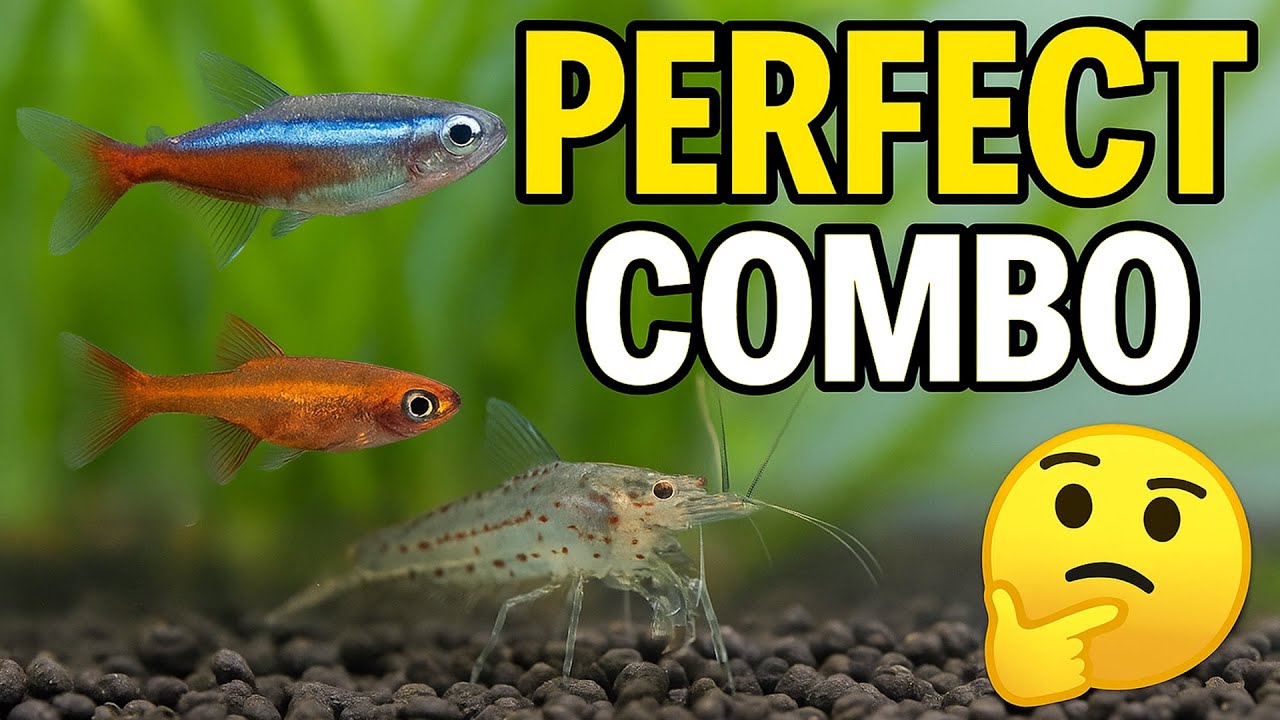
Finding the right aquarium fish that thrive alone is the single most effective way to eliminate social stress, territorial battles, and chronic bioload spikes in small to mid-sized freshwater tanks. Most hobbyists are conditioned by commercial pet stores to believe that an active aquarium requires a shimmering school of schooling fish. What retail chains leave off the livestock tag is the physiological invoice: forcing shoaling species into confined glass boxes triggers chronic neuroendocrine stress, destroys the mucosal barrier, and guarantees delayed system crashes.
When you stock an aquarium around a solitary centerpiece fish, you work with evolutionary biology instead of fighting it. You do not need another mass-farmed Betta with compromised fin genetics, nor do you need a commercial Dwarf Gourami carrying incurable Dwarf Gourami Iridovirus (DGIV). By selecting a species naturally adapted for solitary apex life, you drop the biological maintenance load, remove inter-species friction, and create a predictable underwater ecosystem.
Before buying another bag of delicate nano fish, watch the full video above to see these ten ambush predators, micro-hunters, and solitary oddballs in motion. The following guide expands on the exact water parameters, anatomical constraints, and spatial geometry required to keep them healthy for years.
The Cortisol Trap: The Hidden Biology Behind Schooling Fish Failures in Small Aquariums
Big-box retail stores push the schooling fish myth because it is a self-replenishing sales engine. Selling schooling fish in mandatory groups of six guarantees repeat business when stressed fish inevitably crash. In wild river systems, shoaling is not a social preference; it is an antipredator survival mechanism based on hydrodynamic coordination and sensory dilution. When six or ten of these fish are dumped into a standard ten-gallon or twenty-gallon aquarium, that evolutionary security network completely collapses.
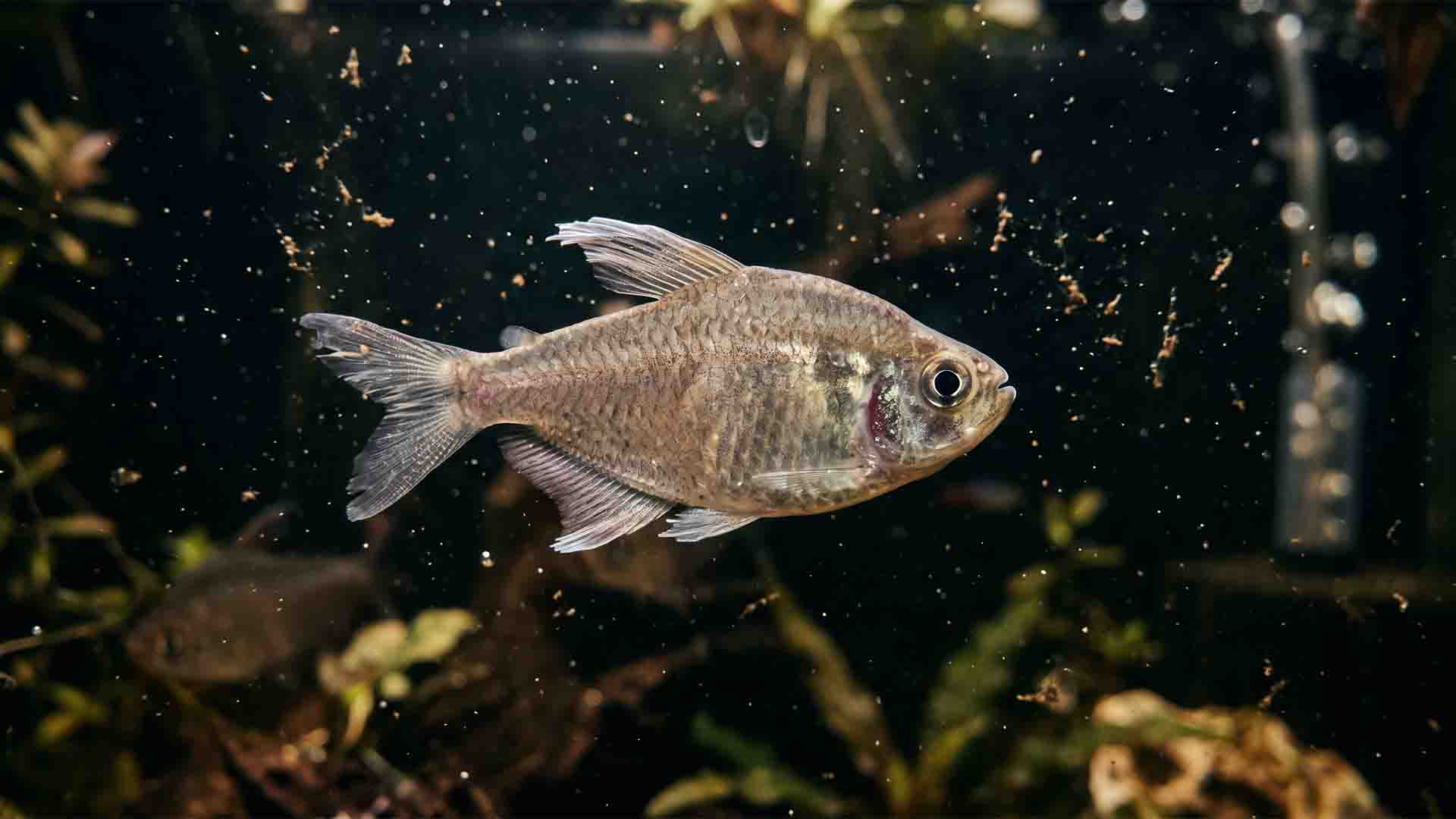
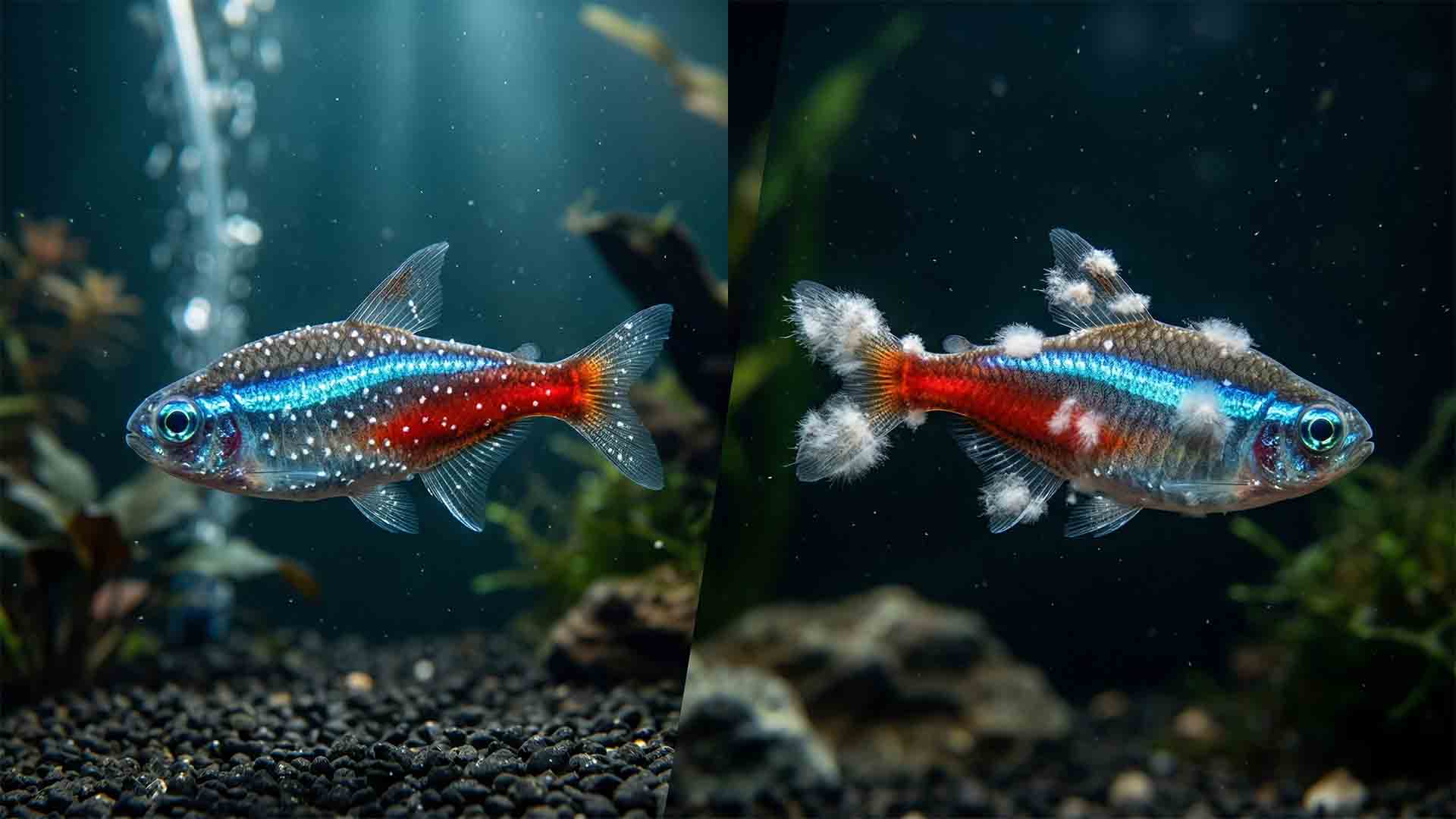
Confined spaces prevent natural flight distance. Fish situated at the lower tier of the intra-school dominance hierarchy cannot escape dominant individuals. The constant micro-chasing triggers relentless activation of the hypothalamic-pituitary-interrenal (HPI) axis. This neuroendocrine cascade floods the bloodstream with cortisol. Elevated cortisol is an immunosuppressive hormone: it thins the protective dermal mucus layer, shuts down white blood cell proliferation, and leaves the fish defenseless against ubiquitous opportunists like Columnaris, Ich, and fungal spores. This is the physiological reality behind false stability and delayed tank collapse.
Hydrodynamic Space-Math: Why 6 Fish in 10 Gallons Triggers Chronic Stress
An average ten-gallon aquarium features a footprint of twenty inches by ten inches, containing roughly thirty-eight liters of actual water volume once hardscape and substrate are factored in. Fast-swimming characins and cyprinids require continuous straight-line burst margins of at least ten to twelve body lengths to bleed off territorial momentum. In a twenty-inch tank, a two-inch fish hits a glass barrier in under half a second.
When flight lines are obstructed by glass, evasive maneuvers turn into sharp vertical stalls. This erratic kinetic energy creates turbulence that disrupts weaker tankmates. Beginners often misinterpret this constant chasing as playful community behavior. In reality, it represents spatial competition. Over 30 to 60 days, the weakest individuals stop feeding, experience muscular wasting along the dorsal ridge, and vanish overnight. The outdated one-inch-per-gallon stocking rule completely ignores these hydrodynamic behavioral boundaries, leading hobbyists directly into system failure.
The Bioload Footprint: Solitary Predators vs. Fragmented Schools
Managing water chemistry in a small tank comes down to metabolic predictability. A fragmented school of six dying tetras produces irregular ammonia spikes caused by uneven feeding, decomposing tissue, and elevated respiration rates under stress. Uneaten flakes rot in hardscape crevices, fueling heterotrophic bacterial blooms and dropping dissolved oxygen levels overnight.
A single, well-chosen solitary fish operates on a stable metabolic curve. Feeding is precise: you feed one stomach directly, ensuring zero stray waste enters the water column. Solid waste output is localized and easily processed by nitrifying autotrophs in your biological filtration. By replacing an anxious, fragmented school with a solitary centerpiece, you reduce the bioload footprint, eliminate organic decay spikes, and stabilize your dissolved nitrogen parameters.
Top 10 Solitary Centerpiece Fish That Flourish Without a Group
The following species do not tolerate groups in home aquariums; they thrive in complete isolation. Their wild evolutionary biology is optimized for solo territory defense, ambush hunting, and resource guarding. Here are the first five contenders that turn standard tanks into zero-conflict setups.
1. Golden Wonder Killifish (Aplocheilus lineatus) – The Surface Crocodile
The Golden Wonder Killifish is an ornamental color variant of the wild Asian killifish native to India and Sri Lanka. Sporting intense metallic chartreuse scales and ruby spangles, this fish looks like a peaceful surface swimmer on pet store display tags. In reality, it is built like a miniature aquatic crocodile designed to rule the top three inches of the water column.
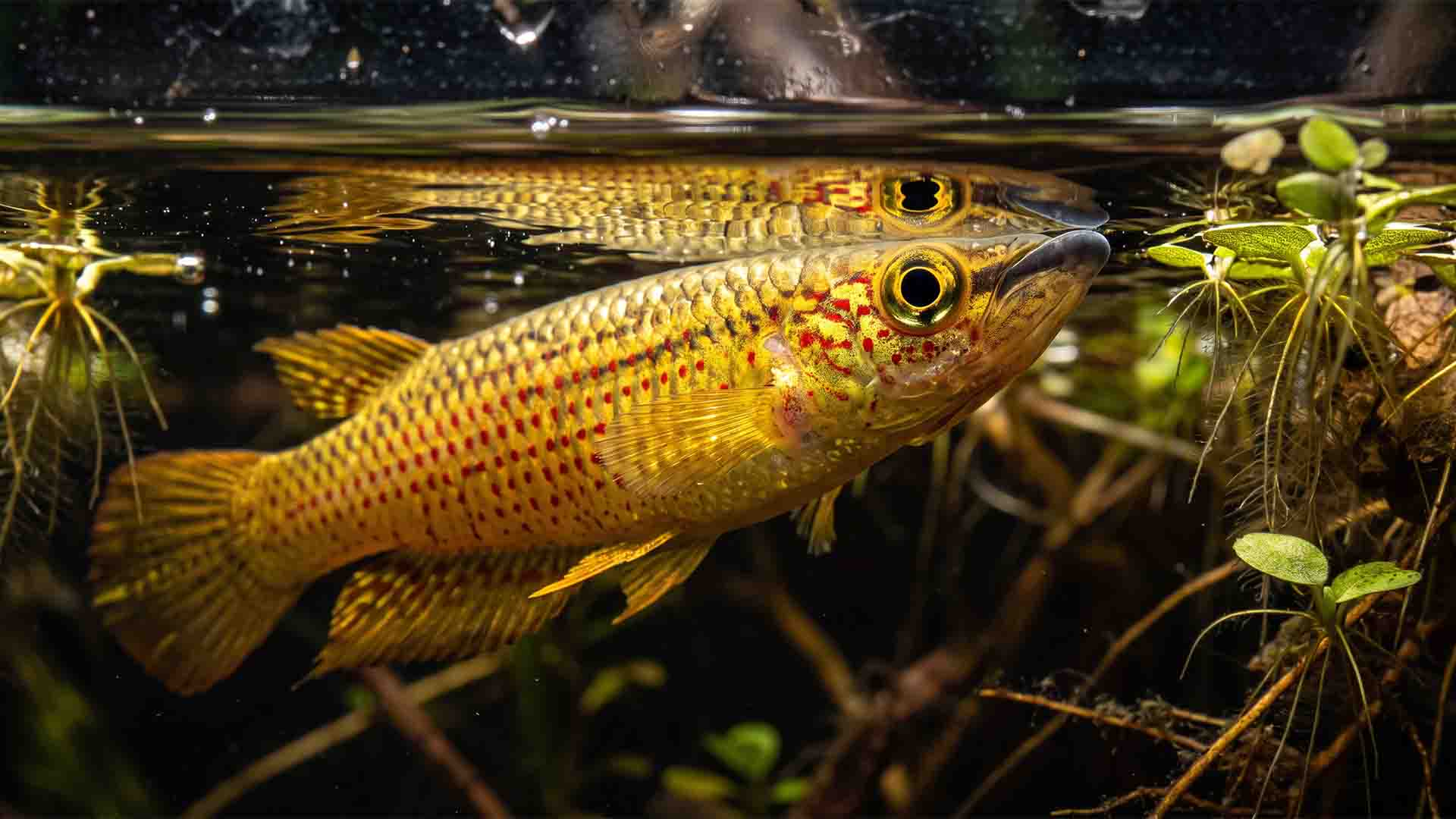
The anatomical trap with this species lies in its cranial kinematics. The mouth is hinged dorsally and snaps open horizontally to nearly 40 percent of its entire head width. Any tankmate that fits between its eyes will eventually disappear into that cavernous jaw. Beginners regularly drop these into tanks with Chili Rasboras, juvenile Guppies, or Neocaridina shrimp, only to find their livestock vanished by morning. Understanding these anatomical gape-size traps in community fish is the difference between an intact tank and an accidental crime scene.
- Minimum Tank Size: 20 gallons (75 liters) with an airtight, weighted lid (they are world-class jumpers).
- Water Parameters: pH 6.0 to 7.8, Temperature: 72°F to 82°F (22°C to 28°C), Hardness: 5 to 15 dGH.
- Dietary Reality: High-protein carnivore. Flakes are accepted, but frozen bloodworms, mysis shrimp, and crickets bring out optimal coloration.
- FTM Verdict: Kept as a solo surface centerpiece with deep-bodied bottom dwellers like Corydoras, a single Golden Wonder Killifish delivers striking intelligence, predatory focus, and zero inter-species drama.
2. African Butterfly Fish (Pantodon buchholzi) – The Prehistoric Surface Hunter
An ancient freshwater relic belonging to the prehistoric order Osteoglossiformes, the African Butterfly Fish is a direct relative of the massive Arowana. Evolving in the stagnant, weed-choked backwaters of Central and West Africa, this species spends 99 percent of its captive life anchored beneath floating plant leaves, waiting for terrestrial insects to hit the surface meniscus.
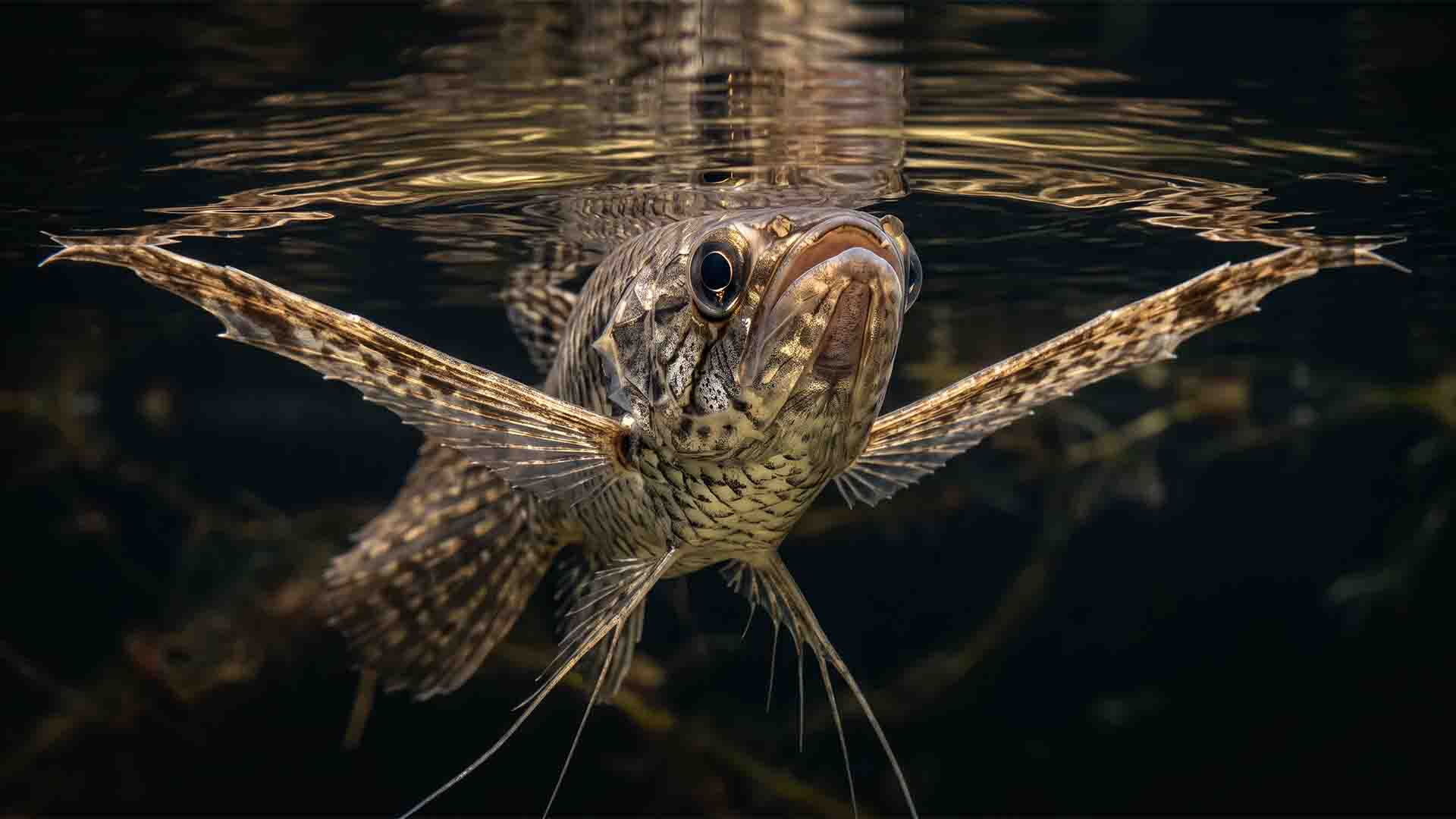
Pantodon buchholzi is entirely indifferent to water depth; it demands horizontal surface area. Squeezing this animal into a tall, narrow tank is a death sentence. Their wing-like pectoral fins are specialized sensory instruments that detect micro-ripples across the surface film. Because their eyes are calibrated upward, they cannot register food that sinks past their jaws. In a group, dominant individuals starve weaker specimens through surface shadow dominance. A single specimen kept alone thrives without competition.
- Minimum Tank Size: 20-gallon long or 30-gallon shallow footprint (broad horizontal dimension).
- Water Parameters: pH 6.0 to 7.2, Temperature: 77°F to 82°F (25°C to 28°C), Soft water (<10 dGH).
- Special Setup Needs: Dense surface cover using Amazon Frogbit or Salvinia, coupled with ultra-low surface current. High-flow filter returns will exhaust them.
- FTM Verdict: The ultimate prehistoric solitary predator. They completely ignore bottom and midwater dwellers while commanding the surface layer with zero aggression toward fish below them.
3. Leopard Bush Fish (Microctenopoma acutirostre) – The 30-Gallon Ambush Master
Hailing from the heavily tannin-stained Congo River basin, the Leopard Bush Fish (also known as the Spotted Ctenopoma) is a stealth bomber in miniature. Covered in dark espresso rosettes over an amber body, this fish uses disruptive camouflage to blend seamlessly against fallen Malaysian driftwood roots and decaying leaf litter.
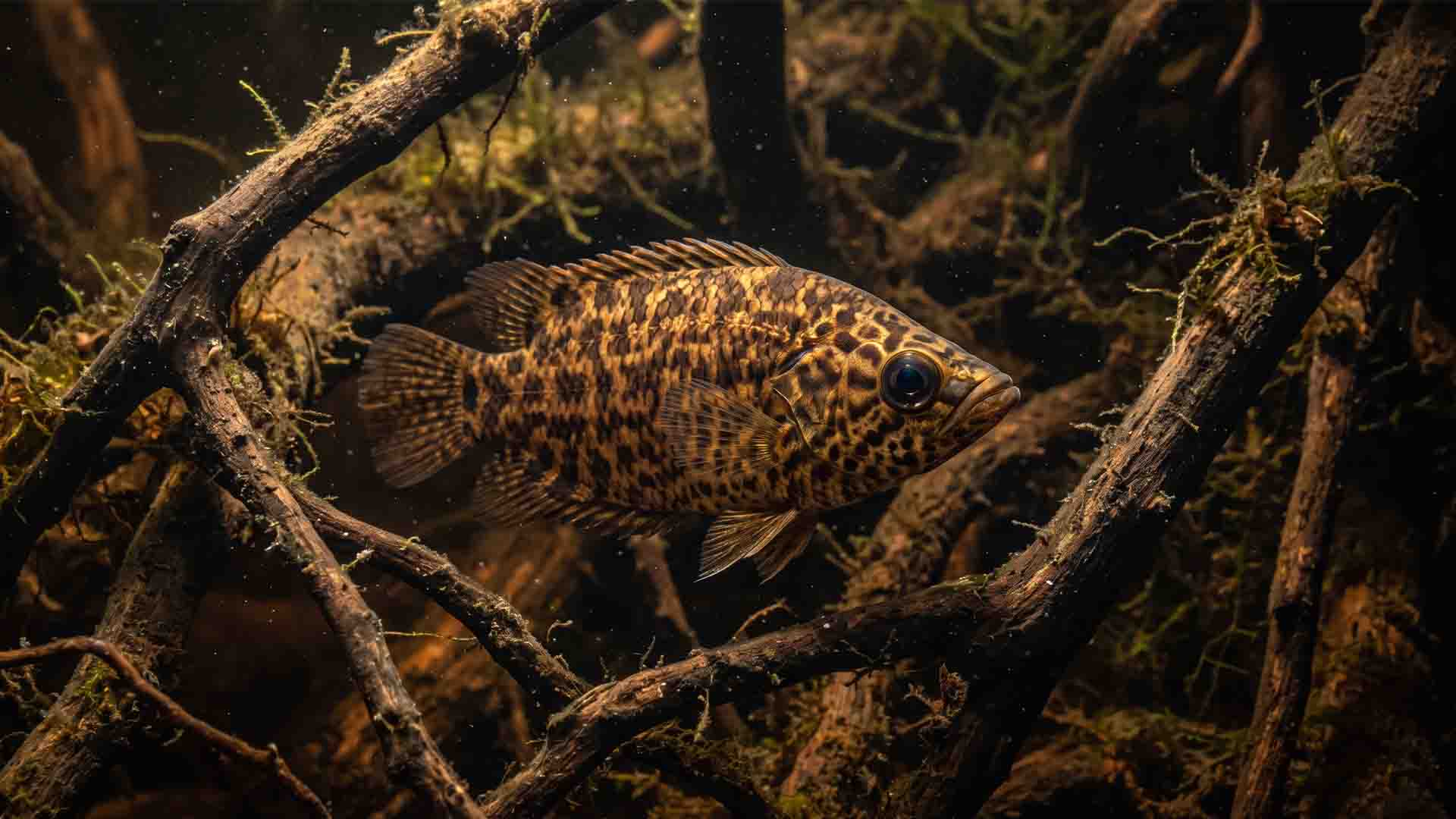
Like Betta splendens and Gouramis, the Bush Fish is an anabantiform possessing a specialized labyrinth organ, allowing it to gulp atmospheric oxygen in stagnant, oxygen-depleted pools. However, keeping multiple Bush Fish in an aquarium under 75 gallons leads to vicious territorial jaw-locking battles. A single specimen in a well-structured 20 or 30-gallon tank becomes a methodical, curious pet with an enormous personality. Its telescopic mouth shoots forward like an accordion to vacuum up small live or frozen organisms, while it peacefully ignores medium-sized, deep-bodied tankmates.
- Minimum Tank Size: 30 gallons (115 liters).
- Water Parameters: pH 6.0 to 7.5, Temperature: 73°F to 82°F (23°C to 28°C), moderate water hardness.
- Behavior Profile: Highly territorial toward conspecifics (its own kind), completely peaceful toward deep-bodied fish too large to swallow.
- FTM Verdict: Indestructible wild biology, bulletproof disease resistance, and dog-like begging behavior once acclimated to human movement.
4. Paradise Fish (Macropodus opercularis) – The Zero-Heater Labyrinth Centerpiece
Documented in 1869 as one of the very first ornamental freshwater fish brought to the Western world, the Paradise Fish is an evolutionary powerhouse that modern hobbyists have mistakenly abandoned. Hailing from rice paddies, ditches, and sluggish streams across China, Vietnam, and Taiwan, this labyrinth fish possesses a stunning coloration of alternating neon blue and crimson vertical bars accented by elongated caudal lyretails.
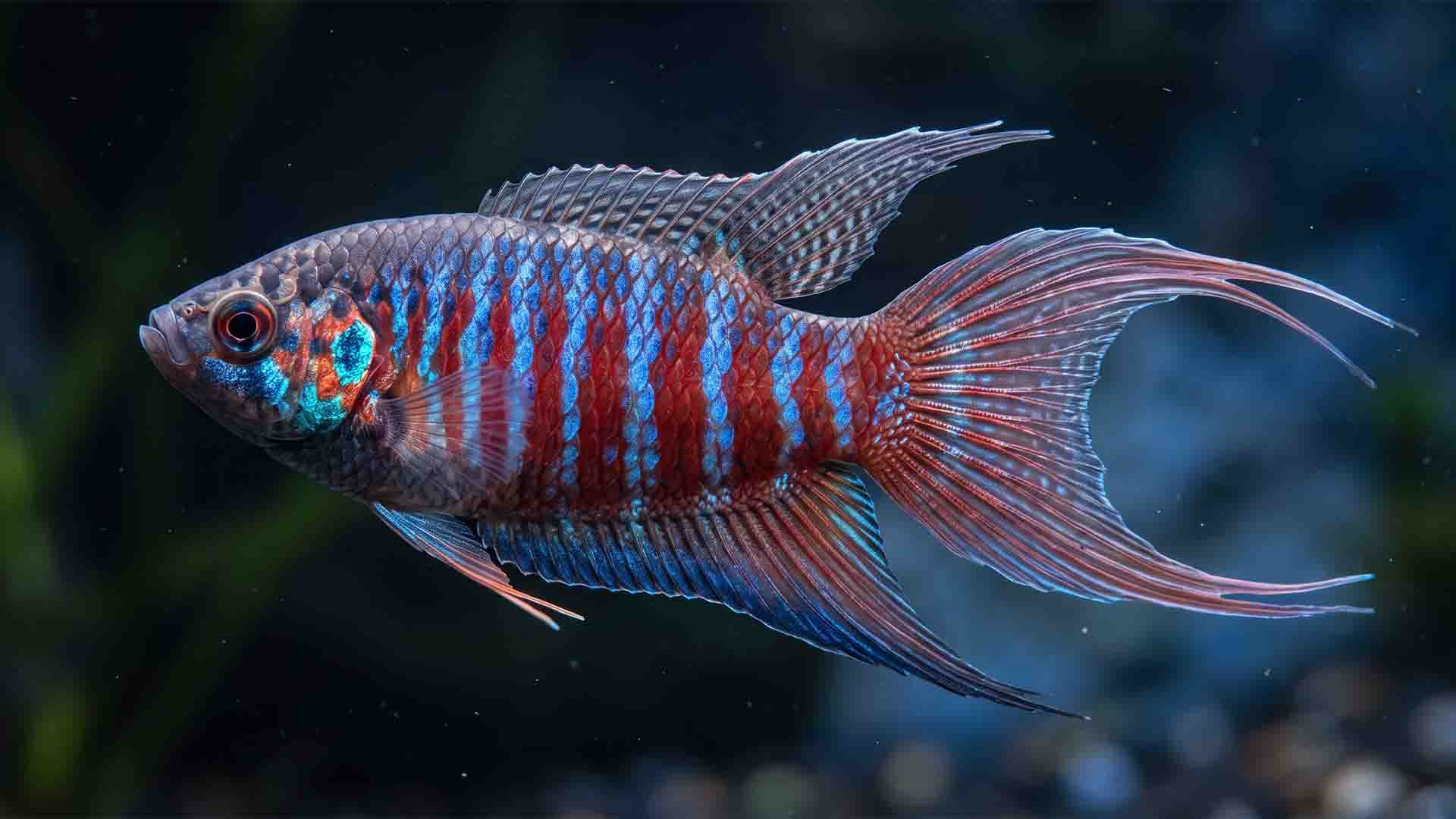
The superpower of Macropodus opercularis is its massive eurythermal tolerance. Unlike fragile tropical fish that collapse when water drops below 75°F, Paradise Fish flourish in unheated environments from 60°F to 78°F (15°C to 26°C). Keeping one completely eliminates the risk of catastrophic heater failures cooking your aquarium overnight. Male Paradise Fish are aggressively intolerant of rivals, making them prime candidates for solitary centerpiece setups where they display bold territorial curiosity without harming the biological balance.
- Minimum Tank Size: 20 gallons (75 liters).
- Water Parameters: pH 6.0 to 8.0, Temperature: 60°F to 78°F (15°C to 26°C), broad hardness adaptation.
- Key Advantage: Works seamlessly in unheated indoor tanks alongside other hardy coldwater fish that thrive without a heater.
- FTM Verdict: Vibrant colors rivaling expensive reef fish combined with bulletproof biological hardware and zero heater bills.
5. Bolivian Ram (Mikrogeophagus altispinosus) – Cichlid Brains Without the German Blue Fragility
Aquarists craving dwarf cichlid intelligence almost always gravitate toward the German Blue Ram (Mikrogeophagus ramirezi). That decision usually ends in heartbreak. Commercial German Blue Rams have undergone decades of aggressive hormone blasting and inbreeding, stripping their biological immune systems to paper. They require scalding water temperatures (84°F+), sterile parameters, and near-zero nitrates; drop them into standard community water, and their internal organs fail within weeks.
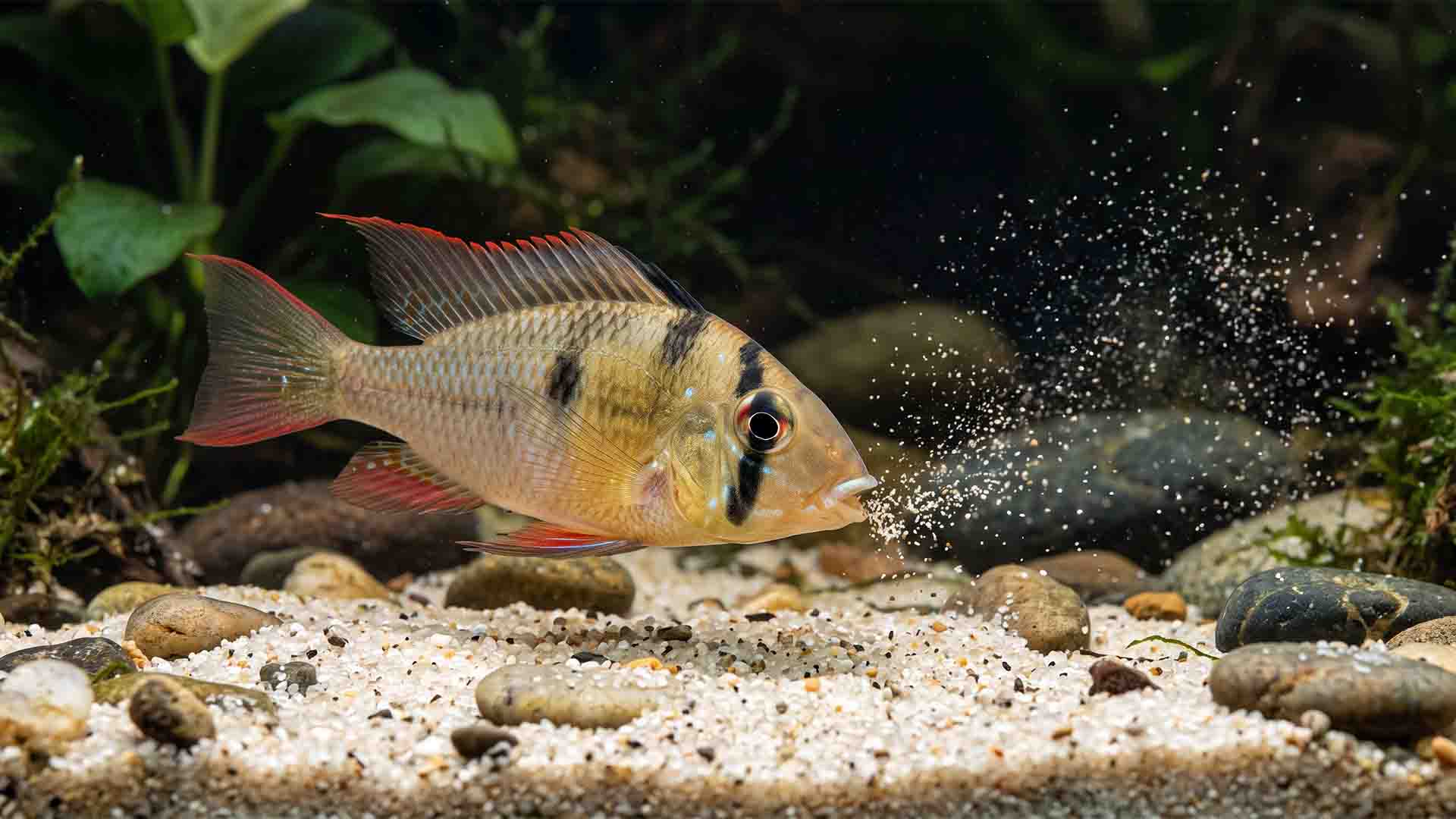
The Bolivian Ram is the wild-grade, bulletproof answer. Originating from the Amazon river basin in Bolivia and Brazil, this geophagine dwarf cichlid retains intact wild genetics. It operates at standard tropical temperatures (74°F to 79°F), handles broader mineral hardness, and exhibits natural benthic sand-sifting behavior through its branchial gill rakers. While keeping pairs in small setups frequently triggers vicious breeding aggression, a single male Bolivian Ram acts as a calm, watchful, and highly intelligent substrate centerpiece.
- Minimum Tank Size: 20 gallons (75 liters) with a fine quartz sand substrate.
- Water Parameters: pH 6.5 to 7.6, Temperature: 74°F to 80°F (23°C to 27°C), Hardness: 5 to 15 dGH.
- Substrate Prerequisite: Fine sand is mandatory. Coarse gravel blocks their natural gill-sifting feeding mechanics.
- FTM Verdict: All the curiosity and problem-solving intelligence of South American cichlids without the genetic fragility or territorial mate murder.
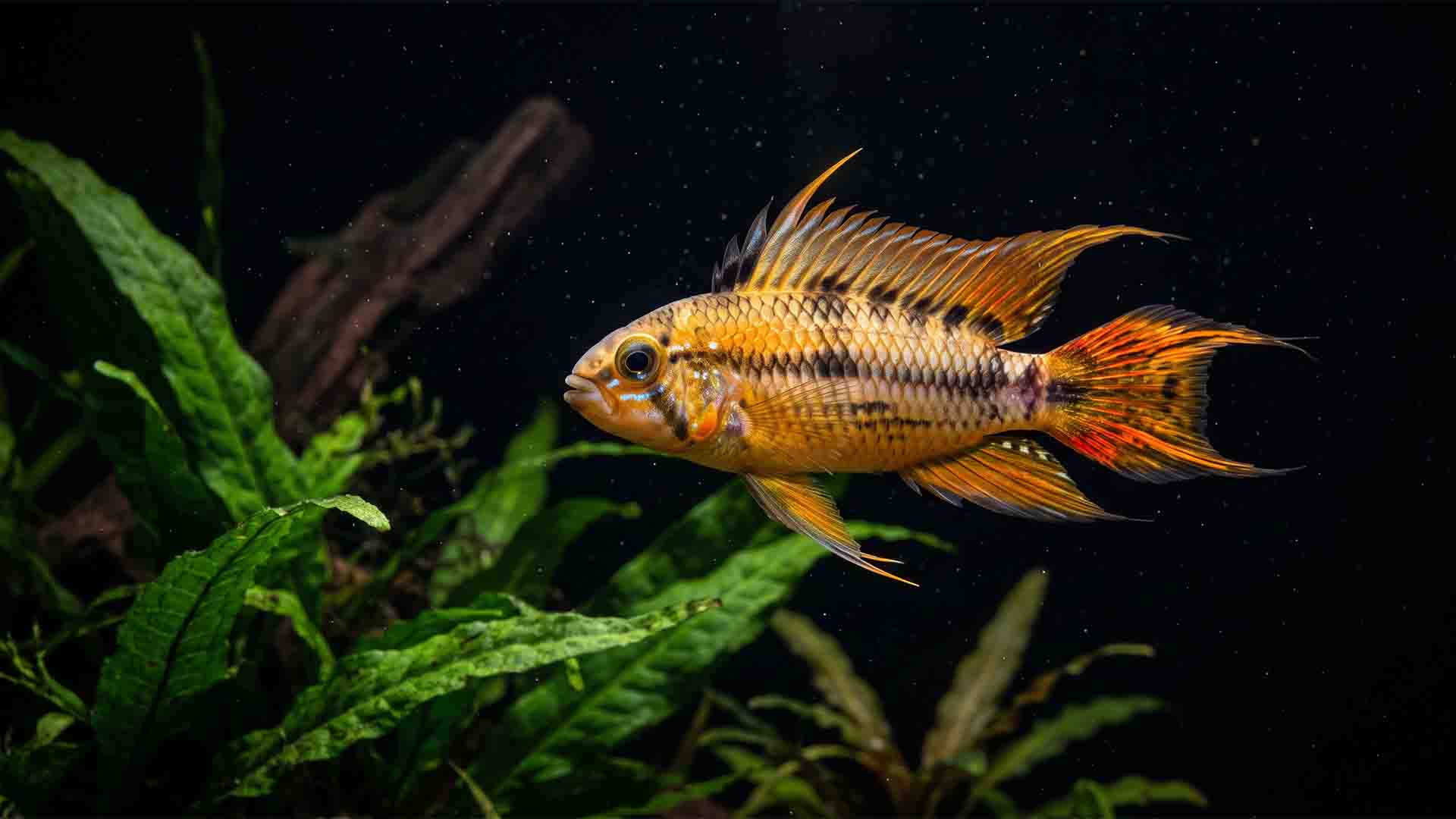
6. Cockatoo Apisto (Apistogramma cacatuoides) – Solo Male Apex Intelligence
Every freshwater aquarist eventually craves the cognitive depth, complex eye tracking, and interactive curiosity of South American dwarf cichlids. The retail trap is that pet stores always push them in mated pairs or trios. In an aquarium under 40 gallons, introducing a male and female Cockatoo Apisto is a guaranteed recipe for domestic warfare. Once eggs are laid in a coconut cave, the female turns into a hyper-aggressive demon, pinning the male into the top corner behind your filter intake until he dies of physical exhaustion and fin rot. Conversely, if the female refuses to spawn, the male chases her relentlessly until her immune system collapses from chronic cortisol exhaustion.
The biological hack that retail chains never discuss is keeping a single, solitary male Cockatoo Apistogramma. Free from the chemical and hormonal pressures of reproduction, a solo male directs all his metabolic energy into physical growth, fin extension, and environmental exploration. You get the full visual majesty of his fiery double-red dorsal crest, predatory cichlid intelligence, and interactive begging behavior without a single drop of territorial bloodshed. Male Apistos kept solo treat the bottom third of the aquarium as their sovereign patrol zone, coexisting peacefully with deep-bodied midwater schooling fish that do not resemble competing dwarf cichlids.
- Minimum Tank Size: 15 to 20 gallons (57 to 75 liters).
- Water Parameters: pH 6.0 to 7.2, Temperature: 76°F to 82°F (24°C to 28°C), Hardness: 2 to 10 dGH.
- Substrate & Hardscape Architecture: Soft silica sand is non-negotiable for their gill-sifting feeding habits. Provide dense leaf litter (Indian Almond leaves) and smooth driftwood to release humic acids that protect their dermal mucus layer.
- FTM Verdict: The undisputed king of solitary dwarf cichlids. A single male offers center-stage cichlid personality with zero risk of breeding-related tankmate slaughter.
7. Scarlet Badis (Dario dario) – The Nano Micro-Predator (Live Food Reality)
The Scarlet Badis is frequently marketed as the ultimate miniature jewel for three-gallon and five-gallon nano tanks. Reaching an adult size of barely 0.8 inches (2 cm), dominant males display blinding scarlet-red vertical bars framed by electric neon cyan fin margins. Under store showroom lighting, beginners see an affordable, microscopic centerpiece fish. What the retail tag intentionally conceals is their strict obligate micro-predatory physiology.
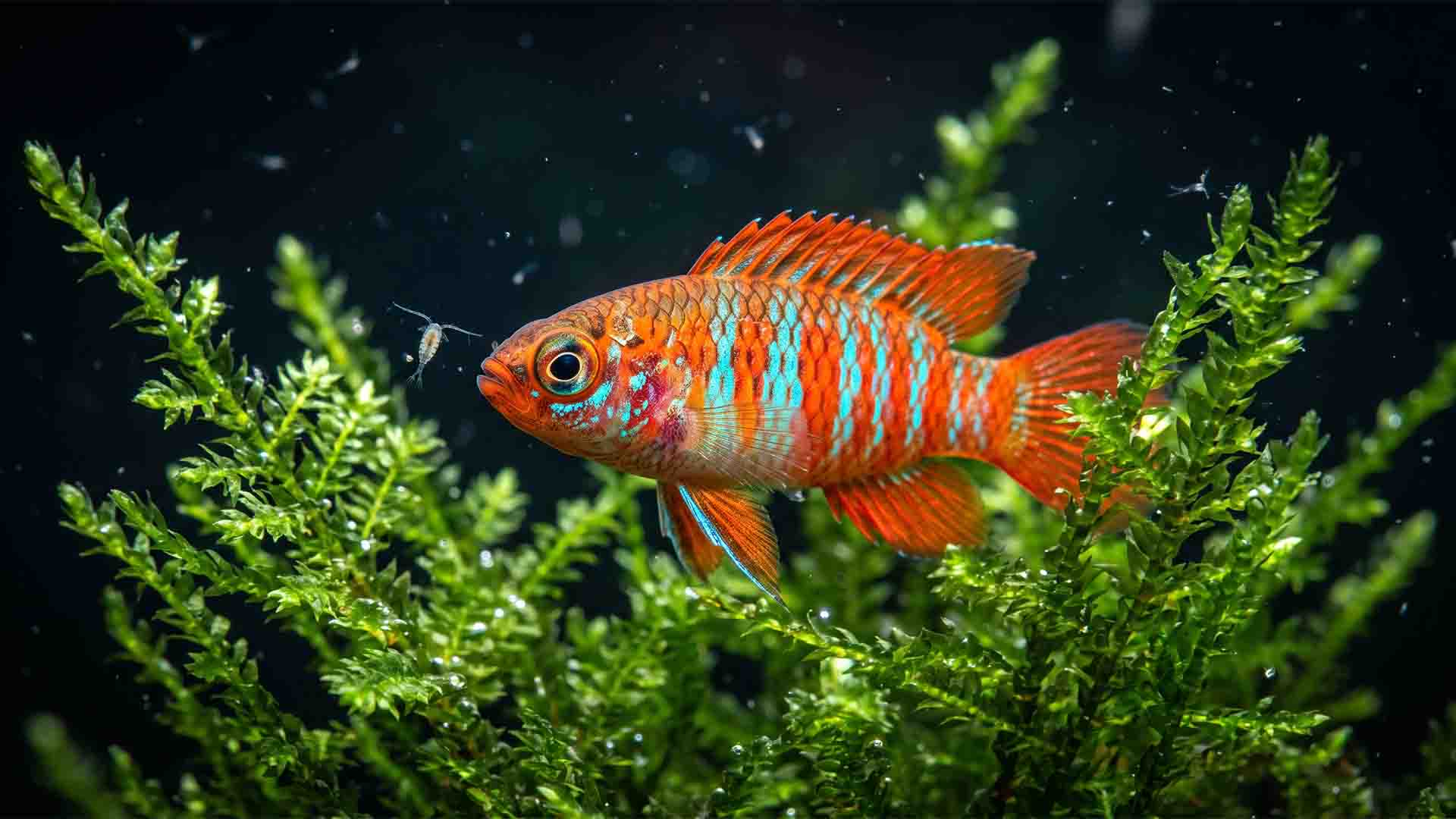
Dario dario is not a scavenger. They possess independently mobile eyes and hunting kinematics closely resembling a saltwater seahorse or freshwater chameleon. They will stare at commercial dry flakes, freeze-dried granules, and generic processed pellets with complete indifference until they starve to death in a spotless tank. To keep a solo Scarlet Badis alive, you must cultivate or purchase live micro-foods: freshly hatched baby brine shrimp (Artemia nauplii), live microworms, vinegar eels, or maintain an established colony of seed shrimp (Ostracods) and copepods living inside thick mats of Java moss. As detailed in our guide on the biological limits of nano tank stocking, feeding dynamics dictate ecosystem survival far more than tank volume.
- Minimum Tank Size: 5 to 10 gallons (19 to 38 liters).
- Water Parameters: pH 6.5 to 7.5, Temperature: 68°F to 76°F (20°C to 24°C), Moderate hardness (6 to 12 dGH).
- Dietary Reality: 100 percent live food dependent. Will occasionally accept frozen cyclops or daphnia, but strictly refuses dry factory rations.
- FTM Verdict: A masterclass nano centerpiece for patient aquarists willing to hatch live microfauna. Kept alone in a heavily mossed cube, a single male will display brilliant wild coloration and stalk tiny organisms with hypnotic surgical precision.
8. Blue Badis (Badis badis) – The Color-Shifting Snail & Hydra Assassin
While the diminutive Scarlet Badis is restricted to micro-aquariums, its larger cousin, the Blue Badis (also known as the Chameleon Fish), represents one of the most functional, heavily ignored predatory centerpieces in the freshwater hobby. Native to sluggish streams, ponds, and ditches across India and Bangladesh, Badis badis reaches an adult length of 2.5 to 3 inches (7 to 8 cm). What makes this fish an evolutionary spectacle is its physiological capacity for rapid chromatophore manipulation: depending on substrate tone, lighting, mood, and ambient temperature, a single individual can shift from dull sandy-tan to midnight black, iridescent royal blue, or deep purple within seconds.
Beyond its striking chameleon aesthetics, the Blue Badis provides unmatched biological utility inside planted tanks. Unlike delicate nano fish that get bullied during feeding, Badis badis is a robust, methodical hunter with a voracious appetite for invasive aquarium pests. They actively stalk and eradicate freshwater Hydra (stinging coelenterates that kill larval fry and dwarf shrimp) and crush juvenile pest snails using specialized pharyngeal jaw dentition. While multiple males will fight over caves in smaller setups, housing a single Blue Badis in a structured 20-gallon planted aquarium gives you a fascinating, snail-hunting centerpiece that accepts frozen bloodworms and brine shrimp with zero complaint.
- Minimum Tank Size: 20 gallons (75 liters).
- Water Parameters: pH 6.5 to 7.8, Temperature: 68°F to 77°F (20°C to 25°C), Hardness: 5 to 15 dGH.
- Core Ecological Utility: Natural biological control agent against freshwater Hydra infestations and juvenile bladder/ramshorn snail populations.
- FTM Verdict: Substantial mass, wild chameleon color-morphing capability, and true biological problem-solving utility packed into a calm, solitary predator.
9. American Flagfish (Jordanella floridae) – The Hair-Algae Bulldozer
Beginners wrestling with unsightly outbreaks of coarse green hair algae, staghorn, or filamentous black brush algae are routinely told by pet stores to buy a fleet of Siamese Algae Eaters or a Common Pleco. What retailers leave out is that Common Plecos produce enormous fecal loads that overwhelm biofilters, while juvenile algae eaters frequently abandon algae altogether once they discover high-protein flakes. Enter the American Flagfish: an endemic pupfish native to Florida’s sluggish springs, marshlands, and vegetated drainage canals.
Sporting a dense matrix of shimmering turquoise spangles over deep olive-red horizontal bars reminiscent of the Stars and Stripes, the male Flagfish is visually breathtaking. Biologically, his lower jaw is equipped with specialized spatulate, tricuspid teeth adapted specifically for scraping tough periphyton and tearing fibrous filamentous algae from plant leaves. When kept in territorial male groups in small aquariums, Flagfish can be rowdy fin-nippers. But when placed as a solitary centerpiece in a planted setup, a single Flagfish channels all that physical energy into relentless, systematic hair-algae grazing without harming tankmates or kicking up substrate mulm.
- Minimum Tank Size: 15 to 20 gallons (57 to 75 liters).
- Water Parameters: pH 6.8 to 8.2, Temperature: 64°F to 78°F (18°C to 26°C), Hardness: 8 to 20 dGH.
- Key Advantage: Extreme thermal tolerance. Like the Paradise Fish, the Flagfish thrives without a submersible aquarium heater in standard indoor room conditions.
- FTM Verdict: One of the only freshwater fish on earth that aggressively consumes coarse hair algae while doubling as a vibrant, hardy native centerpiece.
10. Peacock Gudgeon (Tateurndina ocellicauda) – Peaceful Nano Color Without Schooling Stress
Hailing from the pristine rainforest streams, ponds, and swamps of eastern Papua New Guinea, the Peacock Gudgeon (also called the Eye-Spot Sleeper Gudgeon) is a visual masterpiece that looks like a miniature marine reef dweller. Reaching an adult size of approximately 2 to 2.5 inches, both males and females sport brilliant pastel-blue bodies patterned with crimson lateral dots, luminous yellow fin margins, and a distinct black ocellus (false eye-spot) at the base of the caudal peduncle designed to confuse larger predators.
Unlike standard schooling fish that require large open runways and constant group coordination to feel secure, the Peacock Gudgeon is a slow, methodical, substrate-and-crevice explorer. When kept in forced pairs or small crowded groups within tight nano tanks, males can engage in aggressive fin-flaring, gill-puffing, and cave monopolization. A single specimen kept as a solo centerpiece exhibits absolute calm: it hovers peacefully between Anubias roots, ignores midwater cruisers, and possesses zero territorial malice toward bottom-dwelling scavengers. Because it is an amphidromous eleotrid rather than an aggressive cichlid, it provides exceptional coloration without the high-stress behavioral baggage.
- Minimum Tank Size: 10 to 15 gallons (38 to 57 liters).
- Water Parameters: pH 6.5 to 7.5, Temperature: 72°F to 79°F (22°C to 26°C), Hardness: 4 to 10 dGH.
- Dietary Needs: Carnivorous micropredator. Thrives on frozen bloodworms, daphnia, brine shrimp, and high-grade sinking carnivore micro-pellets.
- FTM Verdict: Explosive saltwater-grade color in a slow-moving, peaceful freshwater fish that never demands a school to feel completely at home.
Solitary Fish Biological Matrix: Volume, Ecological Layer & Diet Specifications
Selecting the right solitary centerpiece requires matching the species’ wild evolutionary architecture to your aquarium’s physical dimensions and feeding routine. The comprehensive data matrix below breaks down the precise operational requirements of all ten species featured in our system breakdown.
| Species (Scientific Name) | Min Tank Volume | Target Water Zone | Dietary Profile & Flake Tolerance | Behavioral Trait & Warning | FTM Ecosystem Role |
|---|---|---|---|---|---|
| Golden Wonder Killifish (Aplocheilus lineatus) | 20 Gallons | Upper 3 Inches | Carnivore; accepts dried foods, requires frozen insects. | Predatory gape: eats any fish under 1.5 inches. Jumper. | Surface predator; commands the upper water film completely. |
| African Butterfly Fish (Pantodon buchholzi) | 20-Gal Long / 30G | Strict Surface Film | Insectivore; requires floating crickets/worms. Ignores sunken food. | Needs zero surface current; strictly intolerant of surface rivals. | Prehistoric surface anchor; completely ignores fish below it. |
| Leopard Bush Fish (Microctenopoma acutirostre) | 30 Gallons | Midwater Hardscape | Carnivore; thrives on frozen krill, bloodworms, carnivore pellets. | Conspecific aggression; swallows small torpedo-shaped tankmates. | Nocturnal ambush centerpiece; immense canine-like personality. |
| Paradise Fish (Macropodus opercularis) | 20 Gallons | Top & Mid Transition | Omnivore; accepts flakes, pellets, vegetable matter, frozen bugs. | Aggressive toward long fins; absolute coldwater survivor (15°C+). | Zero-heater centerpiece; eliminates equipment failure liabilities. |
| Bolivian Ram (Mikrogeophagus altispinosus) | 20 Gallons | Benthic Substrate Floor | Omnivore / Micro-feeder; sinking micropellets, frozen bloodworms. | Demands fine quartz sand; peaceful substrate sifter. | High-cognitive dwarf cichlid without the genetic frailty of German Blues. |
| Cockatoo Apisto (Male) (Apistogramma cacatuoides) | 15-20 Gallons | Lower Third & Caves | Carnivore; sinking cichlid pellets, frozen daphnia and artemia. | Solo male prevents lethal mate harassment; requires cave hides. | Striking visual anchor; maximum color development with zero mate stress. |
| Scarlet Badis (Dario dario) | 5-10 Gallons | Dense Plant Foliage | Obligate Micro-predator; strictly live micro-crustaceans and worms. | 100% dry flake refusal. Starves in sterile setups without live culture. | Nano planted jewel; surgical microfauna hunter. |
| Blue Badis (Badis badis) | 20 Gallons | Lower & Mid Transition | Carnivore; readily accepts frozen daphnia, brine shrimp, bloodworms. | Color shifts with mood and substrate; stalks snails and hydra. | Biological pest regulator; eliminates hydra without chemical dosing. |
| American Flagfish (Jordanella floridae) | 15-20 Gallons | All Layers / Planted Zones | Herbivore / Algivore; scrapes algae, takes spirulina pellets and flakes. | Can nip long fins if underfed; thrives in unheated aquariums. | Mechanical algae eradicator; rips through thick hair algae networks. |
| Peacock Gudgeon (Tateurndina ocellicauda) | 10-15 Gallons | Lower & Crevice Zones | Carnivore; high-protein micro-pellets, frozen bloodworms and brine. | Gentle and slow-moving; zero territorial aggression toward non-rivals. | Saltwater-grade pastel coloration in a peaceful nano footprint. |
Chronic Cortisol vs. Solitary Stability: A 60-Day Aquarium Stress Timeline
Most aquarium disasters do not happen overnight; they unfold as a delayed biological failure. When six schooling fish are forced into a small aquarium, the chronic neuroendocrine stress silently builds behind clear glass and pristine liquid water tests. The timeline below illustrates how social crowding causes delayed collapse compared to the enduring biological balance of a solitary centerpiece.
| Timeline Milestone | School of 6 Fish (Confined 10-20G Space) | Single Solitary Centerpiece Fish | Underlying Biological Mechanism |
|---|---|---|---|
| Day 1 to 3: The Acclimation Phase | Erratic glass-surfing; constant micro-chasing as fish scramble to establish dominance in a confined flight-path area. | Methodical exploration of cave structures and perimeter boundaries; immediate visual orientation. | Adrenal activation. Group density in small volumes spikes plasma catecholamines; solo fish adapt to territorial borders rapidly. |
| Day 7 to 14: The Feeding Divergence | Uneven nutrient intake. Dominant fish gorge at the surface; subordinate individuals hover timidly, missing flakes. | Targeted, predictable feeding. 100 percent of offered food enters one stomach; zero excess flakes rot in hardscape. | Resource monopolization. Weak schoolers begin metabolic wasting; solitary setup maintains zero organic waste accumulation. |
| Day 21 to 30: The Mucosal Breakdown | Subordinate fish display clamped dorsal fins, frayed tail margins, and pale flanks. Chronic cortisol thins the dermal slime barrier. | Full chromatic saturation. Dermal slime coat remains robust and intact; active exploratory swimming behavior. | HPI-axis exhaustion. Sustained glucocorticoid release suppresses epidermal goblet cell secretions, leaving crowded fish vulnerable. |
| Day 45 to 60: The Final Trajectory | The “Mystery Death” occurs. Two weakest fish perish overnight; secondary bacterial Columnaris or Ich infects the remaining stressed group. | Ecosystem reaches biological climax equilibrium. Water chemistry is predictable, bioload is baseline, zero disease vectors. | Delayed system failure. Decaying subordinate tissue spikes heterotrophic bacteria; solitary ecosystem operates in absolute biological harmony. |
What to Avoid: 4 Dangerous Mistakes When Stocking a Lone Centerpiece Aquarium
Transitioning from chaotic community schools to a solitary centerpiece setup is the smartest move you can make for tank longevity, but you must avoid applying outdated community stocking habits to a single apex animal. Eliminate these four behavioral errors immediately:
- 1. Feeding Commercial Dry Flakes to Obligate Micro-Predators:Why it feels right: Every pet store shelf displays colorful cans of cheap tropical flakes labeled as “complete balanced nutrition for all freshwater fish.” It feels convenient and harmless to drop a pinch into the tank each morning.What it silently breaks: Species like the Scarlet Badis (Dario dario) and African Butterfly Fish evolved strictly for live insect movement. Flakes lack the bio-sensory trigger required to induce strike behavior. The dry food floats past their jaws, sinks into deep substrate crevices, and decomposes, fueling massive heterotrophic bacterial blooms while your micro-centerpiece starves in plain sight.What question to ask instead: “Does this specific fish hunt via olfactory scent tracking or movement-triggered optical strike mechanics?”
- 2. The Barren “Bowling Alley” Hardscape Layout:Why it feels right: Many hobbyists leave the center of the aquarium completely wide open so they can watch their solitary fish swim back and forth without visual obstruction.What it silently breaks: Large ambush predators like the Leopard Bush Fish (Microctenopoma acutirostre) and territorial dwarf cichlids require structural cover to feel secure. In a barren tank with wide-open glass sightlines, solitary fish feel continuously exposed to overhead avian predation. They enter a state of chronic defensive immobility, locking their fins, losing pigmentation, and refusing to venture out for food.What question to ask instead: “Does this hardscape provide enough visual breaks, shadows, and root cover for an ambush predator to construct a secure home territory?”
- 3. Pairing Solitary Bottom-Dwellers in Overlapping Ecological Strata:Why it feels right: You decide to keep a solitary Bolivian Ram as your centerpiece, but you also want a Red-Tail Shark or a breeding pair of Kribensis to “keep the bottom active.”What it silently breaks: You trigger severe benthic territory compression. Bolivian Rams and male Apistogrammas command the substrate layer. If you introduce another aggressive, bottom-oriented territory holder into a tank under 40 gallons, the two fish are locked in perpetual line-of-sight confrontation. This leads directly to physical lip-locking injuries and secondary fungal infections.What question to ask instead: “Are my livestock choices distributed across three completely independent water layers (surface, midwater, benthic floor) to prevent volumetric territory overlap?”
- 4. Chasing Clinical “Sterile Glass” Over Healthy Biofilms:Why it feels right: When brown diatoms or soft green algae appear on hardscape wood and rocks, well-meaning hobbyists scrape every square inch of glass clean and blast the filter sponge under chlorinated tap water to create an immaculate display.What it silently breaks: Solitary grazing species like the American Flagfish and micro-hunters like the Blue Badis depend heavily on the microscopic ecosystem inhabiting aged surfaces. Eradicating all biofilm and algae removes their natural secondary grazing pasture. Worse, deep-cleaning filter media destroys nitrifying autotrophs, resetting the tank’s biological cycle and causing toxic ammonia spikes as explained in our breakdown on common filter maintenance mistakes that kill fish.What question to ask instead: “Am I nurturing a living, self-regulating biological biome, or am I running an expensive, sterile glass clinic?”
Do This Instead: The 14-Day Single-Fish Ecosystem Landing Protocol
To successfully land your solitary centerpiece fish without triggering transition shock, osmotic gill stress, or systemic immune collapse, execute this four-step biological protocol developed at FishTank Mastery:
- Step 1: Dark-Drop Acclimation & Osmotic Balancing (Day 1)Never float a sealed plastic bag under blazing aquarium LEDs. The intense illumination combined with transport-induced ammonia accumulation inside the transport bag triggers acute sensory panic. Dim all tank lights completely. Float the sealed bag for 15 minutes to equalize temperature, then open the bag and slowly add half a cup of aquarium water every five minutes over a 30-minute window to balance mineral hardness and pH. Net the fish gently into the aquarium—never allow store water to enter your display tank—and keep the aquarium lights completely off for the first 24 hours.
- Step 2: The 24-Hour Zero-Feeding Rule (Day 1 to 2)Resist the urge to offer food on the day of arrival. When a teleost fish enters a new aquatic territory, its sympathetic nervous system suppresses gastrointestinal motility. Tossing pellets or flakes into the tank while the fish is exploring results in uneaten organic waste sinking into hardscape pockets. Withhold all food for the first 24 to 36 hours. This fasting window clears the gut, lowers metabolic oxygen demand, and sparks sharp natural foraging drive.
- Step 3: High-Protein Live/Frozen Nutrient Priming (Day 3 to 7)Initiate feeding using moisture-rich, highly palatable frozen or live foods. For micro-predators like the Scarlet Badis or Peacock Gudgeon, dose live baby brine shrimp or microworms directly above their resting zones using a pipette. For larger ambush centerpieces like the Leopard Bush Fish or Golden Wonder Killifish, offer thawed bloodworms or mysis shrimp. High-protein, un-processed nutrition replenishes liver glycogen stores and rapidly restores the protective dermal mucus barrier thinned during transport confinement.
- Step 4: Establish Visual Boundary Geometry (Day 8 to 14)Observe the fish’s spatial swimming patterns over the second week. If an Apistogramma or Bolivian Ram paces the front glass, it indicates a lack of environmental anchors. Add tall background plants (such as Amazon Swords or Vallisneria), insert floating botanical seed pods, or reposition Malaysian driftwood branches to break continuous straight-line sightlines. Providing structured shadows allows a solitary fish to claim a permanent biological anchor point, unlocking bold, interactive behavioral confidence for years to come.
Scientific Truths Behind Teleost Endocrinology & Territorial Space Economics
Aquarium failures are never mysterious accidents; they are the direct, measurable outcome of violating evolutionary biology. When you force social schooling fish into confined nano tanks, you trigger physiological breakdown at the cellular level. Conversely, solitary centerpiece species thrive because their evolutionary hardware was built specifically for individual territory defense and low-friction survival. Here are four peer-reviewed biological mechanisms governing solitary freshwater systems.
Truth 1: The Glucocorticoid Immune Collapse in Confined Shoaling Teleosts
In open river systems, shoaling is an anti-predator strategy driven by sensory dilution and collective hydrodynamic pacing. When shoaling fish are confined to an aquarium under thirty gallons, this survival mechanism reverses. Subordinate individuals cannot establish visual distance from dominant fish, causing continuous activation of the hypothalamic-pituitary-interrenal (HPI) axis. This neuroendocrine cascade causes sustained elevations in circulating plasma cortisol. Sustained hypercortisolemia suppresses the production of circulating lymphocytes and downregulates the activity of epidermal goblet cells that secrete protective glycoproteins. The fish’s dermal slime coat thins dramatically, leaving it vulnerable to ubiquitous ambient pathogens like Columnaris (Flavobacterium columnare) and Saprolegnia. A single solitary centerpiece eliminates this social confrontation, keeping resting cortisol at baseline levels and preserving mucosal immunity. Read the comparative endocrinology study on Oxford Academic.
Truth 2: Buccal Negative Pressure and Gape-Size Kinematics in Ambush Hunters
Surface hunters like the Golden Wonder Killifish (Aplocheilus lineatus) and African Butterfly Fish (Pantodon buchholzi) do not browse or nibble on food; their feeding biology relies on rapid cranial kinematics. During a predatory strike, the neurocranium elevates while the hyoid apparatus rapidly depresses the floor of the buccal cavity. This structural expansion generates massive negative hydrostatic pressure, pulling water and prey into the mouth within milliseconds. Because their oral jaw margins snap open horizontally to nearly 40 percent of their cranial diameter, prey size limits are dictated entirely by gape width rather than fish length. Introducing nano tetras or juvenile livebearers into a tank housing these solitary surface predators ignores cranial biomechanics, turning small community fish into live prey. Explore the teleost jaw kinematics research on ScienceDirect.
Truth 3: Spawning Hormones vs. Somatic Growth in Solitary Dwarf Cichlids
In captive cichlid species like Apistogramma cacatuoides and Mikrogeophagus altispinosus, social interactions dictate metabolic resource allocation. When male and female dwarf cichlids share a confined aquarium, reproductive triggers induce high circulating concentrations of systemic androgens and isotocin. These hormones compel both sexes to expend massive amounts of adenosine triphosphate (ATP) defending breeding caves, harassing rivals, and guarding broods. In tanks under 30 gallons, this relentless territorial defense leads to severe physical exhaustion and fin fraying. When kept as a solitary bachelor, the male does not experience reproductive hormonal surges. Metabolic energy is channeled directly into somatic growth, fin elaboration, and immune resilience, unlocking vibrant wild coloration with zero tankmate casualties. Read the cichlid ethology study on SpringerLink.
Truth 4: Eurythermal Enzyme Homeostasis in Cold-Tolerant Centerpieces
Most commercial aquarium fish are stenothermal, meaning their cellular enzymes and membrane ion pumps function only within a narrow thermal band (76°F to 82°F / 24°C to 28°C). A malfunctioning heater that causes temperatures to drop rapidly induces cold-lock shock, halting digestive peristalsis and cell membrane ion exchange. In contrast, solitary species like the Paradise Fish (Macropodus opercularis) and American Flagfish (Jordanella floridae) are eurythermal survivors. They synthesize specialized cold-tolerant enzyme isozymes and incorporate higher ratios of polyunsaturated fatty acids into their cell membranes. This homeoviscous adaptation keeps lipid bilayers fluid and functional at temperatures as low as 60°F (15°C), making them resilient centerpieces that operate safely in unheated indoor tanks. Consult verified thermal life-history records on FishBase.
Google People Also Ask (PAA)
Can a fish be happy living completely alone in an aquarium?
Yes. Many freshwater species are naturally solitary and territorial in the wild. Fish like the Leopard Bush Fish, solo male Apistogrammas, and Paradise Fish do not experience emotional loneliness. In nature, they only interact with their own kind to fight over territory or spawn briefly. Keeping them alone eliminates chronic social stress, stops territorial combat, and supports natural exploratory foraging behavior.
What is the best single centerpiece fish for a 10-gallon tank?
The Peacock Gudgeon (Tateurndina ocellicauda) is the best overall solitary centerpiece for a 10-gallon aquarium, offering striking pastel coloration and a calm, non-aggressive temperament. For experienced aquarists willing to culture live microworms or baby brine shrimp, a single male Scarlet Badis (Dario dario) provides brilliant ruby coloration and chameleon-like hunting behavior in heavily planted nano setups.
What freshwater fish do not need to be kept in schools or pairs?
Top solitary freshwater centerpiece fish include the Golden Wonder Killifish, African Butterfly Fish, Leopard Bush Fish, Paradise Fish, Bolivian Ram, solo male Cockatoo Apistogramma, Blue Badis, Scarlet Badis, American Flagfish, and Peacock Gudgeon. Each of these species thrives as an individual without requiring conspecific companionship.
Can a male Cockatoo Apistogramma live alone without a female?
A male Cockatoo Apisto (Apistogramma cacatuoides) is substantially healthier and less stressed when kept without a female in aquariums under 30 gallons. Without the aggressive territorial demands of brood defense, a solitary male displays maximum dorsal fin extension, full color saturation, and interactive begging behavior with zero mate-related violence.
Why do schooling fish keep dying in small aquariums?
Schooling fish die in small aquariums because confined dimensions eliminate natural flight distances. Subordinate individuals cannot escape dominant fish, triggering chronic neuroendocrine stress (HPI-axis activation) and elevated cortisol. Over 30 to 60 days, this hormonal flood thins their protective dermal slime coat, leading to immune failure, appetite loss, and secondary bacterial infections.
Are Paradise Fish hardy enough for unheated aquariums?
Yes. Paradise Fish (Macropodus opercularis) possess an evolutionary eurythermal tolerance that allows them to thrive in water temperatures ranging from 60°F to 78°F (15°C to 26°C). Keeping one in a standard indoor aquarium completely eliminates the danger of heater failure cooking your tank or crashing your biofilter.
Frequently Asked Questions (FAQ)
Will a solitary centerpiece fish get bored or inactive without other fish?
No. Solitary ambush predators and micro-hunters do not depend on social interactions for mental stimulation; they interact directly with their physical environment. A solitary fish explores root crevices, stalks microfauna along plant leaves, sifts sand substrate, and establishes territory patrols. Providing structured hardscape, botanical leaf litter, and live plants provides all the cognitive enrichment a solitary fish needs.
Can I keep dwarf shrimp with solitary centerpiece fish like Killifish or Bush Fish?
No. Both the Golden Wonder Killifish and Leopard Bush Fish are specialized macro-predators with wide buccal cavities. Adult Neocaridina and Caridina dwarf shrimp will be hunted and swallowed within hours. If you want to keep invertebrates with a solitary centerpiece, choose large adult Amano Shrimp or Nerite Snails, and house them with peaceful species like the Bolivian Ram, Peacock Gudgeon, or American Flagfish.
What happens if I add a female to a solo male Apistogramma tank later?
Adding a female Apistogramma into an established male territory inside a tank under 30 gallons usually triggers lethal aggression. If the female is not immediately receptive to spawning, the dominant male will relentlessly chase her. If they do breed, the female will claim the entire cave zone and brutally pin the male into a surface corner. Unless your aquarium provides at least 36 inches of horizontal length with visual barriers, keep the male solo.
Why did my Scarlet Badis refuse to eat premium dry micro-pellets?
Scarlet Badis (Dario dario) are obligate micro-predators whose feeding strike is triggered strictly by visual movement and live prey kinematics. Processed flakes, freeze-dried rations, and inert dry pellets lack the bio-sensory movement required to induce a strike. To keep a Scarlet Badis alive, you must supply live microfauna such as newly hatched baby brine shrimp, microworms, or seed shrimp cultivated in dense moss.
Do labyrinth fish like Paradise Fish and Bush Fish still require a filter?
Yes. While their specialized labyrinth organ allows them to breathe atmospheric air in low-oxygen water, it does not protect their gill lamellae from toxic dissolved ammonia or nitrite. A biological filter is mandatory to convert nitrogenous waste into safe nitrates. However, you must use low-flow filtration—such as a gentle sponge filter or a baffled hang-on-back filter—because strong water currents exhaust their labyrinth breathing mechanics.
Hub & Spoke: Engineering the Complete Conflict-Free Ecosystem
Selecting a solitary centerpiece fish is the foundation of a stable tank, but true biological balance requires understanding how every layer of your aquarium interacts. If you are designing a medium-sized setup around a calm bottom sifter like the Bolivian Ram or a color-shifting predator like the Blue Badis, study our layout framework for the best centerpiece fish for a 20-gallon tank to align hardscape geometry with swimming zones.
For hobbyists seeking to eliminate electrical gear failure, pairing cold-tolerant centerpieces like the Paradise Fish or American Flagfish with compatible unheated tankmates removes significant mechanical risk. You can explore proven combinations in our comprehensive breakdown of hardy coldwater fish that thrive without a heater.
If you are managing tight nano volumes between 5 and 10 gallons with a Scarlet Badis or Peacock Gudgeon, you must respect the physical constraints of water volume. Avoid common stocking errors by reviewing the biological limits of nano tank stocking, and keep your micro-predators in peak condition by supplying proper nutrition detailed in our guide to high-protein live and frozen nano fish foods.
Finally, if your previous community setups suffered from unexpected aggression or overnight losses, look beyond retail marketing labels. Discover how predatory mouth geometry and hidden growth rates disrupt mixed tanks by auditing our guides on anatomical gape-size traps in community fish, avoiding popular community fish that secretly cause chaos, and mastering the step-by-step biological nitrogen cycle setup.
Scientific References & Peer-Reviewed Literature Review
Every biological parameter, anatomical threshold, and behavioral dynamic detailed in this guide is grounded in published ichthyological research and veterinary aquatic science:
1. Neuroendocrine Stress Responses & Cortisol Kinetics in Confined Teleosts: Research published through Oxford Academic investigates how physical confinement and social hierarchy pressure activate the hypothalamic-pituitary-interrenal (HPI) axis in teleosts. The study details how sustained glucocorticoid elevation induces splenic lymphocyte depletion and degrades mucosal defenses. Read the study on Oxford Academic.
2. Biomechanics of Suction Feeding and Cranial Kinematics in Ambush Teleosts: Published in Aquaculture / ScienceDirect, this biomechanical investigation maps the skeletal linkage systems and buccal cavity expansion kinetics of predatory teleost jaws, demonstrating how negative pressure creates lethal suction independent of overall body length. Read the study on ScienceDirect.
3. Ethology and Territorial Resource Economics in Captive Cichlidae: Research indexed in SpringerLink evaluates the energetic costs of territorial maintenance and brood defense in South American dwarf cichlids. The authors demonstrate that removing reproductive conspecific competition significantly lowers baseline metabolic strain and prolongs captive lifespan. Read the study on SpringerLink.
4. Homeoviscous Adaptation and Membrane Enzyme Homeostasis Across Thermal Gradients: Physiological literature available via FishBase and comparative biochemistry archives documents the biochemical pathways that allow eurythermal freshwater teleosts to maintain active sodium-potassium ATPase transport below 15°C. Explore verified species data on FishBase.
Watch Next: The FTM Zero-Conflict Aquarium Video Chain
Reading the biological science is the first step toward aquarium mastery; observing these predatory mechanics, feeding strikes, and swimming patterns in real-time completes your education. Continue your journey through the FishTank Mastery video chain below to build a bulletproof, zero-conflict setup:
- Don’t Buy These Schooling Fish! Worst to Best Ranked Schooling Fish: Discover which active schooling species nip long fins, trigger chronic stress, and crash small tanks, and see which peaceful alternatives maintain true group harmony. Watch on YouTube.
- Don’t Buy These Tropical Fish – They’re NOT Peaceful (Better Alternatives!): Expose the retail “peaceful” labels that hide aggressive territorial behavior and learn the exact swaps that keep community tanks casualty-free. Watch on YouTube.
- Why Community Tanks Quietly Fail? Best 12 Community Fish: A deep breakdown of the environmental, dietary, and vertical stratum triggers that cause crowded community systems to collapse weeks after stocking. Watch on YouTube.
- Beginner Fish That WON’T Ruin Your First Tank: Build a high-resilience aquarium foundation using species wired with wild genetic durability that forgive beginner water chemistry shifts. Watch on YouTube.
- Ultimate Community Aquarium Guide: Building a Zero-Conflict System: Master the complete multi-layer stocking framework to create an active, stress-free aquarium where every species occupies its precise biological niche. Watch the full playlist on YouTube.
Building a successful aquarium is never about forcing delicate schools into confined spaces or endlessly battling social friction. When you work with evolutionary biology, respect volumetric space-math, and select a centerpiece fish built to thrive alone, your tank ceases to be an underwater hospital. It becomes a peaceful, self-regulating living ecosystem that thrives for years to come. Until next time, keep your systems balanced, your research independent, and your curiosity flowing.