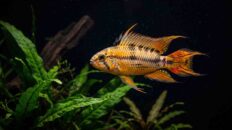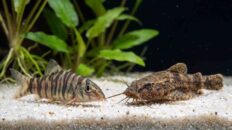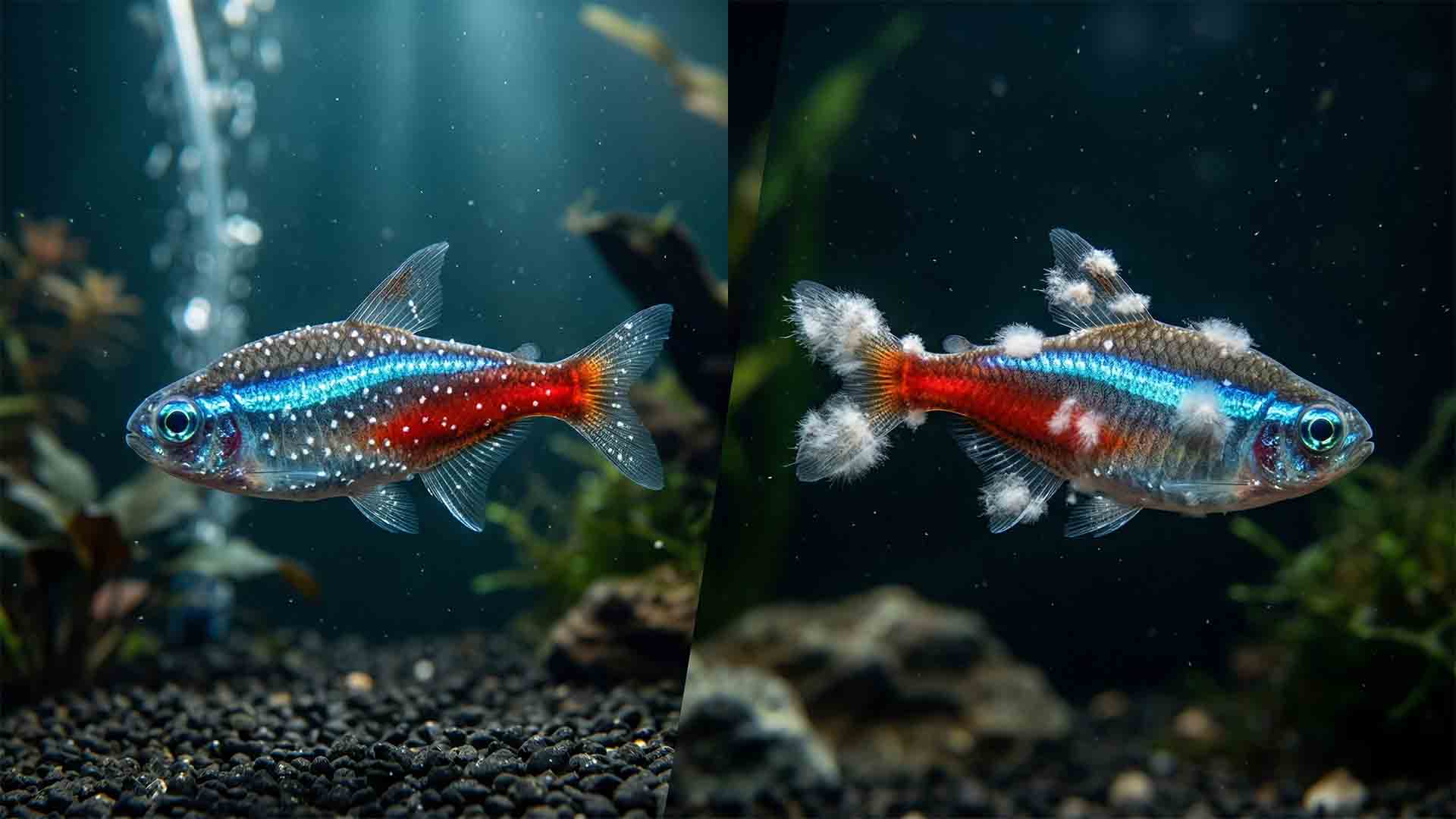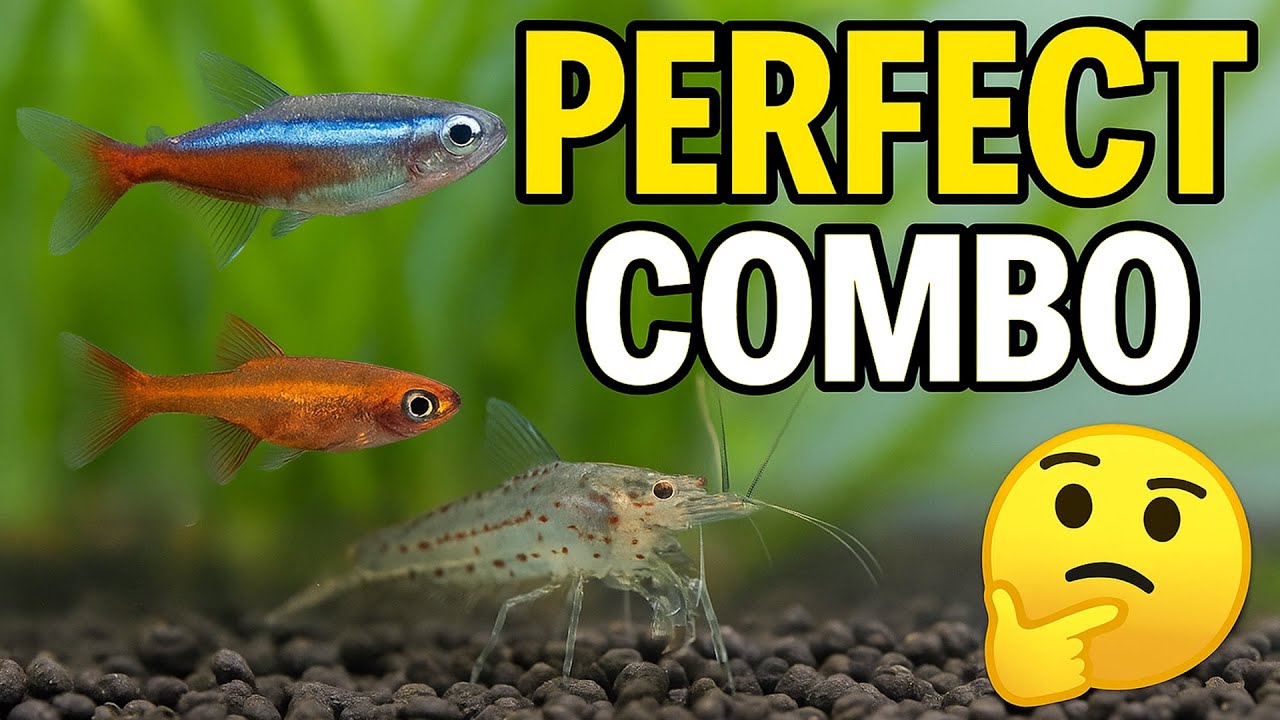

Finding reliable nano fish for predator tanks is not about buying fast swimmers and hoping for the best. It is a strict biological calculation of predator mouth gape limit versus prey dorsoventral body depth. Most community aquarists wake up to missing tetras and immediately blame water chemistry or mysterious pathogens, completely unaware that their centerpiece cichlid systematically harvests sleeping schoolers the second the aquarium lights go out. In commercial fish stores, juvenile Angelfish and dwarf cichlids look harmless, but as their cranial skeletal anatomy matures, any slender, torpedo-shaped tankmate becomes an inevitable midnight meal.
The standard retail advice tells hobbyists that if fish grow up together, they will coexist peacefully. That is a marketing myth. Predation in freshwater teleosts is not driven by emotional familiarity; it is governed by mechanical opportunity, retinal rod cell activation in darkness, and neuro-motor reflex speeds. When you combine large centerpiece fish with genetically compromised schooling species, you create a slow-motion biological collapse.
The Biomechanics of Predation: Why Peaceful Fish Disappear Overnight
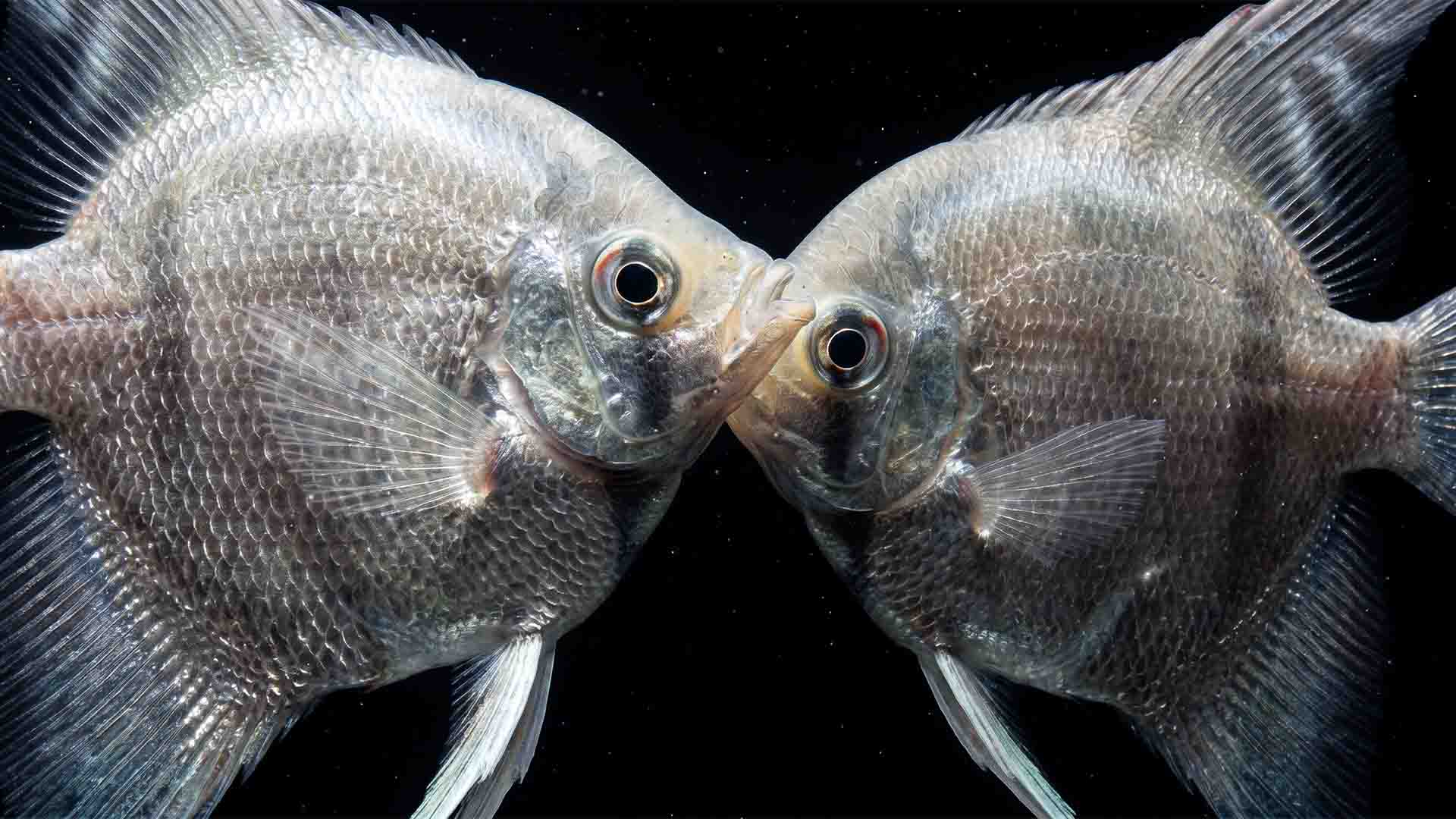
To stop losing livestock, you must understand how a predatory centerpiece fish physically captures prey. Predatory cichlids do not chew their food in the water column; they use buccal suction feeding. By dropping the floor of their mouth (the hyoid apparatus) and thrusting their premaxillary jaw bones forward in under 15 milliseconds, they create a sudden negative-pressure vacuum that pulls nearby water—and whatever is swimming in it—directly into their gullet.
Mouth Gape Limit vs. Dorsoventral Body Depth
The absolute physical barrier to suction predation is the ratio between the predator’s maximum oral opening (gape limit) and the prey’s vertical height (dorsoventral depth). An adult Angelfish (Pterophyllum scalare) possesses an average vertical mouth gape between 9 and 12 millimeters when fully flared. A standard commercial Neon Tetra exhibits a dorsoventral depth of barely 4 to 5 millimeters with an elongated, cylindrical profile.
No matter how fast a Neon Tetra swims during feeding time, it remains anatomically ingestible. If a fish’s vertical height is smaller than the predator’s open jaw circumference, it is classified as food. True survival requires keeping deep-bodied species whose vertical disc profile physically jams the predator’s oral cavity, making suction intake impossible. When hobbyists ignore this physical constraint and purchase aggressive apex species under misleading store tags, the results can mimic the destructive ecological crashes seen with regulated and illegal aquarium fish kept in closed home systems.
Scotopic Night Vision vs. Diurnal Torpor
The second biological factor that wipes out schooling fish is visual disparity in low light. Centerpiece predators like Angelfish, Severums, and Festivums possess retinas packed with high-density rod cells and specialized reflective tissue layers (tapetum lucidum) engineered for scotopic, low-light hunting. In nature, river cichlids hunt actively during dusk, dawn, and pitch-black nocturnal hours when ambient light levels drop below 0.1 lux.
Most popular nano tetras and rasboras, however, are strictly diurnal. When the tank lights switch off, these fish enter diurnal torpor—a state of metabolic dormancy where muscle activity drops, brain waves slow, and sensory processing shuts down to conserve glycogen stores. While your schoolers are suspended motionless between plant leaves with zero active reflexes, the centerpiece predator patrols the dark with fully functional lateral line sensors and night-adapted eyesight. It is not a chase; it is an effortless harvest.
The Mauthner-Cell Breakdown: How Commercial Inbreeding Ruined Escape Reflexes
In wild river basins, small prey fish survive predatory strikes using an evolutionary neuro-circuit known as the Mauthner-cell system. These twin, massive neurons located in the hindbrain process acoustic and pressure-wave threats, firing a millisecond-fast muscular contraction called the C-start escape response. A wild tetra detects the water displacement of an incoming predator jaw and bends its body into a rigid ‘C’ shape, launching itself multiple body lengths away in under 8 milliseconds.
Decades of intensive commercial farm inbreeding have genetically degraded this reflex in common retail fish. Inbred lines of mass-produced Neon Tetras and Fancy Guppies suffer from delayed neuro-motor transmission. When an ambush hunter approaches, these compromised fish freeze instead of executing a C-start bend. To build a predator-proof community, you must stock species that either retain intact ancestral survival instincts or carry physical, dermal defense systems that make them impossible to swallow.
10 Armored Nano Fish Built to Outsmart Centerpiece Predators
Survival in a community tank with large cichlids requires biological advantages: deep body geometry, strategic vertical zoning, cryptic camouflage, or specialized nocturnal armor. Below are the first five species engineered by evolution to coexist safely alongside centerpiece tank predators.
1. Harlequin Rasbora (Trigonostigma heteromorpha): Deep-Body Disc Defense
The Harlequin Rasbora is the gold standard for schooling fish kept alongside adult Angelfish. While retail shops routinely recommend Neon Tetras—leading to the exact predatory disasters we broke down in our analysis of common angelfish mistakes in community tanks—the Harlequin Rasbora utilizes an entirely different physical architecture.
Adult Harlequins develop a deep, diamond-shaped disc profile, reaching a dorsoventral depth of 14 to 17 millimeters. This height significantly exceeds the maximum gape limit of fully grown Angelfish. Even if an adult cichlid lunges at a mature Harlequin, it cannot generate the suction volume required to ingest the fish’s tall lateral frame. Furthermore, Harlequins maintain exceptionally tight, synchronized schooling geometry. When a predator approaches, the school moves as a single, shifting mass, creating sensory overload across the cichlid’s binocular field of view and disrupting target tracking.
2. Clown Killifish (Epiplatys annulatus): Surface Tension Boundary Pinning
The Clown Killifish survives aggressive centerpiece predators not through physical bulk, but by exploiting a zone that midwater cichlids cannot efficiently hunt: the air-water interface. Reaching barely 1.2 to 1.4 inches in total length, this micro-predator appears fragile, yet its habitat specialization makes it virtually untouchable.
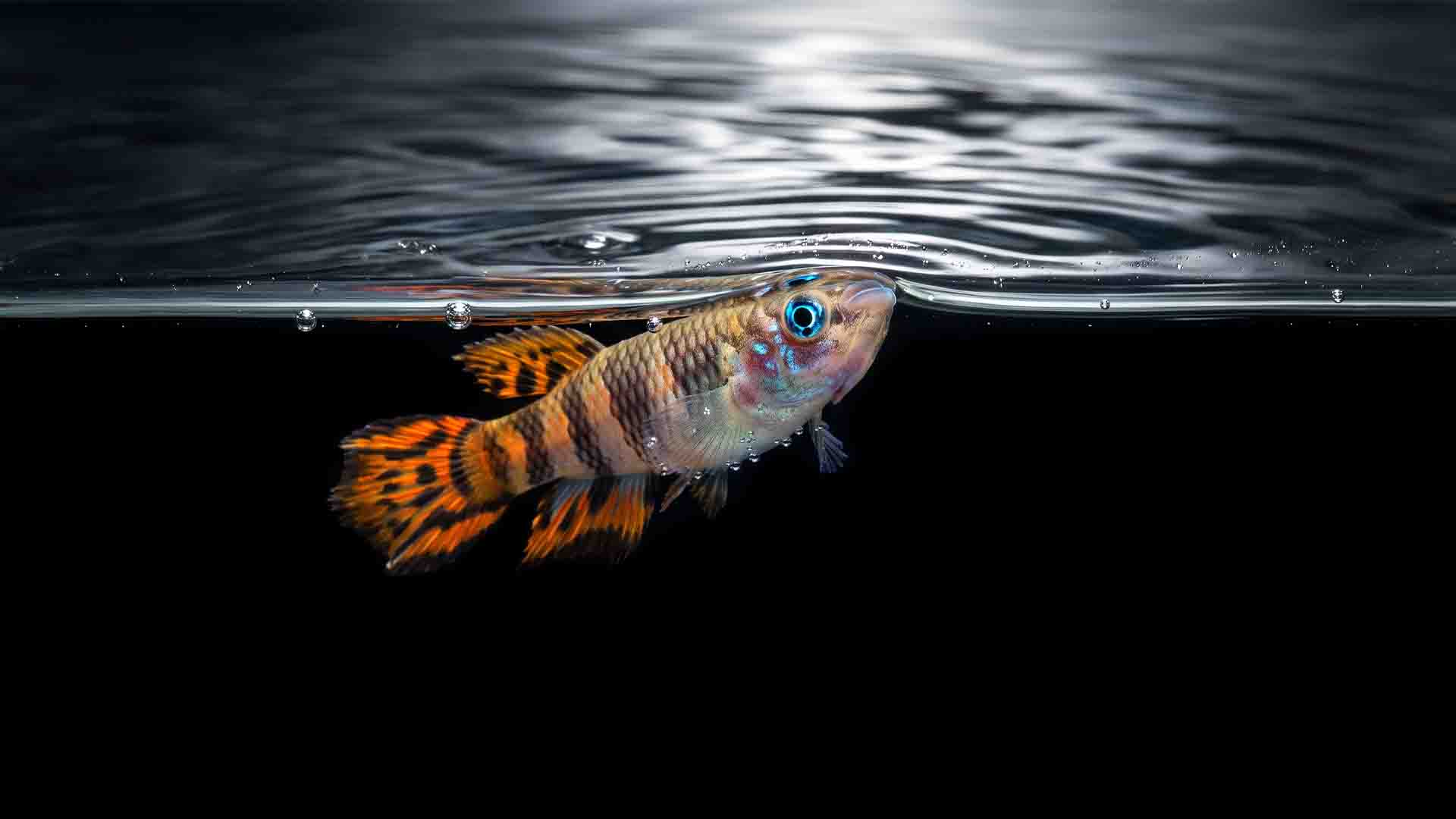
Clown Killifish feature a specialized flat-topped cranium and an upturned, superior mouth structure designed to pin their dorsal profile directly into the surface tension meniscus. Large cichlids possess downward- or forward-facing jaws built for striking forward in the water column or grazing downward. Striking straight up at the reflective surface causes light refraction distortions (Snell’s Window), blinding the predator to exact micro-movements. By spending 95% of their lifecycle resting flush against the surface film beneath floating plant cover, Clown Killifish stay completely outside the attack corridor of centerpiece hunters.
3. Kuhli Loach (Pangio kuhlii): Substrate Burrowing & Nocturnal Texture Deletion
When predatory cichlids switch on their scotopic night vision, bottom-dwelling fish that rest exposed on open gravel become easy targets. The Kuhli Loach circumvents nocturnal hunting entirely through fossorial, benthic burrowing behavior. They are among the most capable yet underrated bottom dwellers in the freshwater hobby, transforming open substrate into a permanent defensive bunker.
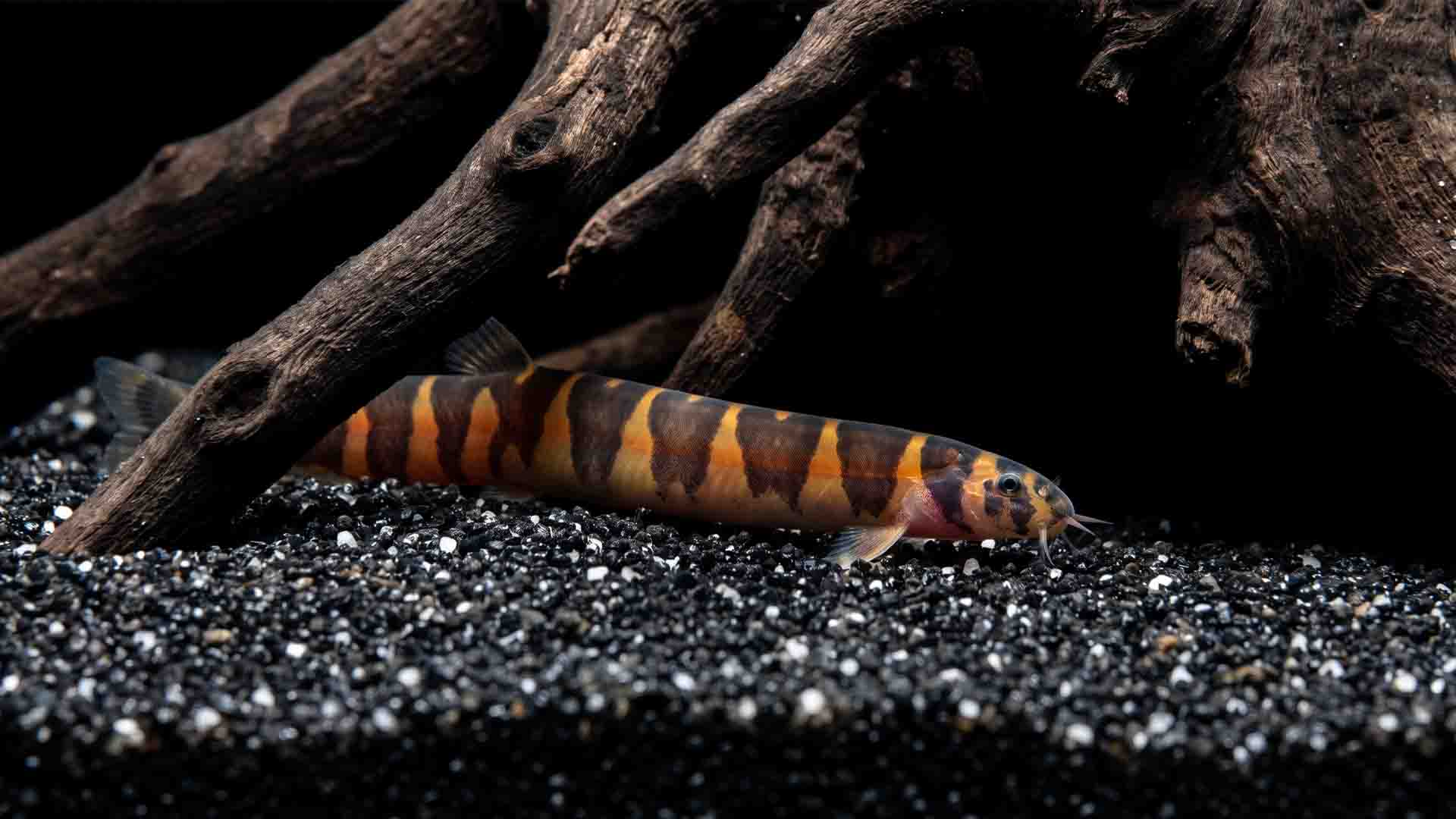
Equipped with an elongated, flexible serpentine morphology and smooth, non-scaled skin, the Kuhli Loach dives directly into fine quartz sand at the first detection of waterborne predatory vibration. Within three seconds, the loach burrows beneath the top layer of substrate or slips under deeply anchored hardscape roots, completely deleting its physical and visual presence from the tank. Centerpiece cichlids cannot sift compacted substrate to reach them, allowing Kuhli Loaches to navigate the bottom layer with zero predation risk.
4. Ember Tetra (Hyphessobrycon amandae): Plant Camouflage & Micro-Geometry
At under one inch in size, beginner aquarists often assume the Ember Tetra is instant feeder food for an adult cichlid. However, their survival relies on plant-stem micro-camouflage and tight ecological spatial awareness. Unlike large, solitary centerpiece species that require open territorial swimming lanes—a reality detailed in our guide on freshwater aquarium fish that thrive alone—Ember Tetras integrate seamlessly into dense aquatic foliage.
The fiery translucent amber coloration of the Ember Tetra acts as cryptic disruptive camouflage among dense plantings of Rotala, Ludwigia, and fine-leaved mosses. Rather than fleeing into open water when threatened, Ember Tetras lock their bodies into the micro-cavities between closely spaced stem plants. A large cichlid cannot maneuver its deep body into dense stem thickets without stalling its swimming momentum and damaging its delicate fins on hardscape, creating an impenetrable biological nursery for the school.
5. Pygmy Corydoras (Corydoras pygmaeus): Dermal Bone Scutes & Midwater Hovering
The Pygmy Corydoras challenges typical armored catfish behavior. While traditional corys remain tethered to the substrate, Corydoras pygmaeus spends significant portions of its day hovering in the middle water column alongside schooling characins. Despite measuring just over an inch, their physiological defense is formidable: dual rows of overlapping, rigid dermal bone plates (scutes) that encase their entire torso.
In addition to this external bone plating, Pygmy Corydoras possess sharply serrated, ossified pectoral fin spines capable of locking rigidly at a 90-degree angle when stressed. If an inquisitive cichlid attempts to inhale a Pygmy Corydoras, the catfish immediately flares and locks these pectoral spines. This anatomical wedge mechanism lodges firmly inside the predator’s buccal cavity, creating intense mechanical resistance and discomfort. Centerpiece predators learn within a single failed predation attempt that attacking these armored miniature catfish results in painful oral trauma rather than a digestible meal.
6. Black Neon Tetra (Hyphessobrycon herbertaxelrodi): Lateral Line Radar in Dark Aquariums
While the standard red-and-blue Neon Tetra functions as a biological glitch that collapses under basic environmental shifts, the Black Neon Tetra is built on an entirely different genetic blueprint. Despite sharing a commercial trade name, Black Neons do not belong to the genus Paracheirodon. They are true Hyphessobrycon characins, carrying the deep muscular frame and broader dorsoventral depth of rugged river species like Lemon and Rosy Tetras.
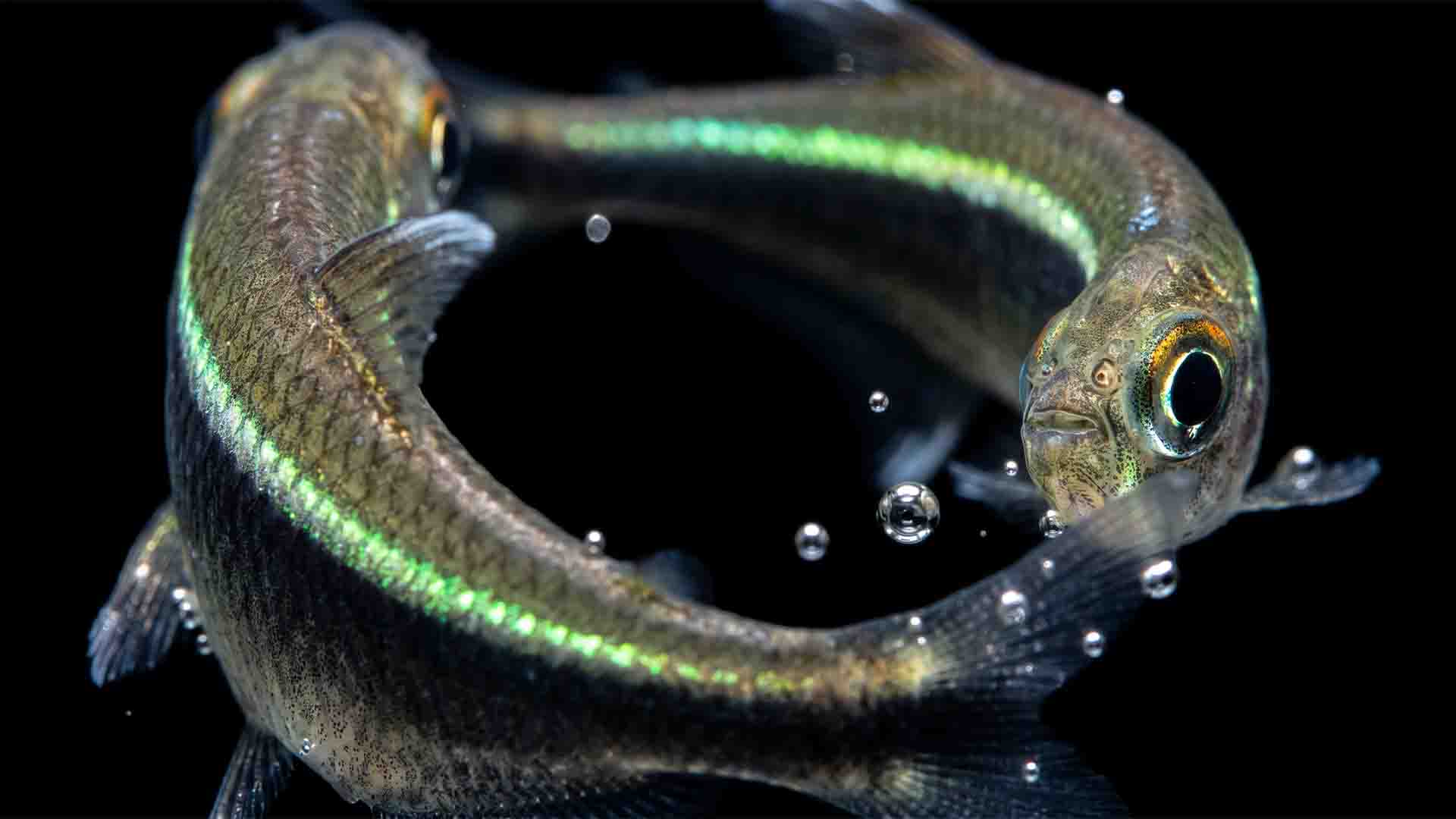
The true survival mechanism of the Black Neon Tetra lies inside its cephalic and lateral-line mechanoreceptive system. Running down its flanks and branching across its skull is a specialized network of fluid-filled canals packed with superficial neuromasts. These sensory hair cells detect micro-vibrations and low-frequency hydrostatic pressure waves down to 0.1 Hertz. When an adult Angelfish flares its gill covers to initiate a nocturnal suction strike in pitch-black water, the displacement wave travels through the water column faster than the strike itself. The Black Neon’s lateral line registers this wave instantaneously, firing motor impulses to execute an evasive turn long before the predator’s open jaws reach suction range.
7. Zebra Danio (Danio rerio): Fast-Twitch Sprinting vs. Saccadic Ambush
Ambush predators like dwarf cichlids and juvenile pike cichlids rely on saccadic visual tracking. They locate a target, freeze their body axis, cock their caudal fin into an S-curve, and launch in an explosive 20-millisecond dash. This predation strategy works flawlessly against stationary characins, but it completely breaks down when confronted by the axial kinematics of the Zebra Danio.
Zebra Danios feature an extraordinary proportion of fast-twitch glycolytic white muscle fibers along their vertebral column. They do not drift; they operate in perpetual, erratic hydro-kinetic motion across the upper-third water layer. When targeted by a lunging centerpiece predator, the Zebra Danio generates burst speeds exceeding 45 body lengths per second. Because their swimming patterns lack fixed trajectories, predatory cichlids burn massive metabolic reserves executing missed strikes. Recognized globally as foundational hardy beginner fish, Zebra Danios possess both osmoregulatory endurance and a neuromuscular system that shrugs off chronic predatory stress without entering hormonal exhaustion.
8. Cherry Barb (Puntius titteya): Tactical Retreat & Line-of-Sight Breaking
Open-water pacing is an instinctive panic response that gets schooling fish killed. When an inexperienced schooler senses danger, it frantically paces the front glass, establishing an open visual runway that allows centerpiece predators to lock their binocular gaze and calculate intercept angles. The Cherry Barb survives because it executes the exact opposite behavioral pattern: tactical retreat and line-of-sight interruption.
When an aggressive tankmate flares or patrols the midwater, Cherry Barbs immediately drop into the lower 20% of the water column. Rather than clumping into an exposed ball, they scatter individually into the dense shadows beneath driftwood, broad Java Fern leaves, and rock crevices. Once submerged in structural cover, they calmly browse epiphytic biofilm off hardscape surfaces. By deleting their silhouette from open water, Cherry Barbs break the predator’s hunting sequence. Cichlids are opportunistic visual hunters; if prey disappears from their active line of sight for more than four seconds, their neurological targeting resets, leaving the barb completely unmolested.
9. White Cloud Mountain Minnow (Tanichthys albonubes): Low-Stress Resilience in Community Tanks
Originating from the cool, turbulent mountain streams of Southern China, the White Cloud Mountain Minnow is an evolutionary marvel that eliminates the single biggest mechanical vulnerability in community fishkeeping: the aquarium heater. In tropical setups, sudden heater failures or stuck thermostats induce severe metabolic paralysis or thermal stress, shutting down the immune response of sensitive tetras and rendering them easy nocturnal prey.
White Clouds possess an exceptionally broad eurythermal window, maintaining active motor function and enzymatic stability from 60°F to 74°F. In temperate or room-temperature setups, they run circles around sluggish warm-water predators. Furthermore, their skin is reinforced by a thick, high-viscosity epidermal mucus matrix that resists opportunistic fungal and bacterial pathogens. Because they do not carry the skittish, panic-prone nature of mass-farmed fish, their resting respiration rate remains remarkably low, even when sharing water with larger species. They school with quiet confidence, preserving vital metabolic glycogen instead of wasting it on chronic stress-swimming.
10. Wild-Type Endler’s Livebearer (Poecilia wingei): Uncorrupted Wild Reflexes vs. Fancy Guppies
The ornamental pet trade has systematically destroyed the domestic Fancy Guppy. Decades of extreme line-breeding for oversized caudal fins and metallic pigmentation have produced animals burdened with massive hydrodynamic drag. A standard commercial male guppy spends eighty percent of its daily caloric budget simply hauling its oversized tail through filter current. When attacked by a cichlid, its compromised fins cannot generate directional thrust, turning it into instant feeder food.
The pure or hybrid male Endler’s Livebearer represents the uncorrupted wild counterpart. Endlers retain short, aerodynamic, spade-shaped caudal fins that create zero hydrodynamic drag. More importantly, their ancestral hindbrain Mauthner-cell architecture remains completely intact. An Endler does not freeze when a predator lunges; its acoustic and pressure sensors trigger a C-start escape turn in under 6 milliseconds, snapping the fish 180 degrees away from the attack trajectory. Backed by wild genetic heterosis, Endlers thrive in diverse water parameters without the devastating osmotic crashes that wipe out commercial livebearer strains.
The Clean-Up Crew Trap: Avoiding False Algae Eaters in Predator Tanks
One of the most catastrophic mistakes hobbyists make when building a centerpiece community aquarium is purchasing “janitor fish” to clean the glass. Local fish stores routinely sell juvenile Chinese Algae Eaters (Gyrinocheilus aymonieri) under the promise that they will consume nuisance algae and leave other inhabitants alone. At two inches long, these slender fish look industrious. In reality, you are introducing a future 10-inch territorial parasite into your ecosystem.
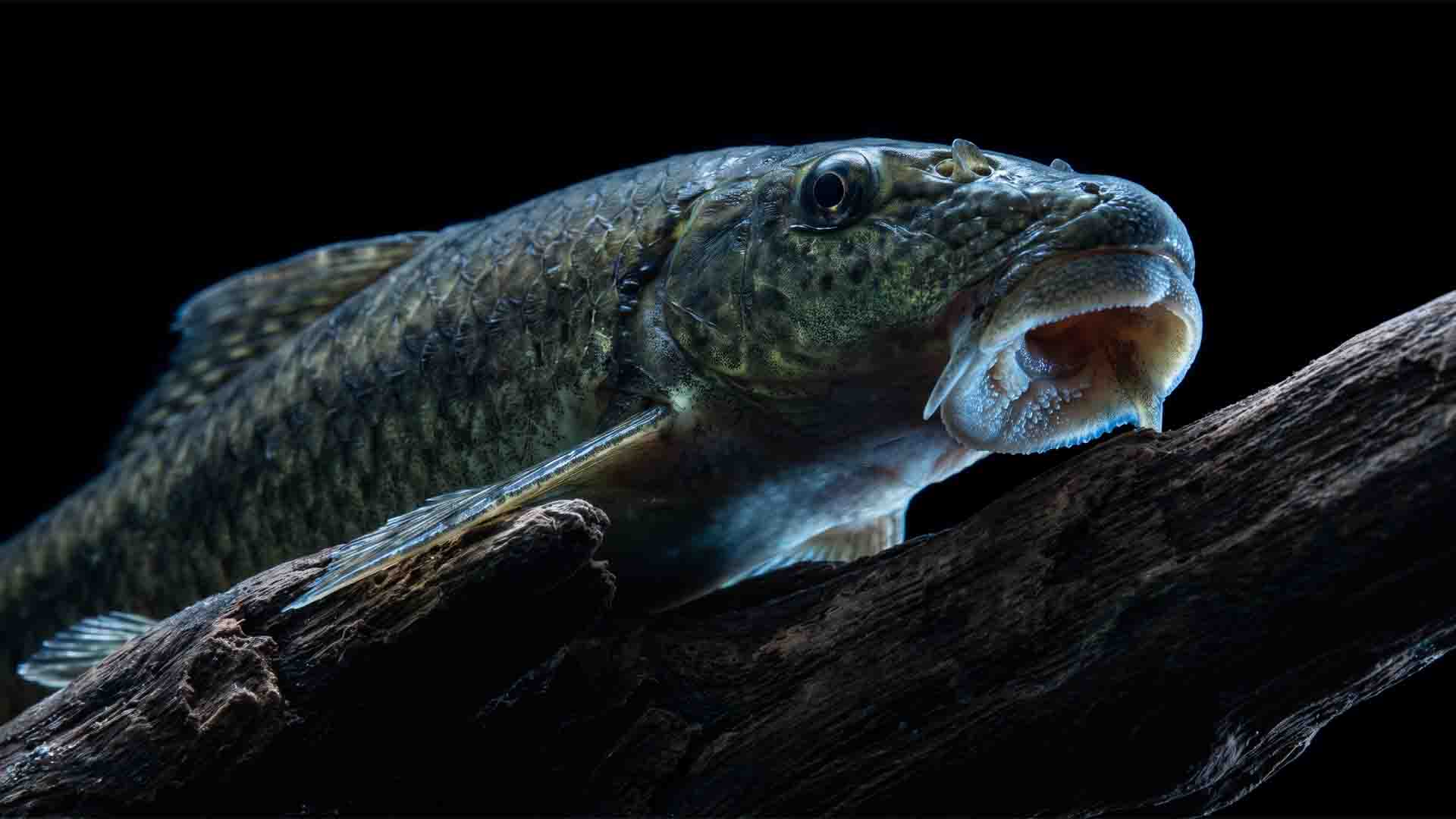
As the Chinese Algae Eater matures past four inches, its physiology undergoes an irreversible ontogenetic shift. Its digestive system ceases synthesizing cellulase enzymes to break down plant algae and begins demanding dense animal proteins. At night, while broad-bodied fish like Angelfish, Severums, or large tetras rest in the lower strata, the Chinese Algae Eater utilizes its downward-turned, papillose oral suction disc to latch onto the flanks of sleeping tankmates.
Once attached, its keratinized rasping plates scrape away the fish’s protective epidermal mucus layer (slime coat), consuming the nutrient-rich glycoprotein matrix and creating open, circular lesions. These wounds destroy the victim’s osmotic barrier and allow environmental pathogens like Flavobacterium columnare to invade the bloodstream. To keep your system clean without housing a nocturnal slime vampire, replace these commercial hazards with verified invertebrate grazers and peaceful catfish from our definitive ranking of the best freshwater clean-up crew species.
Predator vs. Nano Biomechanical Compatibility Matrix
The table below provides an empirical breakdown of how individual nano species match up against centerpiece cichlids based on anatomical depth, spatial zoning, and primary evasion mechanics:
| Species (Scientific Name) | Adult Body Depth | Ecological Water Zone | Primary Survival Mechanism | Angelfish Predation Risk |
|---|---|---|---|---|
| Harlequin Rasbora (T. heteromorpha) | 14 – 17 mm | Midwater Column | Dorsoventral height exceeds adult cichlid gape limit | Ultra-Low (Safe) |
| Clown Killifish (E. annulatus) | 5 – 7 mm | Top 0–2 Inches | Surface boundary pinning; exploits upward blind spot | Low (Zone Isolated) |
| Kuhli Loach (P. kuhlii) | 6 – 8 mm | Substrate / Benthic | Fossorial sand burrowing; nocturnal visual deletion | Ultra-Low (Hidden) |
| Ember Tetra (H. amandae) | 6 – 8 mm | Lower-to-Mid Planted | Cryptic amber camouflage in dense plant stems | Moderate (Cover Dependent) |
| Pygmy Corydoras (C. pygmaeus) | 7 – 9 mm | Midwater & Floor | Locking pectoral bone spines; dermal scute armor | Low (Mechanical Defense) |
| Black Neon Tetra (H. herbertaxelrodi) | 11 – 14 mm | Midwater Column | Cephalic neuromast radar; nocturnal wave detection | Low (Reflex Evader) |
| Zebra Danio (D. rerio) | 7 – 9 mm | Upper-to-Mid Column | Fast-twitch glycolytic bursts (45 body lengths/sec) | Low (Velocity Outmatch) |
| Cherry Barb (P. titteya) | 10 – 12 mm | Lower Strata | Tactical hardscape retreat; resets predator targeting | Low (Cover Master) |
| White Cloud Minnow (T. albonubes) | 8 – 10 mm | Upper-to-Mid Column | Eurythermal enzyme stability; non-skittish composure | Low (Low-Stress Cruiser) |
| Endler’s Livebearer (P. wingei) | 6 – 8 mm | Upper Strata | Wild-type short fins; 6-millisecond C-start escape | Low (Agile Survivor) |
| Standard Neon Tetra (P. innesi) | 4 – 5 mm | Midwater Column | None; inbred Mauthner cells freeze during attacks | Fatal (Instant Prey) |
The 90-Day Community Coexistence Timeline
The greatest psychological deception in aquarium stocking is the initial 14-day peaceful grace period. When hobbyists place juvenile cichlids with small fish, nothing goes wrong immediately. The water tests zero for ammonia, the schoolers explore the open glass, and the keeper congratulates themselves on beating the odds. The timeline below illustrates how delayed biological failure systematically unfolds in predator-nano setups:
| Timeframe | Visual Illusion (What You See) | Underlying Biological Reality | Required System Intervention |
|---|---|---|---|
| Days 1 – 14 | Harmonious cohabitation. Centerpiece cichlid eats commercial pellets and ignores schooling fish. | Juvenile masking. Cichlid mouth gape is under 5 mm; prey is physically impossible to ingest. Cortisol is suppressed by transport disorientation. | Verify the dorsoventral depth of your schoolers. Ensure structural sightline breaks and planted zones are established immediately. |
| Days 15 – 45 | Cichlid grows rapidly, displaying bold feeding behavior. Small fish appear slightly more cautious during daytime. | Metabolic acceleration. Cranial skeletal elements scale outward; premaxillary jaw extension reaches 8 mm. Scotopic retinal rod cells mature for nighttime hunting. | Perform a night audit 30 minutes after dark using a red-spectrum flashlight. Inspect whether schoolers are holding tight to plant cover or pacing exposed glass. |
| Days 46 – 90 | One or two slender tetras go missing. The keeper assumes water quality issues, disease, or jumping. | The Nocturnal Harvest begins. Cichlid gape limit exceeds prey body depth. Suction strikes systematically eliminate torpid, sleeping fish in total darkness. | Remove slender, cylindrical species immediately. Replace compromised schoolers with deep-bodied rasboras or surface-pinned killifish. |
| Days 91 – 180 | The tank either reaches permanent, stable harmony OR devolves into an empty, stressful glass box containing only the predator. | Systemic resolution. If stocked by biomechanics, the predator ceases hunting attempts due to physical gape limitations. If stocked by store labels, 100% prey mortality occurs. | Maintain consistent twilight feeding protocols and preserve mature vegetative refuges to ensure perpetual community equilibrium. |
What to Avoid: 4 Stocking Habits That Ruin Predator-Nano Communities
Creating a permanent, zero-mortality community tank is not about discovering lucky fish; it is about eliminating the self-sabotaging maintenance and stocking habits that hand all tactical advantages to the predator:
- Avoid Stocking by Retail Juvenile Appearance: Walking into a commercial store and purchasing a 1.5-inch juvenile Angelfish alongside a school of Neon Tetras is stocking by temporary showroom cosmetics. All juvenile teleosts share compressed, non-threatening morphology. Within 12 weeks, the cichlid scales allometrically while the nano tetra reaches its genetic growth ceiling. Always cross-reference adult skeletal dimensions on independent ichthyological databases before purchasing, or you will repeat the exact mistakes outlined in our audit of the worst aquarium fish that cause beginners to quit the hobby.
- Avoid the “Full Darkness” Light Switch Shock: Slamming high-output aquarium canopy lights directly from 100% intensity to absolute pitch darkness triggers a severe startle-and-freeze reflex in diurnal schooling fish. While tetras are temporarily blinded and disoriented by the sudden photon drop, centerpiece cichlids require only seconds to engage their scotopic rod vision. This instant transition creates a 20-minute vulnerability window where defenseless schoolers are harvested at will.
- Avoid Barren, Open-Water “Sightline Highways”: Designing an aquarium with central open-water voids and sparse hardscape perimeter plants gives large predators complete territorial dominance. Without physical vertical barriers, a cichlid can observe, track, and pursue smaller fish across the entire length of the tank without obstruction, keeping small species in a state of chronic, fatal immunosuppressive stress.
- Avoid Deploying Juvenile “Janitor Fish” to Fix Husbandry: Dropping a juvenile Chinese Algae Eater into a community tank because you noticed brown diatoms on the rocks is introducing a future predatory mucivore to solve an operational light-cycle problem. Cleanliness in a closed glass box is achieved through balanced photoperiods, nutrient export, and mature microbial biofilms—never by adding livestock with volatile adult dietary shifts.
Do This Instead: The 5-Step Hydro-Architectural Survival Blueprint
To ensure total, long-term biological peace between centerpiece predators and nano schooling fish, apply this 5-step engineering framework to your display aquarium:
- Step 1: Enforce the 1.25x Gape-to-Depth Safety Ratio: Before introducing any schooling fish to an aquarium containing an adult cichlid, measure the predator’s maximum flared mouth diameter. The dorsoventral body depth of the smallest schooling fish must be at least 1.25 times larger than that measurement. If your Angelfish flares to 10 millimeters, your schooling fish must measure at least 12.5 millimeters from dorsal fin origin to ventral belly margin.
- Step 2: Construct Vertical Hardscape Sightline Baffles: Position tall, vertical elements—such as dense clusters of Manzanita branches, tall Malaysian driftwood, or thick stands of Vallisneria gigantea—directly in the central third of the aquarium. These physical baffles divide the open water into isolated visual compartments, ensuring that a pursuing cichlid loses sight of its target within two body lengths.
- Step 3: Establish Dedicated Velocity and Plant Refuges: Create micro-habitats that cater to nano biomechanics while physically excluding large predators. Plant dense thickets of fine-stem plants like Rotala rotundifolia or configure rock piles with narrow 1-inch gaps. Nano fish glide through these micro-crevices effortlessly, while the tall vertical frame and trailing pelvic fins of adult Angelfish prevent them from entering without tearing their delicate finnage.
- Step 4: Implement a 15-Minute Twilight Dimming Protocol: Replace abrupt on/off canopy lighting with a programmable LED unit that replicates natural river twilight. Program a gentle 15-to-30-minute ramp-down period utilizing low-intensity amber or deep-blue spectrums (under 5% power). This gradual transition allows diurnal nano schoolers to locate secure nocturnal resting spots deep within the plant thickets before centerpiece predators activate their night hunting instincts.
- Step 5: Execute Routine Behavioral Audits Over Blind Chemical Testing: Never assume an aquarium is thriving simply because a liquid test kit reads zero ammonia. Chronic behavioral pressure and micro-chasing elevate circulating cortisol long before water chemistry registers distress. Take ten minutes twice a week to observe fish kinematics after lights-out. If schoolers are clamped, gasping, or pinned against upper corners, intervene immediately by auditing your maintenance routines against our breakdown of common aquarium mistakes that collapse biological stability.
Scientific Truths Behind Teleost Predation and Evasion Biology
Aquarium management is not governed by retail sales scripts or wishful thinking; it is dictated by the laws of functional morphology, neurobiology, and sensory ecology. When small schooling fish disappear in community aquariums, the failure is neither mysterious nor accidental. Understanding the four cellular and biomechanical realities governing predator-prey dynamics in closed teleost environments transforms your stocking strategy from reckless gambling into predictable ecosystem design.
Truth 1: Suction Feeding Kinematics and Buccal Pressure Dynamics
Predatory freshwater cichlids do not physically bite or chew free-swimming prey in open water; they rely on explosive planar suction feeding governed by fluid dynamics. During a predatory strike, the fish initiates rapid neuro-muscular cranial elevation while simultaneously depressing the hyoid apparatus and abducting the suspensorium. This mechanical linkage sequence expands the internal buccal cavity volume by up to 400% in less than 15 milliseconds, generating extreme negative hydrostatic pressure within the mouth. As a consequence of pressure differential physics, ambient water rushes inward to equalize the vacuum, carrying any suspended prey along with it. If the prey item’s dorsoventral body depth is smaller than the predator’s expanded oral aperture, it is physically impossible for the prey to generate enough hydro-kinetic counter-thrust to break free of the incoming suction vector. To examine the fluid biomechanics of cichlid jaw protrusion, read the biomechanical feeding study on ScienceDirect.
Truth 2: Neuro-Anatomy of the Mauthner-Cell Escape Circuit
The survival of small teleost prey during high-velocity predatory lunges relies entirely on a specialized pair of giant reticulospinal neurons located in the hindbrain: the Mauthner cells. Each Mauthner cell receives direct sensory input from the lateral line neuromasts and the acoustic eighth cranial nerve. When an incoming shockwave or pressure transient crosses a critical threshold, the ipsilateral Mauthner cell fires a single, massive action potential down the spinal cord. This electrical impulse directly stimulates motor neurons on one side of the body while simultaneously inhibiting the opposite musculature, executing a rigid C-start contraction within 5 to 8 milliseconds. Commercial inbreeding lines of ornamental fish suffer from severe neuro-motor degradation and cellular metabolic fatigue, effectively muting this ancestral survival reflex. Stressed, inbred fish exhibit delayed latency periods exceeding 25 milliseconds, allowing suction predators to capture them before muscle contraction even initiates. To understand how genetic bottlenecks disrupt teleost neuro-motor pathways, read the stress neurobiology study on PubMed.
Truth 3: Retinal Scotopic Sensitivity and Rod-to-Cone Photoreceptor Ratios
The concept of “peaceful community cohabitation” collapses entirely when analyzed through comparative retinal histology. Diurnal schooling fish, such as commercial tetras and rasboras, possess photopic retinas dominated by high-acuity cone photoreceptors engineered for color discrimination in bright, daylight illumination. In total darkness, these cone cells become metabolically inactive, forcing the fish into diurnal torpor—a semi-dormant resting state characterized by depressed metabolic rates and visual blindness. Centerpiece cichlids (including Pterophyllum and dwarf river cichlids), however, possess high rod-to-cone cellular ratios and specialized reflective retinal tapeta designed for scotopic vision. These physiological adaptations allow predators to detect spatial silhouettes and micro-movements under light levels below 0.05 lux. Housing diurnal schoolers with scotopic ambush predators creates a permanent visual disparity where one species enters metabolic paralysis while the other actively hunts. To explore comparative teleost retinal architecture, read the sensory physiology research on SpringerLink.
Truth 4: Ontogenetic Trophic Divergence and Parasitic Mucophagy in Algae Grazers
Many freshwater fish sold under retail utility labels undergo dramatic anatomical and dietary changes as they mature, a biological phenomenon known as ontogenetic trophic divergence. Juvenile Chinese Algae Eaters (Gyrinocheilus aymonieri) possess soft oral papillae adapted for grazing benthic diatoms, utilizing endogenous amylase and cellulase enzymes to digest plant matter. As somatic growth continues past 4 inches, the synthesis of these digestive enzymes declines precipitously, while somatic protein demands accelerate. Concurrently, the oral disc develops rigid, keratinized rasping plates. In an aquarium lacking sufficient macro-invertebrate forage, the adult fish shifts to obligate mucophagy—actively hunting the nutrient-dense epidermal glycoprotein mucus coat of slow-moving, broad-bodied tankmates. This feeding behavior strips the protective dermal barrier of cichlids and schooling fish, inducing localized tissue ulceration, osmotic collapse, and lethal secondary saprolegniasis. To examine adult trophic transitions in freshwater teleosts, consult the life-history records on FishBase.
Google People Also Ask (PAA) Direct Diagnosis Answers
Can nano fish live safely with adult angelfish?
Yes, but only if the nano fish possess a dorsoventral body depth that exceeds the adult Angelfish’s flared mouth gape limit (typically 12 to 14 millimeters). Deep-bodied species like Harlequin Rasboras (Trigonostigma heteromorpha) and Black Neon Tetras (Hyphessobrycon herbertaxelrodi) are physically impossible for Angelfish to inhale, whereas slender, torpedo-shaped species like standard Neon Tetras are inevitably consumed.
Why do schooling fish go missing only at night?
Schooling fish disappear at night because diurnal characins enter diurnal torpor—a state of metabolic rest and near-total blindness in darkness—while predatory cichlids activate scotopic, rod-dominated night vision. Centerpiece predators patrol the water column using their lateral line radar and scotopic eyesight, systematically capturing motionless, defenseless schooling fish from plant resting sites.
What is the predator mouth gape rule for aquarium fish?
The predator mouth gape rule states that any prey fish whose vertical body height (dorsoventral depth) is smaller than the maximum flared diameter of a predator’s mouth opening will eventually be classified as food and ingested. To guarantee survival, prey fish must possess a minimum body depth at least 1.25 times larger than the predator’s fully flared oral cavity.
Which tetras are too big for angelfish to eat?
Black Neon Tetras, Diamond Tetras, Bleeding Heart Tetras, and mature Lemon Tetras develop deep, disc-shaped profiles that exceed the gape limit of adult Angelfish. Conversely, slender species within the genus Paracheirodon (such as Neon Tetras and Green Neon Tetras) remain permanently within the edible size threshold and should never be housed with mature cichlids.
Will fast-swimming nano fish escape centerpiece cichlids in a 20-gallon tank?
No. In confined aquarium footprints, swimming velocity cannot overcome an ambush hunter. Predatory cichlids execute suction strikes in under 15 milliseconds, utilizing blind spots, cornering tactics, and nocturnal hunting patterns. Speed is useless when a fish is trapped inside a glass box without structural line-of-sight breaks.
Why did my angelfish suddenly eat neon tetras after months of peace?
This delayed failure occurs due to allometric skeletal growth and sexual maturation. A juvenile Angelfish possesses a mouth gape under 6 millimeters, making predation mechanically impossible. Between 6 and 10 months of age, its jaw morphology expands past the 10-millimeter threshold while predatory hunting hormones surge, triggering immediate predation on tankmates it previously ignored.
Frequently Asked Questions (FAQ)
Does raising an angelfish from a juvenile with small tetras stop it from eating them as an adult?
No. The belief that predators “learn to be friends” with tankmates is a retail myth. Suction predation in teleost fish is an involuntary, instinctual hunting reflex triggered by prey movement, silhouette contrast, and mouth gape opportunity. As soon as the cichlid’s oral cavity expands beyond the tetra’s body height, instinct overrides any perceived habituation.
What should I do immediately if I notice schooling fish disappearing from my community tank?
First, perform a nocturnal audit 30 minutes after dark using a dim red light to observe active hunting behavior. Second, inspect the mouth opening of your centerpiece fish against the body depth of the remaining schoolers. If the schoolers fit inside that oral perimeter, immediately separate the species using a divider or secondary tank before the entire population is harvested.
Can I use floating plants to protect surface-dwelling nano fish like Clown Killifish from cichlids?
Yes. Dense layers of floating plants—such as Amazon Frogbit (Limnobium laevigatum) or Water Lettuce (Pistia stratiotes)—create a physical root barrier that isolates the top two inches of the water column. Midwater cichlids cannot maneuver their tall, disc-shaped bodies through dense root mats, providing a secure foraging and resting canopy for surface-pinned killifish.
Are Pygmy Corydoras safe from being swallowed by medium-sized cichlids?
Pygmy Corydoras carry dual mechanical defenses: rigid dermal bone scutes and ossified, locking pectoral fin spines. If a cichlid attempts to inhale one, the catfish flares its pectoral spines at 90-degree angles, wedging itself inside the predator’s oral cavity. While this painful wedge mechanism typically deters future attacks, the initial predation attempt can fatally injure both fish, making spatial separation the safer option.
Why is the Chinese Algae Eater sold as a peaceful cleaner if it attacks fish at night?
Commercial distributors market Chinese Algae Eaters based exclusively on juvenile behavior. At 2 inches in length, they consume soft diatoms and appear harmless. However, commercial retailers routinely omit the adult ontogenetic diet shift: mature specimens reach 10 inches, become intensely territorial, and switch to parasitic mucophagy, stripping the protective slime coat off resting tankmates.
Hub & Spoke: Complete FishTank Mastery Ecosystem Network
Mastering a peaceful community aquarium requires moving beyond isolated fish purchases and engineering a unified, balanced ecosystem. If your display tank cannot accommodate the swimming lanes and structural sightline barriers required for deep-bodied schooling fish, you must reconsider your central stocking framework. Instead of forcing stressed schools into cramped footprints alongside territorial centerpieces, explore our comprehensive breakdown of freshwater aquarium fish that thrive alone to create low-stress, character-driven displays.
Establishing rock-solid security in the lower water column requires deploying specialized benthic species that physically delete their presence from nocturnal predators. Rather than relying on fragile, exposed scavengers that get picked off after dark, integrate burrowing loaches and armored catfish detailed in our guide to underrated bottom dwellers. To fully optimize the biological mechanics of your substrate and eliminate anaerobic waste accumulation, cross-reference your layout with our master manual on the best freshwater bottom dwellers.
The single greatest operational hazard in the aquarium hobby is the pet store impulse buy. Mislabeled showcase novelties and predatory oddities consistently destabilize home aquariums, generating massive bioloads and predatory carnage that mirror the ecological damage caused by illegal aquarium fish kept in closed systems. To safeguard your investment, always anchor your community around species proven to withstand environmental and social fluctuations, starting with our verified index of hardy beginner fish.
When sudden behavioral friction disrupts a previously peaceful tank, never assume your fish are acting irrationally. Territorial shifts, fin-nipping, and cornering are predictable biological reactions to poor zoning and collapsed spatial boundaries. To diagnose subtle behavioral warnings before physical casualties occur, apply the environmental enrichment protocols in our diagnostic manual on why peaceful community fish turn aggressive, and eliminate common community layout traps by auditing your livestock against our guide to schooling fish you should avoid.
Finally, remember that adding livestock to solve maintenance problems is an engineered recipe for disaster. Introducing predatory grazers to scrape glass inevitably leads to slime-coat parasitism and biofilter overload. Build your cleaning regimen around genuine biological janitors using our definitive rankings of the best freshwater clean-up crew species, and protect your entire closed loop from delayed biological collapse by systematically eliminating the seven common aquarium mistakes that ruin ecosystem stability.
Scientific References & Peer-Reviewed Literature Review
Every anatomical measurement, physiological threshold, and behavioral dynamic documented in this masterclass is grounded in peer-reviewed ichthyological literature, aquatic biomechanics, and veterinary medicine:
1. Functional Morphology and Biomechanics of Teleost Suction Feeding: Landmark biomechanical research examining feeding kinematics across Neotropical cichlids confirms that premaxillary jaw protrusion coupled with rapid hyoid depression generates high-velocity suction fields capable of capturing prey items within 15 milliseconds. The study proves that prey dorsoventral depth represents the primary mechanical boundary limiting suction capture success. Read the study on ScienceDirect.
2. Neurobiology of the Mauthner-Cell Mediated Escape Reflex in Teleosts: Empirical investigations into teleost neuro-muscular circuits demonstrate how giant hindbrain M-cells process acoustic and pressure-wave transients to fire millisecond-fast C-start evasive turns. The research documents significant escape latency delays in inbred commercial ornamental lineages compared to wild genotypes. Read the study on PubMed Central.
3. Retinal Photoreceptor Specialization and Scotopic Predation in Cichlidae: Comparative sensory physiology studies analyzing retinal rod-to-cone density ratios prove that predatory freshwater cichlids possess scotopic visual acuity that functions effectively under twilight and nocturnal illumination, allowing them to target diurnal schooling fish during metabolic torpor. Read the study on SpringerLink.
4. Ontogenetic Trophic Divergence and Feeding Morphology in Gyrinocheilus aymonieri: Ichthyological life-history documentation detailing the physiological development of the Chinese Algae Eater confirms a progressive loss of carbohydrate-digesting enzymes and the emergence of specialized rasping oral discs, explaining the adult shift toward parasitic mucus predation in captive environments. Explore the species profile on FishBase.
5. Endocrine Stress Cascades and Branchial Epithelial Breakdown: Toxicological and physiological criteria published by the U.S. Environmental Protection Agency establish how chronic sensory agitation and visual confrontation elevate systemic cortisol, accelerating ionocyte exhaustion and immune collapse across captive teleost populations. Read the EPA Water Quality Criteria.
Watch Next: Continue Your Freshwater Mastery
Reading the biological mechanics is step one; watching these physical triggers, evasive kinematics, and stocking failures play out in real aquariums cements the lesson permanently. Continue your aquatic education across the FishTank Mastery video ecosystem with these essential masterclasses:
- Don’t Buy These Tropical Fish – Get These Peaceful Alternatives Instead: Discover which popular showroom staples bring territorial chaos into community systems and learn the exact peaceful species that maintain ecosystem harmony. Watch the complete species breakdown on YouTube.
- Don’t Buy These Schooling Fish (Part 2) – Get These Instead: Learn which active schoolers turn into aggressive fin-nippers under closed glass conditions and find the tight-schooling, deep-bodied alternatives that stay calm. Watch the schooling guide on YouTube.
- Why Your “Safe” Fish Just Turned Into Killers: A deep visual breakdown of the subtle environmental, social, and hormonal triggers that cause seemingly peaceful community centerpieces to snap. Watch the behavioral diagnostic on YouTube.
- 10 Worst Fish I’ll NEVER Keep Again: Real-world post-mortems exposing the commercial traps, high-maintenance monsters, and predatory impostors that push beginners out of the aquarium hobby. Watch the warning list on YouTube.
- Best Freshwater Tank Cleaners That Actually WORK: Build a high-efficiency janitorial squad that polishes glass and consumes detritus without introducing parasitic mucus predators or biofilter collapse. Watch the cleanup crew masterclass on YouTube.
Building an unbreakable community aquarium is not about crossing your fingers at the checkout counter; it is about respecting the evolutionary biology of the animals you bring home. When you eliminate juvenile illusions, honor the mouth gape equation, and build layered physical structure, your glass box stops being a crime scene and becomes a balanced, self-sustaining piece of nature. Until next time… keep your tanks balanced, your schools tight, and your curiosity flowing.