
Building a functional underrated freshwater clean up crew is the single most misunderstood challenge in the aquarium hobby. Most fish tank maintenance routines fail quietly because retail stores sell massive common plecos and aggressive Chinese algae eaters as magic janitors, trapping hobbyists in a biological debt trap where heavy waste shatters the bioload-to-filtration ratio. If your glass is covered in green dust, your substrate is turning into an anaerobic swamp, and your so-called cleaner fish spend the day hiding or producing thick ropes of waste, you do not have an algae problem. You have an ecosystem architecture problem.
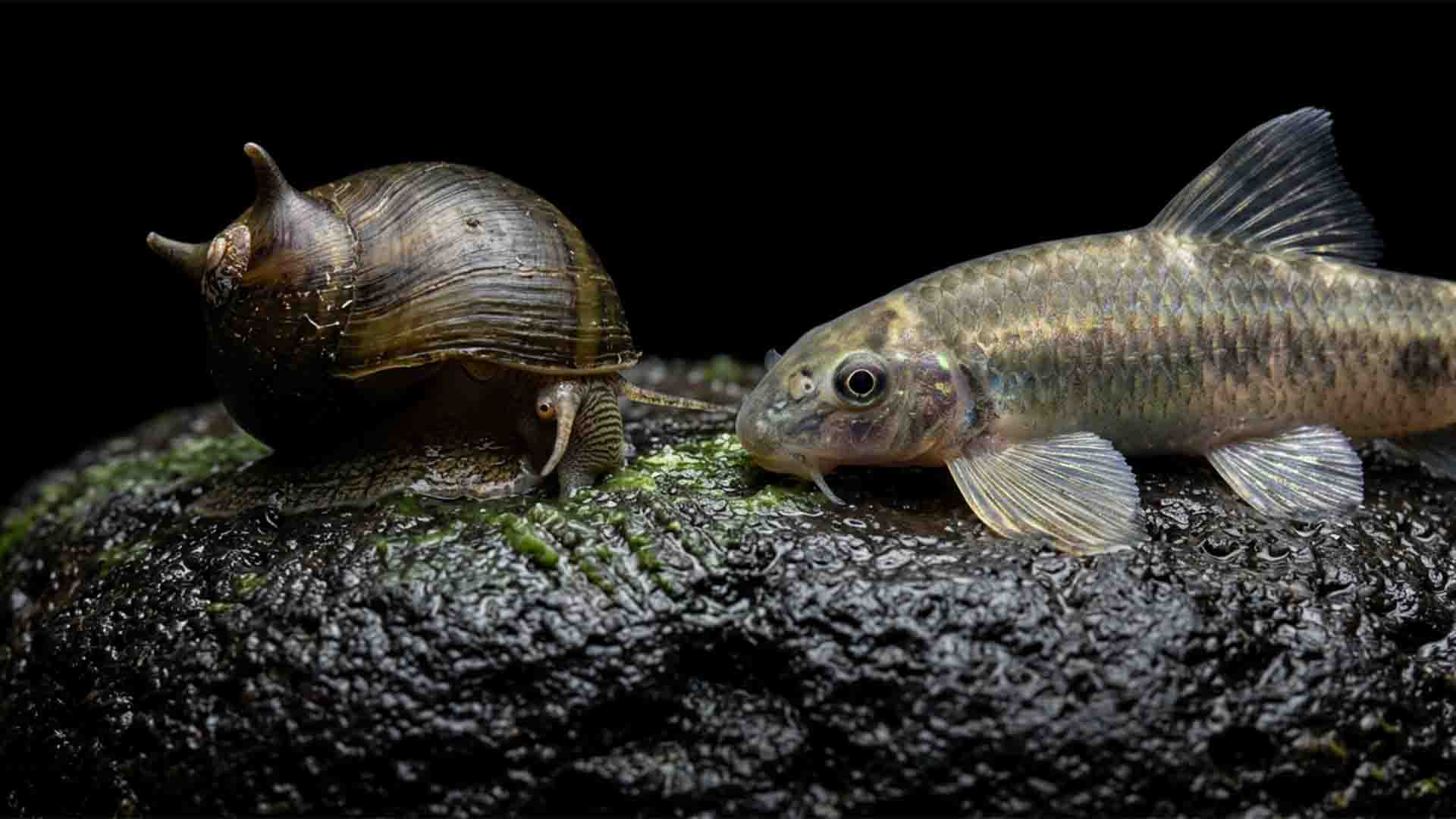
Every beginner dreams of an aquarium that cleans itself. You walk into a commercial store, glance at the bottom-row tanks, and assume you can hire an animal to do your chores for five dollars. But an aquarium is a closed biological reactor governed by the laws of thermodynamics. Animals do not delete mass; they process it, metabolize a fraction of it, and convert the remainder into un-ionized ammonia, dissolved organic carbon, and particulate feces. When you buy livestock based on commercial marketing labels instead of functional morphology and ecological niches, you do not reduce maintenance. You accelerate the timeline toward systemic biological failure.
The Subcontractor Debt Trap: Why Commercial Cleaners Crash Parameters
The standard retail advice for aquarium algae or substrate detritus follows a disastrous economic loop we call the Subcontractor Debt Trap. When organic matter accumulates, beginners instinctively hire a subcontractor: an animal marketed as a cleaner fish. The logic sounds bulletproof on the surface. Something eats algae, so the algae goes away. What the label on the tank fails to mention is that every animal you introduce breathes oxygen and produces metabolic exhaust.
If you drop a juvenile Common Pleco or Mystery Snail into a young aquarium to remove a dusting of diatoms, that animal consumes the surface film and immediately excretes concentrated organic waste directly into the lower water column. Within weeks, that waste decomposes, releasing nitrates and phosphates that fertilize the next, more aggressive generation of algae. Because the visible glass looked clear for seventy-two hours, the aquarist assumes the cleaner is working. They feed the tank more, relax their water change discipline, and fall into a false sense of security while biological debt silently accumulates.
To break this loop, you have to realize that cleanup crew fish do not eliminate nutrients. They merely alter the physical state of carbon and nitrogen within your glass box. When an animal’s metabolic waste output exceeds the processing capacity of its janitorial labor, that animal is no longer a cleaner. It is an environmental liability that pushes your biofilter past its margin of error.
The Ontogenetic Trophic Shift: The Dark Transition of Retail Cleaners
The second fatal flaw of mainstream cleaners is the biological reality of ontogenetic dietary shifting. Local pet shops regularly sell juvenile Chinese Algae Eaters (Gyrinocheilus aymonieri) and Common Plecostomus (Hypostomus plecostomus) at two inches in length. In their juvenile phase, these species possess specialized mouthparts and digestive enzymes adapted to rasp soft diatoms and early-stage biofilms off submerged surfaces.
However, as these fish double and triple in length, their internal enzymatic production shifts radically. Maintaining a massive bodily frame on microscopic biofilm requires an unsustainable expenditure of foraging energy. The adult fish ceases production of cellulase enzymes and develops an urgent metabolic demand for dense animal protein and dietary lipids. They stop rasping glass entirely. In community aquariums, adult Chinese Algae Eaters turn into nocturnal parasites, using their suctorial oral discs to latch onto broad-bodied, resting tankmates like Angelfish or Discus, tearing off protective epidermal mucus and opening pathways for fatal columnaris infections. Understanding these physiological traps is why experienced hobbyists cross-reference our field guide on the worst aquarium fish that collapse community tanks before spending money at retail checkout counters.
The 10 Underrated Ecosystem Mechanics (Niche-Partitioned Tier List)
Real ecosystem stability requires niche partitioning. In nature, a single organism never manages every biological boundary layer. A river system stays pristine because specialized micro-grazers, benthic bioturbators, detritivores, and microfauna occupy distinct spatial strata without competing for food or generating toxic bioload spikes. Below are the ten most biologically functional, highly underrated freshwater cleaners engineered for closed aquariums.
1. Horned Nerite Snail (Clithon corona) – Micro-Cranny Hardscape Diatom Grazer
Standard Nerite snails (such as Neritina natalensis) are fantastic glass polishers, but their bulky, rounded shells make it mechanically impossible for them to access tight micro-crevices within intricate hardscapes. Enter the Horned Nerite Snail (Clithon corona). Capping out at a modest half-inch diameter, this diminutive gastropod possesses an exceptionally rigid, sharp radula capable of grinding stubborn green spot algae and diatom films directly off coarse lava rock, spiderwood joints, and tight hardscape junctions where larger snails physically wedge and starve.
The evolutionary armor of Clithon corona includes sharp, calcified cranial horns that deter curious cichlids and nipping barbs from dislodging them from rocks. Most importantly, while they readily lay tiny, harmless white egg capsules, their larvae require brackish water with specific salinity gradients to complete cellular development. They will never overpopulate or trigger a pest snail infestation in a freshwater aquarium. Their metabolic waste footprint is microscopic, making them the ultimate surgical cleaning tool for delicate nano layouts and high-end aquascapes.
2. Panda Garra (Garra flavatra) – Biofilm & BBA Rasping Without Mucophagy
If you have ever been burned by a lazy Siamese Algae Eater look-alike or an aggressive bottom scavenger, the Panda Garra is the exact evolutionary correction your tank needs. Originating from swift, oxygen-saturated hillstreams in Myanmar, Garra flavatra is an active, diurnal grazer displaying striking chocolate and bronze geometric banding accented by crimson margins on its dorsal fin.
Unlike nocturnal catfish that hide until lights-out, Panda Garras actively cruise the middle and lower strata during peak daylight. Their sub-terminal mouth is modified into a specialized crescent-shaped oral suction disc flanked by sensory papillae. They utilize this muscular disc to rasp tenacious biological matrices, including early-stage Black Beard Algae (BBA), green dust algae, and thick bacterial biofilms off broad plant leaves without puncturing cellular plant walls. Crucially, Garra flavatra does not undergo a predatory dietary shift as it reaches its three-inch adult size; its gastrointestinal tract remains structurally herbivorous and detritivorous for life. If you want to compare how specialized biofilm grazers stack up against commercial retail staples, examine our ranked breakdown of the best freshwater clean-up crew species.
3. Malaysian Trumpet Snail (Melanoides tuberculata) – Deep Sand Aeration & H2S Prevention
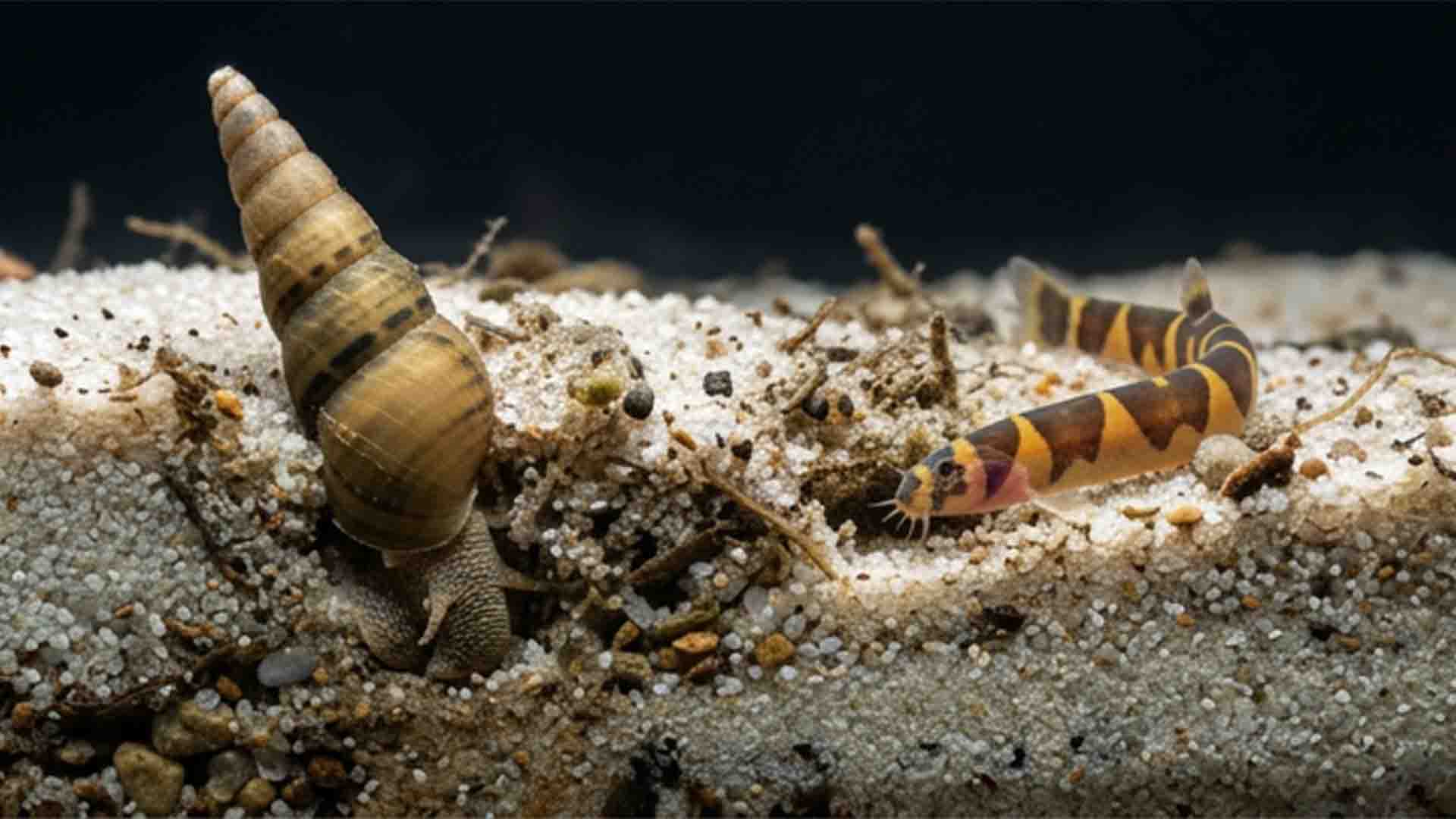
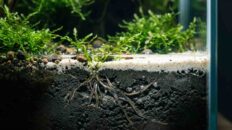
The bottom layer of an aquarium is not a static decorative floor; it is the biological engine of the entire system. When hobbyists install fine quartz sand substrates without active bioturbation, physical compaction occurs within sixty days. As pore water velocity between sand grains drops to zero, dissolved oxygen is depleted, creating anoxic dead zones. In these oxygen-starved pockets, obligate anaerobic sulfate-reducing bacteria like Desulfovibrio metabolize decaying organic debris, producing dissolved hydrogen sulfide (H2S) gas. If an aquarist drives a gravel siphon into an untreated sand bed, liberated H2S binds irreversibly to cytochrome c oxidase within fish gill lamellae, causing rapid, acute asphyxiation.
The biological antidote to substrate compaction is the Malaysian Trumpet Snail (Melanoides tuberculata). Operating as a subterranean biological plow, this cone-shelled snail burrows vertically through deep sand beds during daylight hours. This continuous burrowing action introduces oxygenated water into the interstitial pore spaces, keeping the sediment redox potential in positive territory (Eh > +100 mV) and preventing the formation of toxic hydrogen sulfide pockets. They clean substrate without siphon tools by breaking down compacted detritus at the root level, surfacing only under darkness or when oxygen levels drop, serving as an organic early-warning alarm for your aquarium.
4. American Flagfish (Jordanella floridae) – The Filamentous Hair Algae Specialist
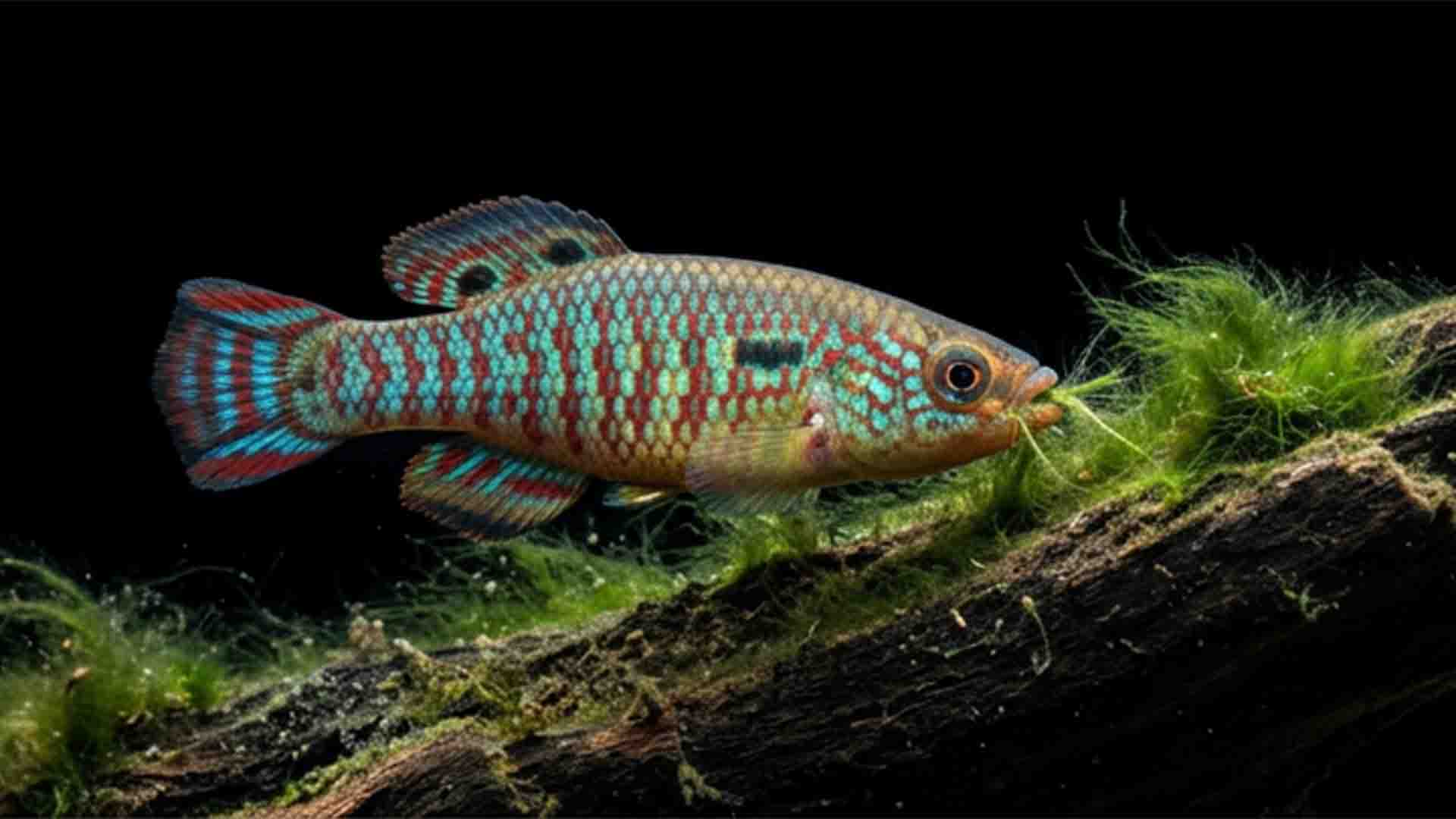
Filamentous green hair algae is the ultimate nightmare for planted tank enthusiasts. Traditional clean-up crew members like plecos, otocinclus, and corydoras lack the jaw morphology required to process tough structural filaments; their rasping oral discs simply slide harmlessly over flexible hair algae strands. The American Flagfish (Jordanella floridae), a robust pupfish native to Florida’s shallow marshes, is built with specialized spatulate, chisel-like teeth anchored in powerful, compact jaws.
Instead of merely licking biofilms off flat surfaces, Jordanella floridae bites down on thick hair algae patches, bracing its deep-bodied muscular frame to physically rip and shear tough filamentous strands away from driftwood and delicate stem plants. While adult males display intense turquoise and ruby horizontal striping, their real value lies in their relentless, non-stop grazing pressure on nuisance filamentous species that no invertebrate can control. For tanks overrun by dense green fuzz, deploying flagfish alongside our proven protocols for eliminating green hair algae naturally tilts the biological balance back in your favor within days.
5. Asian Stone Catfish (Hara jerdoni) – Zero-Bioload Nocturnal Carpet Sifter
Planted tanks featuring delicate foreground carpets of Micranthemum ‘Monte Carlo’ or dwarf hairgrass present a difficult maintenance paradox. Heavy bottom dwellers like Bristlenose plecos or large Corydoras act like blunt bulldozers, their thick pectoral fins and heavy bodies continuously tearing shallow root systems out of the substrate. Neglecting the carpet, however, allows organic detritus, fungal spores, and micro-particulates to choke lower foliage.
The Asian Stone Catfish (Hara jerdoni) is the ultimate micro-solution. Reaching a maximum adult size of barely 1 to 1.2 inches, these cryptic, slow-moving silurids resemble weathered river gravel. During daylight hours, they remain motionless beneath broad leaves or driftwood crevices. At night, they glide weightlessly over delicate plant leaves and fine sand without disturbing a single root hair. Utilizing four pairs of highly sensitive rostral barbels loaded with external chemoreceptors, Hara jerdoni methodically extracts micro-worms, sunken pellet dust, and decaying particulates from interstitial carpet gaps where larger cleaners cannot reach. Their metabolic rate is so minuscule that their biological waste footprint is practically undetectable on standard test kits, making them an essential asset for specialized nano aquariums and peaceful communities detailed in our ranking of the best freshwater bottom dwellers.
6. Hillstream Loach (Sewellia lineolata) – Rheophilic Glass Polishing Without Glass-Surfing Stress
Common algae eaters sold in commercial stores suffer from a major hydrodynamic flaw: they are built for sluggish backwaters. When hobbyists install high-turnover filtration or wavemakers to eliminate dead spots, species like juvenile Otocinclus or young Bristlenose plecos expend immense muscular energy just fighting the current, leading to chronic physical exhaustion and thinned epidermal mucus shields. The Hillstream Loach (Sewellia lineolata) turns high water velocity into an unfair biological advantage.
Native to torrential, shallow highland streams across Vietnam and Laos, Sewellia lineolata features paired pectoral and pelvic fins that have radically broadened and flattened against the abdominal wall. These specialized fins create a complete, continuous hydrodynamic suction disc around the ventral perimeter of the fish. As water velocity increases across its dorsal profile, the resulting pressure differential pushes the loach tighter against smooth surfaces via the Venturi effect. They polish flat glass panels and smooth river stones by grazing brown diatoms and microscopic aufwuchs matrices without ever being swept away by strong currents.
Because they are rheophilic organisms, Hillstream Loaches possess high cellular oxygen consumption rates. In stagnant, overheated community tanks, their opercular gill movement accelerates into frantic panting, a distress signal often misdiagnosed as playful activity. If you operate an unheated community or a river-manifold biotope, integrating Sewellia provides pristine glass maintenance without the territorial aggression or structural mass of large catfish. To master temperature and dissolved oxygen requirements for current-loving species, explore our field guide on the best coldwater aquarium fish that thrive without heaters.
7. Green Babaulti Shrimp (Caridina babaulti) – Structural Plant Cellulose Composter
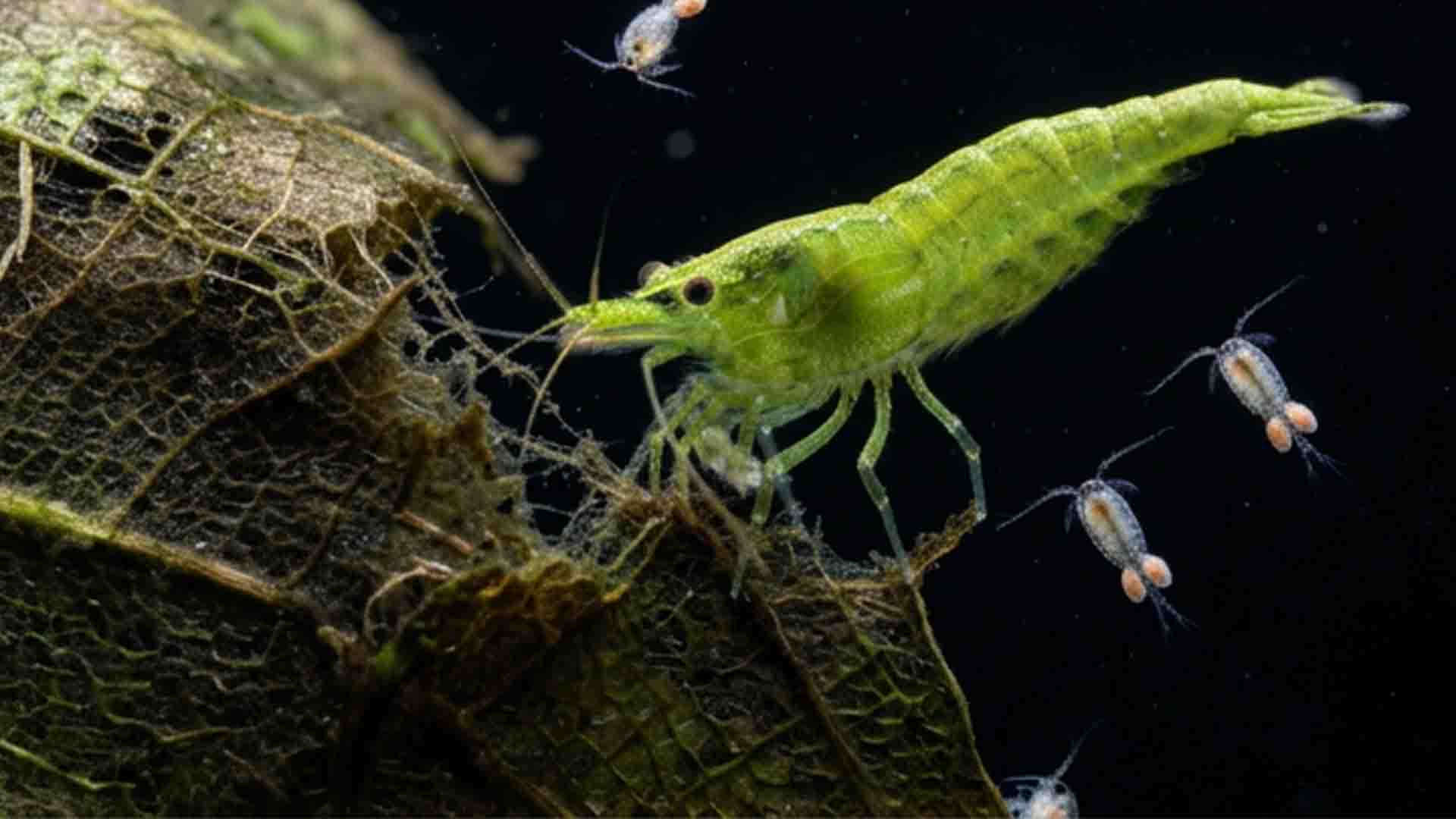
While the aquarium trade obsessively focuses on Neocaridina color morphs and sterile Amano shrimp, planted tank keepers continually face a hidden biochemical hurdle: structural plant cellulose breakdown. When aquatic plants transition from terrestrial emersed growth to submerged form, older leaves shed their outer cell layers. Standard dwarf shrimp pick lightly at surface micro-algae, completely bypassing the tough, fibrous pectin and cellulose veins of melting foliage. Left untouched, these decaying plant stems rot slowly, fueling heterotrophic bacterial spikes and persistent organic haze.
The Green Babaulti Shrimp (Caridina babaulti) is nature’s dedicated composting engine. Native to diverse river drainages in India, this hardy invertebrate possesses a specialized enteric microbiome equipped with active cellulase and pectinase enzymes. When an Anubias or Cryptocoryne leaf begins to deteriorate, Babaulti shrimp swarm the tissue, methodically shredding and consuming the fibrous cellulose structural matrix down to inert, organic humus without grazing on healthy green leaves. If your planted layout is actively struggling with decaying foliage, audit your system against our diagnostic breakdown on how to stop aquarium plants from melting.
Unlike Amano shrimp (Caridina multidentata), whose larvae require brackish water to survive, Caridina babaulti completes its entire reproductive life cycle in pure freshwater. A starting colony of ten individuals quietly self-regulates within your leaf litter and moss beds. They shift their coloration dynamically from bright lime green to mottled olive-brown based on substrate tone, delivering relentless, permanent composting power with practically zero additions to your aquarium’s dissolved nitrogen load.
8. Kuhli Loach (Pangio kuhlii) – Sub-surface Crevice Scavenger & Barbel Protection
The middle layer of your aquarium receives all the visual attention, but detritus settles into the subterranean architecture where mechanical gravel vacuums cannot reach. When uneaten micro-pellets and organic flakes slip underneath heavy bogwood roots and deep rock piles, they evade surface-skimming fish and decompose. While hobbyists often deploy Corydoras catfish to patrol the substrate, Corydoras possess rigid, deep-bodied skeletal geometry that physically restricts them to broad, open sand flats.
The Kuhli Loach (Pangio kuhlii) solves this spatial limitation through an elongated, anguilliform morphology. Operating like a living, striped ribbon, this nocturnal bottom dweller slides through the narrowest interstitial gaps beneath hardscapes. As they forage after lights-out, they methodically consume trapped protein particles and detritus before heterotrophic decomposers can convert that mass into toxic ammonia spikes.
However, keeping Kuhli Loaches healthy long-term requires strict adherence to one non-negotiable physical law: substrate grain geometry. In nature, Pangio species forage exclusively over ultra-fine alluvial sand and soft leaf litter. Their sub-terminal mouths are flanked by three pairs of delicate sensory barbels packed with external chemoreceptors. Forcing a Kuhli Loach onto coarse, crushed gravel or angular lava rock acts like a cheese grater against their facial tissue. The resulting micro-abrasions create open entry points for opportunistic bacterial pathogens like Flavobacterium columnare and Aeromonas hydrophila. Keep them on fine quartz sand in social groups of six or more, and they will quietly maintain the deepest crevices of your aquarium floor for over a decade. To understand how bottom-dwelling species balance sediment chemistry without triggering territorial wars, review our ranking of the best freshwater bottom dwellers for planted tanks.
9. Twig Catfish (Farlowella acus) – Zero-Impact Delicate Leaf Blade Polisher
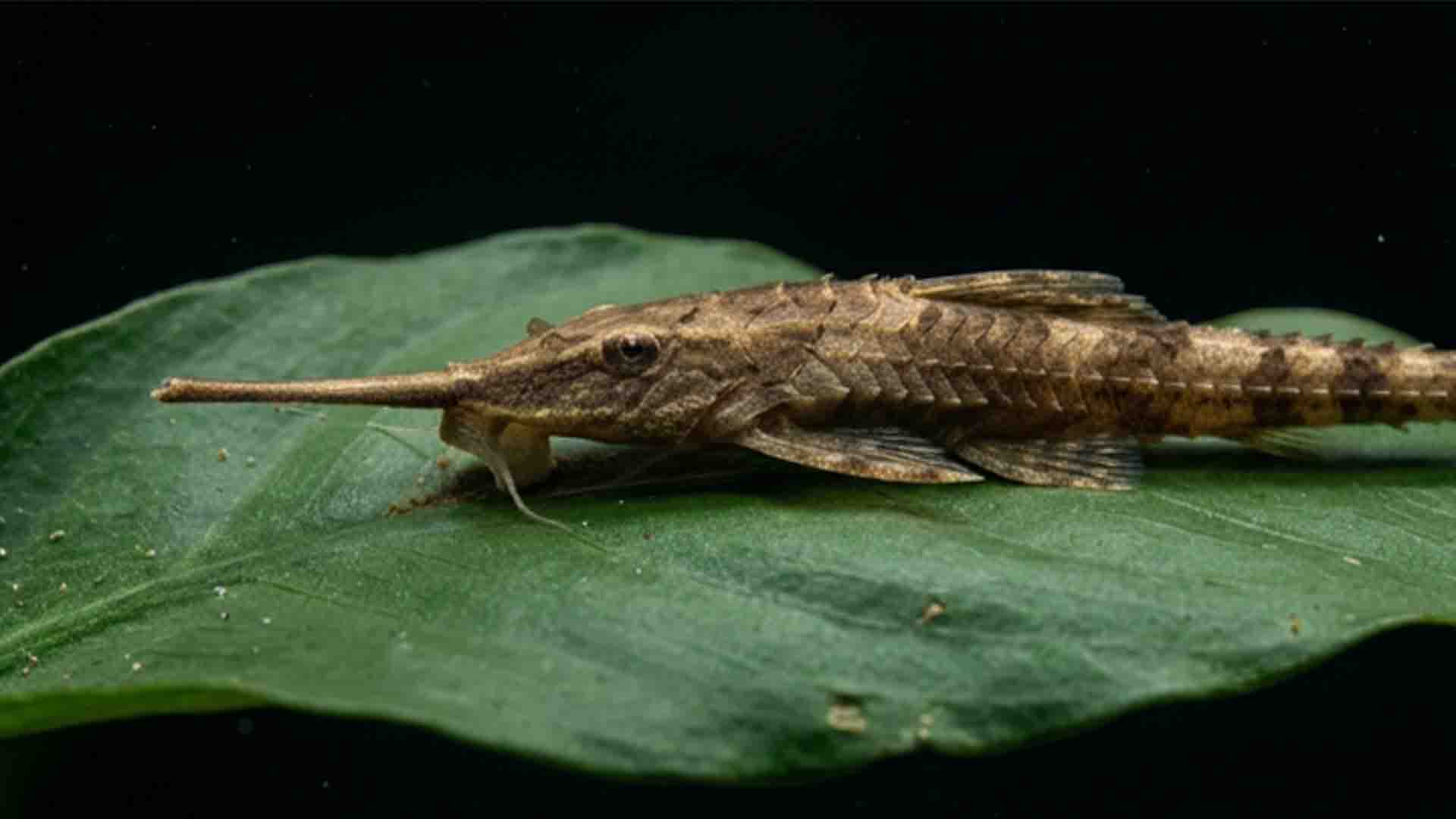
Planted tank hobbyists frequently encounter a frustrating physical conflict when using large loricariid catfish for algae management. While a Bristlenose pleco (Ancistrus) is an exceptional wood-grazer, its heavy, muscular body regularly snaps delicate stem plants like Rotala, Ludwigia, or fine Cryptocoryne petioles whenever it crashes onto foliage to reach green spot algae. The mechanical damage inflicted by the cleaner often exceeds the cosmetic damage caused by the algae.
The Twig Catfish (Farlowella acus) provides the surgical antidote. Native to calm, heavily vegetated waters in the Amazon and Orinoco basins, Farlowella acus features an ultra-slender, stick-like body covered in rigid dermal scutes. Because its body mass is distributed evenly across an elongated, feather-light frame, an adult six-inch Twig Catfish can anchor itself horizontally onto a fragile plant leaf without causing the petiole to bend or snap.
Equipped with a specialized ventral suctorial mouth lined with fine, brush-like labial teeth, Farlowella acus delicately rasps stubborn brown diatoms, green film algae, and biological scum directly off the leaf epidermis without puncturing plant cell walls. They are obligate herbivores with zero territorial drive, coexisting peacefully with dwarf shrimp and timid schooling fish. Because their metabolic rate is exceptionally low, their waste output is negligible, making them the ultimate high-precision leaf polishers for mature, low-energy planted ecosystems.
10. Benthic Copepods & Ostracods – The Invisible Microfauna Engine
The ultimate clean-up crew is not an animal you purchase individually from a display tank; it is a microscopic biological infrastructure you seed into the ecosystem. In wild river systems, visible macro-cleaners represent only the top tier of waste management. Beneath them lies a perpetual army of benthic microfauna: Cyclopoid copepods, Harpacticoid copepods, and seed shrimp (Ostracoda).
Measuring between 0.2 and 1.5 millimeters, these tiny crustaceans colonize the microscopic pore spaces between substrate grains, the interior core of porous biological filter media, and the surfaces of sunken botanical leaf litter. They consume organic micro-particulates, fungal hyphae, bacterial aggregates, and fish fecal dust before those compounds can dissolve into the open water column. They operate as internal biological recyclers, converting detritus into dense, living biomass that doubles as continuous supplemental nutrition for grazing nano fish and developing fry.
When you establish a breeding population of benthic microfauna alongside targeted macro-grazers, your aquarium transitions from a high-maintenance glass box reliant on constant gravel siphoning into a self-regulating biological engine. You eliminate the dead zones where organic matter quietly decays, stabilizing your system’s dissolved oxygen levels and biological carrying capacity from the microscopic level upward.
Data-Driven Comparative Matrices (2026 Ecosystem Engine)
To successfully integrate utility livestock, you have to look past common retail marketing names and analyze the species through the lens of ecological niche partitioning, waste kinetics, and environmental limitations. The matrix below details the precise biological operating profile of our ten underrated cleaners:
| Species (Scientific Name) | Water Zone | Bioload Factor (1–10) | Target Organics & Algae | Plant & Nano Safety | Primary Environmental Limitation |
|---|---|---|---|---|---|
| Horned Nerite (Clithon corona) | Hardscape / Glass | 1 / 10 | Diatoms, green spot algae, micro-biofilms | 100% Plant Safe / Perfect for Nano | Requires stable pH > 7.0 for calcified shell maintenance. |
| Panda Garra (Garra flavatra) | Rocks / Mid-Lower | 3 / 10 | Biofilm matrix, green dust, young BBA | 100% Plant Safe / Minimum 15 Gallons | Demands well-oxygenated water with moderate flow. |
| Malaysian Trumpet Snail (M. tuberculata) | Subterranean Sand | 1 / 10 | Compacted organic detritus, root-zone decay | 100% Plant Safe / Perfect for Nano | Overpopulates if the tank is chronically overfed. |
| American Flagfish (Jordanella floridae) | Middle / Plant Canopies | 4 / 10 | Filamentous hair algae, thread algae | Safe with thick plants; may nip ultra-soft mosses | Can display mild territorial squabbles in cramped tanks. |
| Asian Stone Catfish (Hara jerdoni) | Carpet / Benthic Floor | 1 / 10 | Sunken pellet dust, micro-worms, interstitial waste | 100% Plant Safe / Nano Specialist | Easily outcompeted by aggressive daytime surface eaters. |
| Hillstream Loach (Sewellia lineolata) | Glass / High-Flow Rock | 2 / 10 | Surface aufwuchs, soft diatoms, green film | 100% Plant Safe / Minimum 20 Gallons | Low dissolved oxygen causes rapid respiratory collapse. |
| Green Babaulti Shrimp (Caridina babaulti) | Leaf Litter / Moss Bed | 1 / 10 | Decaying plant cellulose, soft detritus, biofilm | 100% Plant Safe / Perfect for Nano | Vulnerable to predatory fish with broad oral gapes. |
| Kuhli Loach (Pangio kuhlii) | Deep Sand / Crevices | 2 / 10 | Hidden detrital protein, sunken organic scraps | 100% Plant Safe / Minimum 20 Gallons | Requires soft sand; jagged gravel erodes sensory barbels. |
| Twig Catfish (Farlowella acus) | Broad Leaves / Wood | 2 / 10 | Leaf-surface diatoms, brown algae film | 100% Plant Safe / Minimum 30 Gallons | Strict herbivore; starves in newly set up, sterile tanks. |
| Benthic Microfauna (Copepoda / Ostracoda) | Substrate Interstices | 0 / 10 (Net Recycler) | Microscopic organic dust, fungal spores, bacteria | 100% Plant Safe / Universal Scale | Quickly eradicated by small predators without dense cover. |
The reason so many hobbyists remain trapped in chronic maintenance loops is the delayed biological feedback curve. The table below illustrates the contrasting trajectories between buying retail marketing gimmicks and deploying a specialized, niche-partitioned biological crew:
| Timeline Phase | Commercial Janitor Trap (Common Pleco / CAE) | FTM Biological Niche Crew (Panda Garra / MTS / Farlowella) | System Water Chemistry Impact |
|---|---|---|---|
| Day 1 to 7 (Landing) | Juvenile cleaner consumes visible surface diatoms; owner assumes maintenance is solved. | Cleaners disperse into designated vertical strata; immediate micro-grazing begins without parameter shifts. | Chemical parameters test identical; biological debt begins accumulating silently in the retail tank. |
| Week 2 to 4 (The Shift) | Cleaner doubles in mass; heavy fecal ropes accumulate; biofilter starts struggling with organic load. | MTS aerate deep sand; Babaulti process decaying plant matter; Copepods consume micro-debris. | Commercial tank shows gradual nitrate creep and cloudy water; FTM tank sediment redox potential remains positive. |
| Month 2 to 3 (The Breakdown) | CAE undergoes ontogenetic dietary shift, attacking sleeping tankmates; Pleco uproots stems. | Stable grazer populations maintain equilibrium; glass and foliage remain clear of nuisance films. | Retail tank experiences sudden heterotrophic bacterial blooms and elevated stress hormones (cortisol). |
| Month 6+ (System Outcome) | Systemic biological crash: stunted fish, ruined hardscape, chronic algae outbreaks, hobbyist quits. | Self-sustaining living ecosystem: low-intervention maintenance, crystal-clear water, thriving biology. | Retail setup requires massive emergency interventions; FTM system operates smoothly on light routine water changes. |
What to Avoid: 4 Behavioral Mistakes That Silently Crash Systems
Achieving absolute stability in a freshwater aquarium is not simply about acquiring the right species; it is about eliminating the self-sabotaging human behaviors that load unnecessary biological pressure onto a closed aquatic environment. The ornamental pet trade conditions hobbyists to make maintenance decisions based on quick visual fixes rather than closed-loop biological mechanics. If you want your ecosystem to thrive without medical emergencies or chronic algae blooms, eliminate these four destructive habits immediately:
1. Believing Animals “Delete” Feces (The Poop-Eating Fish Fantasy)
- Why it feels right: You observe a bottom-dwelling fish or snail mouthing organic debris on the substrate floor and assume it is actively consuming fish feces and deleting waste from the aquarium.
- What it silently breaks: It ignores the physical laws of mass balance. No vertebrate fish or macro-invertebrate utilizes teleost feces as a primary caloric fuel source. Animals may mouth waste particles out of sensory curiosity, but they expel the indigestible fibrous matter immediately. Adding livestock to solve visible waste accumulation adds more digestive mass, elevates un-ionized ammonia production, and drives dissolved oxygen down.
- What to ask instead: “What circulation dead spot is preventing particulate matter from reaching my mechanical filter intake, and why am I overfeeding protein beyond my system’s carrying capacity?”
2. Enforcing Cosmetic Sterility Over Functional Biofilm (The Starvation Trap)
- Why it feels right: A surgically clean aquarium with polished glass panels, bleached driftwood, and scrubbed rocks looks pristine and reassuring to the inexperienced eye.
- What it silently breaks: It triggers Sterile Tank Syndrome. Specialized grazers like Otocinclus, Farlowella acus, and young Panda Garras rely on a complex, structured biological matrix composed of microalgae, beneficial heterotrophic bacteria, and extracellular polymeric substances (EPS) for their daily survival. When you scrub every hardscape surface bare, you starve your specialized cleaners. Within fourteen days, their symbiotic intestinal flora collapses, their bellies become concave, and they die silently on spotless glass while the owner assumes water chemistry was the culprit.
- What to ask instead: “Am I cleaning this glass panel for viewer visibility, or am I systematically destroying the primary food web my utility livestock depends on?”
3. Forcing Benthic Sifters onto Jagged, Sharp Substrates
- Why it feels right: Coarse epoxy-coated gravel or crushed black volcanic lava rock looks dramatic, holds stem plants firmly, and is readily available on commercial shelves.
- What it silently breaks: It mechanically mutilates bottom-dwelling organisms. Benthic sifters like Kuhli Loaches and Corydoras interact directly with sediment interfaces. Forcing a sifting animal onto sharp mineral edges repeatedly shears away the delicate epidermal cuticle of their sensory barbels. Opportunistic environmental pathogens colonize these micro-wounds within hours, causing progressive tissue necrosis that enters the cranial bloodstream and triggers delayed mortalities weeks after stocking.
- What to ask instead: “Does this substrate texture allow my bottom dwellers to burrow and sift grains through their opercular gill slits without physical trauma?”
4. Dosing Emergency Chemical Clarifiers & Algicides in a Panic
- Why it feels right: Spotting green hair algae on driftwood or watching the water turn slightly hazy pushes hobbyists to pour liquid algicides or chemical flocculants into the tank for an instant fix.
- What it silently breaks: Algicides operate through non-selective cellular toxicity. When chemical additives rapidly lyse millions of algal cells simultaneously, that dead biomass rots directly in the water column overnight. Heterotrophic bacteria multiply violently to decompose the decaying organic matter, consuming massive amounts of dissolved oxygen and triggering immediate ammonia surges. Furthermore, chemical flocculants coat the delicate gill lamellae of fish and invertebrates, drastically reducing oxygen diffusion efficiency. If your water stays cloudy despite repeated maintenance, stop chasing chemicals and review our proven protocol for fixing cloudy aquarium water naturally.
- What to ask instead: “What photoperiod duration or nutrient ratio imbalance is driving this opportunistic bloom, and how can I correct it gradually through natural biological competition?”
Do This Instead: The 5-Step Biological Landing Protocol (Action Layer)
If your aquarium currently feels like an unstable battlefield or you are preparing to deploy a dedicated utility crew, transition away from reactionary maintenance by following this five-step biological integration protocol:
Step 1: Map Vertical Water Zones and Flow Velocity Before Stocking
Never purchase a clean-up animal without verifying its target physical stratum and hydrodynamic preference. Ensure high-flow, oxygen-rich zones are allocated to rheophilic polishers like the Hillstream Loach, open sand beds are reserved for benthic sifters like the Kuhli Loach, and broad foliage is assigned to delicate grazers like the Twig Catfish. Distributing cleaning labor across distinct spatial layers eliminates interspecies feeding competition and guarantees total habitat coverage.
Step 2: Cultivate Surface Biofilms and Benthic Microfauna Before Introducing Grazers
Do not introduce specialized micro-grazers into a brand-new, sterile aquarium. Allow your setup to mature for at least four to six weeks until a healthy, structured biofilm matrix establishes across driftwood, rocks, and plant leaves. Seed the benthic layer with live freshwater copepods and ostracods, and add natural botanicals such as Indian almond leaves (Catappa) to create sheltered grazing microhabitats. Establishing the bottom of the food web ensures incoming utility livestock transition into a nutrient-rich environment rather than an empty waiting room.
Step 3: Match Grazer Jaw Mechanics to Specific Algae Architecture
Diagnose the exact structural morphology of the nuisance growth before choosing an organism. If you are battling tough, fibrous green hair algae, deploy the spatulate, shearing jaw mechanics of the American Flagfish. If you are managing stubborn diatom films in tight stone fissures, introduce the razor-sharp radula of the Horned Nerite snail. If you are controlling bacterial biofilms and early-stage Black Beard Algae, rely on the specialized oral scraping disc of the Panda Garra. Matching the physical tool to the specific job prevents grazer starvation and eliminates maintenance headaches.
Step 4: Establish Nighttime Target Feeding for Specialized Benthic Crews
Avoid assuming bottom-dwelling cleaners can survive solely on daytime scraps. Fast-swimming midwater schooling fish consume the vast majority of surface feeds before sinking particles reach the floor. Two to three times per week, drop sinking spirulina wafers, blanched zucchini slices, or invertebrate micro-pellets into the tank twenty minutes after the main lights have completely turned off. This targeted nocturnal feeding routine ensures secretive scavengers like Kuhli Loaches and cryptic Asian Stone Catfish maintain optimal body condition and mucosal immunity.
Step 5: Adopt a Low-Intervention Micro-Maintenance Rhythm
The hallmark of an expert aquarist is restraint. Stop deep-vacuuming every square inch of your substrate bed, which strips slow-growing autotrophic nitrifiers and suffocates benthic microfauna. Perform predictable, moderate water changes of 15% to 20% weekly using temperature-matched, dechlorinated water. Rinse filter sponges gently in a bucket of removed aquarium water only when physical flow noticeably declines, preserving the extracellular polymeric substance (EPS) matrix that keeps your closed ecosystem permanently stable. For comprehensive strategies on managing daily feeding discipline and preventing organic overloads, consult our operational framework on how to stop overfeeding aquarium fish.
Scientific Truths Behind Benthic Bioturbation & Biofilm Ecology
Aquariums do not operate on aesthetic wishful thinking; they are governed by closed-system thermodynamics, microbial ecology, and evolutionary biomechanics. The reason commercial janitor fish routinely crash home aquariums while specialized, underrated species establish permanent biological equilibrium comes down to fundamental physiological laws. When you look past retail marketing claims and examine the peer-reviewed science governing freshwater biology, the mechanics of aquarium maintenance become completely predictable.
Truth 1: Bioturbation Dictates Sediment Redox Potential and Prevents Gas Toxins
Sediment in a closed aquarium is a stratified chemical environment. In undisturbed fine sand substrates, pore water velocity approaches zero within a depth of fifteen millimeters. As heterotrophic bacteria consume available interstitial dissolved oxygen, the sediment redox potential (measured as Eh) plunges into deep negative territory (below -150 mV). Under these reducing conditions, obligate anaerobic sulfate-reducing microbes such as Desulfovibrio thrive by utilizing sulfate as a terminal electron acceptor, synthesizing dissolved hydrogen sulfide (H2S) gas as a metabolic byproduct.
Benthic bioturbators like the Malaysian Trumpet Snail (Melanoides tuberculata) and Kuhli Loach (Pangio kuhlii) mechanically alter this geochemical profile through continuous sediment displacement. By churning upper and middle sand strata, these organisms facilitate advective pore water exchange, driving oxygen-rich water from the bulk water column down into the sediment matrix. This mechanical mixing maintains a positive sediment redox potential (Eh > +100 mV), forcing bacterial respiration along aerobic and nitrate-reducing pathways and chemically preventing hydrogen sulfide formation at the root zone. To explore the peer-reviewed biogeochemistry of sediment bioturbation, read the study on SpringerLink.
Truth 2: Ontogenetic Trophic Divergence Drives Retail Algae Eater Aggression
The sudden, destructive behavioral shift observed in commercial cleaner fish like the Chinese Algae Eater (Gyrinocheilus aymonieri) is not an accidental behavioral glitch; it is an evolutionary trait known in ichthyology as ontogenetic trophic divergence. Juvenile Gyrinocheilus possess specialized horny labial ridges and elevated intestinal cellulase and amylase enzyme concentrations optimized for shearing microscopic periphyton and scraping epilithic diatom films off submerged boulders.
However, as somatic growth decelerates and the animal reaches sexual maturity at four to five inches, its internal digestive physiology undergoes an irreversible transformation. Cellular synthesis of carbohydrate-degrading enzymes drops sharply, replaced by an urgent metabolic requirement for high-density lipids and animal proteins required for gonadal development. Deprived of specialized benthic macro-invertebrates in sterile community setups, adult fish turn to predatory mucophagy. They utilize their powerful suctorial oral discs to anchor onto broad-bodied tankmates, stripping epidermal glycoprotein mucus and creating severe dermal lesions that invite fatal secondary infections. To examine life-history data and morphological trophic transitions across wild teleost populations, consult the FishBase database.
Truth 3: Hydrodynamic Suction Mechanics Dictate Rheophilic Energy Budgets
In high-energy river environments, boundary layer fluid dynamics determine whether an organism expends immense metabolic energy surviving or effortlessly grazes surfaces. Standard aquarium bottom dwellers possess rounded, deep-bodied profiles that generate significant hydrodynamic drag when exposed to swift water movement. Fighting continuous filtration currents forces these species to burn systemic glycogen reserves and drives chronic elevation of plasma cortisol, severely suppressing mucosal immune defense.
The Hillstream Loach (Sewellia lineolata) bypasses this energetic trap through specialized rheophilic adaptations. Their pectoral and pelvic fin rays have expanded horizontally, forming an uninterrupted ventral suction disc that interfaces with smooth glass and river stones. As water velocity increases across the convex dorsal profile of the loach, the Venturi effect creates a localized zone of negative hydrostatic pressure, effectively vacuuming the fish tighter against the surface without requiring active muscular exertion. This morphological specialization allows Sewellia to calmly harvest microscopic epilithic biofilms from high-flow zones where nuisance algae typically gains a foothold. To review biomechanical evaluations of teleost swimming energetics and fluid dynamics, read the research on Oxford Academic.
Truth 4: Allometric Metabolic Waste Scaling Follows Kleiber’s Law, Not Linear Math
The most dangerous fallacy in aquarium stocking is evaluating cleaner livestock by linear body length rather than metabolic biomass. Under Kleiber’s Law of allometric metabolic scaling, an organism’s basal metabolic rate, oxygen consumption, and nitrogenous waste output scale cubically relative to its dimensional growth. A single juvenile Common Pleco growing from two inches to six inches does not simply triple its biological impact; its physical mass and corresponding organic waste output multiply by roughly twenty-seven times.
Large, high-mass cleaners excrete massive quantities of particulate organic carbon and un-ionized ammonia (NH3) directly into the bottom water layer. This sudden surge in organic carbon stimulates rapid heterotrophic bacterial blooms that consume dissolved oxygen and outcompete slow-growing autotrophic nitrifiers (Nitrospira) for physical attachment space on filter media. Conversely, deploying a specialized crew of low-mass invertebrates and micro-grazers distributes janitorial duties across multiple ecological niches without exceeding the stoichiometric oxidation capacity of the biological filter. To understand the toxicological thresholds and oxidation mechanics of un-ionized ammonia in closed systems, read the EPA Aquatic Life Criteria documentation.
People Also Ask (Google SERP Direct Answers)
What is the best underrated clean up crew for a planted aquarium?
The best underrated clean up crew for a planted aquarium combines Horned Nerite Snails (Clithon corona) for detailed hardscape diatom grazing, Panda Garra (Garra flavatra) for plant biofilm and young algae control, and Green Babaulti Shrimp (Caridina babaulti) for structural plant leaf composting. This trio covers glass, foliage, and decaying vegetation with a combined bioload footprint that is significantly lower than a single pleco.
Can a clean up crew really clean aquarium substrate without a gravel vacuum?
Yes. Deploying subterranean bioturbators like Malaysian Trumpet Snails (Melanoides tuberculata) alongside Kuhli Loaches (Pangio kuhlii) keeps fine sand substrates clean naturally. The snails burrow through the sand bed to prevent anaerobic gas pockets and break down root-level debris, while Kuhli Loaches methodically sift surface detritus and interstitial crevices, eliminating the need for aggressive gravel siphoning.
Why do Chinese algae eaters attack and suck on other fish?
Chinese Algae Eaters attack other fish because of an adult metabolic shift called ontogenetic trophic divergence. As they mature past three inches, their digestive tract stops producing the enzymes needed to digest algae and develops an urgent requirement for animal protein. In community tanks lacking sufficient live prey, they latch onto broad-bodied tankmates to consume their protective slime coat.
Do Malaysian trumpet snails overpopulate and ruin aquariums?
Malaysian Trumpet Snails only overpopulate if an aquarium is chronically overfed or accumulating excessive decaying organic matter. Because they reproduce based on available food supplies, an explosion in their population is an ecological symptom of excess nutrients, not the root cause. When fed correctly, their numbers remain stable while providing continuous sand bed aeration.
Which clean up fish eats black beard algae without destroying live plants?
The Panda Garra (Garra flavatra) is the most reliable, plant-safe fish for controlling early-stage Black Beard Algae (BBA). Unlike Siamese Algae Eaters, which often become territorial and prefer commercial fish pellets as they grow, Panda Garras actively graze tough brush algae and biofilms off delicate plant leaves throughout their entire adult life without puncturing foliage.
Are there freshwater clean up crew animals with zero bioload?
Benthic microfauna such as live freshwater copepods (Cyclopoida) and seed shrimp (Ostracoda) operate as net-zero bioload recyclers. Instead of adding new nitrogen to the water column, they consume decaying microscopic detritus, fungal spores, and organic dust directly inside the substrate, converting rotting waste into living food for grazing fish.
Frequently Asked Questions (FAQ)
How many cleanup crew animals should I add per gallon?
Avoid rigid formulas like “one cleaner per gallon.” Instead, stock based on available food surface area and target biological tasks. For a standard 20-gallon planted layout, a balanced utility crew consists of 3 to 4 Horned Nerite snails for hardscape, 1 to 2 Panda Garras for mid-level biofilms, a small group of 5 to 6 Kuhli Loaches for sand crevices, and a self-sustaining starter colony of 8 to 10 Green Babaulti shrimp. Always allow the tank’s biological biofilm to mature before introducing specialized grazers.
Will freshwater copepods and ostracods overrun my aquarium?
No. Freshwater microfauna populations are self-limiting and strictly governed by available organic detritus and predation pressure. In any aquarium housing small fish, copepods and seed shrimp are actively hunted as nutrient-dense live food. They will maintain stable, cryptic breeding colonies deep within your substrate pores, filter media, and botanical leaf litter without ever clouding the open water column.
Why did my newly introduced cleaner fish die within two weeks despite having algae on the glass?
Specialized grazers like Otocinclus and Twig Catfish frequently starve in tanks that have visible algae because they do not eat all algae types. Many species consume soft diatoms, unicellular green algae, and bacterial biofilms, but cannot physically digest tough green spot algae, cyanobacteria, or cyanophyta sheets. Furthermore, wild-caught cleaners often arrive with depleted gut microbiomes from supply chain transit, requiring targeted supplemental feeding like blanched vegetables or spirulina wafers to survive acclimation.
Can I keep Horned Nerite snails in soft, acidic planted tanks?
Horned Nerite snails require a stable water pH above 7.0 and moderate general hardness (GH > 6 dGH) to maintain their calcified shells. In soft, acidic water (pH < 6.8), the acidic environment actively leaches calcium carbonate from their shells, causing pitting, structural thinning, and eventual mortality. If you run a soft-water aquascape, provide mineral supplements or choose soft-water tolerant detritivores like Caridina shrimp instead.
What should I feed my cleanup crew when all visible algae is gone?
When an ecosystem reaches pristine visual equilibrium, you must transition your utility livestock to targeted supplemental nutrition. Feed herbivorous sinking wafers containing high percentages of spirulina and kelp, fresh blanched zucchini or spinach medallions, and sinking invertebrate pellets two to three times weekly after lights-out. This ensures your biological cleaners maintain strong mucosal immunity without relying on nuisance algae blooms to survive.
Hub & Spoke: Engineering a Crash-Proof Freshwater Ecosystem
Selecting specialized biological cleaners is only one component of running a resilient, low-maintenance aquatic system. True stability requires aligning your livestock choices with filtration architecture, sediment physics, and planting discipline. If you are constructing a new layout or troubleshooting chronic system instability, you must address the ecosystem from the foundation upward.
Before purchasing utility livestock, review our comprehensive ranking of the best freshwater clean-up crew species to understand how different animals interact across variable water volumes. If you are currently dealing with recurring maintenance headaches, study our analysis on why cleanup crew fish do not fix algae blooms when underlying nutrient ratios are ignored. To avoid introducing oversized bioload polluters that masquerade as janitors, cross-reference your shopping list against our guide on why you must stop buying commercial algae eaters.
When dealing with aggressive filamentous outbreaks that choke plant canopies, combine the shearing power of the American Flagfish with our field-tested manual protocols for eliminating green hair algae naturally. If heavy waste accumulation has already destabilized your water column, restore microbial balance using our diagnostic roadmap for fixing cloudy aquarium water without chemicals. For tanks experiencing decaying vegetation, protect your water chemistry by following our biological rules to stop aquarium plants from melting, and eliminate disruptive bottom species by reviewing our blacklist of the worst aquarium fish that destroy community stability.
Scientific References & Peer-Reviewed Literature
Every biological mechanism, hydro-dynamic principle, and geochemical threshold detailed in this guide is grounded in established aquatic veterinary medicine, sediment geochemistry, and teleost ethology:
1. Sediment Bioturbation & Geochemical Redox Dynamics: Empirical research in aquatic sediment biogeochemistry demonstrates that active benthic macro-invertebrates physically aerate fine sediments, elevating pore water dissolved oxygen and preventing the metabolic reduction of sulfates into toxic hydrogen sulfide gas. Read the study on SpringerLink.
2. Ontogenetic Trophic Shifts & Teleost Feeding Kinematics: Morphological and enzymatic investigations into captive freshwater teleosts document how sexual maturity triggers structural alterations in jaw dentition and gastrointestinal cellulase synthesis, driving adult foragers from epilithic biofilm grazing toward opportunistic mucophagy. Read the study on ScienceDirect.
3. Hydrodynamic Forces and Rheophilic Suction Adaptations: Biomechanical evaluations of specialized benthic teleosts establish that ventral pectoral-pelvic disc structures utilize fluid pressure differentials (the Venturi effect) to maintain substrate attachment in torrential flow regimes with minimal muscular energy expenditure. Read the study on Oxford Academic.
4. Stoichiometric Nitrogen Oxidation and Ammonia Toxicology (U.S. EPA): Criteria published by the Environmental Protection Agency establish the toxicological parameters of un-ionized ammonia (NH3) across teleost gill lamellae, proving that high-mass grazers quickly exceed the biological filtration capacity of closed recirculating systems. Read the EPA Reference.
5. Biofilm Extracellular Polymeric Substances (EPS) & Microbial Ecology: Microbiological research confirms that autotrophic nitrifiers and microfauna require undisturbed, permanent physical matrices to build resilient multi-species biofilms capable of resisting organic parameter swings. Read the study on PMC.
Watch Next: FishTank Mastery Topic Authority Video Chain
Transitioning from written biology to visual mastery is the most effective way to eliminate aquarium failure. Continue your educational journey and build a bulletproof ecosystem by exploring these curated companion masterclasses from the FishTank Mastery archive:
- Stop Buying Cleanup Crew Fish (The Algae Eater Truth): Uncover the Subcontractor Debt Trap and see why adding commercial janitor fish often accelerates parameter failure instead of solving maintenance. Watch on YouTube.
- Best Tank Cleaners That REALLY Help (Clean Up Crew Guide): Discover the high-efficiency biological workers that manage diatoms and surface films without overwhelming your biological filtration. Watch on YouTube.
- Best Freshwater Tank Cleaners That Actually WORK: Compare the ultimate species-safe cleaners and learn how to pair specific grazers with your aquarium footprint for crystal-clear hardscapes. Watch on YouTube.
- The Real Reason You Have Algae (Stop Doing This!): Connect lighting photoperiods, nutrient export kinetics, and natural biofilm defense into a unified system that starves nuisance algae permanently. Watch on YouTube.
- You’re Cleaning Your Filter WRONG! (Stop Killing Your Fish): Master the correct filter maintenance routine to preserve beneficial bacterial colonies and protect your utility crew from toxic parameter swings. Watch on YouTube.
- The Utility Biome: Biological Janitors (Full YouTube Series): Dive deep into the complete multi-layer stocking framework to engineer a calm, self-sustaining freshwater ecosystem from day one. Explore the Full Series on YouTube.
At FishTank Mastery, we treat aquariums as living, interconnected biological systems, not disposable tabletop decorations. When you replace commercial marketing gimmicks with evolutionary niche specialists, your aquarium stops feeling like an exhausting second job and becomes a stable, self-regulating piece of nature. Respect the biology, give the microbiome time to mature, and let nature do the heavy lifting for you.